Rebuild, Refactor, or Buy: Executive Takeaways
- The wrong modernisation path can cost more than delaying the decision itself
- Rebuild is right when architecture and business logic are misaligned
- Refactor works when the model still fits but the system has become hard to evolve
- Buy only where the capability is replaceable and differentiation lives elsewhere
What is SaaS Consulting?
SaaS consulting is a structured advisory process that helps software businesses make better product, architecture, and modernisation decisions.
In the context of rebuild, refactor, or buy, SaaS consulting is used to assess whether the current platform still supports the business model, which capabilities are strategically differentiating, and what modernisation path creates the strongest long-term outcome.
It helps leadership teams evaluate:
- whether the current architecture still fits the product
- which parts of the system should remain in-house
- where technical debt is slowing execution
- what level of change the organisation can realistically absorb
The goal is not simply to recommend a path. It is to reduce the risk of committing time, budget, and engineering effort to the wrong one.
Why This Decision Matters More Than Most Teams Think
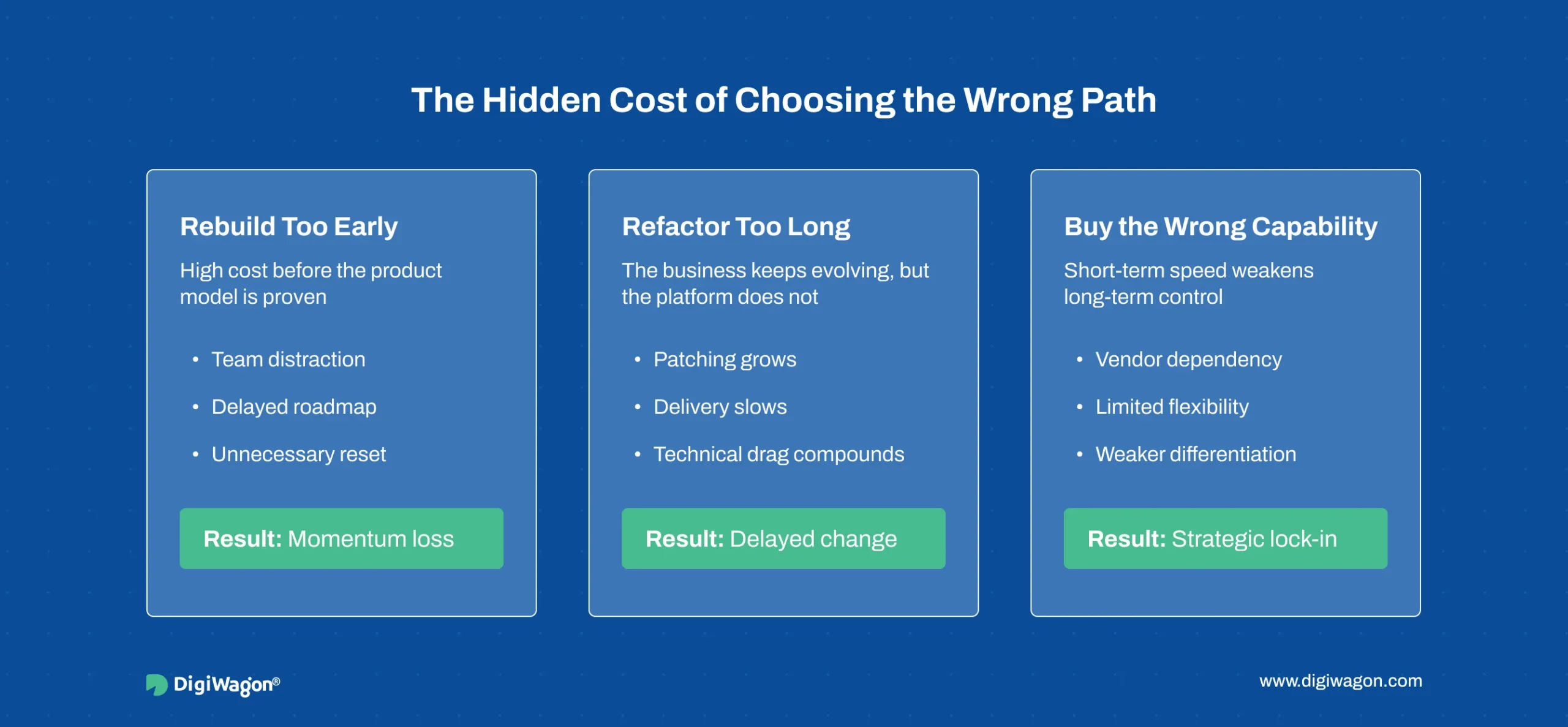
Rebuild, refactor, or buy is not just a technical choice. It shapes product flexibility, delivery speed, cost, and long-term control.
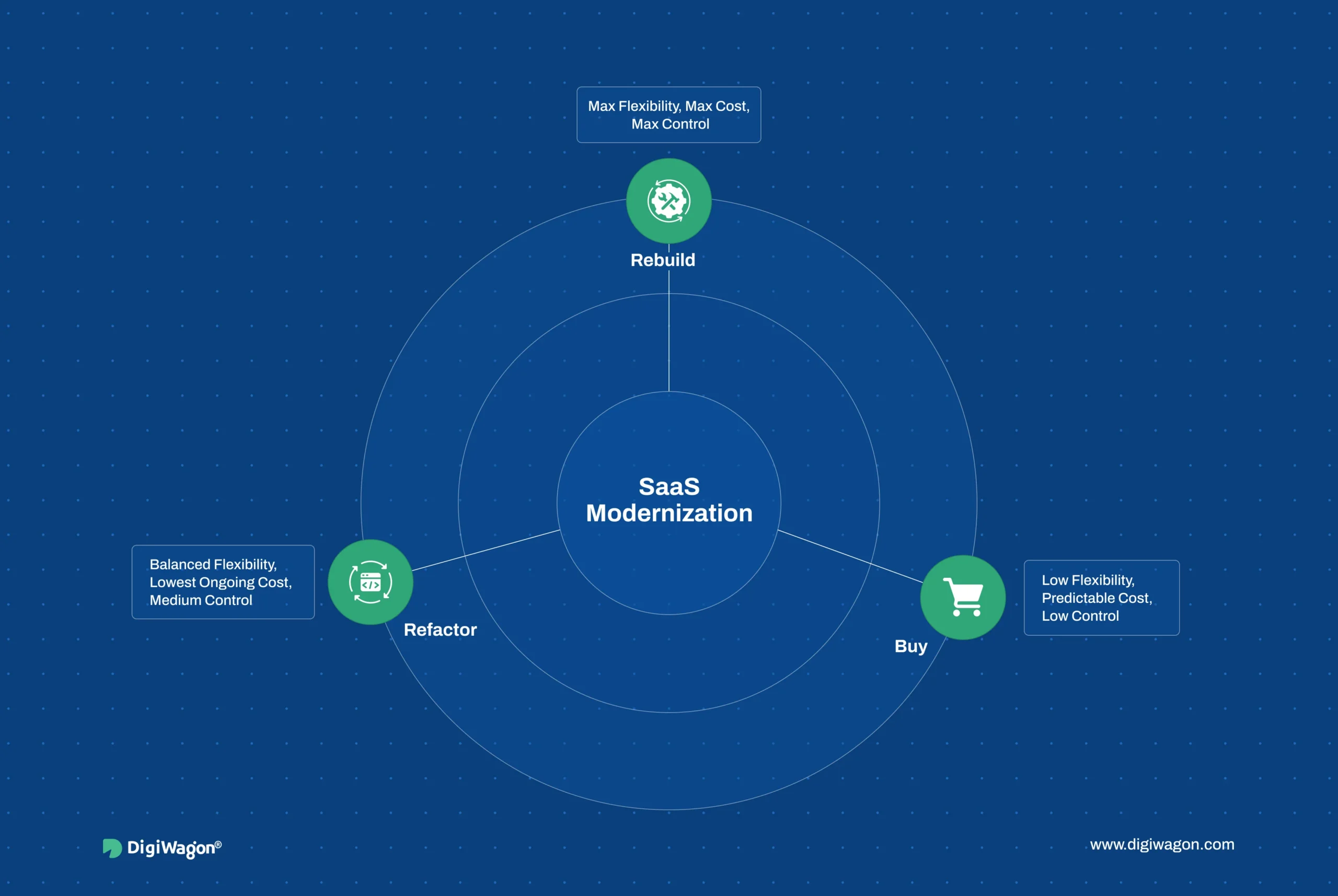
A rebuild can create strategic freedom but requires time and capital. A refactor works only if the current product model still fits the business. A buy decision can accelerate delivery, but it may reduce control if the capability is close to the company’s differentiation.
That is why this decision matters. The wrong path does not just create technical debt. It creates business drag.
Rebuild, Refactor, or Buy: How to Choose the Right Path
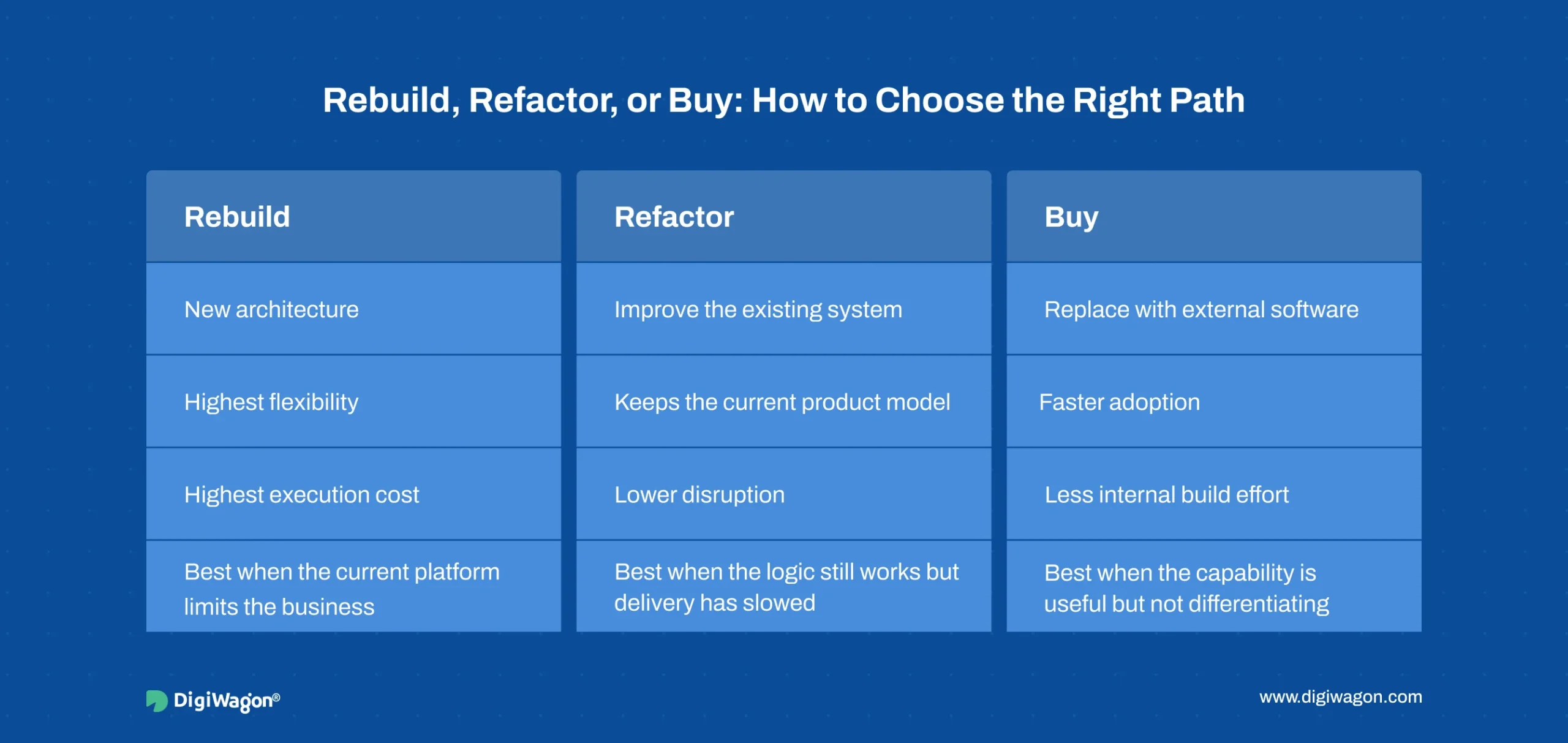
Rebuild is the right path when the current product architecture no longer supports how the business creates value. It offers the most strategic flexibility, but also carries the highest execution cost and delivery risk.
Refactor works when the product logic is still sound, but the system has become difficult to maintain, extend, or scale. It improves the existing platform without replacing the business model behind it.
Buy makes sense when the capability is operationally important but not strategically differentiating. It can reduce development effort and speed up delivery, but may reduce long-term control if the function sits too close to the product’s core value.
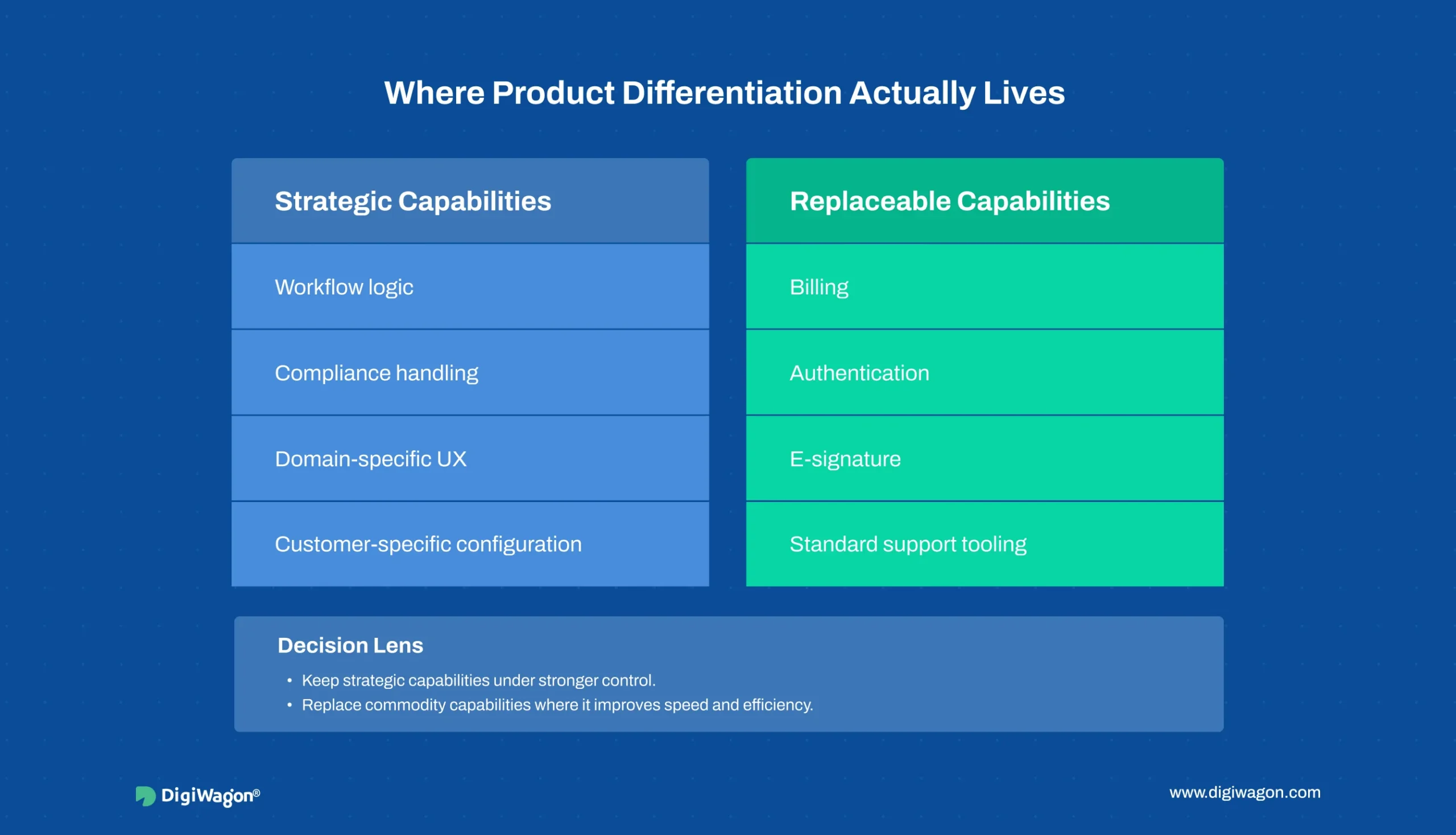
The key decision factor is whether the capability is part of what makes your product different. If it shapes how customers use the product, how workflows operate, or how the business delivers value, it should be treated as strategic. In that case, rebuilding or refactoring is usually the better path. If the capability is necessary but does not create differentiation, buying can be the more efficient option.
The 5-Step SaaS Modernisation Playbook
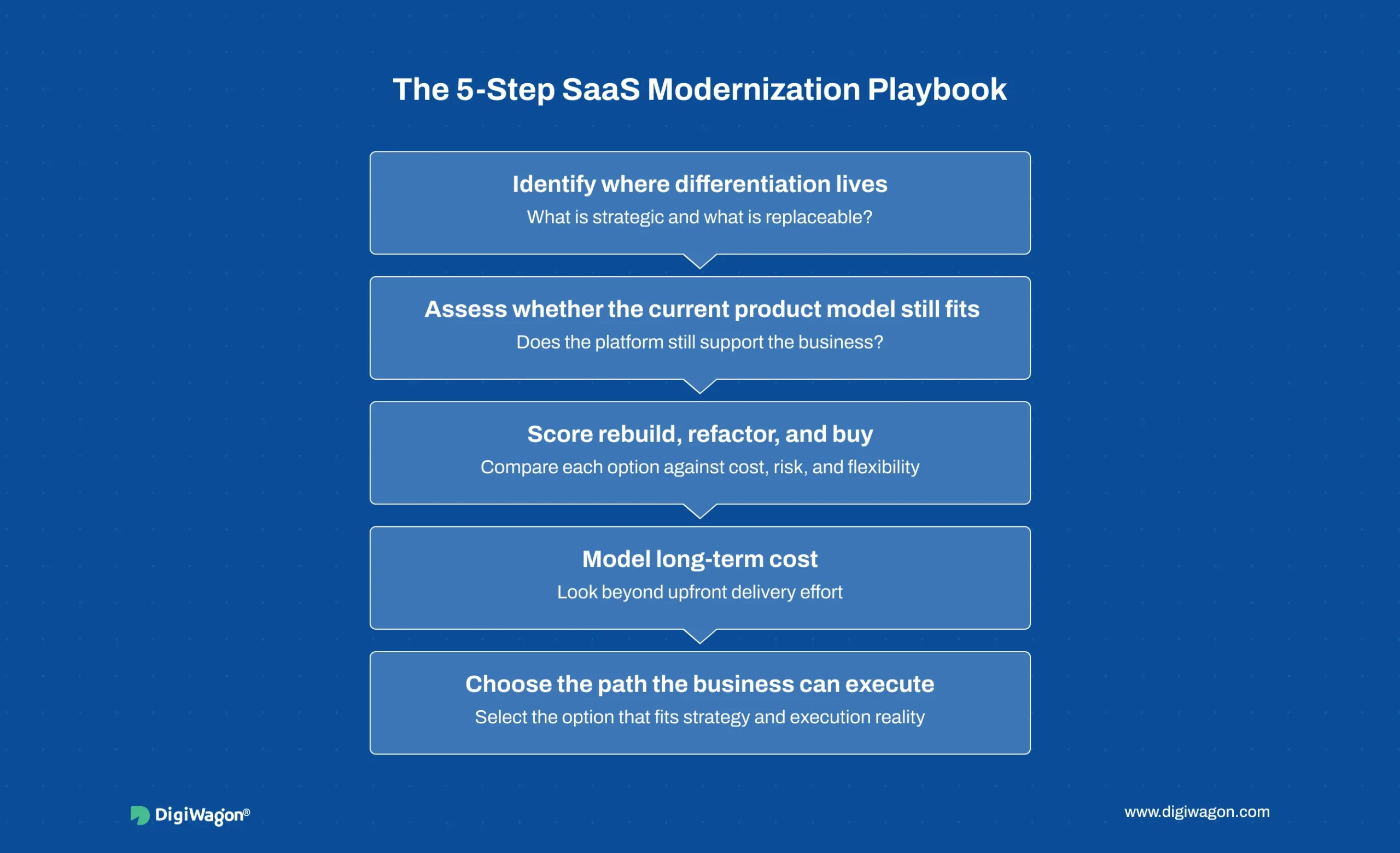
- Identify where the product creates differentiation Start by separating strategic capabilities from replaceable ones. Not every part of the platform should be treated the same.
- Assess whether the current product model still fits the business If the core workflows and domain logic are still right, refactoring may be enough. If the model itself is misaligned, rebuilding becomes more likely.
- Score rebuild, refactor, and buy against business reality Evaluate each option across cost, speed, integration complexity, compliance needs, long-term flexibility, and execution risk.
- Compare the long-term cost, not just the upfront cost A cheaper option at the start can become more expensive if it increases vendor dependency, slows product change, or limits future control.
- Choose the path the business can actually execute The best decision is not the most ambitious one. It is the one that aligns product needs, team capacity, and long-term strategy.
How DigiWagon Approaches Rebuild, Refactor, or Buy
DigiWagon supports rebuild, refactor, or buy decisions through a more technical evaluation of the platform itself, including:
- Domain-model assessment Evaluate whether the current product architecture still reflects how the business operates and delivers value.
- Architecture constraint analysis Identify where tight coupling, legacy dependencies, or module boundaries are limiting scalability and product change.
- Capability mapping Separate strategically differentiating capabilities from commodity functions that can be replaced or externalised.
- Modernisation fit evaluation Determine whether the current platform is better suited for targeted refactoring, selective replacement, or full rebuilding.
- Execution risk assessment Analyse where incremental change is realistic and where deeper architectural reset is necessary to avoid long-term instability.
The goal is not just to choose an option. It is to make sure the option fits the actual technical and product reality of the platform.
What This Means in Practice
- Refactor when the product model is still right, but the architecture is slowing delivery.
- Rebuild when the current platform is limiting how the business can evolve.
- Buy when the capability is necessary, but not part of the product’s differentiation.
- Use long-term control, not just short-term speed, as the final decision filter.
Conclusion
The right modernisation decision is not the one that looks fastest in the moment. It is the one that gives the business the clearest path to sustainable product evolution.
Rebuild, refactor, and buy each solve different problems. The value of SaaS consulting is in knowing which one fits the platform, the product, and the business model behind it.
A SaaS platform scales well when it can evolve with confidence, not just continue by habit.