To the forward-thinking CTOs, Operations Leaders, and Product Heads in Logistics and Supply Chain: The last five years have proven that a resilient operation is one that can see around corners. Global volatility – from geopolitical events to sudden weather shocks – has rendered traditional, linear forecasting methods obsolete.
The competitive edge today is not gained by reacting quickly, but by predicting accurately. This strategic leap from reaction to prediction requires a specialised technological weapon: the Predictive AI Engine, powered by Deep Learning. This engine transforms decades of operational data, real-time telemetry, and external signals into a single, cohesive source of actionable foresight, delivering significant, measurable ROI.
The Critical Shift: From Reactive Logistics to Predictive Resilience
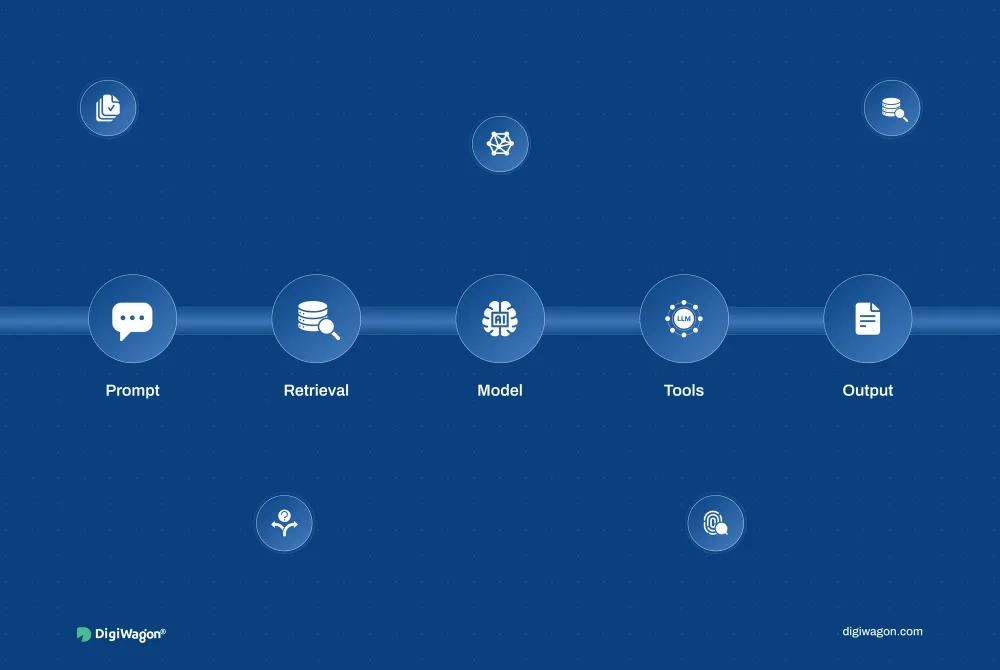
From Reactive to Predictive – The Supply Chain Evolution Every insight adds foresight – and foresight builds resilience.
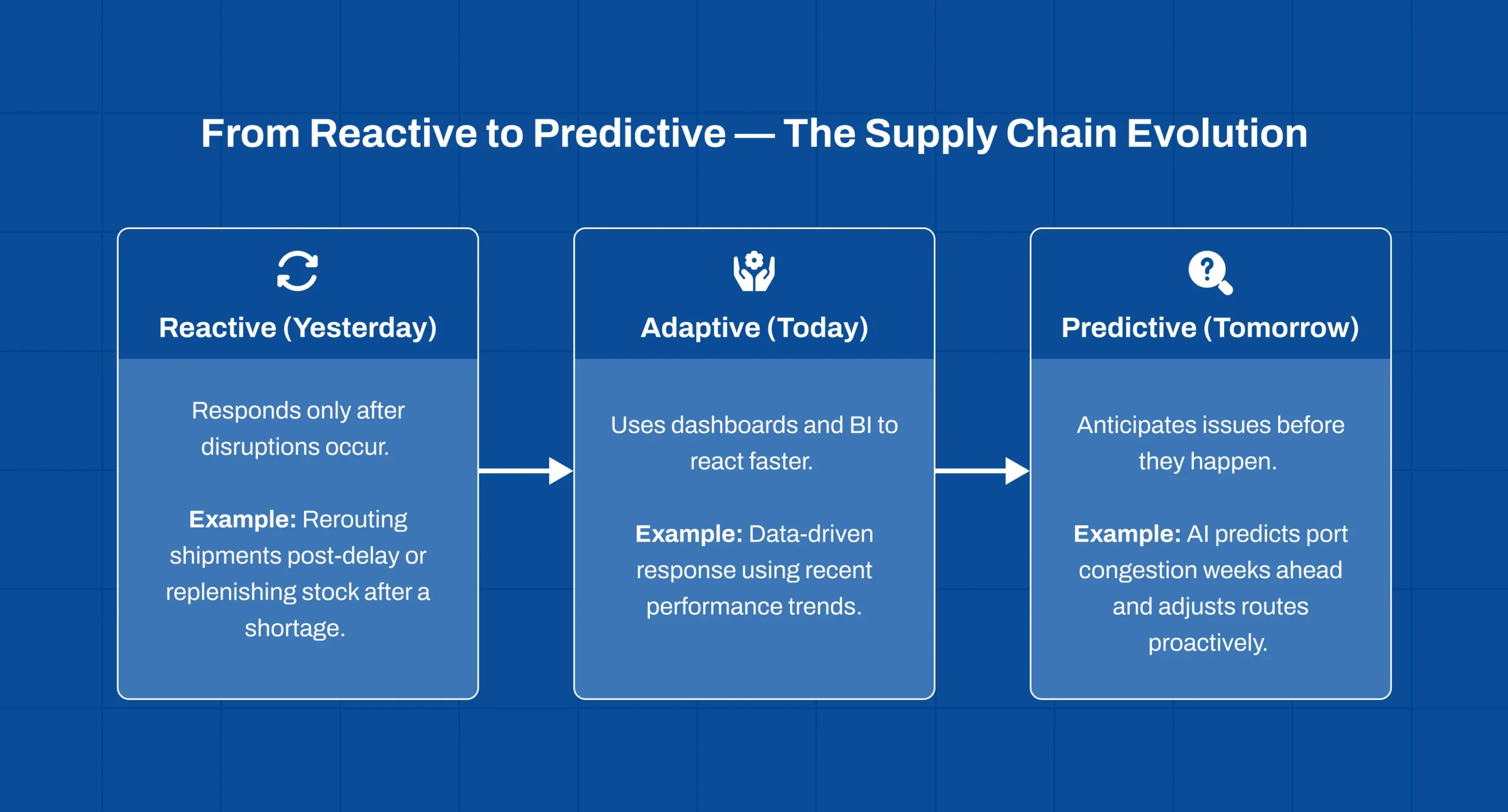
A reactive supply chain manages risks by holding expensive buffer inventory or scrambling for alternative freight when a crisis hits. A predictive supply chain prevents the crisis by anticipating it weeks or months in advance.
The Limitations of Traditional Forecasting
Traditional models (like ARIMA or simple moving averages) rely heavily on historical sales data and struggle with non-linear, unpredictable variables – the very factors that cause major supply chain disruptions. They cannot effectively process the sheer volume and diversity of modern logistics data: IoT sensor readings, global news sentiment, carrier capacity APIs, and weather forecasts. They break down in the face of complex, noisy, and sparse data.
What is a Predictive AI Engine? The Deep Learning Advantage
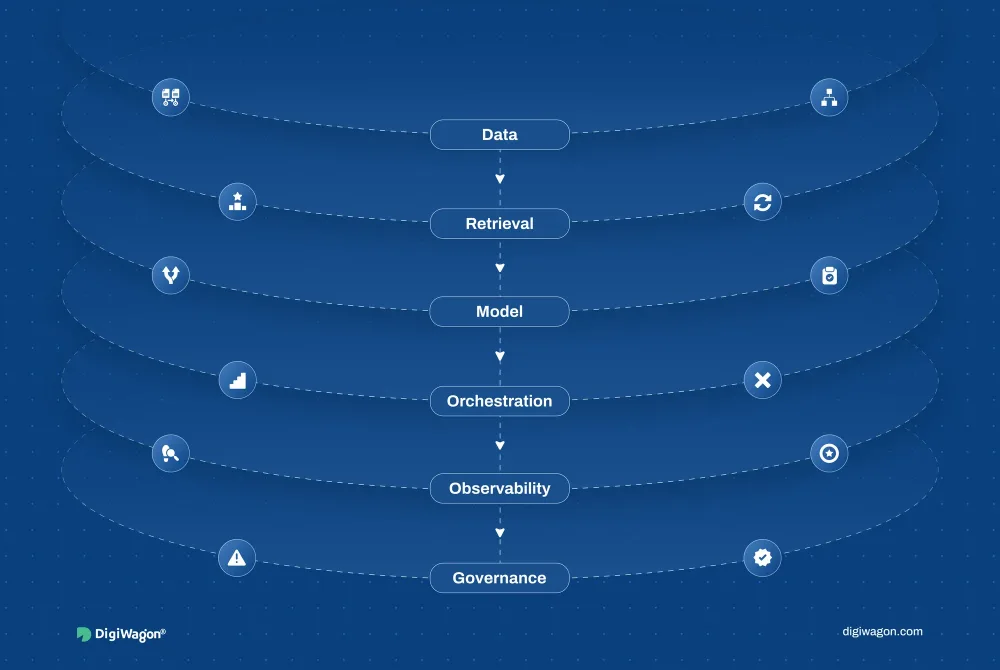
The Predictive AI Engine – Turning Deep Learning into Deep Insight From data noise to decisive intelligence.
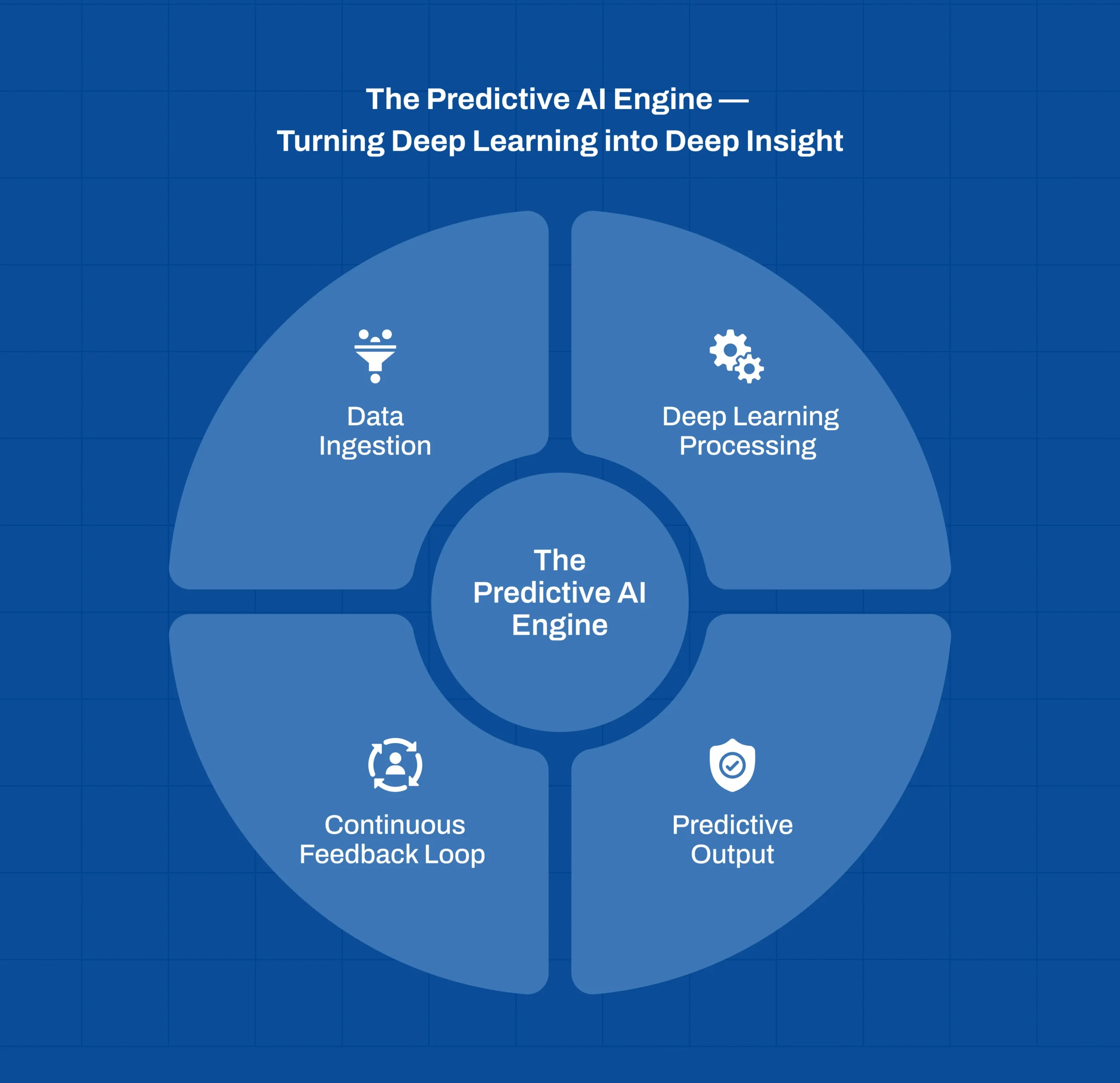
1. Data Ingestion:
Aggregates structured (ERP, IoT) and unstructured (emails, reports) datasets.
2. Deep Learning Models:
LSTM/RNN architectures capture long-term dependencies and hidden trends.
3. Predictive Outputs:
Generates forecasts for demand, risk, and asset health with actionable recommendations.
4. Feedback Loop:
Learns from outcome accuracy – improving every iteration.
A Predictive AI Engine is a specialised system built using advanced Machine Learning and Deep Learning algorithms that analyse vast, complex datasets to calculate the probability of future events and their impact on your operations. It moves beyond simple if/then rules to learn the intricate, non-obvious relationships within your business ecosystem.
Why Deep Learning Architectures (LSTMs & RNNs) Win
The true breakthrough comes from Deep Learning, specifically architectures like Long Short-Term Memory (LSTM) and Recurrent Neural Networks (RNNs).
Unlike traditional statistical models, LSTMs are designed to process time-series data with memory. They can learn dependencies over long periods, allowing them to:
- Recognise that a promotional event three months ago still impacts current demand.
- Filter out noise from routine daily fluctuations to spot a true trend in carrier delays.
- Capture the non-linear relationship between fuel price, seasonality, and optimal fleet capacity.
This capability allows the engine to generate Deep Insight, leading to forecast error reductions often cited between 20% and 50%.
Three Pillars of Deep Insight: Core Applications in the Supply Chain
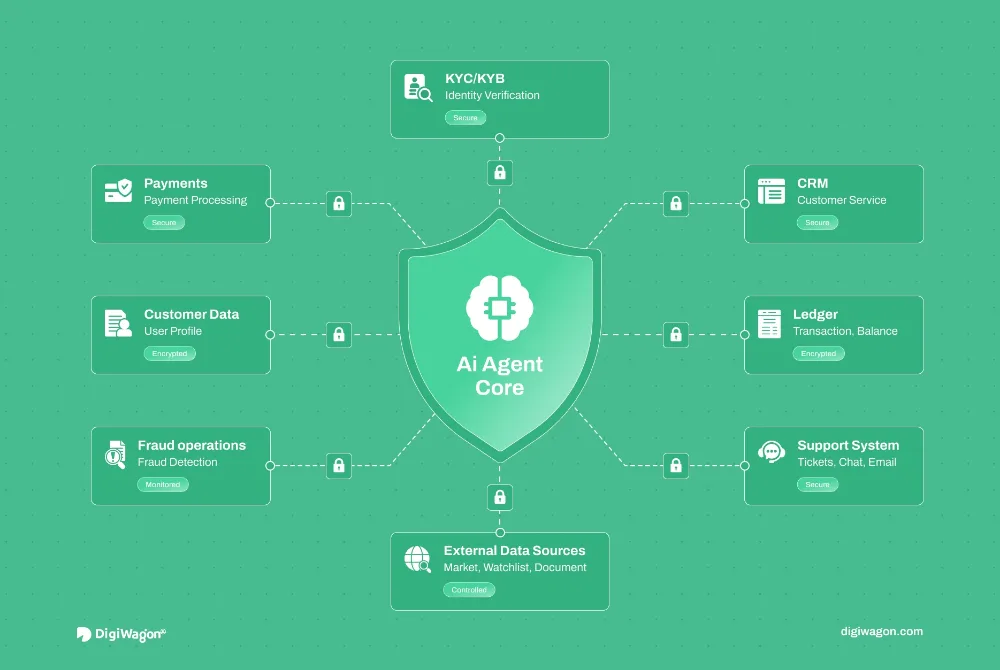
Deep Insight in Action – Three Core Applications AI that predicts, prevents, and performs.
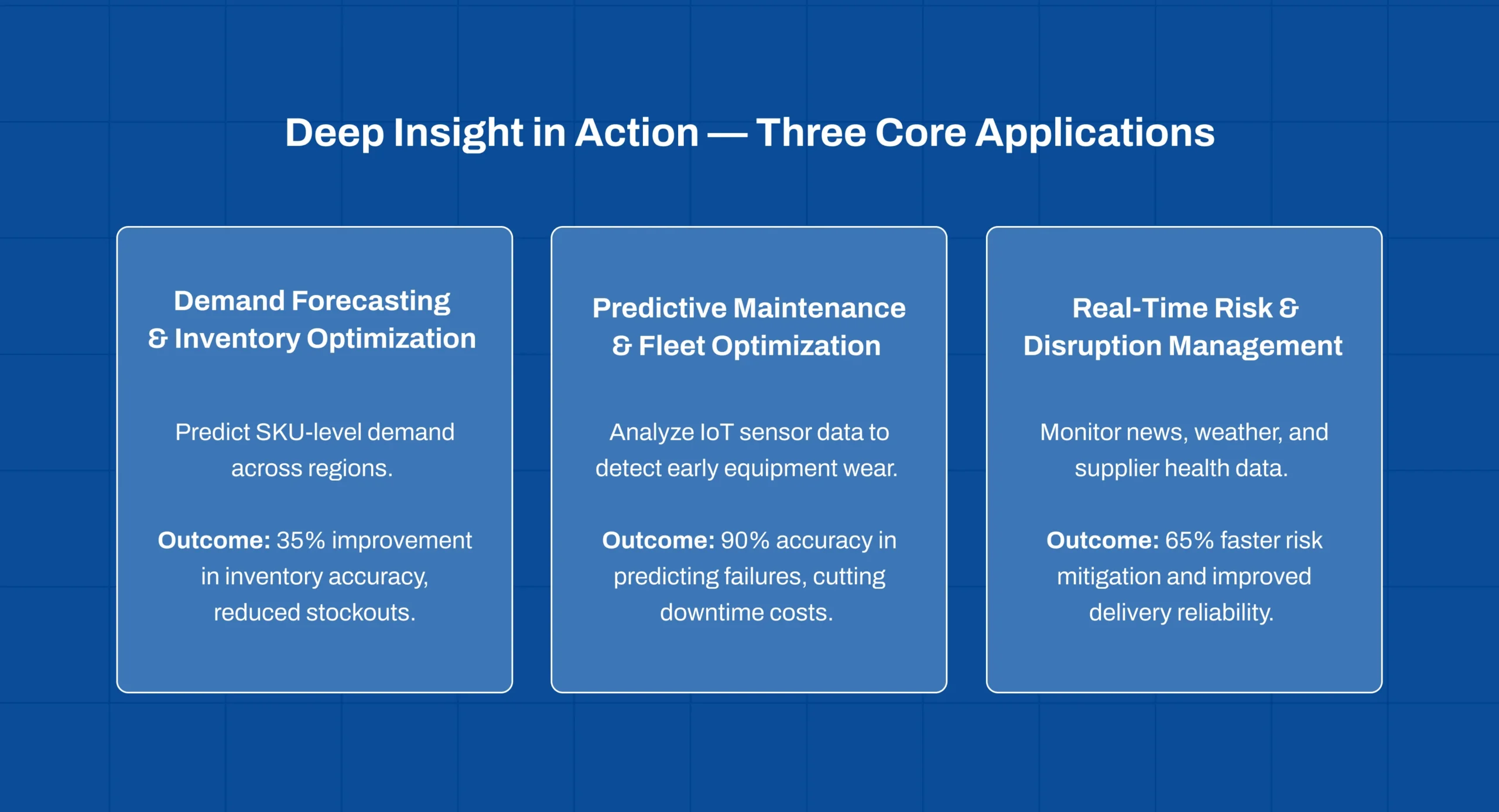
1. Next-Gen Demand Forecasting and Inventory Optimisation
This is the most direct path to ROI. The predictive engine ingests your historical data alongside external data points (e.g., competitor promotions, macro-economic indicators, social media trends) to generate granular demand forecasts by SKU, location, and channel.
- Impact: Reduces stockouts (lost sales) and minimises obsolete inventory (holding costs). Companies implementing this see inventory levels improve by up to 35%.
- Action: The system dynamically calculates re-order points and optimises asset allocation across your distribution network.
2. Predictive Maintenance and Fleet Optimisation
Downtime is a direct, measurable cost. Deep Learning models applied to IoT sensor data from your machinery and fleet components are transforming maintenance from scheduled guesswork to precise prediction.
- Impact: Anticipates equipment failure (e.g., a specific conveyor belt motor, a truck tire’s wear) weeks in advance with over 90% accuracy.
- Action: Triggers an autonomous maintenance ticket and suggests the optimal time in the schedule for repair, avoiding critical operational hours.
3. Real-Time Risk & Disruption Management
The engine’s ability to process unstructured data (news feeds, supplier emails) and integrate it with structured data (shipment tracking) provides a true supply chain resilience layer.
- Impact: Predicts major operational risks – such as a key supplier’s financial distress, port congestion, or severe weather delays – before they become catastrophic.
- Action: Proactively suggests alternative sourcing, triggers re-routing algorithms, and automatically alerts affected customers, enhancing service levels by as much as 65%.
The CTO’s Blueprint: Building the AI Engine (A 4-Step Roadmap)
The CTO’s Predictive AI Blueprint – From Data to Deployment Strategy, structure, science, success.
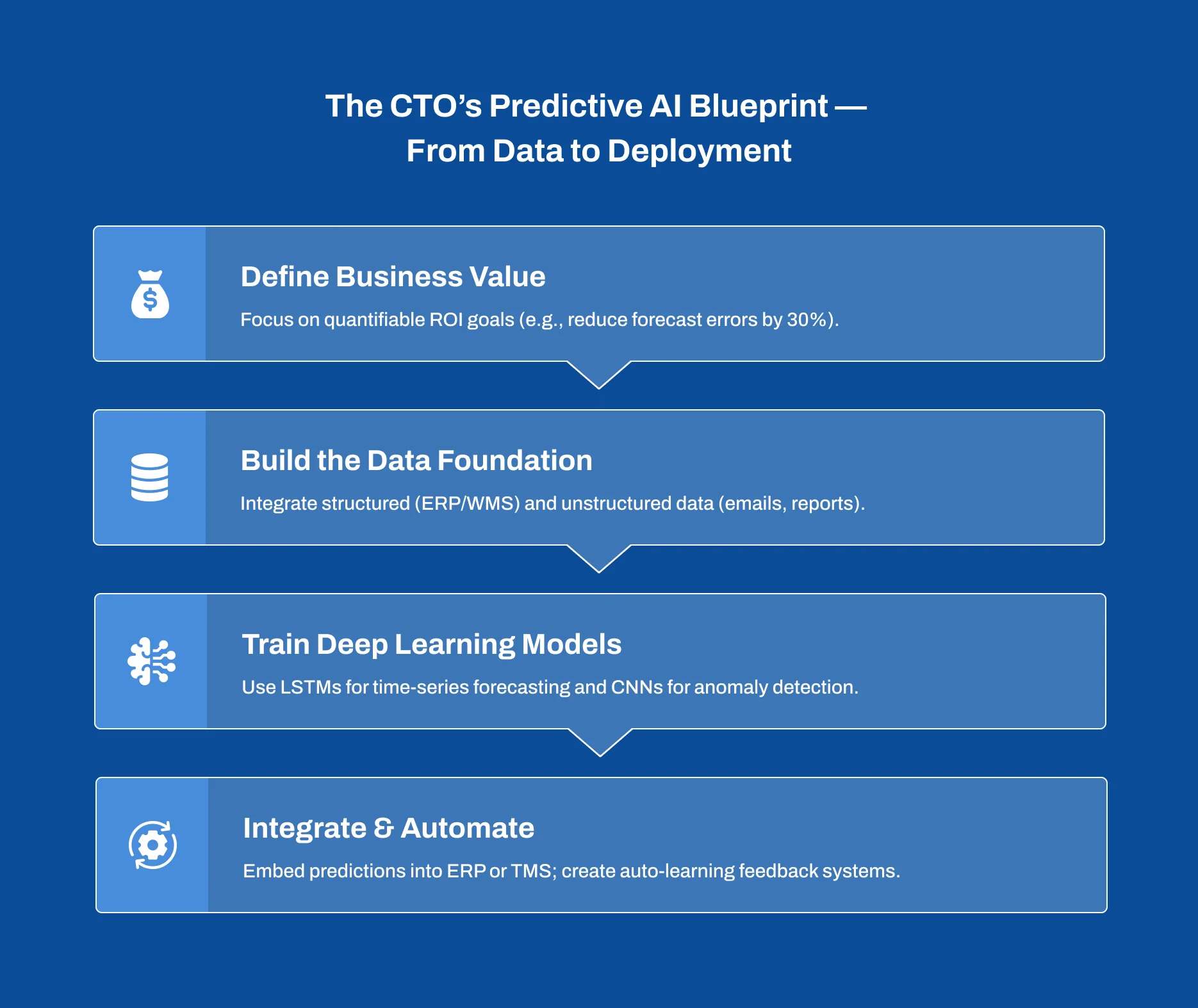
Building a proprietary Predictive AI Engine requires a disciplined, engineering-first approach, not just a pilot project.
1. Define Business Value: Start with a high-impact, measurable problem (e.g., “Reduce forecast error for the top 50 SKUs by 30%”).
2. Architect the Data Foundation: Unify your disparate data sources into a clean, queryable platform.
3. Model Selection & Training: Choose the right Deep Learning architecture (LSTMs, CNNs for patterns, or Gradient Boosting for features) and train it on your clean, proprietary data.
4. Integration & Feedback Loop: Integrate the model’s predictions directly into your ERP, WMS, or TMS systems, and ensure the system continuously learns from the accuracy of its own predictions in production.
Data is the Fuel: Unifying Disparate Data Sources
The accuracy of your engine depends entirely on the richness of your data. This requires unifying:
- Internal Structured Data: ERP (Orders, Inventory), WMS (Stock Levels, Locations).
- Internal Unstructured Data: Supplier Contracts, Internal Emails, QA Reports.
- External Data: Geopolitical events, weather APIs, economic indicators, and carrier performance feeds.
This data unification step is often the most challenging but yields the most significant competitive advantage.
Conclusion: The Measurable ROI of Predictive Excellence
The shift to a Predictive AI Engine is a fundamental digital transformation initiative, not a one-off tech purchase. Research indicates that organisations leveraging AI in their supply chains can see a 10% reduction in overall supply chain costs and substantial revenue gains through optimised pricing and product availability.
For CTOs, the goal is clear: leverage Deep Learning expertise to transition from a reactive, cost-center logistics operation to a self-optimising, deeply insightful, and resilient supply chain. The future belongs to the businesses that move first to translate data complexity into predictive confidence.