Logistics and Supply Chain Software Development for Operations
Freight and fleet systems built for the dispatch desk.
DigiWagon builds transportation, warehouse, fleet and supply-chain visibility software for shippers, carriers, third-party logistics providers and distributors in the United States, the United Kingdom and India. Every system is engineered for the dispatcher, the driver and the dock supervisor who run it, and integrated with the ERP, telematics and carrier networks already in place.
Pick the situation closest to yours. We’ll show what we would build for it, where it sits in the logistics services below, and which standard shapes it.
Pick what your supply chain has to prove
What it has to prove
Shipments You Cannot See Until They Are Late
Orders live in the ERP, loads in a carrier portal, positions in a telematics app and exceptions in someone’s inbox, so the customer learns a shipment is late before you do.
What we would build
What you could end up with
One view of orders, shipments and inventory across carriers and sites
Exception alerts raised before the customer calls
ETAs computed from telematics and carrier events, not promises
Loads are planned in a spreadsheet, tendered by phone, tracked by text message and reconciled against invoices weeks later, and the planner who holds it together cannot take a day off.
What we would build
What you could end up with
Load planning and routing with the constraints your planners actually have
Driver and carrier apps that keep working without signal
Freight audit that matches every invoice to its rate and its proof of delivery
Demand is forecast on last year’s spreadsheet, delays surprise everyone, and carrier selection is whoever answered the phone, because no model has earned the planners’ trust.
What we would build
What you could end up with
Demand, ETA and delay models with documented features and review cadence
Carrier and route recommendations ranked on cost and reliability
Predictions delivered inside the planner’s screen, with the reasoning attached
Logistics software development for the yard, the road and the warehouse, and the supply chain software development behind end-to-end visibility, from a logistics software development company that builds for the shift that moves the freight: the systems, models and integrations below, each linked to the DigiWagon practice that builds it.
01
Logistics Digital Strategy & Discovery
Most logistics software fails at the dock, not in the demo: it assumed a scan that never happens, a network the yard does not have, or a rate structure the contracts do not follow. Discovery starts with the flows — orders, loads, movements, documents and money — and the people who move them, then settles the sequence: what to connect first, what to modernize, what to leave alone. The output is a roadmap costed against service failures and detention hours, not a transformation deck, and a first release the dispatch desk will use on Monday.
Order-to-cash and order-to-delivery flow mappingConnect-modernize-retire sequencingPartner and message inventoryMVP definition with adoption planned
Order-to-load planning, carrier tendering, dispatch, tracking, proof of delivery and freight audit built around your lanes, contracts and constraints rather than a vendor’s module list. Tendering and status flow over EDI 204, 990, 214 and 210 or carrier APIs, whichever the partner speaks. Freight audit matches every invoice to its rate, its accessorials and its proof of delivery before settlement, and every decision writes the record the shipper, the carrier and the auditor will ask for.
Load planning and multi-modal routingCarrier tendering and rate managementDock, yard and appointment schedulingFreight audit and settlement
Receiving, put-away, picking, packing, cartonization, shipping and cycle counts built for the scanner in a gloved hand and the supervisor watching the wave. Inventory is a stream of events — every barcode, RFID and GS1 identifier read from receipt to dispatch — so stock is a fact with lot, serial and location behind it, multi-warehouse positions reconcile against the ERP, and a recall or a customs query answers in seconds. Labor and slotting analytics sit on the same data. Where a packaged warehouse management software system already runs, we build the applications and integrations around it rather than replacing it.
Receiving, put-away and slottingWave, batch and zone pickingLot, serial and location traceabilityCycle counts and replenishment
Driver apps, dispatcher consoles and fleet dashboards that work in the cab, at the gate and in a dead zone: offline-first, with proof of delivery, electronic documents, hours-of-service awareness and vehicle checks captured where they happen and synchronized when signal returns. Telematics, ELD and diagnostic data are read through the providers’ APIs and standardized into one vehicle record for maintenance, utilization and safety analytics. For a tractor OEM we built predictive maintenance across legacy and connected fleets — component issues detected 45% faster, unplanned-downtime risk down 35% — and the same fleet-health pattern applies to trucks, trailers and yard equipment.
Offline-first driver and gate appsTelematics, ELD and diagnostics integrationVehicle checks and electronic documentsFleet health and maintenance scheduling
One governed data layer over orders, shipments, inventory and partners, with lineage back to the EDI message, the API call or the scan that produced each fact. Carrier events, telematics positions, port and customs milestones and warehouse movements are ingested as they happen, reconciled to the order, and exposed as a control tower: exception queues, ETA confidence, dwell and detention, on-time-in-full by lane and customer. A data orchestration platform we built for a compliance provider replaced spreadsheet handling of partner files arriving by SFTP and email with monitored ingestion, task-based validation and audit logging — 60% less manual spreadsheet work, 50% faster validation — the same discipline a supply chain’s partner data needs.
Event ingestion from carriers, telematics and portsOrder reconciliation with lineageException queues and ETA confidenceDwell, detention and OTIF analytics
Demand, ETA, delay and carrier-performance models trained on your order, shipment and telematics history, enriched with weather, traffic and port data, and delivered inside the planner’s screen with the reasoning attached. Every model ships with documented features, thresholds and review cadence, an explanation the planner can check, and drift monitoring in production, because a forecast nobody trusts is a spreadsheet with extra steps.
Demand and replenishment forecastingETA and delay predictionCarrier and route recommendationModel documentation and drift monitoring
Bills of lading, commercial invoices, packing lists, customs declarations, proof of delivery and carrier invoices arrive as PDFs, emails and portal downloads, and someone re-keys them. We build the pipelines that read, validate and route them: document extraction with human review for the exceptions, three-way matching of invoice to rate to delivery, customs data assembled to the filing’s schema, and dangerous-goods and sanctions checks before a shipment is tendered.
Document extraction with human reviewThree-way freight invoice matchingCustoms data assembly to filing schemasDangerous-goods and sanctions checks
Logistics runs on other people’s systems: carriers on EDI X12 and EDIFACT, marketplaces and web stores on webhooks and APIs, customs on government schemas, and your own ERP on whatever it was configured with a decade ago. We build the integration layer that makes them one flow — message translation, idempotent processing so a duplicate 214 never creates a duplicate event, retries and dead-letter queues for the partner that goes quiet, and monitoring that tells you a feed stopped before operations notices. New partners onboard by configuration and certification in a sandbox, not by a new project each time.
EDI X12 and EDIFACT translationMarketplace, web store and ERP connectorsIdempotent processing and dead-letter queuesPartner onboarding and sandbox certification
On-time-in-full, cost per shipment, cost to serve, dwell, detention, utilization, damage and claims, calculated once from the governed data layer and read the same way by operations, sales and finance. Role-based dashboards for the dispatcher, the warehouse lead, the account manager and the CFO sit on one model with lineage to the source event, so a number challenged in a review can be traced to the scans and messages behind it. Where the analytics need a workforce and wages dimension, the production-to-payroll platform we built for a multi-location manufacturer — wage calculation 55% faster — is the pattern.
OTIF, cost-per-shipment and cost-to-serveRole-based dashboards with lineageClaims, damage and carrier scorecardsWorkforce and productivity analytics
Plenty of dispatch, warehouse and billing software runs on code written a decade ago, kept alive by the one person who understands it. We do not tear it out while freight is moving. An API layer goes in front of the legacy system first, so new applications, integrations and analytics ship against it; then modules are re-platformed one at a time — tracking, rating, billing — each run in parallel against live operations and reconciled before the old path is retired, with cutovers planned to the quietest window in the week.
Legacy system API enablementModule-by-module re-platformingParallel runs against live operationsCutover planned to quiet windows
Third-party logistics providers, freight platforms and logistics software vendors need one platform that serves many shippers, carriers or workshops at once, with each tenant’s data, rates and branding kept apart. We design the tenancy model, entitlements, billing and onboarding as product features, and build the APIs partners integrate with. The multi-brand tractor service network platform we built — booking, workshop coordination, multilingual access and real-time tracking on one web and mobile platform, service tracking 50% faster and workshop coordination 40% smoother — is the pattern: a service network digitized as a product rather than as one company’s internal tool.
Tenancy, entitlements and billingShipper, carrier and workshop portalsPartner APIs and onboardingReal-time tracking at scale
The building blocks behind the platforms above, grouped the way an operations leadership team scopes them. Pick a group to see what we have built inside it.
01 / 05
Transportation & Freight
01Load planning and multi-modal routing
02Carrier tendering over EDI and APIs
03Real-time shipment tracking and ETAs
04Appointment, dock and yard scheduling
05Freight rate management and audit
06Proof of delivery and electronic documents
02 / 05
Warehouse & Inventory
01Receiving, put-away and slotting
02Wave, batch and zone picking
03Packing, cartonization and labeling
04Multi-warehouse inventory with lot and serial traceability
05Cycle counts and replenishment signals
06Returns and reverse logistics
03 / 05
Fleet & Telematics
01Offline-first driver applications
02Telematics, ELD and diagnostics integration
03Vehicle and trailer maintenance scheduling
04Predictive maintenance and fleet health
05Driver safety and hours-of-service awareness
06Fuel, utilization and idle analytics
04 / 05
Visibility, Planning & Intelligence
01Control tower and exception management
02Demand and replenishment forecasting
03ETA and delay prediction
04Carrier performance scoring
05On-time-in-full and cost-to-serve analytics
06Multi-site reporting with lineage
05 / 05
Integration, Compliance & Platform
01EDI X12 and EDIFACT translation
02Marketplace, web store and ERP connectors
03Customs and dangerous-goods data assembly
04Document extraction with human review
05Multi-tenant platforms for 3PLs and vendors
06Audit trails and evidence by design
Who we build for
Operators We Build For
Five kinds of operation, each with its own rhythm, partners and failure modes. The data, integration and forecasting patterns transfer between them; the constraints at the dock do not.
Shippers & Manufacturers’ Supply Chains
Inbound materials, outbound finished goods and a service level promised to a customer. We connect the ERP, the carriers and the warehouses into one flow, and the plant-side systems we have built — production, inventory and workforce platforms for manufacturers — already run on the same data discipline.
Carriers & Fleet Operators
Dispatch, drivers, vehicles and the margin between a rate and a cost. Driver apps that work in a dead zone, telematics standardized into one vehicle record, and fleet-health models of the kind we built for a tractor OEM: component issues detected 45% faster, unplanned-downtime risk down 35%.
Third-Party Logistics & Freight Forwarders
Many shippers, many carriers, many documents, one platform. Multi-tenant systems that keep each customer’s data and rates apart, EDI and API onboarding by configuration, customs and document automation with evidence, and the control tower the account manager opens before the customer calls.
Wholesale, Distribution & eCommerce Fulfillment
Orders from every channel, stock in several places, and a promise date the web store made without asking the warehouse. Inventory as events, multi-warehouse orchestration, returns built in, and the marketplace and store connectors that keep the shelf and the site telling the same story.
Cold Chain, Food & Pharma Logistics
Temperature, lot and time are the product. Serialization and traceability to DSCSA and FSMA 204, GDP-grade records for pharmaceuticals, temperature monitoring joined to the shipment, and the recall query that answers in seconds rather than in a weekend of spreadsheets.
Standards by design
Standards Are Architecture
Logistics software is judged by the standards the freight already moves on: what a carrier message must contain, how a driver’s hours are counted, what a customs filing demands, which lot went where, and what the security validator samples. We treat each as a design constraint rather than a badge. Every standard below binds at least one of the services above, because that is where it is implemented.
01
C-TPAT (U.S. Customs and Border Protection) and AEO (EU and UK Authorised Economic Operator)
Supply chain security programs whose criteria — partner vetting, container and conveyance controls, access records — the software has to evidence for the validation visit.
Freight & customsIntegrationControl tower
02
FMCSA Hours-of-Service and ELD rules (49 CFR Part 395); EU drivers’ hours (Regulation (EC) 561/2006, retained in UK law)
Driver time and electronic logging rules a dispatch or driver application must respect; ELD data is read from certified devices, never recreated.
The transaction sets carriers and shippers actually exchange for tenders, responses, status and invoices; the reason integration here is translation and idempotency, not bespoke feeds.
IntegrationTransportation
04
GS1 standards — GTIN, SSCC, GS1-128 and EPCIS 2.0
Identification of products, logistic units and events, so a scan means the same thing in your warehouse, your carrier’s and your customer’s; EPCIS is the event vocabulary traceability is built on.
Warehouse & inventoryTraceability
05
Customs filing standards — US ACE and ISF 10+2, the UK Customs Declaration Service, EU ICS2 — and Incoterms 2020
The data each filing demands and who bears which cost and risk; document automation assembles to the filing’s schema and keeps the source of every element.
Freight & customsDocument automation
06
FDA DSCSA and FSMA Section 204 (Food Traceability Rule); EU Good Distribution Practice (2013/C 343/01)
Serialization, interoperable tracing and key-data-element records for pharmaceuticals and listed foods, and the storage and transport controls GDP expects.
Cold chain & pharmaTraceability
07
US Hazardous Materials Regulations (49 CFR Parts 171–180) and ADR (Europe)
Classification, documentation, labeling and segregation rules for dangerous goods; a tender is blocked, not merely flagged, when the data does not satisfy them.
Freight & customsDispatch
08
ISO 28000:2022 (supply chain security management); GDPR, UK GDPR and India’s DPDP Act 2023
Security management for the chain, and data protection for the driver location, customer and consignee data a logistics platform necessarily holds — telematics is personal data.
Every engagementFleet & drivers
09
ISO/IEC 27001:2022 and SOC 2 Type II
Information security management and evidenced controls. DigiWagon holds ISO/IEC 27001 and ISO 9001 certification; the platform’s pipeline generates the SOC 2 evidence as it runs.
Every engagement
Certification is a claim we make only about ourselves. For everything else on this list, the system is built for the standard and the evidence is produced with the code.
How we work
How a Logistics Build Runs
Logistics software development starts at the dock and the dispatch desk, not in the requirements document: which partners speak EDI and which speak email, where a scan is missed, what the driver can do without signal, and what the network cannot afford to have stop. Everything else is sequenced from there.
01
Discover at the Dock
Walk the flow from order to proof of delivery, read the messages partners actually send, find the spreadsheets that hold the network together and map the systems of record before scope is fixed, so the plan is costed against service failures rather than against a demo.
Focus
Flow mappingPartner messagesSpreadsheet auditSystems of record
02
Design for the Exception
Offline-first apps for the cab and the yard, idempotent message handling for the partner that sends twice, exception queues before dashboards, and records that satisfy the customs or security validator are designed as features, not retrofitted.
Focus
Offline-firstIdempotencyExceptionsRecords
03
Build Alongside Live Operations
New systems run in parallel with the ones they replace, reconciled shipment by shipment; partners are certified in a sandbox before a live load touches them; and cutovers are planned to the quietest window of the week with a rollback position.
Focus
Parallel runCertificationCutover windowRollback
04
Run With the Network
Feed health, model drift, exception volumes and adoption on the floor and in the cab are watched in production, and the on-time, audit and traceability records the customer or the regulator asks for are produced by the system as it runs.
Focus
Feed healthDriftAdoptionEvidence
Discover01 Discover at the DockDesign02 Design for the ExceptionBuild03 Build Alongside Live OperationsRun04 Run With the Network
Insights
Notes From the Supply Chain.
Writing from the logistics work: predictive engines for delay and demand, quick-commerce fulfillment for logistics and retail, and why vertical SaaS is winning in logistics and supply chain.
Software Engineering
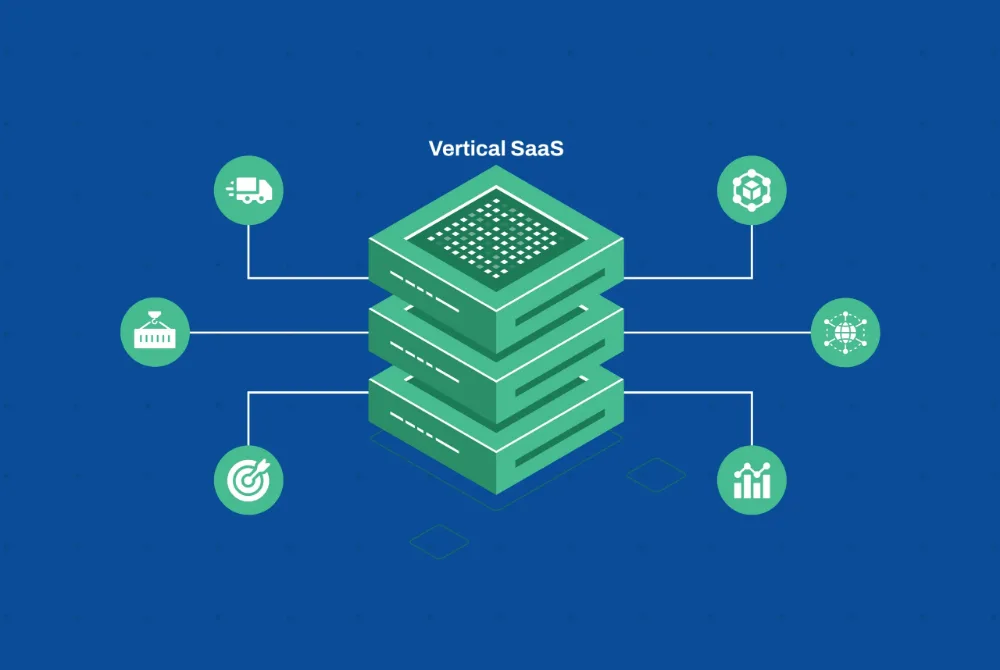
Vertical SaaS is the New Frontier: How to Build a Hyper-Niche Platform that Dominates Logistics & Supply Chain
· Akash Thakor · 5 min read
AI & Machine Learning
From Deep Learning to Deep Insight: Building a Predictive AI Engine for Logistics & Supply Chain
· Akash Thakor · 5 min read
Software Engineering
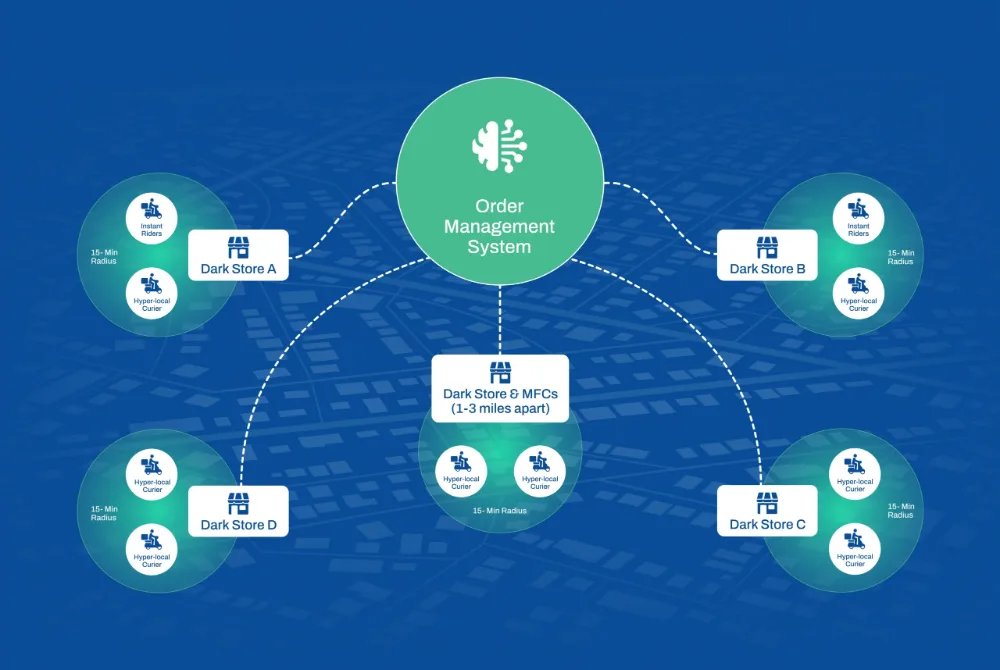
From Click to Cart in 15 Minutes: Developing a Quick Commerce Strategy for Logistics & Retail
Frequently Asked Questions About Logistics Software Development
Direct answers on multi-warehouse inventory and reverse logistics, how carriers and ERPs are integrated, international freight rules, how forecasting models earn the planners’ trust, and what a logistics software development company should be able to show you.
01Can the platform handle multi-warehouse inventory, cross-docking and reverse logistics?
Yes, because inventory is modeled as events rather than balances. Every receipt, move, pick and return is recorded with its lot, serial and location, so multi-warehouse positions, cross-dock flows that never touch a shelf and returns that need inspection before re-stocking are all the same stream read differently. Reconciliation against the ERP runs continuously, and a recall query answers in seconds.
02How do you integrate with carriers, ERPs and marketplaces — EDI or API?
Whichever the partner speaks, translated into one internal event model. Carriers mostly send X12 204, 990, 214 and 210 or EDIFACT; marketplaces and web stores send webhooks and REST calls; the ERP has its own connector. Processing is idempotent, so a duplicate message never creates a duplicate event, failed messages queue for review, and a feed that goes quiet raises an alert before operations notices.
03Do you support multi-currency, multiple units of measure and international freight rules?
Yes. Currency, units of measure, Incoterms, dangerous-goods classes and customs data elements are modeled as data with effective dates rather than hard-coded, so a new lane or a new market is configuration. Customs documents are assembled to the filing’s schema — ACE and ISF in the US, CDS in the UK, ICS2 in the EU — and the source of every element is kept for the audit.
04How do you build ETA and demand models the planners will actually trust?
By treating a wrong prediction as a failure with a cause. Models are trained on your own order, shipment and telematics history, enriched with weather, traffic and port data, and delivered inside the planner’s screen with the reasoning attached. Each ships with documented features, thresholds and review cadence, and drift is monitored in production, so the model is corrected before the planners stop reading it.
05Have you shipped logistics platforms, or is your experience adjacent?
Adjacent, and we say so: no logistics case study is published on this site yet. The published work that transfers is named where it appears — predictive maintenance across a tractor OEM’s legacy and connected fleets, a multi-brand service network’s booking and real-time tracking platform, a manufacturer’s production platform and a partner-data orchestration platform. Ask for the detail behind each before anything is scoped.
Build the System Your Dispatch Desk Will Use
Tell us what the network cannot afford to have stop and what the dispatcher needs to see. We will walk the flow from order to proof of delivery, map the partners and the data, and show you comparable work before anything is scoped.
One click opens the assistant you already use with a question that points it at this page, so the answer comes from what we publish, not a guess.
The question it opens withRead https://digiwagon.com/logistics-and-supply-chain-software-development. Outline how DigiWagon approaches Logistics & Supply Chain engineering and compliance, then tell me what a Logistics & Supply Chain CTO should verify before choosing them or any similar partner. Stick to what the page says and mark anything you are not sure about.