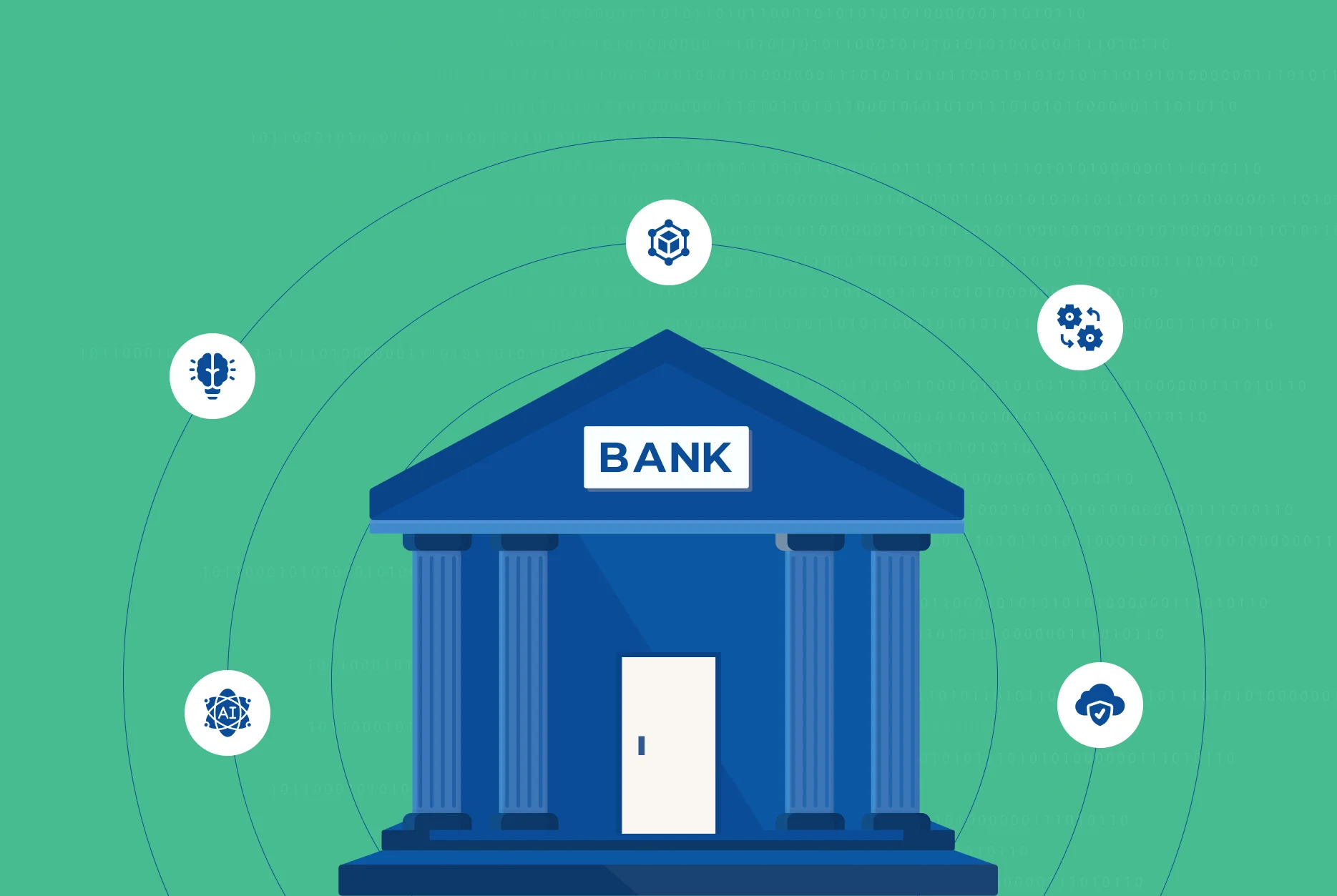
An evolution has occurred with digital transformation in corporate banking with FinTech. The traditional banking methods have been revolutionised with modern techniques by advances in new technologies. Also, corporate customers usually demand frequent payment processing with large transactions, which are getting better with innovative FinTech solutions. Digital transformation led to betterment in cash management, advisory, trade finance, working capital loans, and other corporate bank services.
What is Digital Transformation?
Digital Transformation is a revolutionary practice to adopt to technologies for change. Businesses around the globe, and encouragingly in the banking sector, are embracing change with a switch to cloud computing and other facilities. Digital Transformation changes how business operates, interact with suppliers, engage with employees, and deliver value to customers. In totality, digital transformation produces modern banking methods that aid corporate banks to function faster and smartly.
Adopting FinTech for Digital Transformation in Corporate Banks
FinTech brings innovation and automation to corporate banks with a shift to customer-centric business operations. The transfer occurs because of a change in customer behavior to contactless and cashless transactions. Also, advancement in technology has made this movement progressive. FinTech uses AI tools, Robotic Process Automation (RPA), Big Data Analytics, chatbots, and many more to transform corporate banks digitally.
How FinTech Facilitates Digital Transformation Process in Corporate Banks
Digital transformation is shaping corporate banks with data-driven decision-making and customer-centric approaches. Using FinTech tools such as big data, RPA, and AI, it has now become easy to transform corporate banks digitally.
Big Data Analytics
FinTech processes a large amount of customer data with machine learning tactics and trains algorithms to provide accurate customer preferences and automate processes.
Robotic Process Automation (RPA)
Using RPA, FinTech solutions automate repetitive tasks and business manual processes, which reduces inefficiencies and common errors. It enables cost optimisation and generates higher ROI.
AI-powered Chatbots and Virtual Assistants
AI digitally transformed corporate banks’ engagement with customers. Introduction to AI-powered banking chatbots and voice-activated virtual assistants improves onboarding, handling customer grievances, providing support, and processing loans.
FinTech Made Us Reimagine Banking.
Transform your corporate banking structure for speed, security, suitability and smooth operations.
Benefits of Digital Transformation in Corporate Banking with FinTech Solutions
Frustrating customers can be a downturn for any business organisation. This encourages the concept of providing better facilities to corporate customers and engaging them in operations for effective growth. Digital transformation in corporate banking with FinTech enriches the concept and leads to numerous benefits, such as:
Benefits of FinTech Solutions to Corporate Banks
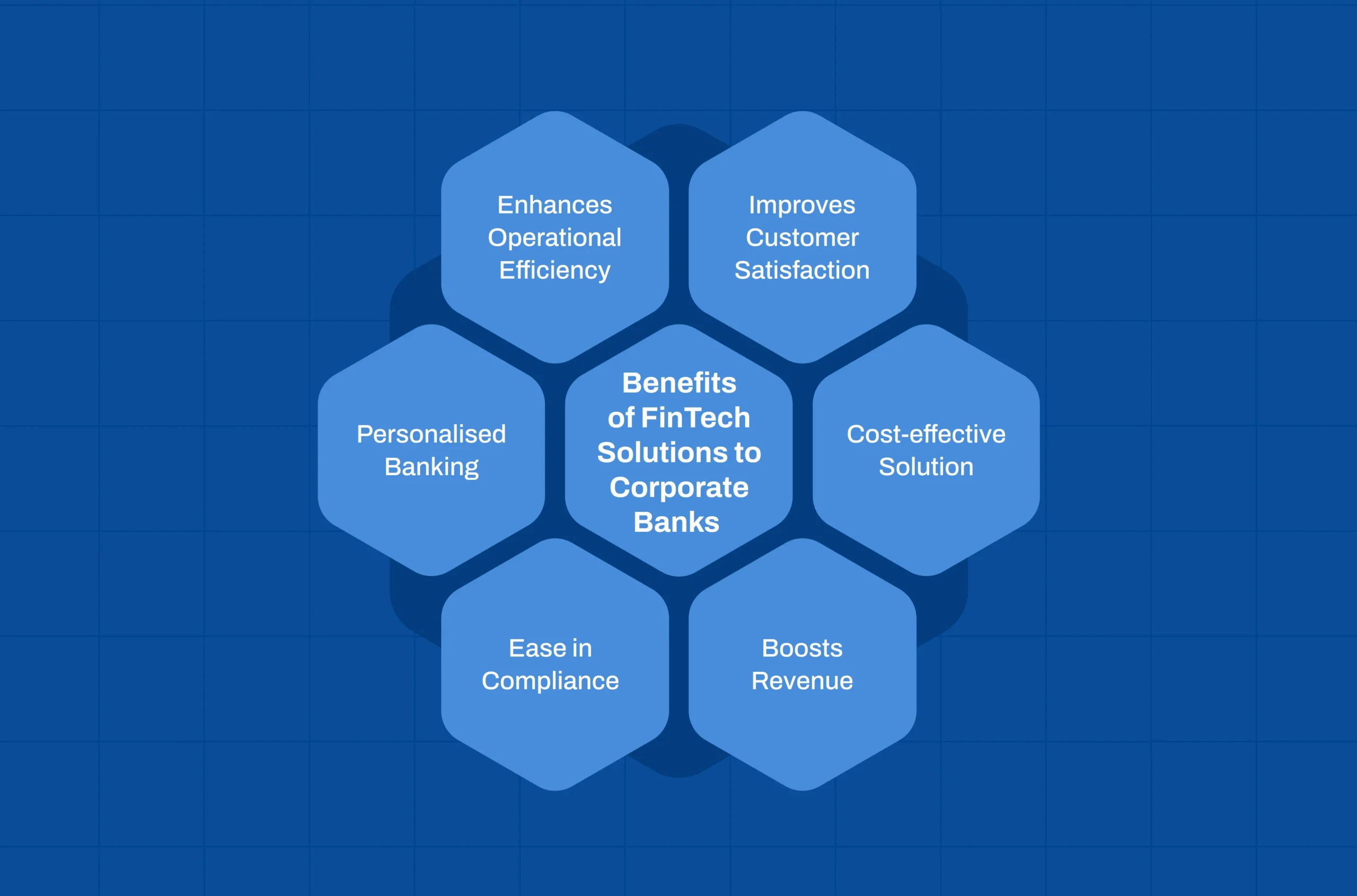
Enhances Operational Efficiency
Digital Transformation simplifies banks’ internal processes and communication with customers. Using FinTech solutions automates routine tasks, minimises human errors, ensures compliance, organises tasks based on priority, and improves workflow.
Improves Customer Satisfaction
Digitalisation helps meet corporate clients’ expectations, who demand fast and convenient processes. FinTech allows speedy and timely work done that results in positive client journeys. With features like self-service, customers can access their accounts anytime, from anywhere, through mobile devices and web portals.
Cost-effective Solution
Digital transformation replaces traditional legacy systems, which require upfront costs, but the usage of advanced digital solutions lowers operational costs. FinTech solutions, such as using cloud-based subscription models, lower spending on physical infrastructure and other related costs.
Boosts Revenue
The advanced analytics feature of FinTech solutions leads corporate banks to understand market and customer behaviour. This results in more customers and staying ahead in the competition, which in turn boosts revenue and leads to business growth.
Ease in Compliance
Digitalisation also makes compliance processes easier and more secure. As such, FinTech uses encryption measures for data security and brings automation to compliance processes, which leads corporate banks to adhere to regulatory obligations. Also, with a real-time facility, FinTech helps follow evolving financial rules and regulations.
Personalised Banking
Every bank has a different way of conversing with clients, handling operations, and managing staff. With digital tools like FinTech, it gets easier for banks to customise software or applications according to their preferences and requirements to provide efficient service to end customers.
Resolving Challenges to Digital Transformation in Corporate Banking with FinTech Adoption
| Challenges to Digital Transformation | FinTech Adoption Resolving Challenges |
|---|---|
| Legacy systems are hindering business growth and just increasing costs, with slow processes, no connectivity, and no agility options. | Choosing a FinTech solution, even a hybrid cloud model that allows migration, can result in modernisation and growth. |
| The fragmented processes may lead to data silos that further leave no room for advancement. | Using centralised data hubs with a FinTech solution helps consolidate data from multiple sources and enables secure data exchange. |
| Hesitation to adopt transformation is upright, but it delays progress and disrupts workflows. | Thinking about culture and people may open doors to digital transformation, with FinTech solutions that offer change management too. |
| Corporate banks may not have efficient staff with technical expertise and industry knowledge. | Teaming digital transformation in corporate banks with FinTech becomes easier by choosing a flexible and cost-effective solution, like partnering with a software development company. |
Future of Corporate Banking with FinTech
The rise of digital transformation in corporate banking has diversified the future growth of FinTech companies. Digital transformation in corporate banking with FinTech has unfolded new concepts, such as:
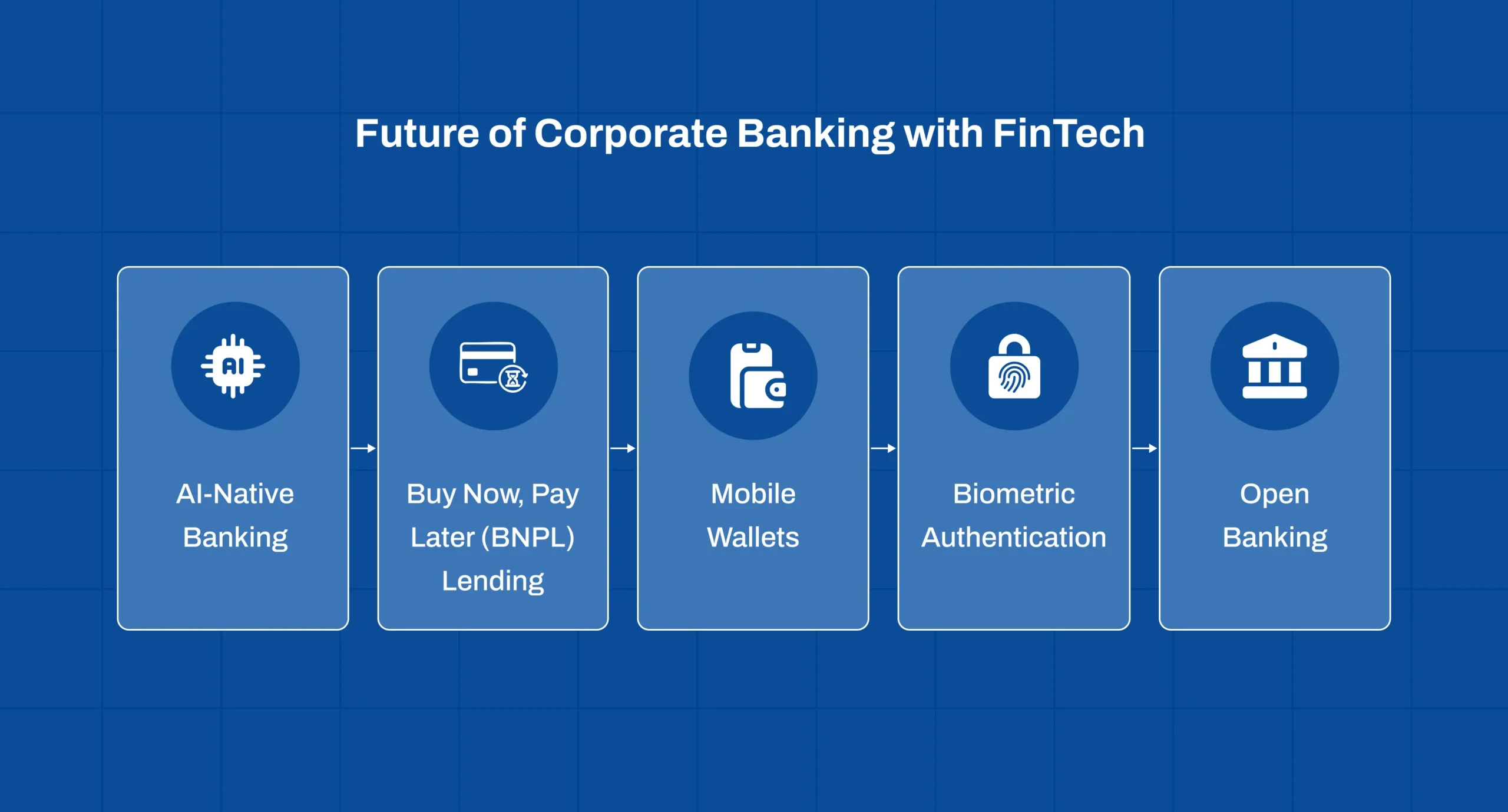
AI-Native Banking
AI is fitting in every industry, and with FinTech growth, it is likely to transform banking structures at every level and function, such as risk assessment, customer interaction, fraud detection, predictive analysis and more.
Buy Now, Pay Later (BNPL) Lending
BNPL has been seen as a rising trend, allowing short-term credit, a substitute for traditional credit cards. The model has attracted the young generation with different credit needs.
Mobile Wallets
Convenient mobile payments result in the introduction of mobile wallets. The platforms ease the trading of digital assets or make payments. It further allows advanced tracking and rewards/discounts options, leading to a gradual digital transformation.
Biometric Authentication
Eliminating passwords and PINs to biometrics such as fingerprint or facial recognition improves security. This technology upgradation in FinTech results in a broader transformation to payment applications and mobile banking facilities.
Open Banking
Open banking allows corporate banks to share customers’ information with third parties on consent, through powerful APIs. It enables innovation and flexibility in corporate banks and offers varied financial services to customers, such as credit monitoring and budget tracking.