
Skip to content
/
Computer Vision Development Services

Computer Vision Development Services

Seeing Beyond the Human Horizon.

Let the Lens Do the Thinking.

Your eyes can miss things, but Computer Vision doesn’t. Think of it as giving your system an extra teammate who never blinks or zones out.

Picture your own business for a second. You are surrounded by so much visual data every day, including camera feeds, product photos, dashboards, documents, shelves, quality checks… but most of it goes untouched. The reason is simple: humans can’t look at everything, every time. That’s where Computer Vision Development Services change the game. It notices every single small detail. By applying image recognition, object detection, and real-time video analytics, our computer vision solutions turn raw visuals into usable signals.

A quick example: Last month, our pilot at a small grocery chain flagged a dented can on the shelf that humans missed out of 8,000 daily images. That little detail saved them a whole day of repackaging. And that’s the whole point of what we, DigiWagon, are trying to deliver. Instead of just algorithms, we build context-aware vision systems. The kind that understands what they are looking at and why it matters to your specific setup. If you want the full picture (yes, pun absolutely intended), scroll through the page.  

The Anatomy of Our Computer Vision Development Services  

Every System Has a Story

These are the ones that changed everything.

The workbench for Computer Vision Development Services

Build Vision for Real Environments

Lighting changes. Cameras shake. Angles aren’t ideal. People move unpredictably. We design computer vision systems assuming all of that will happen because it always does. If it only works in controlled conditions, it’s not ready.
No Rip-and-Replace Required

Your existing cameras stay. Your infrastructure stays. Our vision layer slips in quietly and starts delivering value without forcing a full rebuild.

Working When Things Drift

Accuracy numbers look great in demos. Real environments are tougher. We care more about whether the system keeps working after launch, under pressure, in an unusual environment, and six months down the line.

Insight Before Optics

We don’t begin by asking what the camera sees. We start by asking what’s currently going unnoticed, delayed, or manually verified and then design a vision around closing that gap.

The Quiet Part: We’ve Done This Before

We know where computer vision usually breaks, and we design around that. That experience shows up in the small decisions most people don’t talk about but always feel later.

Because Seeing Isn’t the Same as Knowing

Detect, classify, track, alert, and make your visual pipelines become decision-making systems.

Computer Vision Development Services – FAQs

Computer Vision (CV) is a branch of Artificial Intelligence that allows the computer to see vision and interpret the meaning hidden behind it. It helps businesses automate inspection, strengthens security, makes sense of customer behavior, prevents errors, and supports faster decisions with real-time visuals.

Here are the sectors that rely on computer vision the most and gain the biggest advantages through computer vision development services:

  • Manufacturing
  • Retail
  • Healthcare
  • Logistics
  • Automative
  • Security
  • Construction
  • Agriculture

Our Computer Vision Development Services follow a privacy-first approach by comprising anonymized data pipelines, access control, secure storage, and ethical AI practices. Still, if your use case involves face recognition or sensitive environments, strict governance and regulatory compliance will be implemented. This way, you never need to worry about it when you partner with DigiWagon.

Yes, because real environments are rarely perfect. Lighting changes, shadows appear, glare shows up, and motion isn’t always clean. Computer vision systems are designed with this in mind. Noise reduction, exposure correction, motion stabilization, and frame enhancement help the model stay reliable even in dim or visually busy conditions. This makes our computer vision development services suitable for places like shop floors, warehouses, outdoor setups, or any environment where visuals aren’t always ideal.

No. That’s a common concern, and it’s something we plan early in our computer vision development work. We optimize inference pipelines, compress frames smartly, and run lightweight models on edge devices if needed. This keeps bandwidth usage predictable and servers from getting overwhelmed.

Yes. Modern computer vision can track objects, read text, detect defects, classify behavior, and monitor movement. Our experts focus on building systems that stay accurate as scenes grow more complex, rather than breaking down when activity increases.

Absolutely. Computer vision outputs can trigger your ERP, CRM, manufacturing systems, access controls, ticketing tools, or even physical hardware. So, what’s seen can immediately influence what happens next. That’s how vision becomes part of the workflow instead of being just an extra screen to watch.

Yes. Environments changes, layouts shifts, products evolve, visual patterns drift over time, and vision systems need to keep up. For that, as part of our computer vision development services, we monitor performance, retrain models, update pipelines, and keep your CV solution aligned with real-world changes. This long-term monitoring helps identify when models need tuning or pipeline adjustments. That way, the system improves with use instead of becoming harder to maintain.

Related Services

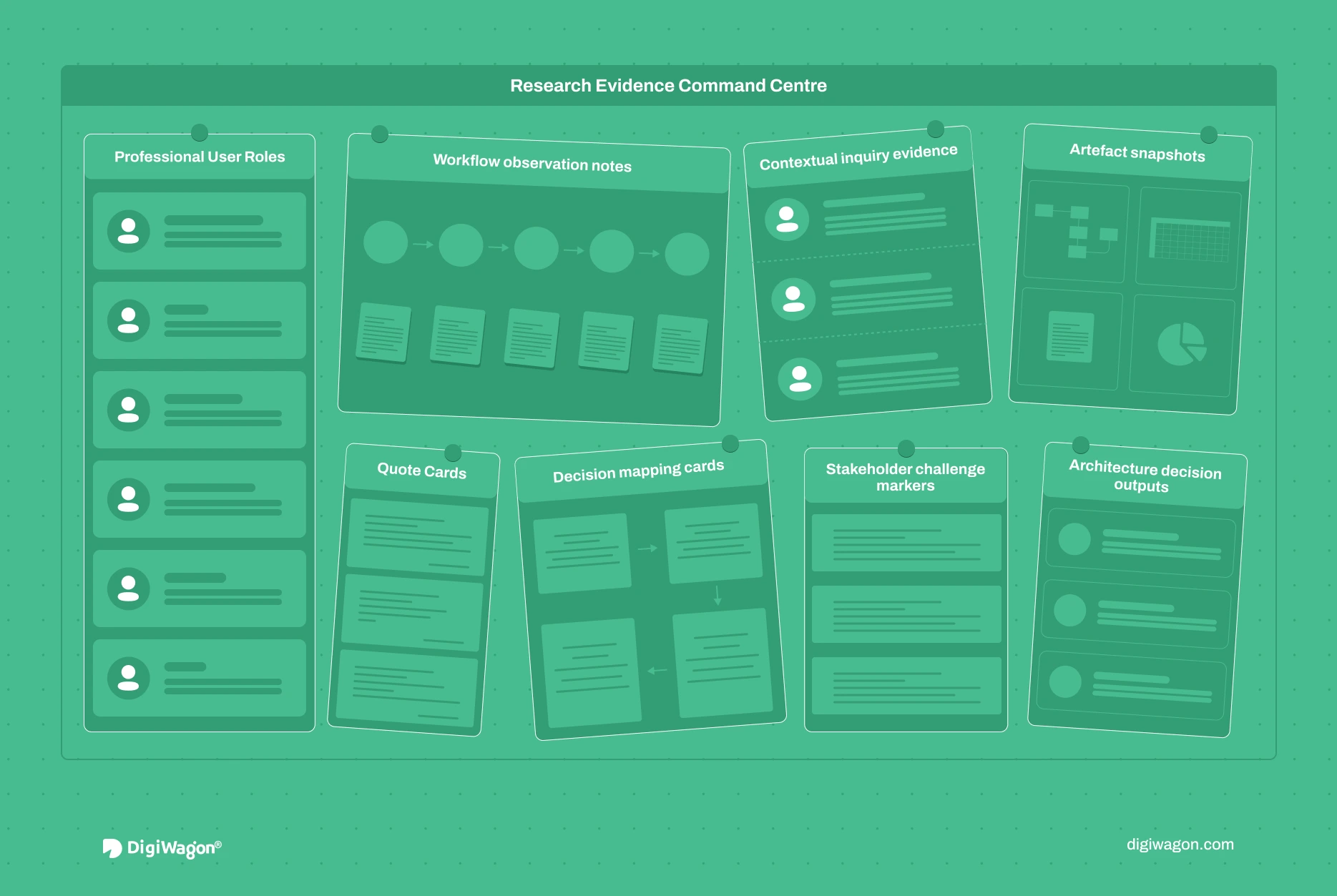
Cover image showing B2B UX research methodology with professional user recruiting, contextual inquiry, workflow evidence, research synthesis, evidence traceability, and product decision mapping.
17 June 2026
B2B UX Research: A Field-Tested Methodology
Cover image showing B2B UX research methodology with professional user recruiting, contextual inquiry, workflow evidence, research synthesis, evidence traceability, and product decision mapping.
blogs

B2B UX Research: A Field-Tested Methodology

17 June 2026
17 June 2026
Pavan Chavda

Pavan Chavda

Cover image showing accessibility-first UX built into design system primitives, focus management, ARIA live regions, keyboard flows, semantic dashboards, WCAG 2.2, and EAA readiness.
15 June 2026
Accessibility-First UX: A Field-Tested Playbook
Cover image showing accessibility-first UX built into design system primitives, focus management, ARIA live regions, keyboard flows, semantic dashboards, WCAG 2.2, and EAA readiness.
blogs

Accessibility-First UX: A Field-Tested Playbook

15 June 2026
15 June 2026
Pavan Chavda

Pavan Chavda

Cover image showing production-grade design systems as infrastructure with token architecture, primitive and composite components, Figma-to-code sync, accessibility, releases, and governance.
12 June 2026
Production-Grade Design Systems: An Architecture
Cover image showing production-grade design systems as infrastructure with token architecture, primitive and composite components, Figma-to-code sync, accessibility, releases, and governance.
blogs

Production-Grade Design Systems: An Architecture

12 June 2026
12 June 2026
Pavan Chavda

Pavan Chavda

Download Whitepaper

Fill in your details to access the whitepaper

This field is for validation purposes and should be left unchanged.
Download Whitepaper

Fill in your details to access the whitepaper

This field is for validation purposes and should be left unchanged.
Download Whitepaper

Fill in your details to access the whitepaper

This field is for validation purposes and should be left unchanged.