
Skip to content
/
Data Engineering & ETL Services

Data Engineering & ETL Services

Weave Scattered Data into Smart Insights

Pull, Purify, and Pump: Raw to Refined

Imagine how effortless your life is in this era of convenience, where clean and safe water flows directly through your taps. You don’t have to rush to fill buckets, no waiting line, and no hassle. Likewise, we make the data processing easy with purity and constant flow. With our care squad, we pull out data from reliable and verified sources, purify & refine it to pump it into your reservoir for data analysis and decision making.

Whether the data is in structured, unstructured, or semi-structured form, we convert it into a clean and refined form. We use historical and real-time data of any volume, speed, and type to provide you with valuable and usable data, tailored to your business needs. Our ETL pipelines reflect data as a freshwater reservoir, flowing smoothly, never slowing and never drying up.

The Anatomy of Our Data Engineering & ETL Services

Scalable Data Engineering & ETL Pipelines

On day one, you may be ingesting data from a handful of sources. A year later, you’re processing continuous streams, supporting analytics workloads, and running models in production. Through our Data Engineering services and ETL development, DigiWagon designs systems that expand along predictable paths instead of forcing redesigns at every growth milestone. As new sources come online, they integrate into the existing data foundation without disrupting what’s already running. Transformation logic scales independently, compute capacity adjusts to absorb load, and operational safeguards keep performance steady as complexity increases. This approach turns scale into a planned progression. Performance remains consistent, and the data engineering foundation continues to support advanced analytical workloads as requirements mature.

ETL With Built-In Security Controls

This layer gives you confidence to trust our developed system. We know what even one small missed compliance check can cost the company. And with that awareness, we integrated security and compliance into our ETL development approach and broader data engineering services. As data flows from ingestion to transformation and storage, it’s protected through role-based access control (RBAC) and least-privilege policies defining exactly who and what can interact with sensitive datasets. These controls reduce the risk of accidental exposure and ensure data usage remains intentional as systems scale. On the compliance side, the setup is designed to align with standards like GDPR, SOC 2, ISO 27001, and other domain-specific requirements where they apply. Audit logs and access traces are always available, so you can always trace back who accessed what and when.

Structured data preparation & reliability

Analytics and intelligence systems depend on how effectively raw data is prepared before it reaches downstream use cases. Our data engineering services focuses on designing structured data flows that move information from ingestion through validation, integration, and transformation in a controlled and reliable way. As data moves through this process, it is normalised and contextualised so it can be reused confidently across teams without repeated manual preparation. This reduces friction between engineering, analytics, and decision layers and prevents inconsistencies from appearing as data travels. By the time data reaches reporting, forecasting, or advanced modelling systems, it is already organised and dependable. Teams can focus on insight generation and decision-making, knowing the underlying data has been prepared with care and intention.

Modern Data Engineering Architecture

Data platforms need to remain relevant in all evolving circumstances. And to fulfil this check, our data engineering services are built on architectures designed for adaptability by default, They support real-time data movement, automated processing, decentralised control, and strong governance without requiring frequent redesign. Our developed system is built to accommodate new sources, changing workloads, and evolving use cases without disrupting existing operations. This approach ensures the data engineering foundation remains current and aligned with future demands. As analytics, machine learning, and operational needs expand, the underlying architecture is already prepared to support what comes next.

Event-Driven Data Engineering

Data rarely delivers value hours after it is generated. In many business scenarios, relevance depends on how quickly information moves from source to system. That is why as part of our ETL development, we design data pipelines that support real-time and near-real-time processing alongside traditional batch workflows. Streaming pipelines ingest events as they occur, like transactions, application logs, user interactions, system signals and make them immediately available for analytics and decision layers. This opens the door for faster visibility into operational changes without waiting for scheduled batch cycles.

Schema-Resilient ETL Design

Data changes. Columns appear. Formats shift. Sources evolve. Pipelines that assume fixed schemas often fracture the moment reality changes. It is precisely at this inflection point that DigiWagon distinguishes itself by engineering data pipelines designed to accommodate schema evolution without disruption. Changes such as new columns, modified data types, or optional fields are absorbed in a controlled way, with downstream analytics and reporting remaining resilient amid ongoing data evolution. This methodology mitigates unforeseen pipeline failures and reduces manual intervention so teams can adapt to changing data sources without constant rework.

Data Quality & Pipeline Monitoring

Reliable data systems require continuous visibility into what is happening inside the pipeline as data flows through it. As part of our data engineering services, we embed observability directly into the data engineering layer, tracking data freshness, volume changes, unexpected anomalies, and overall pipeline health as information moves through the system. Thanks to this built-in oversight, issues get detect early with clear signals that indicate where and when something has deviated from expected behaviour. This level of visibility makes pipelines easier to trust and easier to operate at scale. In practice, teams spend less time diagnosing silent failures and more time acting on data that is current and dependable in production environments.

Cost-Aware Pipeline Design

Scalable data systems only deliver long-term value when performance and cost grow in balance. Through our data engineering services, we design data pipelines with cost awareness built into their architecture, optimising storage, compute usage, scheduling, and transformation logic so scale does not translate into unnecessary spend. At the same time, our ETL development approach also consider downstream consumptio. The outputs are structured and governed so they can feed analytics platforms, forecasting models, machine learning workflows, and AI-driven systems without rework or duplication. As data moves from reporting to advanced intelligence use cases, the foundation is already in place. So, you get the data engineering layer that remains financially sustainable over time and ready to support analytics, machine learning, AI initiatives, and automation engines as the business evolves.

Event-Driven Orchestration

In this approach, pipelines are triggered by actual events rather than time-based schedules. New file arrives → pipeline runs. API updates → transformation triggers. By aligning execution with real events, processing stays current without over-processing. In simple words, the system doesn’t wait around or run blindly. It responds when something happens and stays quiet when nothing does. This makes the overall architecture more responsive and intentional while still remaining predictable, which benefits your business by saving time and resources while still delivering important updates on time.

Data that Flows in a Rhythm.

We let data move freely and feel connected while it evolves.

The Workbench for Data Engineering & ETL Services

Tested Beyond the Happy Path

DigiWagon’s data engineering services and ETL development experience comes from working where assumptions break. Data arrives late, formats change, sources fail, and volume grows unexpectedly. We have designed systems through all these conditions. This hands-on exposure informs how we design systems that don’t panic under change and don’t need rebuilding every time reality behaves differently.

Modern, but Not Fragile

Streaming systems, event-driven orchestration, cloud-native platforms, and scalable storage are valuable only when they age well. Which is why here in our data engineering services, technology choices are made with an understanding of how systems evolve over time. So, the focus stays on architectures that grow without accumulating fragility or demanding repeated rewrites as requirements change.

Engineers Who Stay

Design and delivery are not split across teams. The same engineers who architect your data engineering and ETL development solutions remain involved after launch and carry context forward as the system grows. This continuity keeps intent intact and allows platforms to mature steadily instead of quietly drifting into decay.

Built for the Messy Middle

DigiWagon builds pipelines that are resilient under real operating conditions. Failure handling, observability, cost control, and governance are engineered into the core. In long run, this approach allows data platforms to remain stable in every situation.

Designed to Power What Comes Next

Our ETL development is never isolated from future use. Pipelines are structured, governed, and versioned with downstream analytics, machine learning, and AI in mind. So, as intelligence initiatives grow, your foundation will already be prepared.

Why We’re Your Best Bet for Data Engineering and ETL Development 

Digiwagon-header-logo-v1.1
Company A
Company B
⌛ Experience
– – – – – – – – – –
right icnSeasoned pros who’ve seen it all.
Experienced, but often by the book.
Miss the spark for complex projects.
💰 Estimation
– – – – – – – – – –
right icnHonest timelines and budget, zero surprises.
Timelines that shift and swerve often.
Estimates come with ‘oops, missed that!
📄Documentation
– – – – – – – – – – – –
right icnClear, complete, no missing pieces.
Basic docs, you’ll fill in the gaps.
Sketchy notes, good luck finding info.
🧪 Testing
– – – – – – – –
right icnGlitch-proof before you even see it.
Testing happens once the code is live! 
Testing? Or ‘testing patience?’
☎️ Support
– – – – – – – –
right icnStill by your side, long after the launch.
Support fades after the honeymoon phase.
Support arrives after 10 reminders.

Scalable, Secure, Seamless Data Flow.

Create pipelines that grow with no lag, no limit, and no data loss.

Data Engineering & ETL Services - FAQs

ETL stands for Extract, Transform, and Load and it forms the backbone of modern ETL development within data engineering services. It clearly means digging the right data, cleaning & reshaping it, and moving it to a target system. We extract data from reliable and verified sources, transform it into a clean and refined form and load it into storage systems or a data warehouse.

Yes. Modern ETL development can process real-time streams and historical data within the same architecture. DigiWagon provides data engineering services that designs hybrid pipelines that support live event ingestion alongside scheduled backfills to make sure analytics remain consistent across past and present data.

We connect with you to understand your needs and discuss the plan, then align our data engineering services around them. Our team, with a laser focus on your strategic and operational goals, is equipped with the right tools to craft a data foundation, centralise it, and ensure quality, to be a pillar of strength all the time.

Certainly, we assist you with data warehouse and data lake service by drawing the architecture & data models and thriving ETL/ELT pipelines as part of our data engineering services. We accomplish quality checks and data governance, further fashion tools for data access and analysis.

Data engineering services drives business success by building reliable systems that collect, clean, integrate, and deliver data in a form that teams can actually use. When data flows correctly, teams can make faster decisions and rely on insights without second-guessing their accuracy. For example, instead of teams spending time reconciling numbers or fixing broken pipelines, they work with a single, dependable data layer that supports reporting, forecasting, and advanced use cases.

By validating data as it moves through every stage of ETL development, it prevents quality issues from reaching downstream systems. Data quality checks are integrated at each stage of the ETL process, starting from ingestion. Incoming data is examined for missing values, format inconsistencies, schema mismatches, and unexpected changes before transformations are applied. When issues are detected, affected records are flagged or isolated so clean data can continue flowing without interruption. On top of that, Quality metrics are continuously monitored, and alerts provide visibility into where and why deviations occur.

Yes. Modern ETL pipelines can process real-time streams and historical data within the same architecture. DigiWagon designs hybrid pipelines that support live event ingestion alongside scheduled backfills to make sure analytics remain consistent across past and present data.

Our ETL development pipelines are designed not to break under imperfect conditions. We design ETL pipelines with built-in checks that validate incoming data as it is ingested to make sure issues are detected early rather than propagated downstream. When a source sends incomplete or malformed data, the pipeline isolates the affected records instead of failing entirely. It detects the issue, isolates the faulty data, alerts your team, and continues operating safely. If a source becomes temporarily unavailable, workflows pause or reroute safely until normal operation resumes.

Yes. We modernize legacy ETL systems by migrating them to scalable, cloud-native architectures without disrupting existing business operations. Legacy ETL development jobs are assessed for performance bottlenecks, cost inefficiencies, and operational risk. We then redesign them using modern data engineering patterns that support operational maturity. Where required, migrations are phased so historical pipelines continue running while newer systems are introduced in parallel. The result is you get an ETL environment with better performance, lower cost, improved reliability, and alignment with current analytics & machine learning.

Yes. At DigiWagon, data engineering is designed with AI and machine learning requirements. AI systems depend on data that remains consistent as it moves from training to experimentation to production. Through robust ETL development service, DigiWagon builds data pipelines that preserve structure, versioning, and lineage as data evolves, so models continue to receive inputs they can rely on. This reduces the risk of silent data drift and unexpected model behaviour once systems are live. Along with that, we enable AI and machine learning teams to focus on improving models by treating data engineering as a long-term foundation.

Data security is embedded across DigiWagon’s data engineering services and ETL development lifecycle. Data is protected through encryption in transit and at rest, strict identity and access management (IAM), role-based controls, and least-privilege permissions that prevent unauthorised access. Every interaction and transformation is traceable through audit logs and lineage tracking that support compliance and accountability throughout the data lifecycle. This compliance-first approach ensures data remains protected during every stage, be it ingestion, processing, storage, or downstream use.

Yes. Data pipelines are continuously monitored and refined to ensure they remain reliable as operating conditions change. Performance, data quality, operational stability, and resource consumption are tracked in real time to allow adjustments to be made before issues escalate. As the business evolves, processing logic and execution behaviour are tuned so the infrastructure stays aligned with long-term growth rather than becoming a fragile or outdated dependency.

Related Services

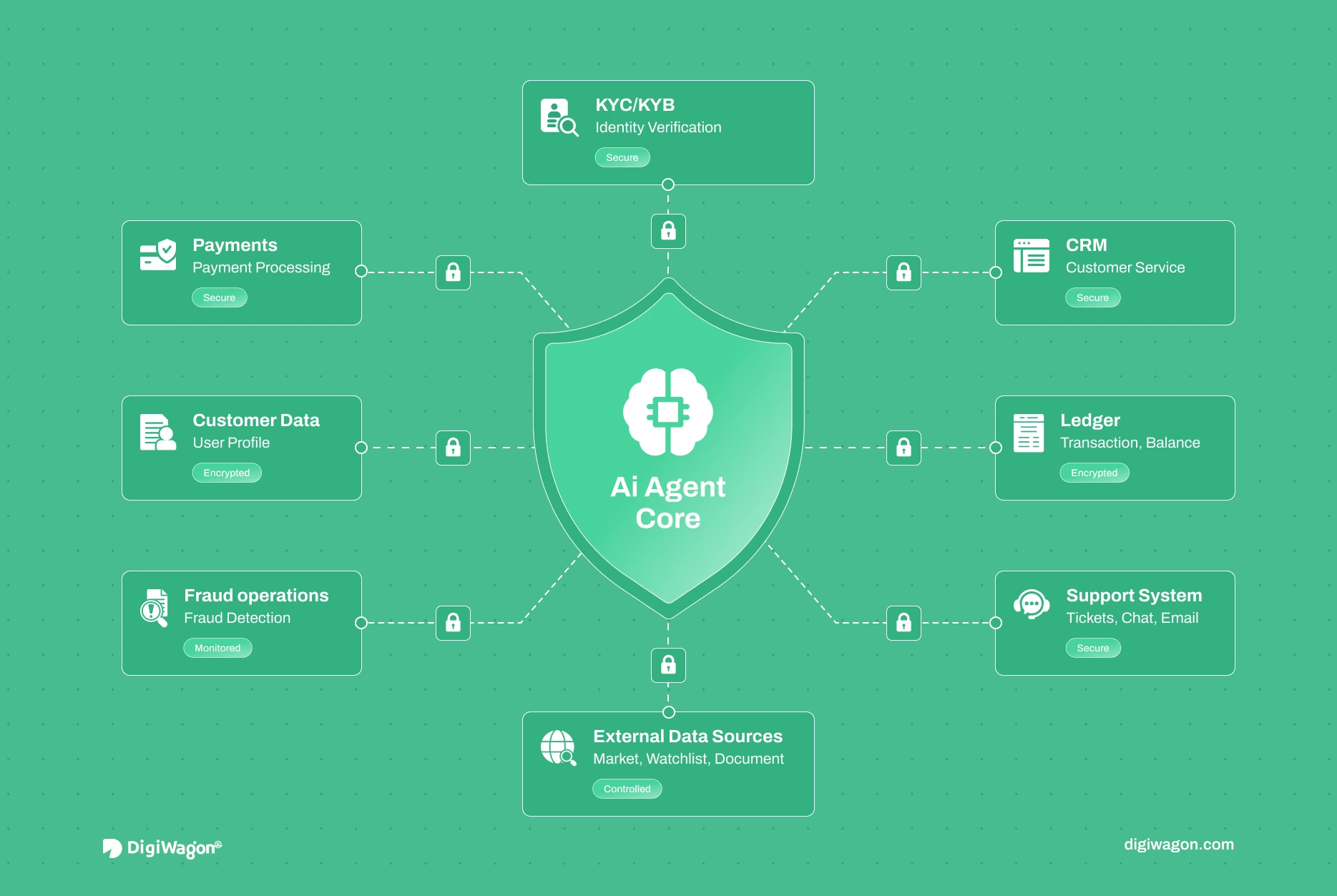
AI agent security for FinTech showing an AI agent protected by tool permissions, human approvals, sandboxing, monitoring, data boundaries, and audit controls.
blogs

AI Agent Security Guide for FinTech | DigiWagon

15 July 2026
Author Jigar
Jigar Vavadia
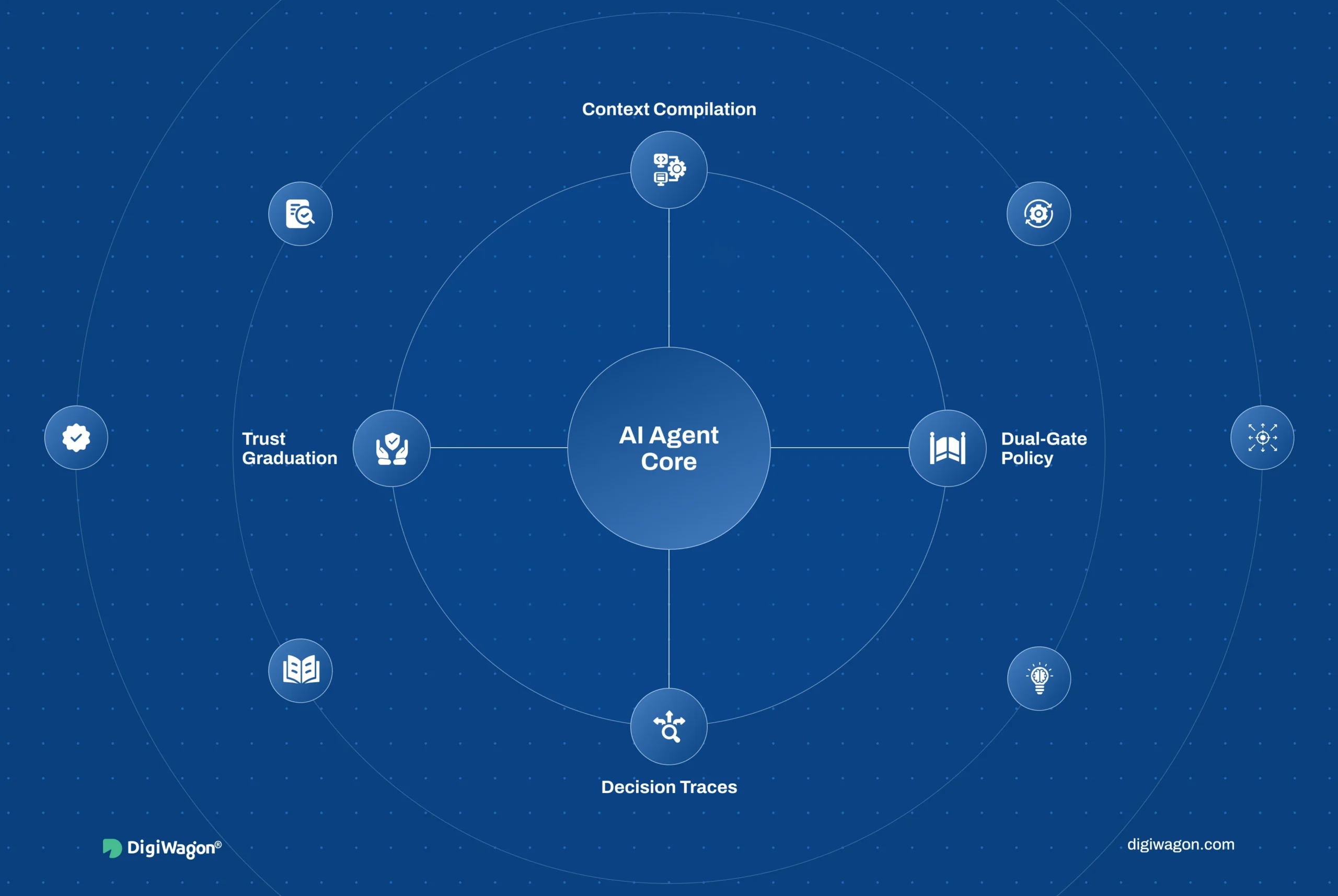
Feature image showing governed enterprise AI agents inside a decision-harness architecture with context compilation, dual-gate policy enforcement, decision traces, trust graduation, and audit-ready controls.
blogs

Governed Enterprise AI Agents: A Decision-Harness Architecture

26 June 2026
Author Kartik Gajjar
Kartik Gajjar
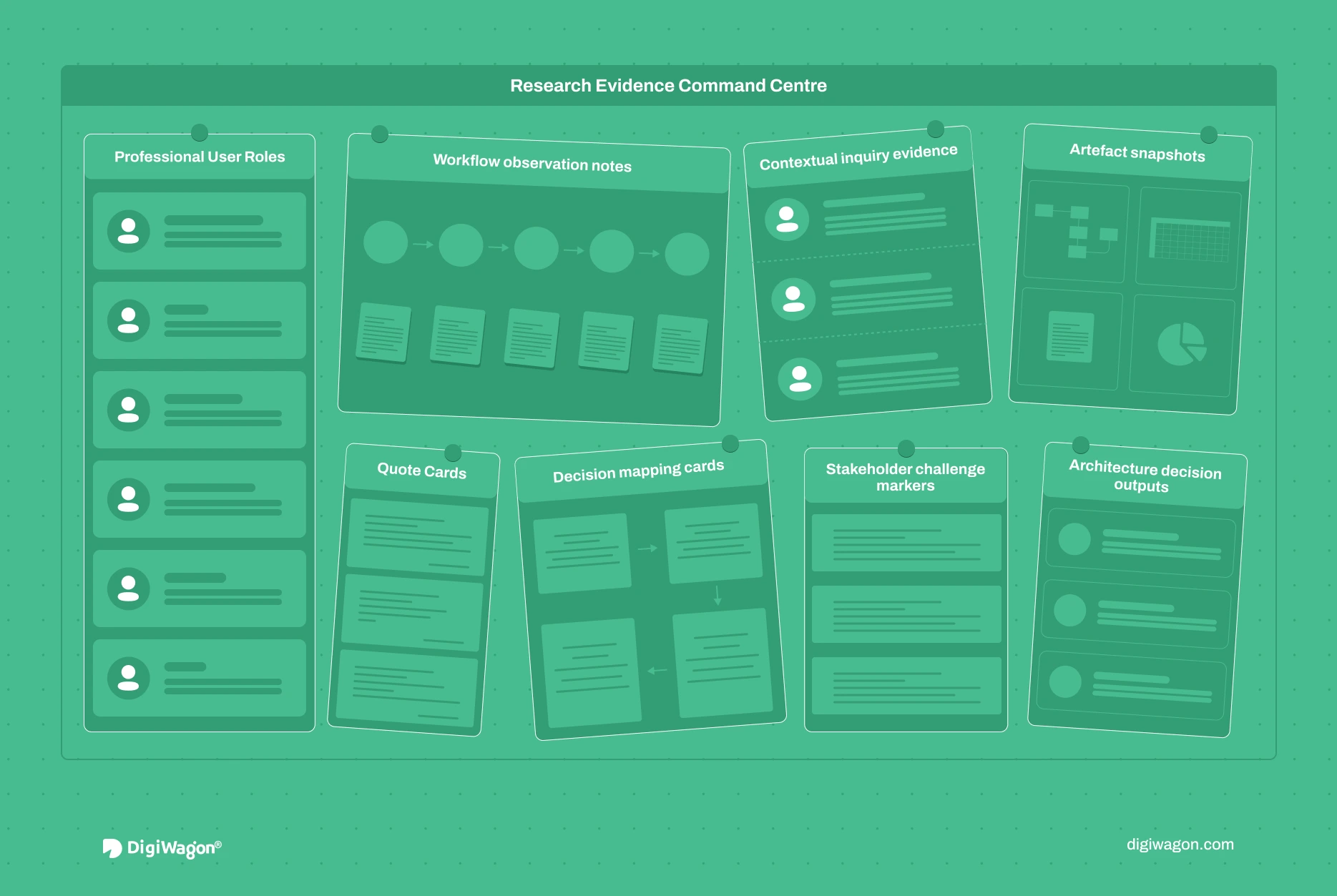
Cover image showing B2B UX research methodology with professional user recruiting, contextual inquiry, workflow evidence, research synthesis, evidence traceability, and product decision mapping.
blogs

B2B UX Research: A Field-Tested Methodology

17 June 2026
Pavan Chavda
Pavan Chavda
Download Whitepaper

Fill in your details to access the whitepaper

This field is for validation purposes and should be left unchanged.
Download Whitepaper

Fill in your details to access the whitepaper

This field is for validation purposes and should be left unchanged.
Download Whitepaper

Fill in your details to access the whitepaper

This field is for validation purposes and should be left unchanged.
Download Whitepaper

Fill in your details to access the whitepaper

This field is for validation purposes and should be left unchanged.