
Transforming Manual Data Handling into Structured, Compliant Automation
Client
A financial technology provider delivering AML compliance solutions for banks and regulated financial institutions.
Project Type
Enterprise SaaS Design, Platform Engineering Development, AML Workflow Automation
Industry
FinTech, RegTech, Next-Gen SaaS & Technology
Year
2025 & 2026
At a Glance
1
What?
2
How?
3
Why?
Challenges
The organization relied on manual, spreadsheet-based processes to manage sensitive insurance data received through multiple external channels. As data volumes increased and compliance requirements intensified, the absence of structured automation introduced significant operational risk, inefficiencies, and scalability constraints.
Fragmented Data Ingestion Channels
Data was received via multiple SFTP connections and email attachments, creating inconsistent workflows and limited centralized visibility.
Manual Spreadsheet Dependency
Critical records were tracked and manipulated in Excel, increasing the likelihood of human error and version control issues.
Lack of Data Standardization
Incoming files varied in structure and format, requiring manual adjustments to meet SWIFT compliance requirements.
Operational Risk Exposure
Uncontrolled manual handling increased the risk of data loss, incorrect transformations, and compliance breaches.
Limited Accountability & Traceability
Manual processes lacked structured task ownership and detailed audit logs, complicating internal reviews and regulatory oversight.
Scalability Constraints
The existing workflow could not efficiently handle growing record volumes without increasing error rates and operational delays.
Our Strategy
Our Tech Mavens
👷♂️
Business Analyst
👩🎨👨🎨
Designers
👨💻👩💻
Developers
🕵️
QA Specialists
👨💼
Project Manager
Our Tech Vault
Our Solutions
Secure Connection Management Hub
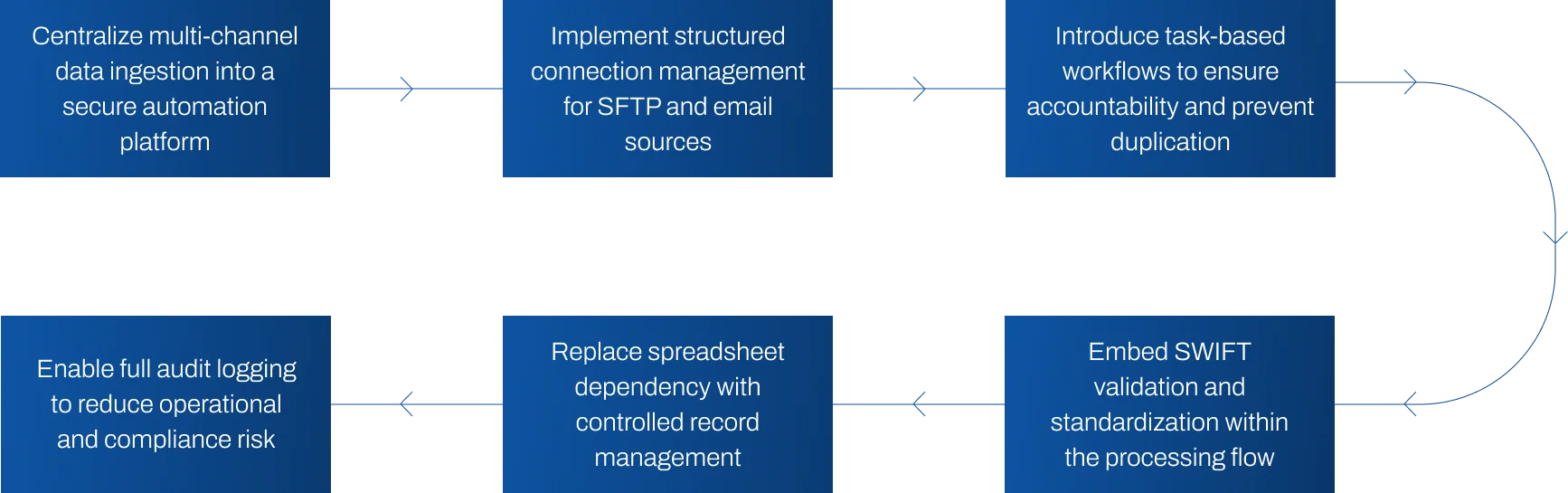
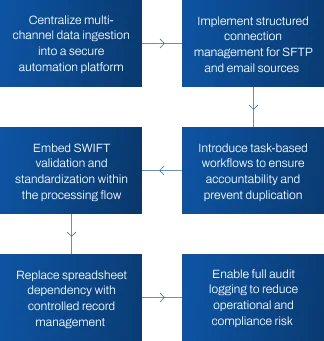
Delivered a centralized configuration module enabling secure setup and management of SFTP credentials and email server connections.
Source Mapping & Data Routing
Built a structured mapping layer linking specific folders, mailboxes, and channels to defined processing workflows.
Automated Job Triggering Engine
Implemented real-time task generation upon file receipt, eliminating manual tracking and spreadsheet dependency.
Task-Based Analyst Workflow
Designed an accountability-driven assignment system to prevent duplicate processing and ensure ownership of each record.
SWIFT Format Validation & Standardization
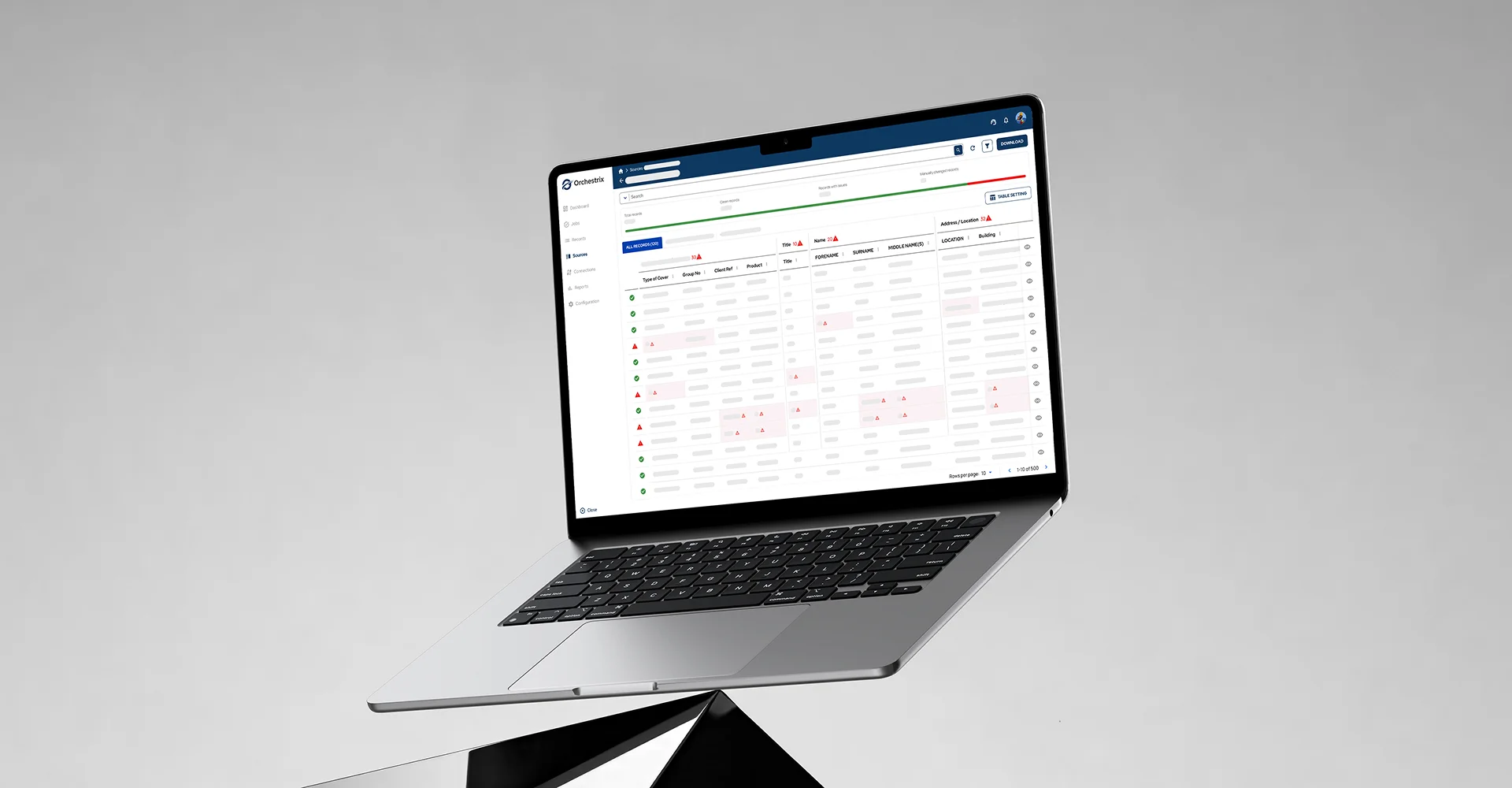
Embedded validation logic to automatically verify structure alignment and enable in-system correction where required.
Centralised Record Repository
Replaced Excel with a controlled data store offering structured record management and version consistency.
Comprehensive Audit Logging
Ensured full traceability of approvals, modifications, and analyst actions with timestamps and change history.
Operational Dashboard & Performance Monitoring
Delivered a centralized view of system health, active jobs, and analyst productivity metrics.
Outcomes
Improved Automation Efficiency
Eliminated manual spreadsheet tracking through automated ingestion and task workflows.
Reduced Operational Risk
Minimized human error by embedding validation and standardization within the system.
Guaranteed Data Compliance
Ensured all records met SWIFT format requirements before database entry.
Enhanced Accountability
Established clear analyst ownership with structured task assignment and tracking.
Strengthened Audit Readiness
Logged every approval, modification, and action with full timestamp traceability.
Scalable Processing Capability
Enabled the system to handle increasing insurance record volumes without workflow disruption.