

What the world witnessed in 2020 and 2021, which is continuing in 2022 as well, is something different. The world faced a pandemic. In the initial days, it was difficult. But, now the world, businesses, and society have learnt to live with the pandemic.
The new normal also shifted people’s way of shopping. Although online shopping was in trend, starting from March 2020, the world witnessed a surge in online shopping. Rising internet penetration, smartphone adoption, and innovative technologies have led to e-commerce growth.
It started with the B2C brands such as Amazon, Flipkart, Alibaba, etc. But, it has expanded to D2C brands such as Pepperfry, Mamaearth, BoAt, Licious, Bewakoof, and many more. Brands are shifting to D2C eCommerce to eliminate intermediaries and directly reach customers and customers are happy because of cost savings.
Defining D2C e-commerce
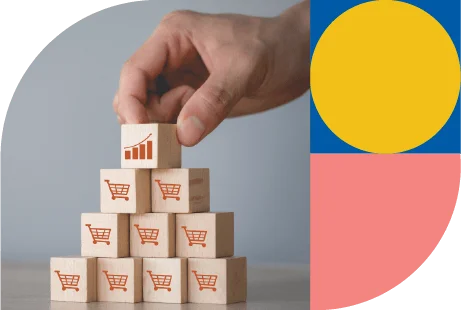
D2C e-commerce means selling the product by the manufacturers directly to the customers. In such e-commerce operations, no intermediaries are involved. Businesses manufacture products, market them, and create a web store to sell them directly to customers.
Let us look at the benefits that brands can enjoy in D2C e-commerce:
Importance of D2C e-commerce
D2C e-commerce operations are preferable because of the following benefits to the brands:
Rise in profit margins
The key concept behind the D2C model is the removal of middlemen. Brands do the manufacturing, marketing, distribution, and sales – all by themselves. Thus, they have more control over their operations and flow of goods from start to end.
They reduce the chances of inefficiencies by doing the process themselves. They are fully aware of where the loophole is and can correct it to make the process smoother. This enables the brands to improve their profit margins.
Better customer relationships
In D2C e-commerce, brands are directly connected to the customers. Because D2C e-commerce allows you to have a direct relationship with your customers, you can create valuable personalised relationships that generate results for them.
Also, you do not have to deal with any other external party, except customers, and so, the focus remains on satisfying customers. Thus, you can target them in a better way and get feedback from them directly.
Control on branding and brand messaging
In D2C e-commerce, the brand is the only entity customer knows. So, it expects value and personalisation from the brand. Since you have the ball in your court, you have to up the game and provide extra value to your customers.
You can create loyalty programs to award customers for their loyalty towards you. You can create content in terms of text, videos, social media messages, and many more to target them. You can involve customers in designing the product or make apps for creating great shopping experiences. You can improve delivery or give discounts, or anything else. Thus, you can attract customers by creating customised experiences for them.
Since you are having an authentic engagement with customers, they feel more connected to your brand. Customers keep coming back to your brand and market you through word-of-mouth. This increases customer loyalty and customer retention.
Full control of customer data
One of the biggest benefits of D2C e-commerce is control of your customer data. Since you have control of the data, you can analyse it the way you want and create marketing strategies accordingly.
You can use the data to identify customer expectations, needs, and preferences and understand their behaviour. This allows you to create strategies for product marketing, promotional offers, and innovations. Thus, you have a higher chance of satisfying your customers since you understand them better now.
The entire portfolio of products on display
In B2C eCommerce, every brand gets limited shelf space because a lot of products are to be displayed by the retailer. This means that customers can view only a few of your products and not the entire portfolio. That is not the case with D2C eCommerce.
In D2C, you have the entire web store at your disposal. You can display the entire portfolio of your products as well as accessories, spare parts, or any other essential products. You can also provide detailed information on each product to assist the customer in decision-making. You also have opportunities to upsell and cross-sell your own products.
Final thoughts
Besides all these benefits to brands, there are also many challenges of operating a D2C eCommerce model. The biggest of them is fulfilling orders by providing fast shipping wherein your competitors are providing next-day deliveries. Also, you have to be capable enough to manage your marketing, sales, and distribution.
A D2C brand has access to a lot of customer data. You must be effective enough to manage the data well and derive insights from it to develop your future strategies. A slight error in your targeting strategy may invite public displays of frustrations or shift to a competitor.
So, be very careful while trying to explore the D2C space. Understand your customers’ needs and target them with customised and genuine products and services. Identify your own secret ingredient of a growing D2C brand recipe and enter the field.
If you need any assistance, DigiWagon Technologies can give you a helping hand.
About DigiWagon Technologies
We are a world-class website design and development company in India. We help clients with e-commerce solutions, digital marketing services, cloud services, and IT consulting. We understand your requirements and handhold you through the entire process to generate the best results.
Our digital strategies and website designing capabilities can give you a whole new look. We strive to build your connection with your customers to augment business growth. We have been delivering services to industries such as retail, property, education, healthcare, travel, food, and e-commerce. Our intuitive digital solutions give your brand the positioning it deserves.