To the Technical Architects, CTOs, and Product Leaders of the Financial World:
Your customers – major banks, global insurance firms, and rapidly scaling FinTech startups-don’t just buy software; they buy trust. In the hyper-regulated spaces of FinTech and RegTech, trust is non-negotiable, and compliance is the license to operate.
For years, multi-tenancy has been a buzzword for SaaS efficiency: share infrastructure, pool resources, save costs. However, in the face of GDPR in Europe, local data residency mandates in the UAE, and the velocity of compliance updates, the classic multi-tenant model built on a shared database is not a competitive advantage – it’s a ticking compliance risk.
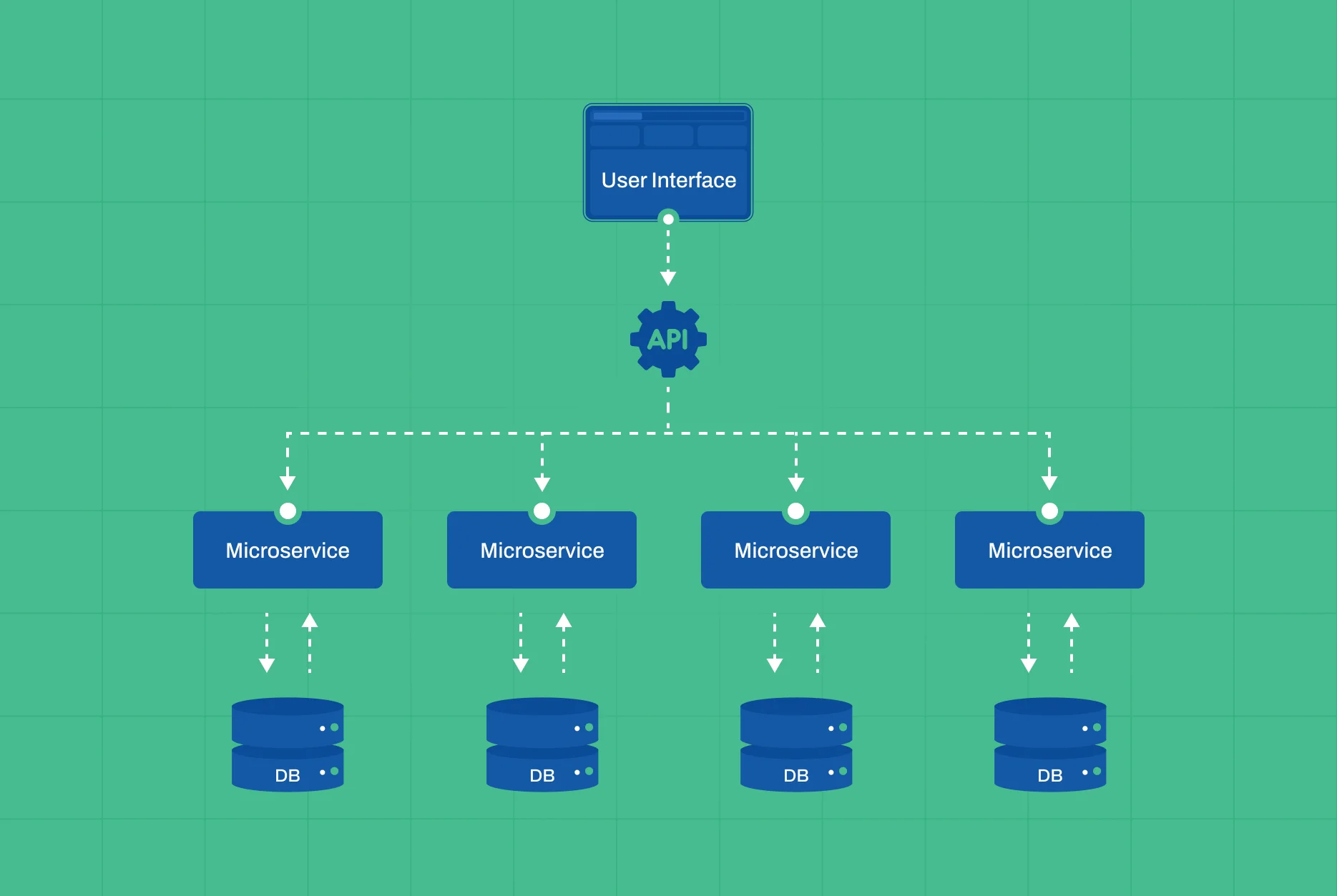
The future is in a highly secure, decentralised SaaS Microservices Architecture that goes beyond multi-tenancy to granular data isolation and fault tolerance.
The Financial Imperative: Why Monoliths Are a Compliance Risk
The Evolution of SaaS Architecture – From Monoliths to Secure Microservice Security, scalability, and compliance now define your SaaS maturity.
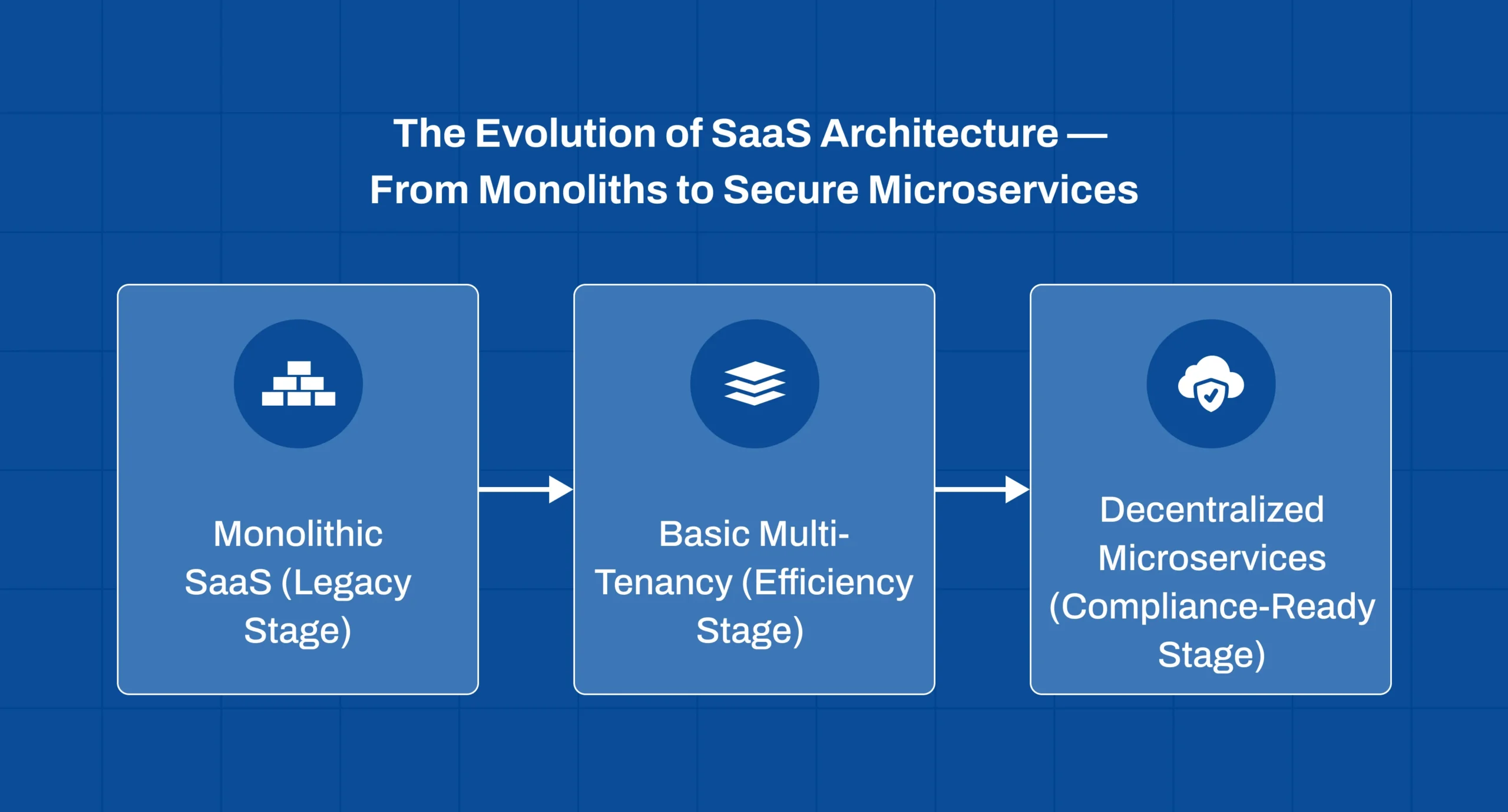
1. Monolithic SaaS (Legacy Stage):
Single codebase, high coupling, low agility.
Risk: One compliance patch can disrupt the entire system.
2. Basic Multi-Tenancy (Efficiency Stage):
Shared database model for cost savings.
Risk: A single query bug can trigger cross-tenant data exposure.
3. Decentralised Microservices (Compliance-Ready Stage):
Independent, domain-driven services with strict data isolation.
Outcome: Fast updates, lower risk, and regulatory confidence.
A monolithic architecture in the financial sector is brittle. Any new regulation in the UK or any minor security patch can require a full system re-test and re-deployment, leading to expensive downtime and slower market response.
The Cost of Global Regulatory Velocity
Regulators are moving faster than ever. Every change to KYC (Know Your Customer) or AML (Anti-Money Laundering) rules requires code updates. If your architecture is tightly coupled, updating one service (e.g., identity verification) risks breaking another (e.g., payment processing). Microservices allow you to treat compliance features as independent, rapidly deployable units, turning a regulatory burden into a source of business agility.
Foundational Shift: Microservices and Domain-Driven Design (DDD)
Beyond Multi-Tenancy – The Five Pillars of Modern SaaS Architecture
The architecture blueprint that balances innovation and compliance.
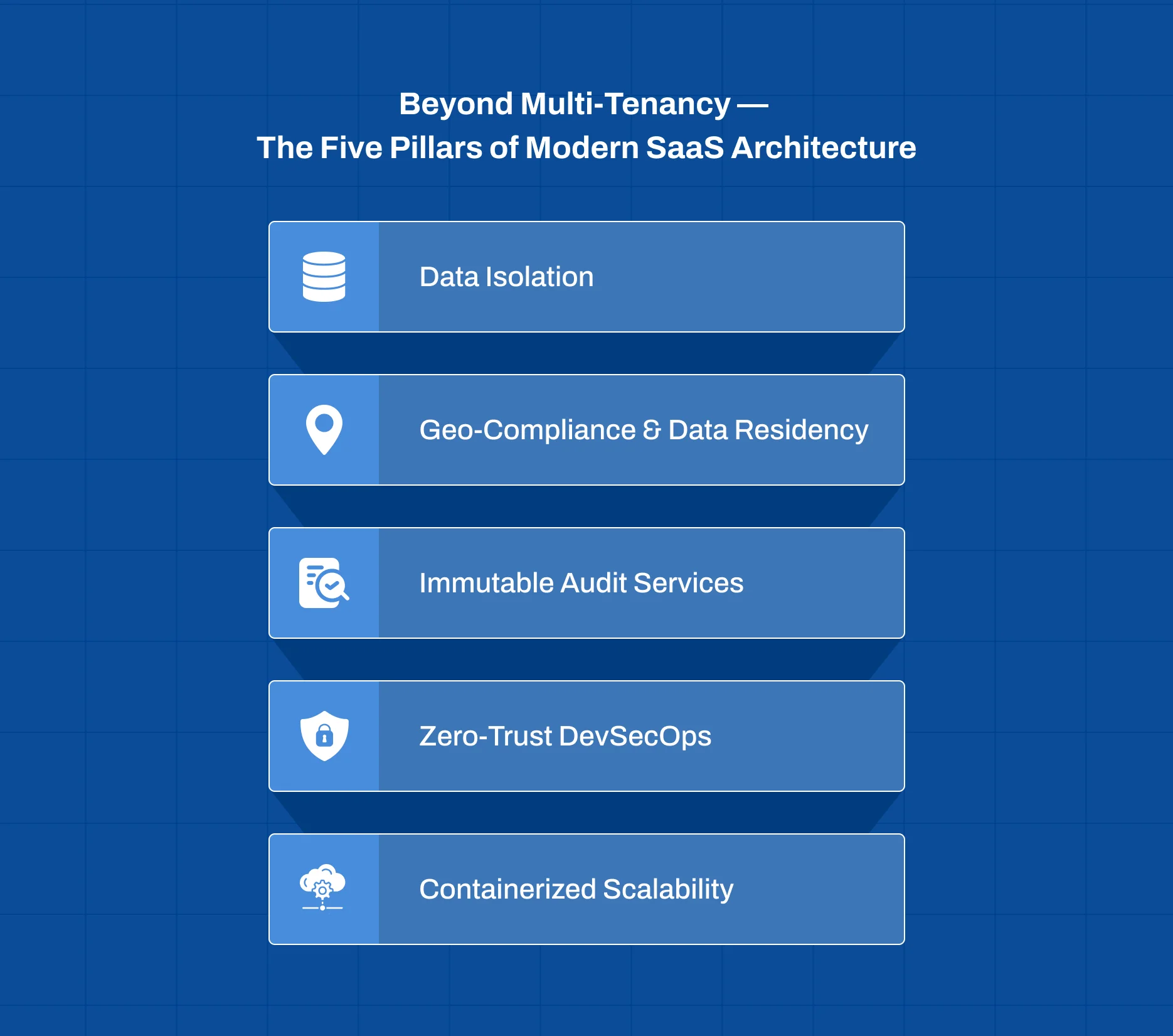
1. Data Isolation:
Move from row-level filtering to database-per-tenant to eliminate cross-tenant risk.
Outcome: Full logical separation and superior data governance.
2. Geo-Compliance & Data Residency:
Deploy region-specific services (EU, UAE, US) through geo-aware routing layers.
Outcome: Seamless compliance with GDPR and local data mandates.
3. Immutable Audit Services:
Centralise events in a write-once ledger microservice.
Outcome: Instant traceability and simplified regulatory reporting.
4. Zero-Trust DevSecOps:
Every service authenticates each call, even internally.
Outcome: Reduced attack surface and regulatory resilience.
5. Containerised Scalability:
Orchestrate microservices via Kubernetes.
Outcome: High uptime, modular deployments, and global performance consistency.
The transition must start with a strategic, business-first approach: Domain-Driven Design (DDD). DDD structures the application around the business capabilities rather than technical layers.
Service Per Domain: The Principle of Single Responsibility
In a FinTech context, this means:
- Audit Service: Only handles the logging and immutability of actions.
- KYC/AML Service: Only manages user identification and sanction list screening.
- Payment Gateway Service: Only orchestrates transactions.
Crucially, the KYC/AML service must own its compliance data, and no other service should access it directly. This sets the stage for genuine independence and security, a core microservices best practice.
Best Practice 1: Architecting True Data Isolation (The TenantID Filter is Dead)
In regulated industries, relying on a simple TenantID column to filter data in a shared database is dangerously low-bar multi-tenancy. A single bug or query error could expose cross-tenant data, risking catastrophic fines under laws like GDPR.
From Row-Level Filtering to Database-Per-Tenant
For mission-critical microservices (e.g., those handling PII, health, or financial data), best practice dictates a higher level of Data Isolation:
- Dedicated Schema/Database Per Tenant:While more complex operationally, this approach is the gold standard for high-security applications like RegTech. It guarantees that an error in one tenant’s database logically cannot affect another.
- Polyglot Persistence: Each microservice should choose the best database technology for its job (e.g., PostgreSQL for transactions, a Vector DB for AI features, an immutable ledger for audit logs). This decoupling further limits the surface area for a single point of failure.
Best Practice 2: Solving Geo-Compliance and Data Residency (Europe, UAE)
Designing for Data Residency – The Geo-Compliance Map
Regulatory compliance doesn’t stop at borders – neither should your architecture.
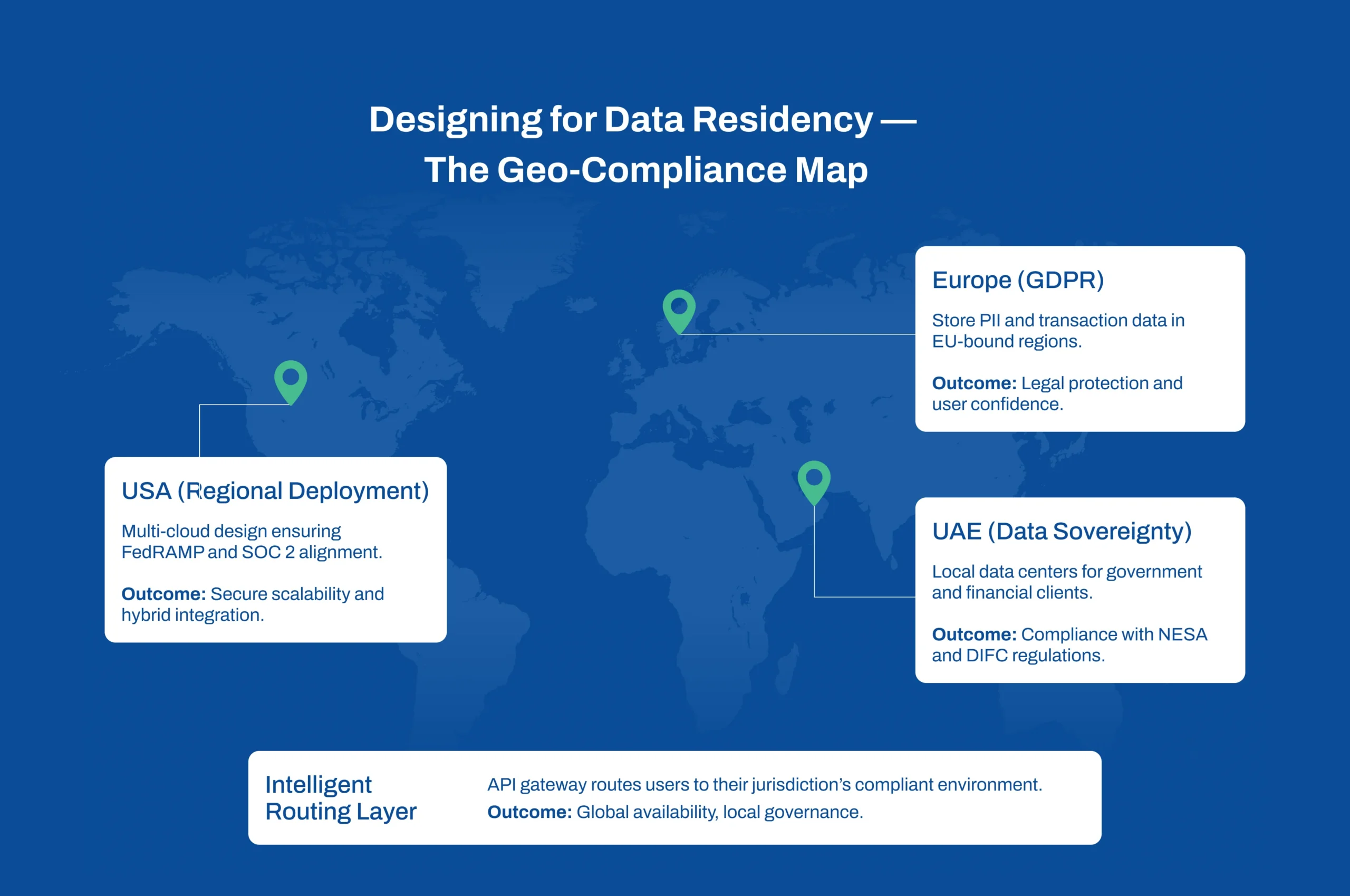
1. Europe (GDPR):
Store PII and transaction data in EU-bound regions.
Outcome: Legal protection and user confidence.
2. UAE (Data Sovereignty):
Local data centres for government and financial clients.
Outcome: Compliance with NESA and DIFC regulations.
3. USA (Regional Deployment):
Multi-cloud design ensuring FedRAMP and SOC 2 alignment.
Outcome: Secure scalability and hybrid integration.
4. Intelligent Routing Layer:
API gateway routes users to their jurisdiction’s compliant environment.
Outcome: Global availability, local governance.
Global expansion into regions like Europe (GDPR) and the UAE is complex because they impose strict Data Residency requirements – mandating that certain data remains within their geographic borders.
The Routing Layer for Global Regulatory Zones
To manage this, your architecture needs an intelligent, geo-aware routing service:
1. Geo-Aware User Onboarding:
During sign-up, the system identifies the tenant’s primary operating region (e.g., Germany, USA).
2. Compliance-Based Service Routing:
Critical microservices, such as the Data & Analytics service or the Security Testing service, are deployed in multiple designated geographic cloud regions.
3. Tenant-Specific Service Endpoint:
The main API gateway routes requests for that tenant to the specific, geo-compliant deployment of the microservice and its dedicated data store.
This model, often referred to as Regional Isolation, enables you to meet the letter of the law in countries requiring data to remain localised, while still offering a single, global SaaS product.
Best Practice 3: Building Immutable Audit and Traceability Services
RegTech compliance is synonymous with traceability. Regulators must be able to verify exactly who did what, and when.
Compliance-as-a-Service Through Automated Microservices
Instead of scattering audit logs across multiple systems, centralise them using an independent, immutable microservice:
- Event Sourcing:Every critical action (login, transaction, configuration change) is recorded as a fact-based Event. These events are streamed to a dedicated Audit Microservice.
- Immutable Ledger:This service uses a write-once, append-only database (like a ledger or a specific NoSQL store) that guarantees records cannot be modified or deleted. This creates an undeniable Audit Trail required for demonstrating compliance.
This microservice effectively turns your Quality Assurance & Testing and compliance framework into a feature your customers can trust.
Best Practice 4: Prioritising DevSecOps and Container Orchestration
Building Trust with Code – The Compliance-First Microservice Stack Regulatory compliance starts with architecture, not audits.
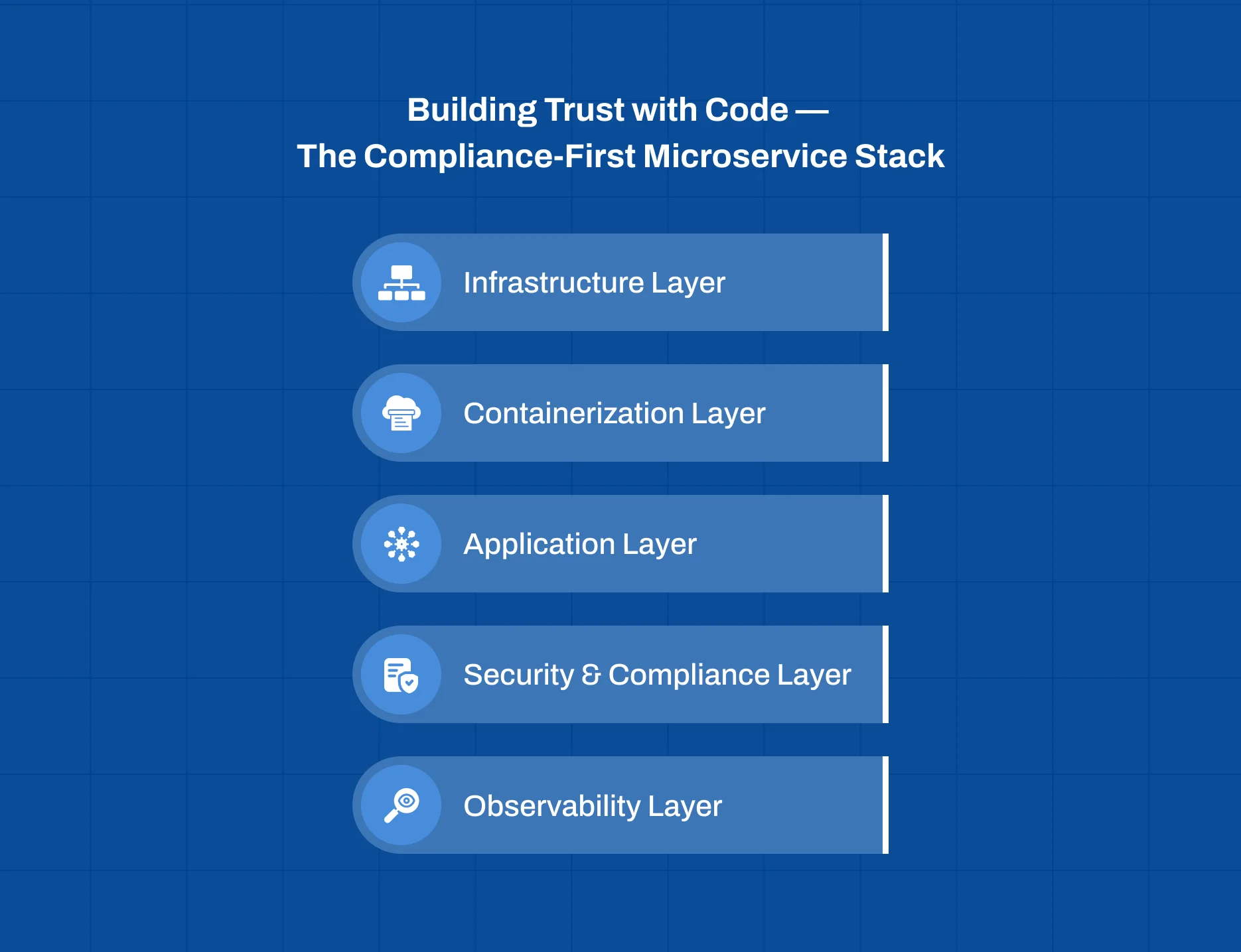
1. Infrastructure Layer:
Multi-cloud setup for redundancy and sovereignty.
2. Container Layer:
Kubernetes-managed isolated environments per microservice.
3. Application Layer:
Domain-driven microservices aligned with business verticals (e.g., KYC, Payments).
4. Security & Compliance Layer:
Continuous code scanning, static analysis, and real-time security validation.
5. Observability Layer:
Centralised monitoring of microservice health, logs, and regulatory events.
The underlying infrastructure must support the high security and continuous deployment cadence of financial services.
Kubernetes and Zero-Trust in Financial Services
- Containerisation (Kubernetes/Docker): Containers provide a secure, isolated sandbox for each microservice. Tools like Kubernetes allow you to orchestrate and scale these compliant services independently, ensuring that even if one container is compromised, the blast radius is minimal.
- DevSecOps Automation: Security cannot be a final testing step. Embed security checks (e.g., static and dynamic code analysis, dependency scanning) directly into your CI/CD pipelines. This Automation Testing approach ensures that compliance is built into every code commit, not added at the end.
- Zero-Trust Security:Every microservice must authenticate and authorise every request, even from another internal service. Never trust the network perimeter; trust only explicit authorisation.
The Next Step: Transforming Risk into Scalable Advantage
Moving beyond multi-tenancy is non-trivial. It demands deep expertise in complex SaaS Architecture patterns, global regulatory frameworks, and advanced DevSecOps practices. When executed correctly, this new architectural paradigm moves you from merely managing risk to establishing a RegTech platform that is secure, compliant, and infinitely scalable across borders.
Don’t wait for the next regulatory wave to force your hand. Partner with an expert team to architect this future-proof foundation today.