FinTech Software Development Company for Regulated Platforms
Regulated financial platforms, built to pass audit.
DigiWagon designs and builds lending, onboarding, payments and AML software for banks, NBFCs and FinTech companies in the United States, the United Kingdom and India. Every platform is engineered around the regulator’s questions as carefully as the customer’s.
Pick the situation closest to yours. We’ll show what we would build for it, where it sits in the FinTech services below, and which regulation shapes it.
Pick what your platform has to prove
What it has to prove
A Lending or Onboarding Journey That Has to Pass Audit
Applications, KYC and disbursal run across web, mobile and field teams, and every step has to be reconstructable when the regulator or the internal auditor asks how a decision was made.
What we would build
What you could end up with
An onboarding flow with KYC, consent and e-sign captured as evidence
Decision logs a compliance officer can read without an engineer
Field, customer and operations apps working from one ledger
Payments That Have to Be Screened Before They Move
Transactions need sanctions and AML checks inside the payment path, fast enough that a customer never notices and complete enough that an investigator can follow every hit.
What we would build
What you could end up with
Real-time screening inside the payment flow, not after it
Reconciliation and settlement views that agree with the ledger
Alert queues sized for analysts, not for false positives
The lending or banking core still runs the business, but every change takes a quarter, the original vendor is gone, and the regulator’s new reporting format lands next year.
What we would build
What you could end up with
An API layer that lets new products ship without touching the core
A migration sequence that never takes the ledger offline
Modules retired from the core one at a time, each with a rollback
What it works with
The core system as it is, documented or not
Batch jobs, reports and integrations nobody owns any more
The change-control regime your auditors expect to see
Credit, fraud and AML models are catching more, but nobody can say why a case was flagged, the false-positive queue keeps growing, and model risk has become an audit item.
What we would build
What you could end up with
Models with documented features, thresholds and review cadence
An explanation attached to every automated decision
Monitoring that shows drift before the regulator does
FinTech software development services for institutions that answer to a regulator: the platforms, integrations and models below, each linked to the DigiWagon practice that builds it.
01
FinTech Product Strategy & Discovery
Most FinTech products fail before code: the licence route was assumed, the compliance cost arrived late, or the first release tried to be a bank. Discovery settles what the product is, which regulatory perimeter it sits inside, which partners it depends on for banking, payments and bureau data, and what the first release has to prove to investors and to the regulator at the same time. The output is a scoped first version with its compliance obligations costed in, not a feature list with a disclaimer attached.
MVP definitionRegulatory perimeter mappingPartner and BaaS selectionUnit economics modeling
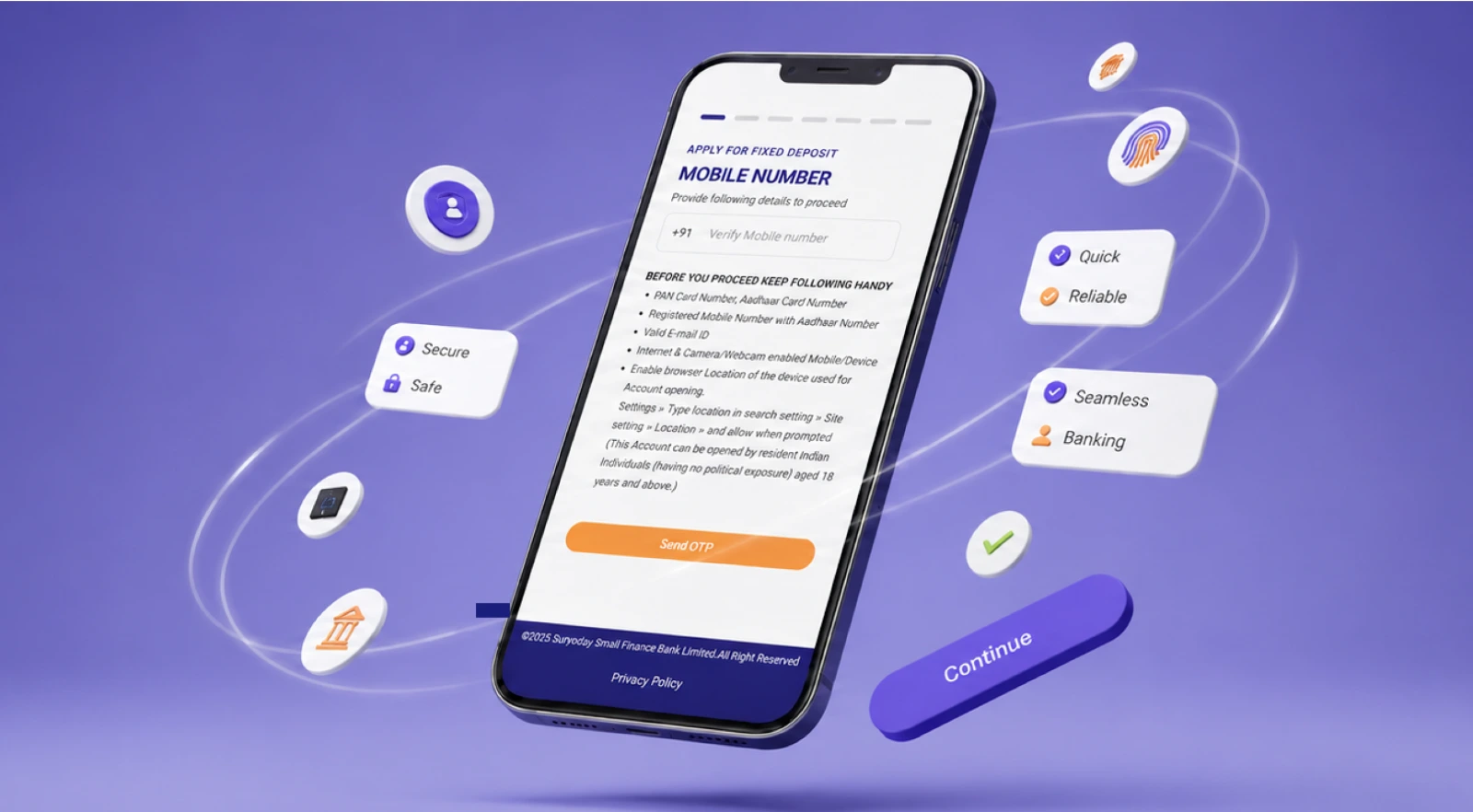
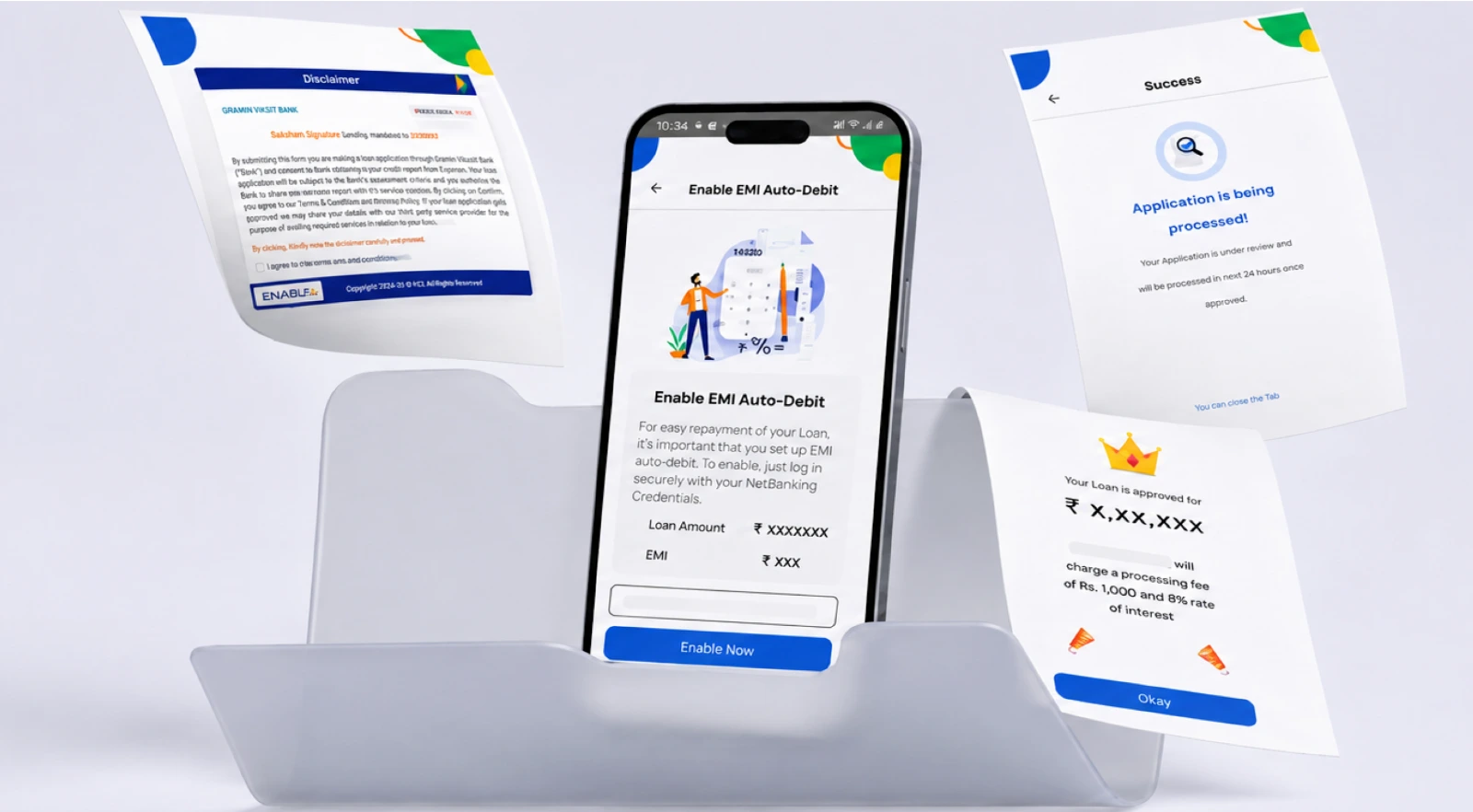
Loan origination, digital onboarding, servicing portals and back-office consoles built as one system rather than a chain of vendor screens. We have built MSME and personal-loan origination for a small finance bank and a white-label lending platform on which approvals moved 60% faster, so the patterns are known: eligibility engines with auditable rules, KYC and e-sign captured as evidence, maker-checker on every sensitive action, and one ledger that field apps, customer portals and operations share. Built on Java, Node.js, React and PostgreSQL with the audit trail designed in, not appended.
Customer and field-agent apps for lending, deposits and payments, in Flutter, React Native or native code depending on how much of the device the product needs. Fintech app development carries constraints a consumer app does not: device binding and root detection, certificate pinning, offline capture for field verification, consent screens the regulator will read, and store-review timelines that have to fit a launch date. We build the mobile surface against the same APIs and ledger as the web product, so a loan started in a branch finishes on a phone without a reconciliation problem.
Payment gateways, card processors, UPI and ACH rails, open-banking APIs, core banking systems, credit bureaus and KYC vendors each speak their own protocol and fail in their own way. We build the integration layer that makes them one platform: idempotent payment orchestration, reconciliation that agrees with the ledger to the cent, event streams for downstream systems, and sandbox-to-production promotion with the certification evidence each rail requires. PSD2 strong customer authentication and UK Open Banking consent flows are designed into the API layer rather than patched onto the front end.
Lending cores, treasury systems and back offices that still run the business but cannot change at the pace regulation does. We modernize them without a big-bang rewrite: an API facade first, so new products ship against the old core; then modules re-platformed one at a time, each with a rollback position and a reconciliation check before the old path is retired. Data migrations run in parallel and are proven against the general ledger before cutover. The regulator sees continuity; your team gets a codebase it can change in a sprint instead of a quarter.
Core system API enablementStrangler-pattern replatformingLedger-safe data migrationBatch-to-event modernization
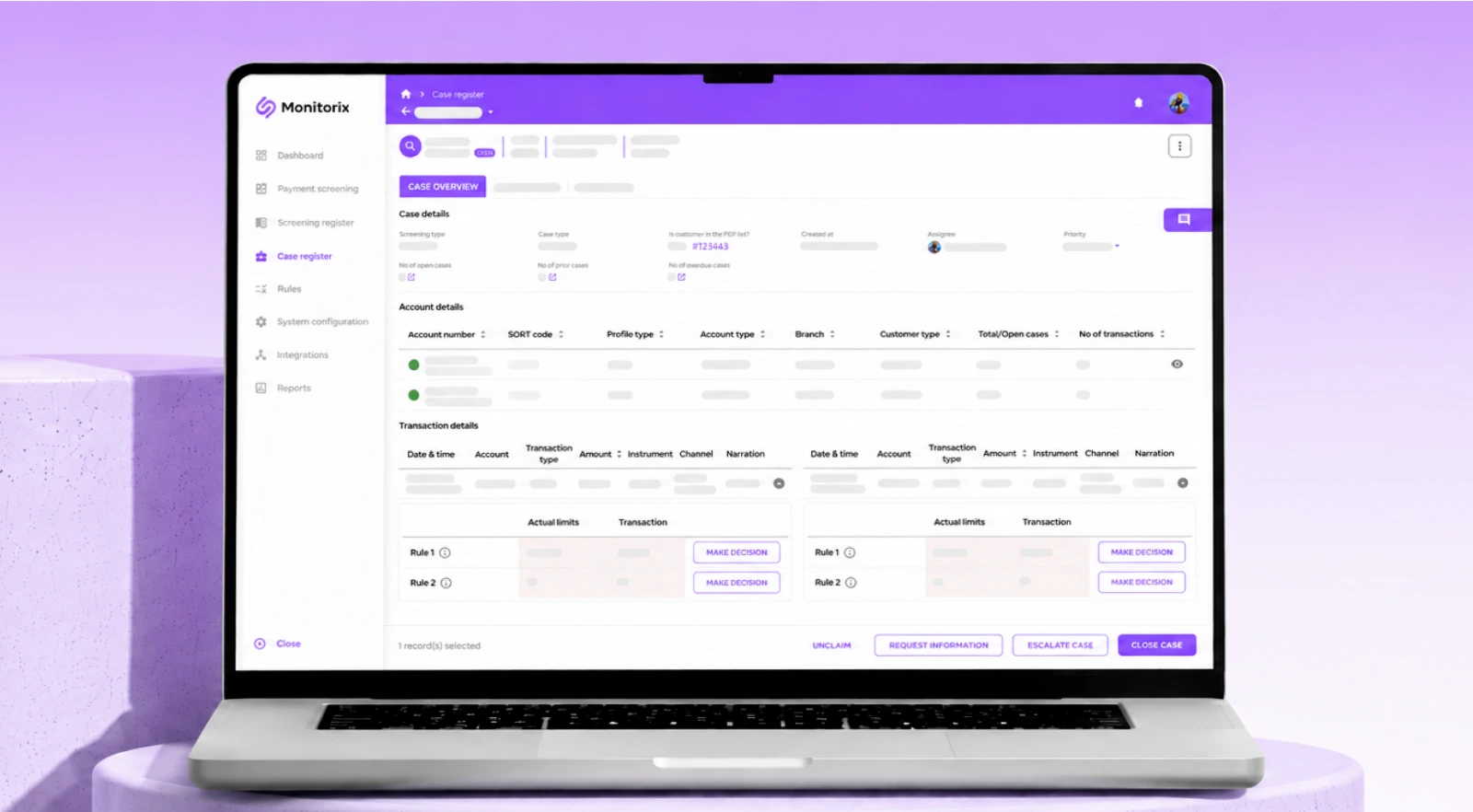
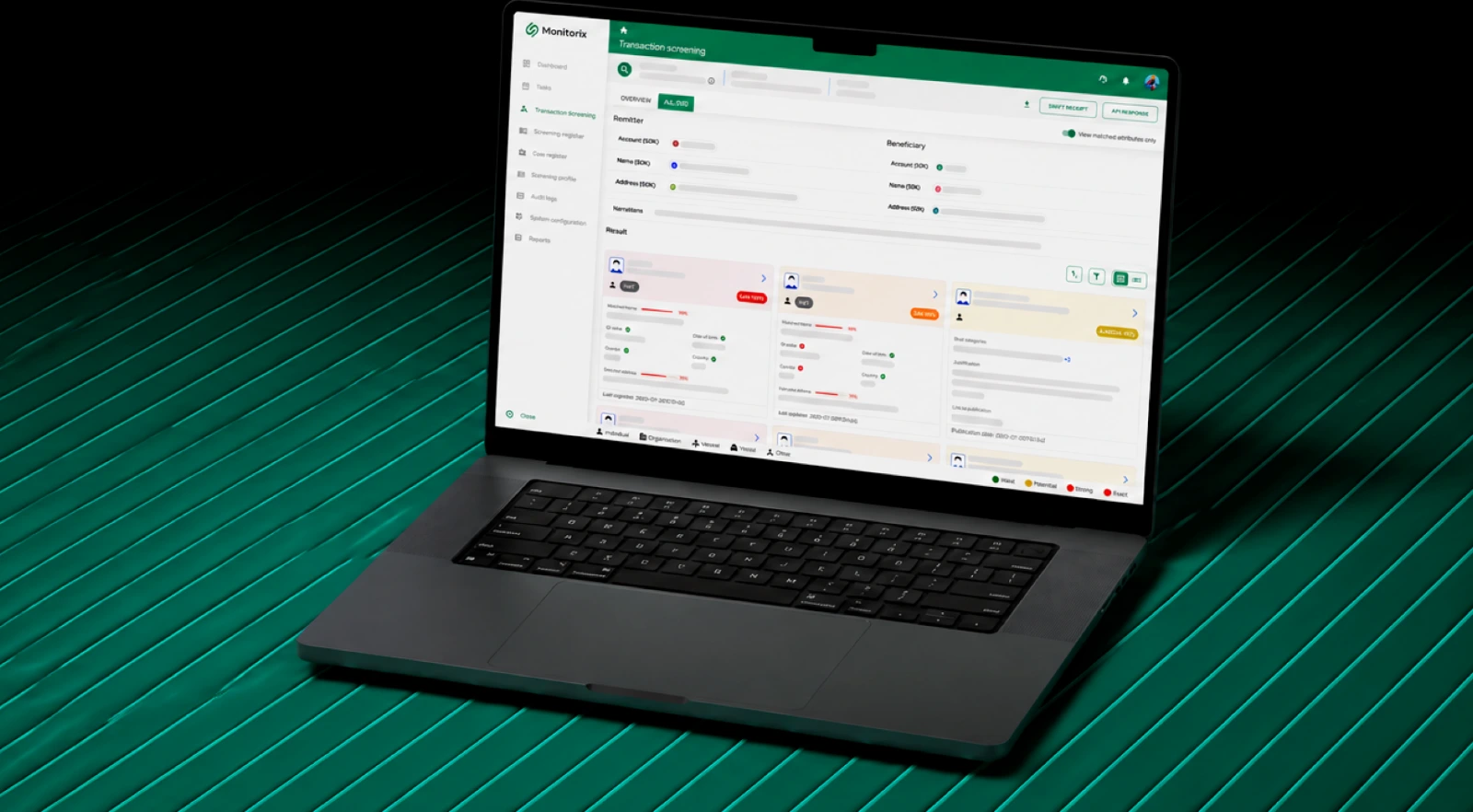
Credit scoring, fraud detection, transaction monitoring and sanctions screening models, built to be explained as well as to perform. We have delivered real-time payment screening that cut screening time by half and a behavioral analytics engine that detected suspicious activity 45% faster, and in both the harder work was the evidence: documented features and thresholds, an explanation attached to every automated decision, human review queues for the edge cases, and drift monitoring that surfaces model risk before an audit does. The models sit inside your case tools, not beside them.
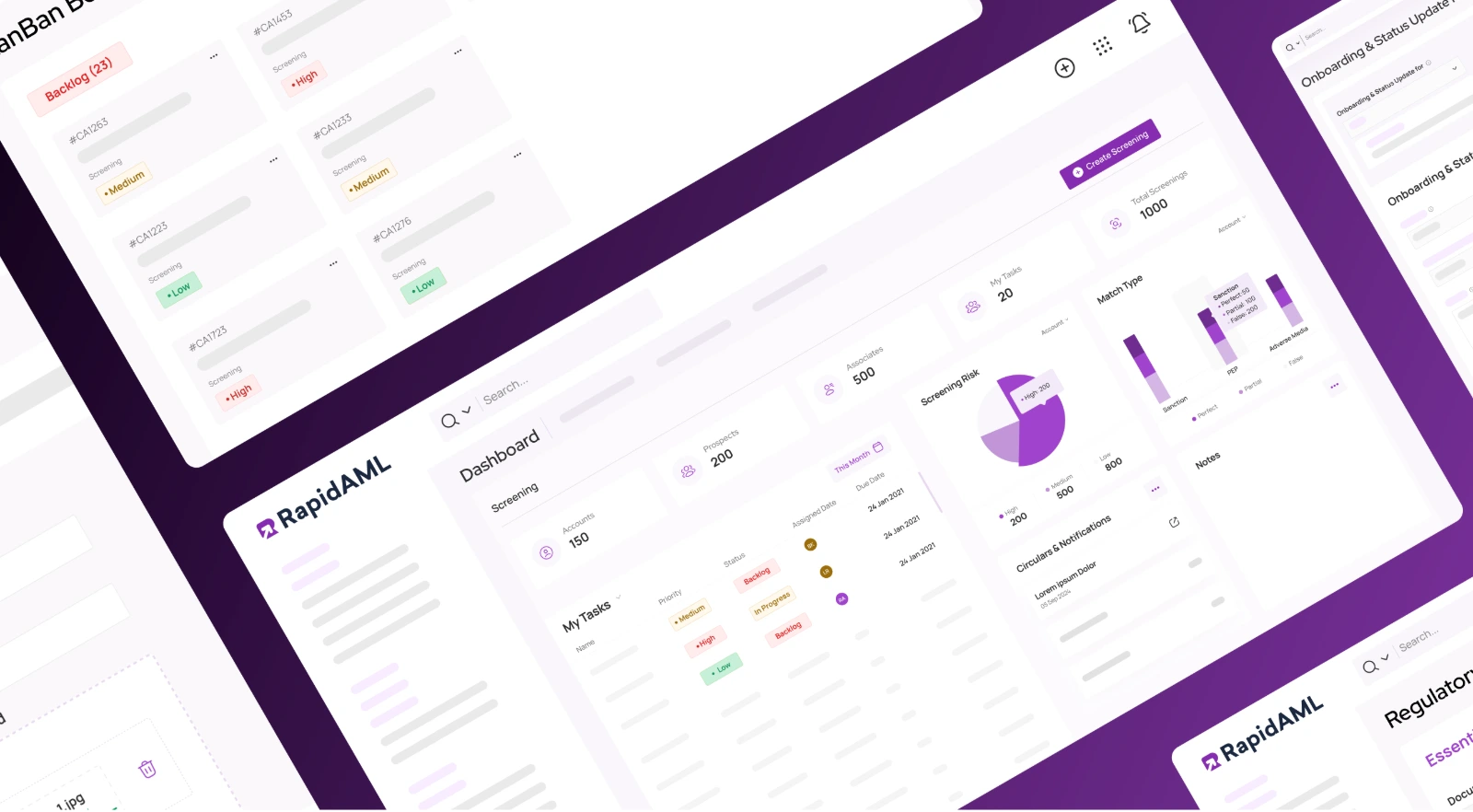
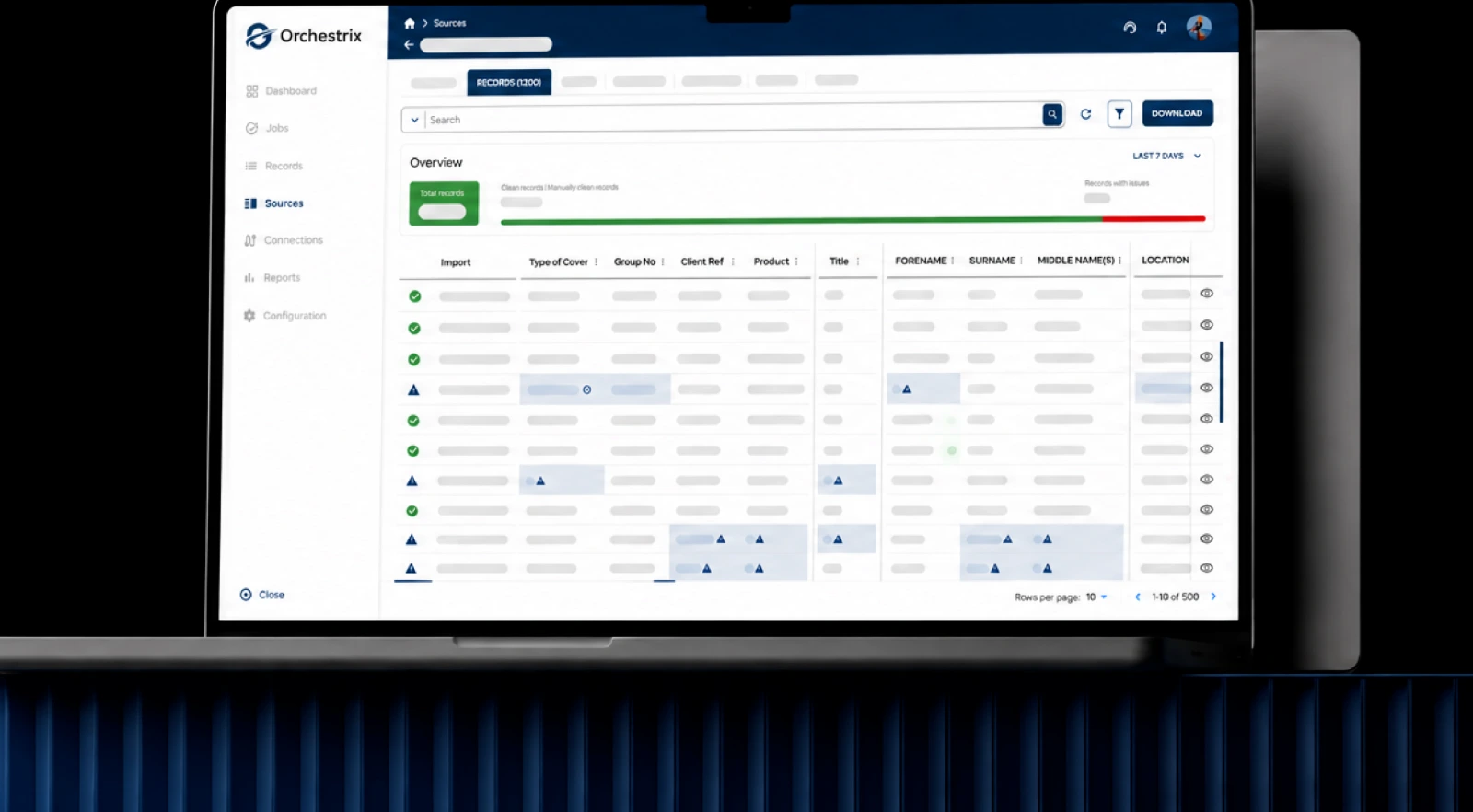
KYC refresh, periodic re-screening, suspicious-activity reporting, SWIFT message handling and regulatory returns are exception-heavy workflows that consume analyst time and produce audit findings when they slip. We automate the rule-bound parts and route the exceptions to people, with every action logged. On one compliance data platform, automating ingestion, validation and SWIFT-format standardization removed 60% of the manual spreadsheet work. The design principle is the same everywhere: the automation produces the evidence pack as a by-product of doing the work, so the audit is a query rather than a project.
KYC refresh & re-screeningSAR and STR workflow automationRegulatory returns & reportingException routing with audit logs
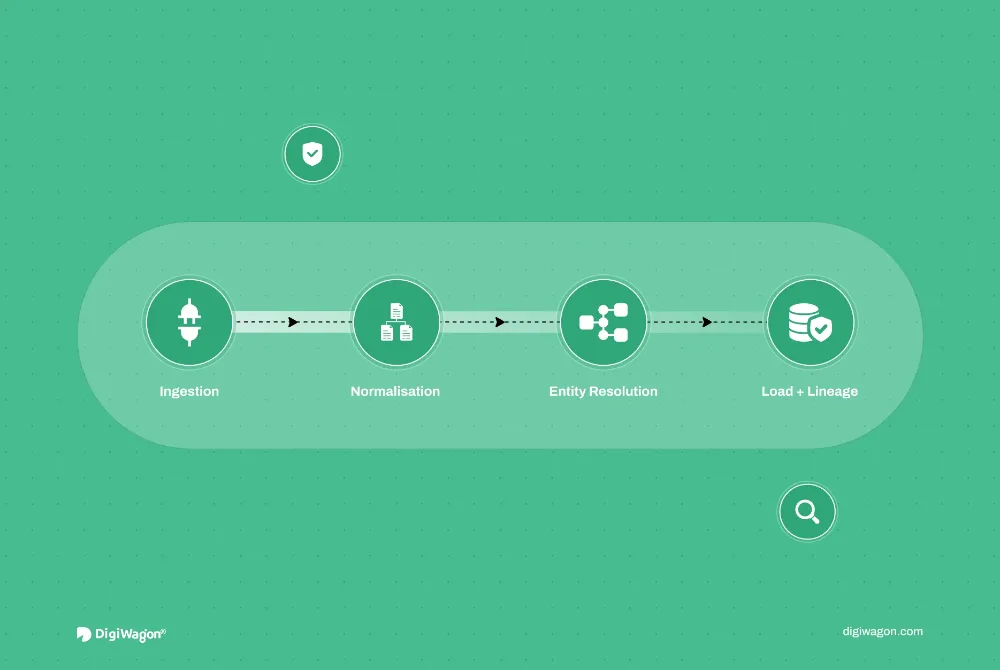
A FinTech runs on data it must be able to trust and reproduce: transaction histories, customer profiles, risk scores and the lineage between them. We build the pipelines, warehouses and dashboards that give product, risk and compliance teams one version of the numbers, with lineage a regulator can follow from a report back to a source record. Watchlist and screening data are treated as governed assets with cleansing, enrichment and synchronization designed in; on one watchlist platform that cut duplicate and inconsistent list data by 40% and made updates 50% faster.
Financial data pipelinesRisk & compliance dashboardsData lineage & governanceWatchlist data management
PCI DSS scope, SOC 2 evidence, data residency and change control are engineering problems as much as policy ones. We build the delivery pipeline and the cloud estate so that controls are enforced by the platform: segregated environments, secrets management, signed releases, infrastructure as code, immutable logs, and evidence collected automatically for the auditor. Where a market requires customer data to stay in-country, the architecture keeps it there by design rather than by procedure. The result is a release process your compliance team can approve without slowing your engineering team down.
Onboarding is where FinTech products lose customers and gain compliance findings at the same time. We design flows in which consent, disclosures and identity checks are legible rather than buried, and in which the drop-off points are measured and fixed. For an AML compliance platform, redesigning role-specific dashboards and guided onboarding made the onboarding flow 35% smoother and cut the training burden on compliance users by 30%. Design systems keep hundreds of screens consistent as regulation changes the copy underneath them, and every banking software development project inherits the same components.
Onboarding & KYC journey designCompliance-grade consent UXOperations & analyst dashboardsDesign systems for regulated products
The building blocks behind the platforms above, grouped the way a FinTech product team scopes them. Pick a group to see what we have built inside it.
01 / 05
Payments & Revenue Systems
01Payment gateway & rail integration
02Cross-border transactions & FX handling
03Billing, invoicing & recurring collections
04Reconciliation & settlement dashboards
05Fee, tax & pricing configuration
06Chargeback & dispute workflows
02 / 05
Lending & Credit
01Loan origination & eligibility engines
02Credit scoring & decisioning
03Disbursal, repayment & collections
04Co-lending & partner APIs
05Document verification & e-sign
06Portfolio & delinquency reporting
03 / 05
Customer & Account Management
01Digital onboarding with KYC & video KYC
02Unified customer data layer
03Identity, access & consent management
04Servicing portals & support tooling
05Subscription & account billing
06Personalization within permitted data use
04 / 05
Compliance, Risk & Intelligence
01AML & sanctions screening
02Transaction monitoring & alert triage
03Fraud & anomaly detection models
04Case management & SAR workflows
05Audit trails & regulatory reporting
06Model risk documentation
05 / 05
Platform Connectivity & Data
01Open banking API integration
02Core banking & LMS connectors
03Multi-institution data bridges
04Multi-currency ledgers
05Event streams & data pipelines
06Financial CRM integration
Who we build for
FinTech Segments We Build For
Five kinds of institution, five different regulators looking over the shoulder. The platform patterns transfer between them; the obligations do not.
Banks & Small Finance Banks
Deposit, lending and onboarding journeys that have to run on a core the bank cannot pause, under RBI, FCA or OCC supervision. We have digitized fixed-deposit onboarding and MSME lending for a small finance bank without touching its core banking system, working through APIs and maker-checker controls instead.
NBFCs & Digital Lenders
Origination, underwriting and collections platforms for lenders whose margin lives in turnaround time. Eligibility rules stay auditable, bureau and KYC integrations stay current, and digital-lending disclosures are built into the flow rather than added before an inspection.
Payment Processors & FinTech Infrastructure
Real-time screening, orchestration and reconciliation for companies whose product is the payment path itself. Latency budgets are set in milliseconds, PCI DSS scope is engineered narrow, and every hit and release is logged for the investigator who reads it later.
WealthTech, Brokerage & Market Data
Portfolio, order and data platforms that must be precise under load and transparent to a supervisor. We build execution-accurate systems with audit capabilities a compliance team can use, and data pipelines that turn market feeds into insight that can be reproduced when challenged.
RegTech & Compliance Teams
AML screening engines, watchlist governance, transaction monitoring and compliance data platforms, built with a compliance-technology provider that serves banks across several jurisdictions. This is DigiWagon’s deepest FinTech vein, and it shows in how every other platform on this page is engineered.
Compliance by design
Compliance Is Architecture
Most FinTech vendors list badges. We treat each framework as a set of design constraints: what data is classified, where it may live, who can act on it, and what evidence the system produces on its own. Every framework below binds at least one of the services above, because that is where it is actually implemented.
01
PCI DSS v4.0.1
Card data storage, processing and transmission. Payment flows are designed so that most of the platform never enters PCI scope at all.
Payments & integrationSecurity engineering
02
SOC 2 Type II (AICPA Trust Services Criteria)
Security, availability and confidentiality controls evidenced over a period. The pipeline and the cloud estate generate that evidence as they run.
Security engineeringData platforms
03
AML and KYC: FATF Recommendations, FinCEN CDD Rule, UK MLR 2017, RBI KYC Master Direction
Customer due diligence, screening, monitoring and reporting, engineered into onboarding and payments rather than checked afterwards.
Lending platformsPayments & integrationRisk & AML intelligenceCompliance automation
04
PSD2 and the UK Open Banking Standard
Strong customer authentication, consented account access and third-party provider flows, designed into the API layer.
Payments & integrationOnboarding design
05
GLBA Safeguards Rule (FTC, amended 2023)
A written information security program for US financial institutions and for the vendors that hold their customers’ data.
Security engineeringData platforms
06
GDPR, UK GDPR, CCPA/CPRA and India’s DPDP Act 2023
Lawful basis, consent, retention, residency and subject rights for personal financial data, applied per market the platform serves.
Onboarding designData platformsMobile apps
07
RBI Digital Lending Guidelines (2022) and IT Governance Directions (2023)
Disclosure, data localization, lending-service-provider and IT outsourcing obligations for regulated lenders in India.
Lending platformsMobile appsLegacy modernization
08
SOX Section 404
Controls over financial reporting for US-listed institutions, including change control and access management on every system that feeds the ledger.
Legacy modernizationCompliance automation
09
ISO/IEC 27001:2022 and NIST CSF 2.0
Information security management as a system. DigiWagon holds ISO/IEC 27001 and ISO 9001 certification; NIST CSF 2.0 is the reference for US clients’ control mapping.
Every engagement
Certification is a claim we make only about ourselves. For everything else on this list, the platform is built for the framework and the evidence is produced with the code.
FinTech in practice
FinTech in practice.
Lending, onboarding, payments and compliance platforms. 6 of them are written up in full.
Fintech software development starts from the regulatory boundary, not the feature list: which licence the product sits under, which data it touches, what the auditor will ask to see. Everything else is sequenced from there.
01
Discover the Regulatory Boundary
Map the licences, frameworks, data classes and third parties the product touches before scope is fixed, so compliance cost is part of the plan and not a surprise at the security review.
Focus
PerimeterData classesPartnersObligations
02
Design for Evidence
Audit trails, maker-checker, consent capture, model documentation and segregation of duties are designed as features, because the cheapest time to produce evidence is while the system does the work.
Focus
Audit trailsConsentControlsExplainability
03
Build in Controlled Increments
Releases move through segregated environments with signed artifacts, sandbox certification for each rail or bureau, and synthetic test data, so production changes are approved without slowing delivery.
Focus
Secure CI/CDCertificationTest dataChange control
04
Run Under Monitoring
Latency, false-positive rates, model drift and control failures are watched in production, with incident response and change records kept in the form the regulator expects to read.
Focus
ObservabilityDriftIncidentsReporting
Discover01 Discover the Regulatory BoundaryDesign02 Design for EvidenceBuild03 Build in Controlled IncrementsRun04 Run Under Monitoring
Insights
Notes From Regulated Builds.
Writing from the AML, lending and payments work: what the architecture had to prove, what the regulator asked, and what we would design differently now.
Data & Analytics
ETL Pipeline Design for FinTech: AML Data at Scale
· Akash Thakor · 10 min read
Software Engineering
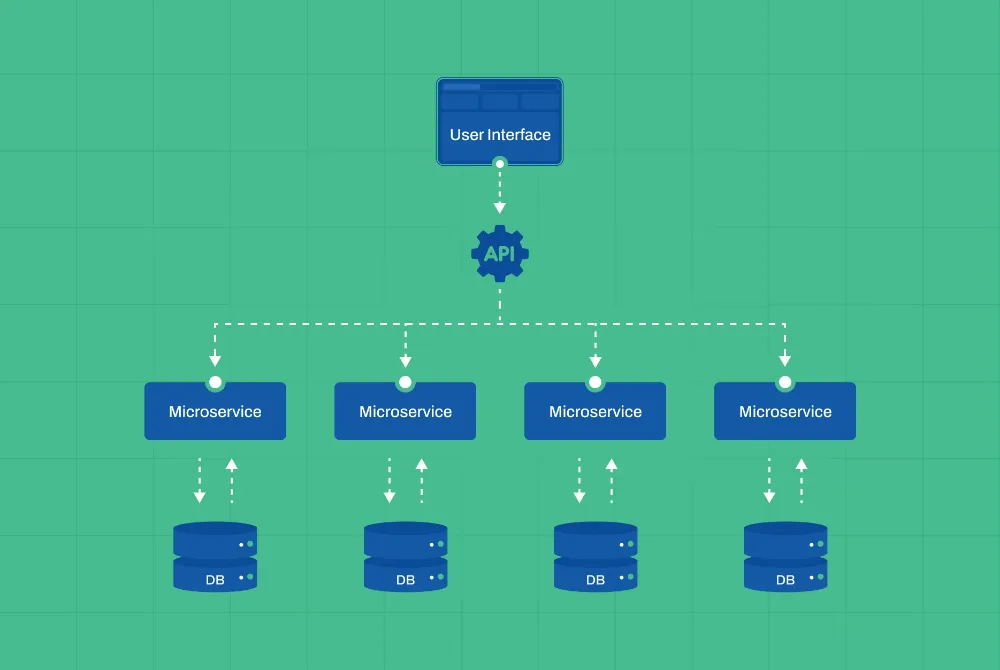
Beyond Multi -Tenancy: Best Practices for SaaS Microservices Architecture in RegTech & FinTech
Frequently Asked Questions About FinTech Software Development
Direct answers on what separates a fintech software development company from a general vendor, how PCI DSS and AML obligations shape a build, where AI belongs in a regulated product, and how a legacy core is modernized without a rewrite.
01What sets DigiWagon apart from other FinTech software development companies?
Shipped regulated platforms rather than a capability deck: MSME and personal-loan origination, paperless deposit onboarding, real-time payment screening, transaction monitoring and watchlist governance, each written up as a case study on this site. Compliance is handled as architecture, with audit trails, controls and evidence designed in, and every trade-off is documented so your compliance team can read the decision and not just the outcome.
02How do you handle PCI DSS, AML and KYC requirements in a FinTech build?
As design constraints set before the first sprint. Payment flows are architected so that most of the platform stays outside PCI DSS scope; KYC, screening and monitoring run inside onboarding and payments with every check logged; and consent, disclosures and retention follow the data-protection law of each market served. The evidence an auditor asks for is generated by the system as it works, not assembled afterwards.
03How do you incorporate AI into FinTech applications without creating model-risk problems?
By treating explainability and monitoring as part of the model rather than an afterthought. Credit, fraud and AML models ship with documented features and thresholds, an explanation attached to each automated decision, human review queues for the edge cases, and drift monitoring in production. That is how real-time screening cut screening time by half on one platform while keeping every decision reviewable by a compliance analyst.
04Can you modernize a legacy lending or banking system without a big-bang rewrite?
Yes. We put an API layer in front of the core first, so new products ship without touching it, then re-platform modules one at a time with a rollback position and a ledger reconciliation before each old path is retired. Data migrations run in parallel and are proven against the general ledger before cutover, so the regulator sees continuity throughout and your team keeps releasing.
05Which markets and regulators have you built FinTech software for?
India most deeply, including RBI-supervised small finance banks and NBFC lending; the United States and the United Kingdom through compliance-technology platforms that serve banks across several jurisdictions; and the UAE through AML work. We build for FinCEN, FCA, RBI and PCI SSC requirements as engineering constraints, and we say plainly that our own certifications are ISO/IEC 27001 and ISO 9001, nothing more.
Build the Platform Your Regulator Can Read
Tell us what the product has to prove. We will map the regulatory boundary, the integrations and the first release, and show you comparable work before anything is scoped.
One click opens the assistant you already use with a question that points it at this page, so the answer comes from what we publish, not a guess.
The question it opens withRead https://digiwagon.com/fintech-software-development-company. Outline how DigiWagon approaches FinTech engineering and compliance, then tell me what a FinTech CTO should verify before choosing them or any similar partner. Stick to what the page says and mark anything you are not sure about.