SaaS Development

The MVP Is Only the Start. SaaS Product Development Should Be Ready for What Follows.

We create SaaS products with the fundamentals thought through early, from tenancy and access to billing, integrations and configuration, so the product does not become harder to manage as more customers come on board.

Shape your SaaS product

Start with the outcome

Where Is the Product Heading?

Pick the situation closest to yours. We'll show what we would build for it and where it sits in the range below.

Pick where the product is heading

Where the product is heading

Take the Product From Idea to Launch

There is a product to build — or an MVP to grow up — and it needs the core workflows plus everything required to run it as a real product.

What we could build
What you could create
  • An MVP carrying the core product workflows
  • User and account management with an admin console
  • Product analytics from the first release
What it works with
  • The problem the product exists to solve
  • The workflows the first customers must complete
  • How the product will be priced and sold
Where the product is heading

Serve Many Customers From One Product

Every new customer adds operating cost and risk, because how tenants, data and services are separated was never really decided.

What we could build
What you could create
  • Tenant isolation and data partitioning that fit how you sell
  • Shared and dedicated models where each earns its place
  • Organization management across every account
What it works with
  • Your customers' compliance and isolation needs
  • The current architecture and where it strains
  • How adoption is expected to grow
Where the product is heading

Connect Pricing to What Users Can Do

Plans, subscriptions and usage live in spreadsheets and billing dashboards while the product itself does not know who is entitled to what.

What we could build
What you could create
  • Subscription billing and usage metering in the product
  • Entitlements that mirror the pricing page exactly
  • Role-based access and plan management
What it works with
  • The pricing model as the business states it
  • The billing provider you already use
  • The features each plan is supposed to gate
Where the product is heading

Open the Product to Other Systems

Customers keep asking for SSO and integrations, and every one built so far is a fragile one-off that slows the next release.

What we could build
What you could create
  • Public and private APIs with webhooks
  • SSO and identity-provider integration
  • Integration workflows instead of one-off connectors
What it works with
  • The tools your customers most ask to connect
  • The identity providers enterprise buyers require
  • The API surface worth committing to publicly
Where the product is heading

Modernize the SaaS You Already Run

The product is live and earning, but its architecture, tenancy, billing or integrations have started slowing releases and limiting how it can evolve.

What we could build
What you could create
  • Architecture and multi-tenant migration in stages
  • Billing and API modernization without a rewrite
  • A cloud foundation the roadmap can grow on
What it works with
  • The product as it runs today, customers included
  • The changes that keep getting deferred
  • The releases the modernization must not block

Not sure where to start? Talk to our team

What we build

SaaS Development Capabilities

A SaaS product has to support many customers without becoming many separate products. That affects how identity, data, billing, configuration, releases and operations need to work from the start.

01

SaaS Product Development

Take a SaaS idea or MVP through the core product, customer experience and operational capabilities needed to run it day to day.

MVP developmentCore product workflowsUser & account managementAdmin consoleProduct analytics

02

Multi-Tenant SaaS Architecture

Allow multiple customers to use the same product while keeping their data, permissions and configuration appropriately separated.

Tenant isolationData partitioningShared & dedicated modelsTenant-aware servicesOrganization management

03

SaaS Monetization & Access

Connect plans, subscriptions, usage and permissions so what customers pay for matches what they can actually use.

Subscription billingUsage meteringEntitlementsRBACPlan management

04

SaaS Integrations & API Ecosystem

Connect the SaaS product to external tools, identity providers and customer systems without creating fragile one-off integrations.

Public & private APIsWebhooksThird-party integrationsSSOIntegration workflows

05

SaaS Modernization

Rework an existing SaaS product when its architecture, tenancy, billing or integrations start slowing releases or limiting how the product can evolve.

Architecture modernizationMulti-tenant migrationBilling modernizationAPI modernizationCloud modernization

The decisions that shape a SaaS product

The SaaS Architecture Choices That Matter Early

Some choices are easy to revisit later. Others affect almost every customer, release and feature that follows. These are the SaaS decisions worth making deliberately from the start.

  1. Tenant Model

    Decide what customers share, what remains isolated and how tenant boundaries are enforced throughout the product.

  2. Product Configuration

    Give customers the flexibility they need without creating separate versions of the product for each one.

  3. Usage & Metering

    Track the events that matter when pricing, limits, analytics, or operations depend on how the product is used.

  4. Release Model

    Plan how updates reach customers without turning every release into a customer-specific deployment.

  5. Operational Visibility

    Make it possible to understand tenant activity, usage and issues without piecing the story together manually.

AI in SaaS experiences

AI That Becomes Part of the Product

AI is most useful in SaaS when it improves something users already need to do, rather than appearing as a separate feature with no clear job.

01

Ask

Let users query product data, documentation, or account information in natural language.

Conversational AI · RAG · Semantic Search

02

Assist

Support users while they complete complex tasks, with guidance based on the context of what they are doing.

Copilots · Contextual Assistance · Generative AI

03

Automate

Move repetitive, multi-step work forward when AI has the right context, permissions and connected tools.

AI Agents · Workflow Automation · Tool Calling

04

Detect

Surface unusual activity, risk, or important changes before users have to look for them.

Anomaly Detection · Classification · Predictive Models

05

Recommend

Suggest relevant actions, content or decisions based on product context and user behavior.

Recommendation Engines · Personalization · Decision Support

06

Generate

Create summaries, reports, drafts, or structured outputs from information already available inside the SaaS product.

LLMs · Content Generation · Structured Extraction

Explore AI & Machine Learning

Industry context

SaaS Product Development Across Business Models and Industries

A SaaS product is shaped by two things: how it is sold and how it is used. A B2B product serving financial teams will need a different mix of access, billing, reporting and integrations than a retail marketplace or healthcare platform.

01 / 05

B2B & Enterprise SaaS

For products used by organizations, teams, and larger accounts.

01Typical needs
Organization Accounts · RBAC · SSO · Admin Controls · Audit Trails · Integrations
02Common industries
FinTech · RegTech · Healthcare · Manufacturing · Logistics & Supply Chain

Our work

SaaS Development in practice.

Engagements where this is what we actually built. 6 of them are written up in full.

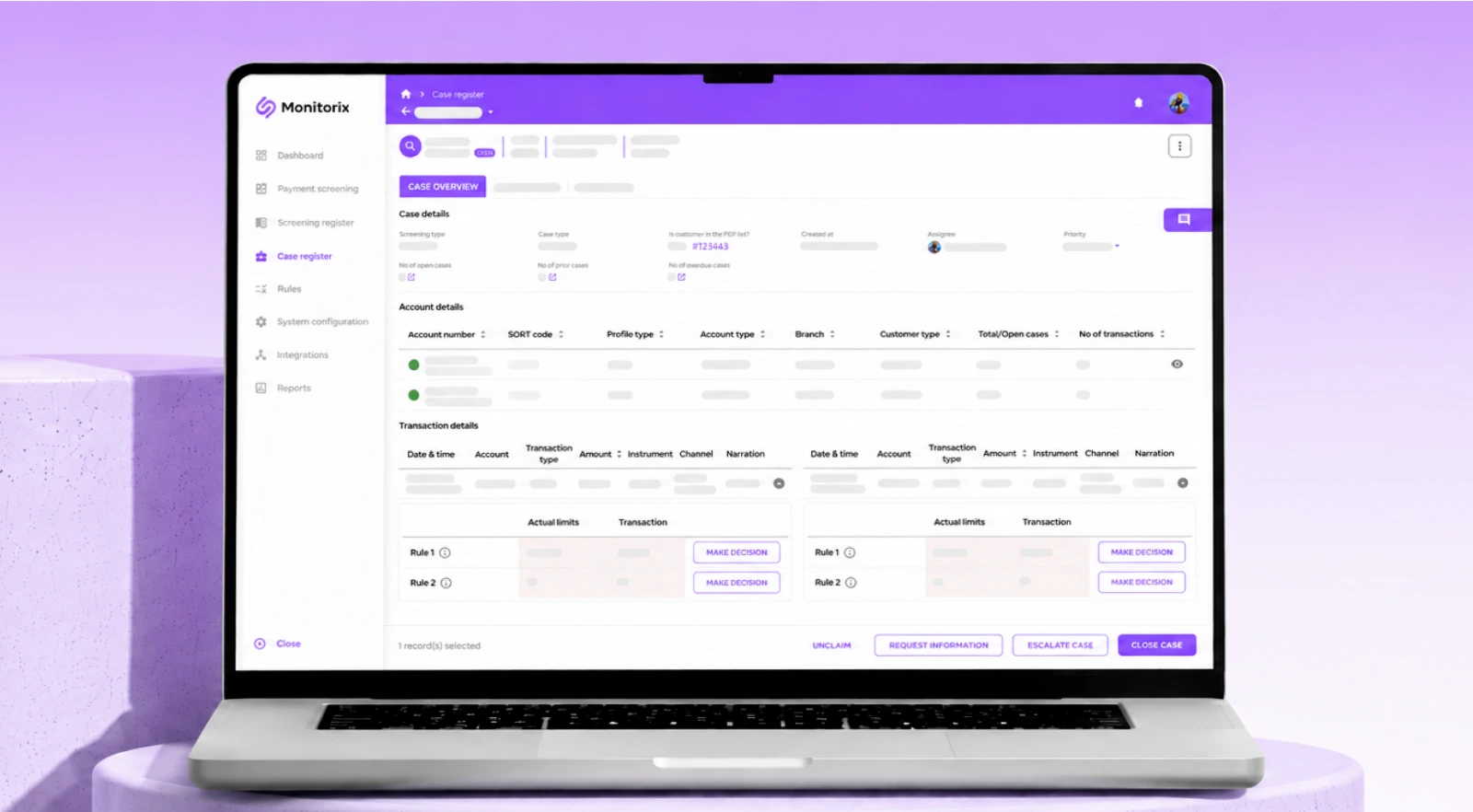
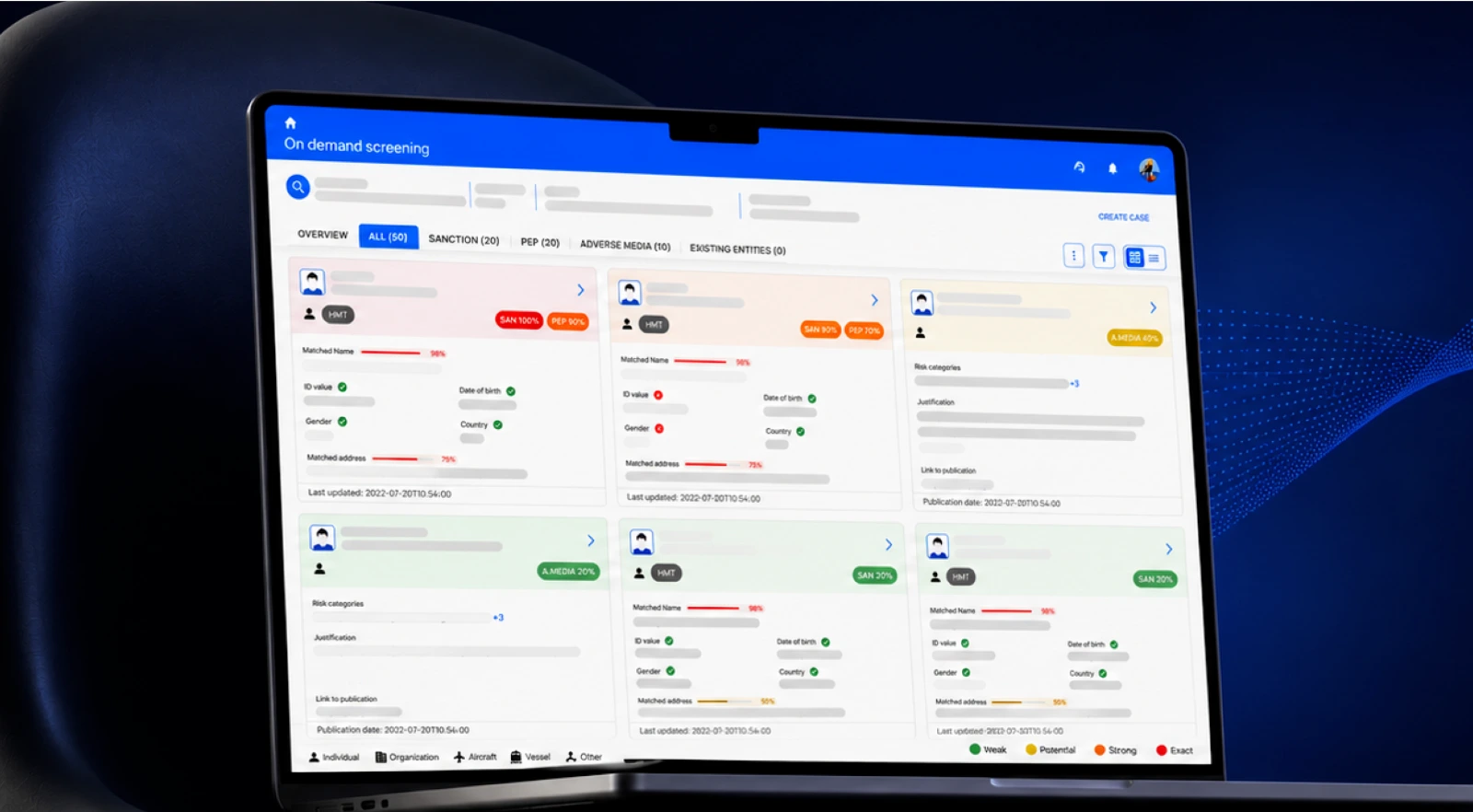
The transaction monitoring dashboard on a laptop against a lilac backdrop, showing an alert queue with risk scores.FinTech

Transaction Intelligence & Behavioral Analytics

A scalable and configurable transaction monitoring solution engineered to detect suspicious activity in real time using rule engines, behavioral profiling, and hybrid risk logic, enabling financial institutions to strengthen AML compliance while optimizing operational efficiency.

45%Faster suspicious activity detection35%Improvement in monitoring workflow efficiency
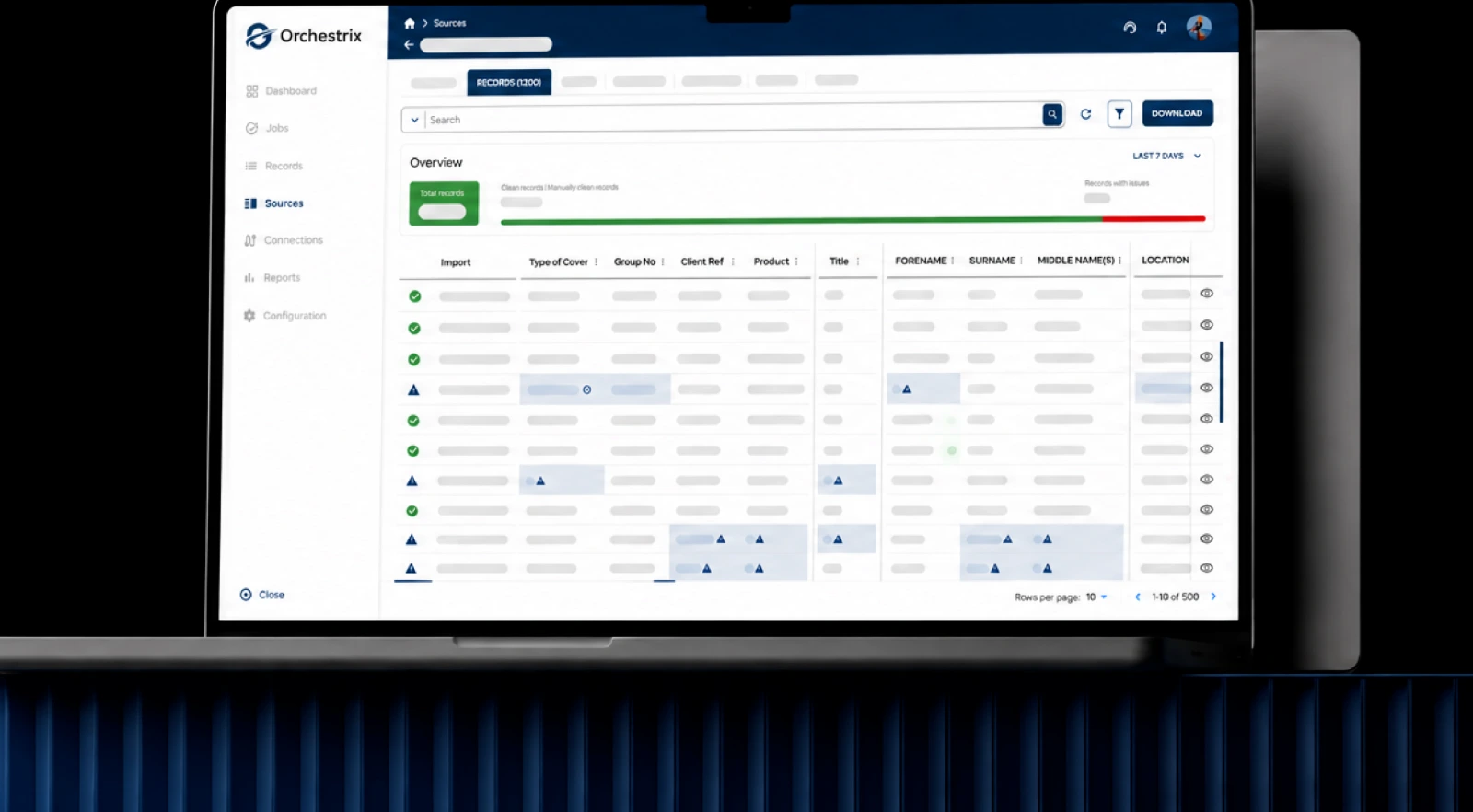
The SWIFT data orchestration console on a laptop, showing a validated message table with status columns.FinTech

SWIFT Data Orchestration & Automation

A centralised data automation platform engineered to replace high-risk manual spreadsheet processes with secure ingestion, task-based validation, and SWIFT-compliant standardisation workflows, ensuring data integrity, operational scalability, and audit-ready transparency for insurance operations.

60%Reduction in manual spreadsheet50%Faster data validation
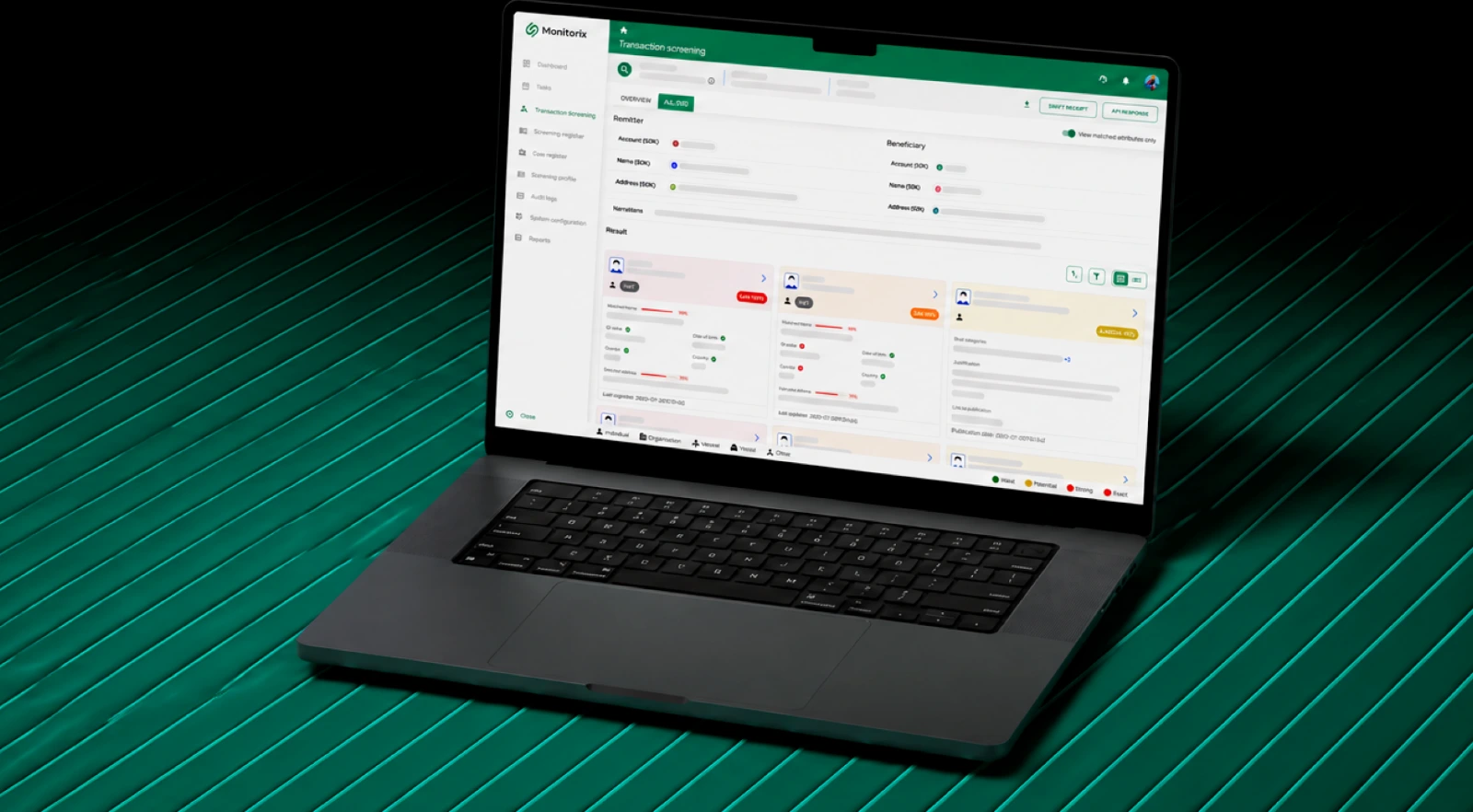
The real-time payment screening console on a laptop against a green backdrop, showing a live transaction queue.FinTech

Real-Time Payment Screening for AML & Sanctions

A high-performance, real-time payment screening solution engineered to validate every transaction against global regulatory requirements, sanctions lists, and risk indicators, delivering ultra-low latency, automated decisioning, and operational transparency for compliance teams.

50%Faster transaction screening40%Faster sanctions validation
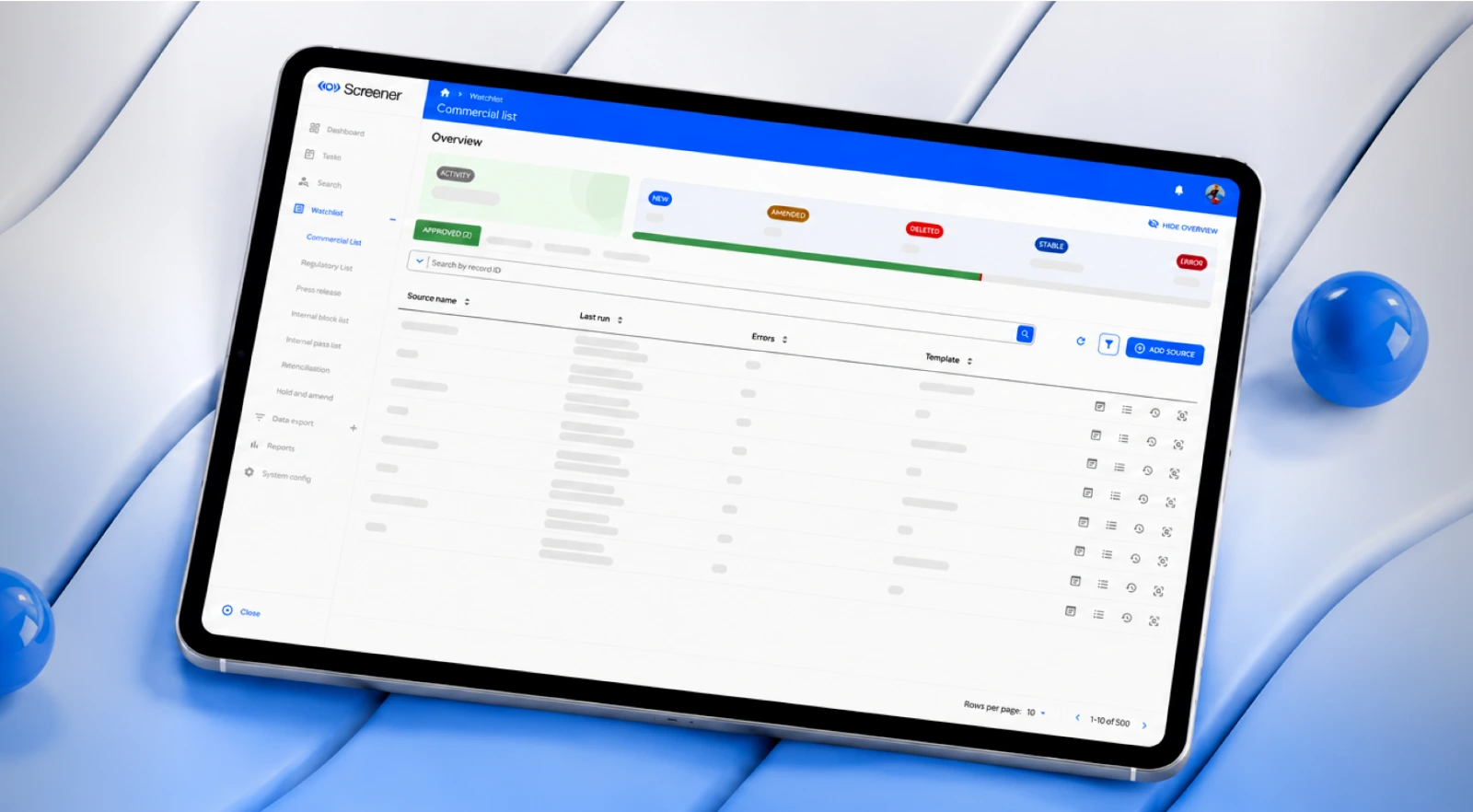
The watchlist governance console on a tablet, showing a consolidated list view with status columns.FinTech

Watchlist Governance & Compliance Intelligence Solution

Unified data governance and watchlist orchestration solution that consolidates, cleanses, and enriches regulatory, commercial, and internal lists, empowering compliance teams with real-time updates, audit-ready transparency, and exceptionally accurate screening data for enterprise AML operations.

50%Faster watchlist updates40%Reduction in duplicate or inconsistent list data
The AI-powered AML screening platform on a tablet, showing a screening queue with match statuses and risk flags.FinTech

AI-Powered AML Screening Platform: Modernising Financial Crime Compliance

Consolidated AML screening, automation, and case management into a single AI-powered platform, enabling faster onboarding, reduced false positives, and real-time compliance visibility for financial institutions.

70%Faster information retrieval60%Reduction in manual knowledge discovery effort
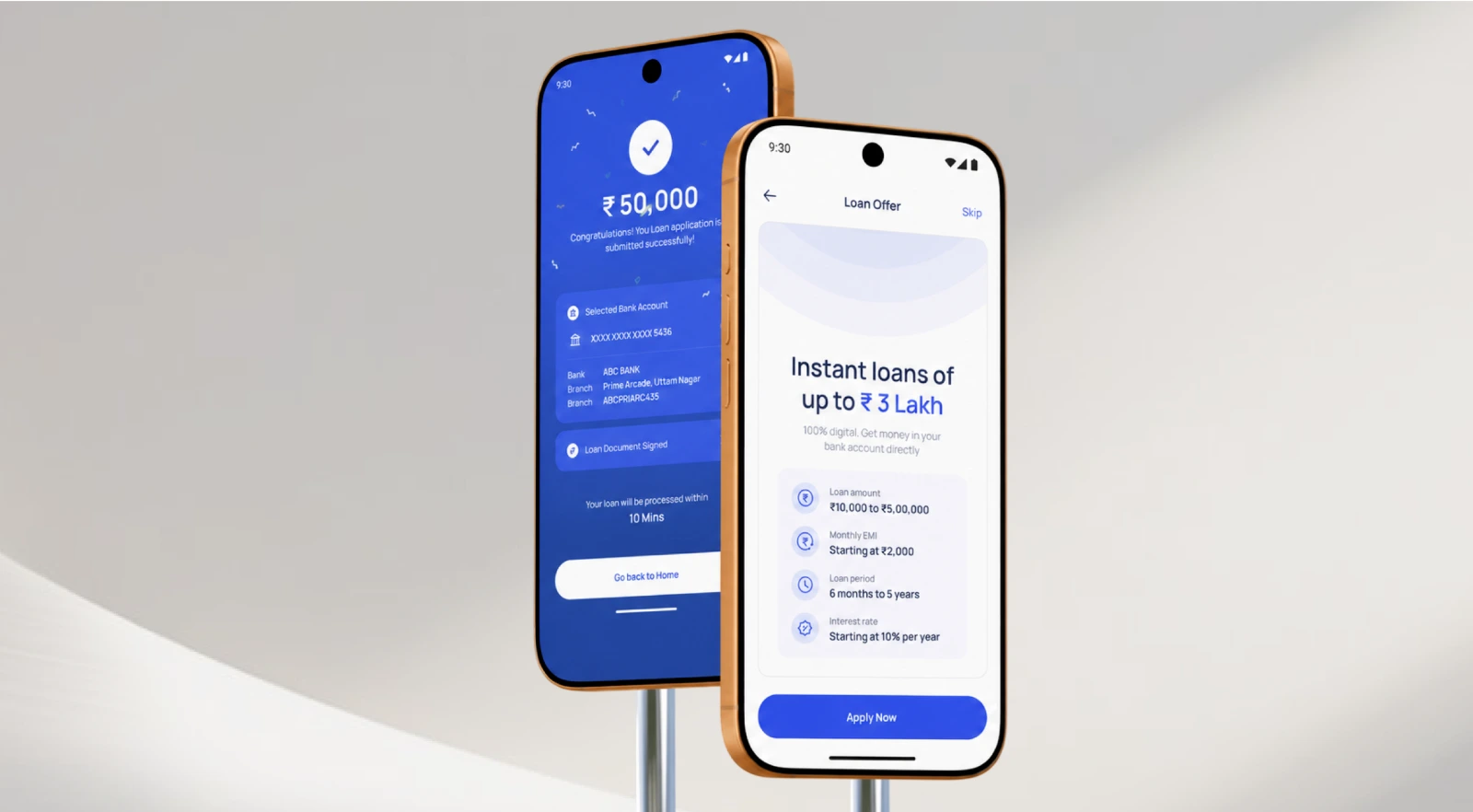
The SmartLend personal loan app on two phones, showing an instant loan offer and the application flow.FinTech

SmartLend: Scalable Personal Loan Engine for Digital Lending

A cloud-native platform for fast, secure, and compliant personal loans. With smart eligibility, fraud detection, and multi-tenant scalability, it enables instant onboarding, quicker approvals, and seamless white-label deployment.

60%Faster loan approvals50%Faster customer onboarding

How we work

How a SaaS Product Takes Shape

We make the decisions that are expensive to reverse — tenancy, billing, access — early, then release the product in stages that can be validated with real customers.

01

Define the Product

Establish the users, the core workflows, the commercial model and what the first release has to prove.

Focus
UsersWorkflowsPricing modelMVP scope
02

Architect for Tenancy

Decide how tenants, data and services are separated or shared, and how billing and entitlements connect access to the pricing page.

Focus
TenancyDataEntitlementsAPIs
03

Prove With Real Accounts

Release the core to early customers and validate onboarding, billing and operations before the product scales past them.

Focus
Early customersOnboardingBillingEvidence
04

Operate and Evolve

Run every customer from one product — releases, monitoring, analytics and a roadmap the architecture can keep absorbing.

Focus
ReleasesMonitoringAnalyticsRoadmap
Define01 Define the ProductArchitect02 Architect for TenancyProve03 Prove With Real AccountsOperate04 Operate and Evolve

Choosing a SaaS development company

Look Beyond the Feature List

The right SaaS development company should understand what happens after the first release. Features matter, but so do tenancy, pricing, access, integrations, operations and the decisions that become expensive to revisit later.

Look for a team that can handle:

Architecture
Tenancy, account structure, permissions and configuration.
Commercial Model
Subscriptions, usage, plans and entitlements.
Integrations
APIs, webhooks, SSO and external platforms.
Operations
Administration, analytics, monitoring and customer management.
Product Evolution
Adding customers, plans and capabilities without constant restructuring.

The right partner should help you make these decisions deliberately, rather than discovering their impact after the product is already in market.

Insights

Thinking Behind Better SaaS.

Perspectives on multi-tenancy, subscriptions, product-led growth and SaaS platforms that stay easy to operate.

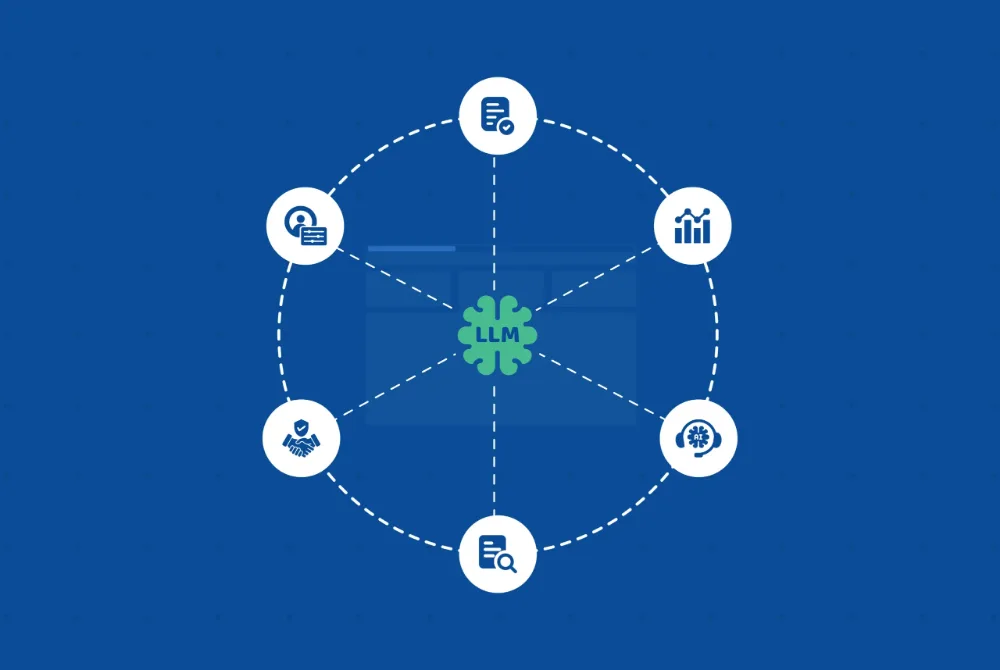
Reduce B2B SaaS Churn using Generative AI co-pilots and LLM-powered customer retention strategies
AI & Machine Learning

The Generative AI Co-pilot: 5 Must-Have LLM Use Cases to Reduce B2B SaaS Churn

· Akash Thakor · 6 min read

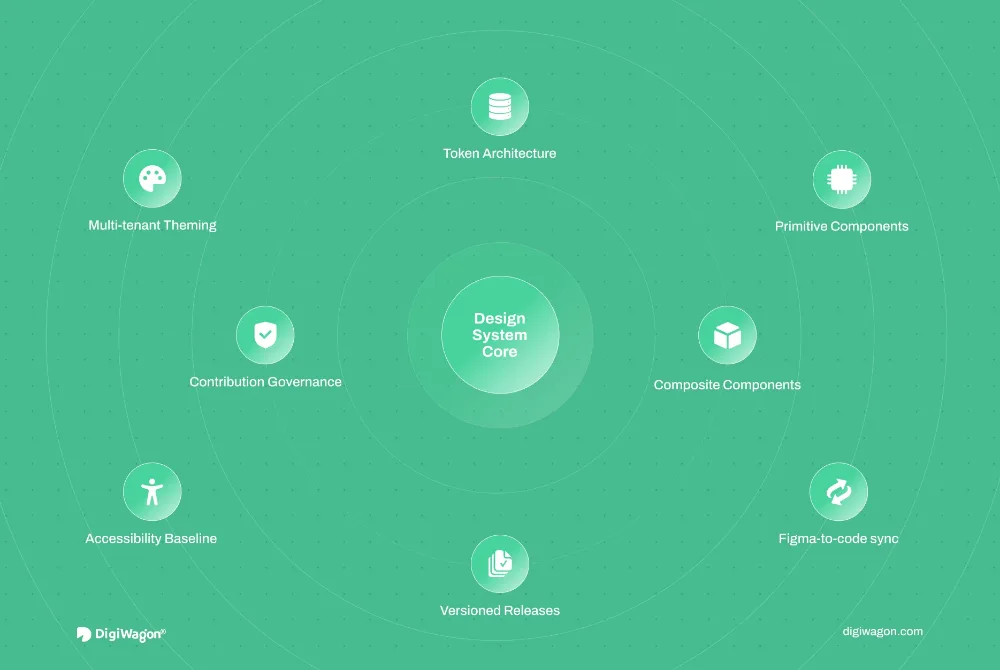
Cover image showing production-grade design systems as infrastructure with token architecture, primitive and composite components, Figma-to-code sync, accessibility, releases, and governance.
Experience Design

Production-Grade Design Systems: An Architecture Guide for Enterprise SaaS

· Pavan Chavda · 7 min read

Feature image showing recurring commerce architecture for Indian D2C brands with subscription models, billing layer, and retention signals
Data & Analytics

Subscription Commerce in India: Recurring Revenue for D2C Brands

· Divyarajsinh Gohil · 10 min read

All Software Engineering writing

FAQ

Frequently Asked Questions About SaaS Development

Straight answers about multi-tenancy, billing, MVPs, modernization and what building a SaaS product actually involves.

01What do SaaS development services include?

SaaS development services can cover product planning, architecture, multi-tenancy, user and account management, subscriptions, billing, integrations, admin tools, analytics and modernization. The exact scope depends on whether the product is new, being expanded, or being reworked from an existing application.

02What is the difference between single-tenant and multi-tenant SaaS?

In a single-tenant model, each customer has a dedicated application instance or environment. In a multi-tenant model, multiple customers use the same underlying product while their data, permissions, and configuration remain isolated. The right choice depends on security, customization, cost, and operational requirements.

03How is customer data kept separate in a multi-tenant SaaS product?

Tenant identity needs to be carried through the application, so every request, query and action is tied to the correct customer boundary. Isolation can be implemented through shared, dedicated, or hybrid data models depending on the level of separation required.

04How do you meter SaaS usage?

Usage-based SaaS products record specific events such as transactions, API calls, storage, seats, or processing volume. Those events can then be used for quotas, customer visibility, analytics, or billing. The metering model should be defined around what customers actually consume.

05What does SaaS architecture cost to run?

There is no fixed infrastructure cost for SaaS architecture. It depends on tenancy models, cloud resources, database design, traffic, storage, third-party services, and workload patterns. Architecture decisions should balance operating costs with isolation, reliability, and expected customer growth.

06Can an existing application be converted into SaaS?

Yes, but it is rarely just a hosting change. Existing applications may need changes to account structure, tenant isolation, permissions, subscriptions, configuration, APIs, and deployment. The first step is usually identifying which parts can be retained, and which need to be reworked for a SaaS operating model.

Your SaaS Has More in It

Whether you are shaping a new product, adding more customers or reworking an existing SaaS foundation, our SaaS development services can help you make the next stage easier to operate and evolve.

Ask an AI about this page

Before you choose a partner, ask your own AI

One click opens the assistant you already use with a question that points it at this page, so the answer comes from what we publish, not a guess.

The question it opens withRead https://digiwagon.com/saas-product-development-services and explain how DigiWagon runs a SaaS Development engagement, what I should expect in the first 90 days, and how to judge whether a partner like this fits a team of our size. Stick to what the page says and mark anything you are not sure about.