RegTech Software Development for AML, KYC and Compliance Platforms
Compliance platforms built for the examiner.
DigiWagon builds AML screening, KYC, transaction monitoring, watchlist governance and regulatory reporting software for RegTech product companies and the regulated firms they serve, across the UK, the US, India and the UAE. Every decision the platform makes is one an examiner can trace.
Pick the situation closest to yours. We’ll show what we would build for it, where it sits in the RegTech services below, and which regulation shapes it.
Pick what your platform has to prove
What it has to prove
A Screening Engine That Has to Decide in Milliseconds
Payments and onboarding events need sanctions and PEP checks inside the transaction path, fast enough that nothing queues and complete enough that every hit and every release is explained.
What we would build
What you could end up with
Real-time screening in the payment and onboarding flow, not after it
Match logic with tunable thresholds and a written rationale per rule
A decision record for every hit, release and override
Transaction monitoring catches more every quarter, but the queue grows faster than the team, investigators cannot see why a case was raised, and the backlog is itself becoming a finding.
What we would build
What you could end up with
Behavioral baselines that cut alerts that were never suspicious
Alert triage that surfaces the evidence with the case
Model documentation an examiner can read end to end
Lists arrive in different formats from different sources, duplicates and stale entries leak into screening, and when a regulator asks which version was live on a given day, nobody can say.
What we would build
What you could end up with
One governed list store with lineage, versions and effective dates
Cleansing, enrichment and synchronization designed in, not scripted
Screening-ready data whose provenance survives an audit
What it works with
Commercial list vendors and public sanctions sources
SWIFT, ISO 20022 and internal message formats
The screening and monitoring engines that consume the data
A Compliance Product Selling Into Several Jurisdictions
The platform works for one regulator and one data-residency regime; the next customer is in another country, with different reporting formats, retention rules and a different definition of a reportable event.
What we would build
What you could end up with
Multi-tenant architecture with per-jurisdiction rules and residency
Reporting formats as configuration, not forks of the codebase
One evidence pack per tenant that matches its regulator's expectations
What it works with
The regulators and reporting portals in each market
RegTech software development services for compliance-technology companies and the banks, payment firms and exchanges they serve: the engines, data platforms and workflows below, each linked to the DigiWagon practice that builds it.
01
RegTech Product Strategy & Consulting
A RegTech product is sold to compliance officers who will be examined on it, so the first questions are not features but obligations: which regulators the first customers answer to, which reporting formats and retention rules the platform must satisfy, what a reportable event means in each market, and where the data may live. We work that out with you before the roadmap is fixed, then scope a first release whose evidence model, tenancy and integration surface will survive the second jurisdiction. It is the difference between a regtech development company and a vendor that builds screens.
Regulatory scope mappingMulti-jurisdiction product designEvidence model definitionBuild-versus-buy assessment
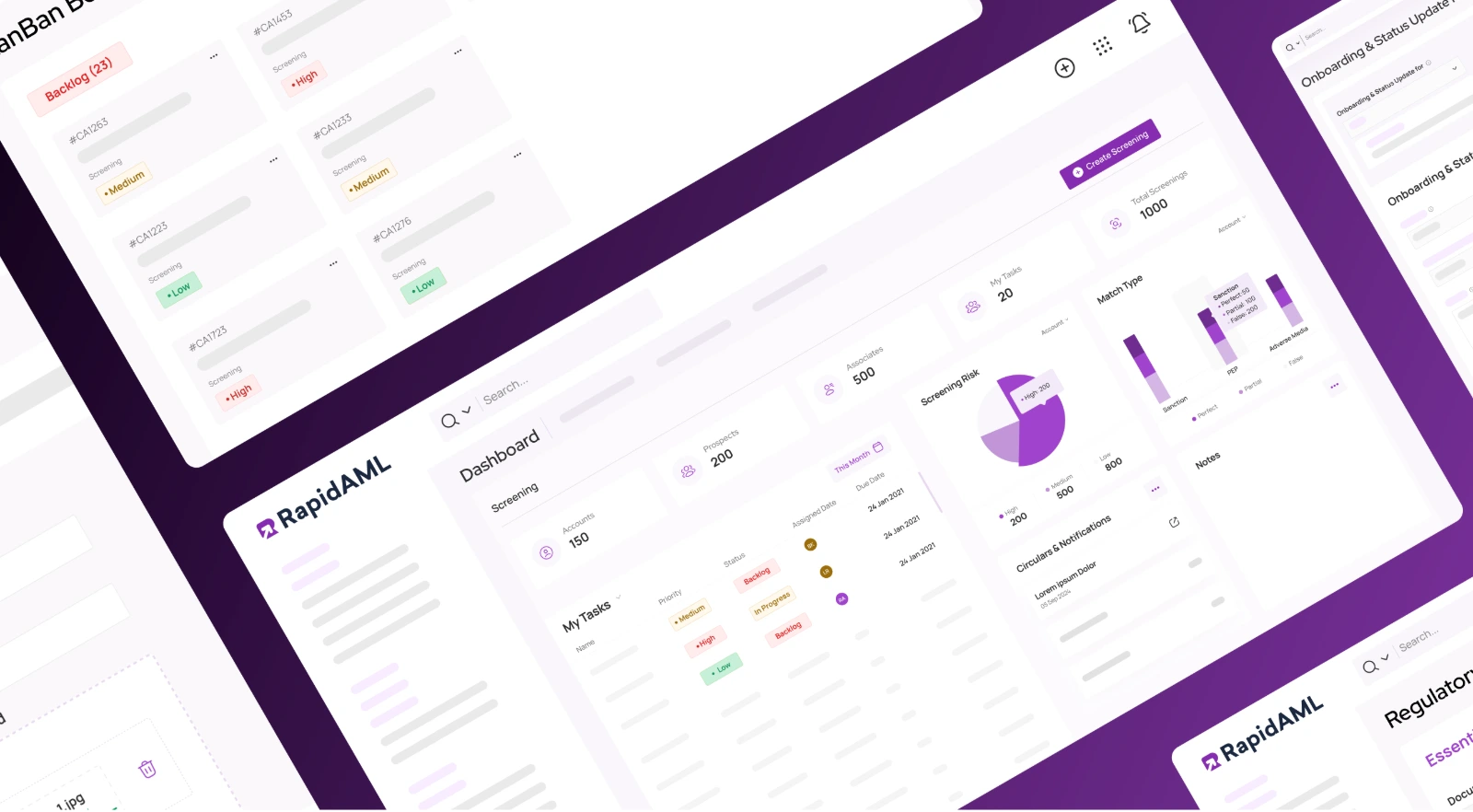
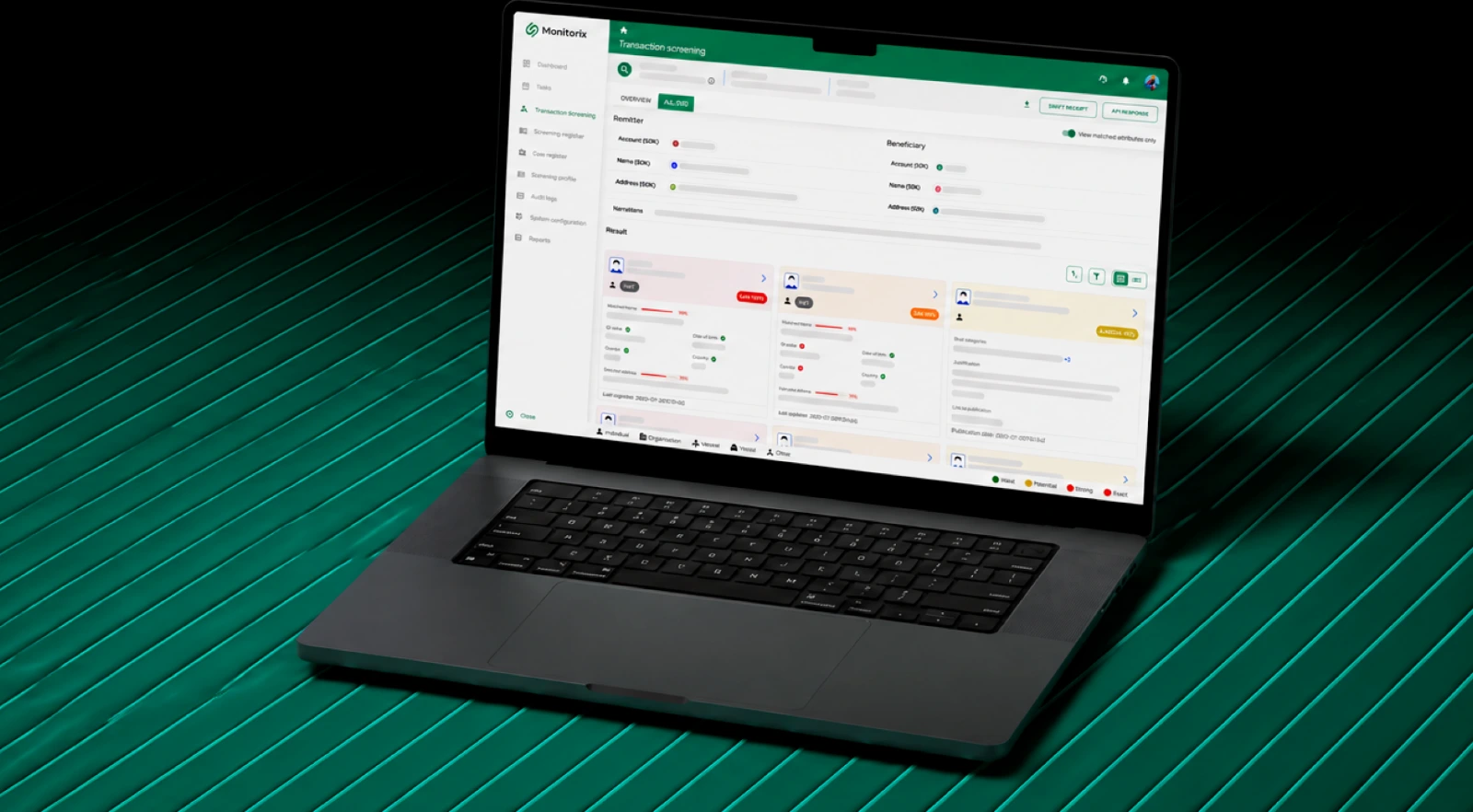
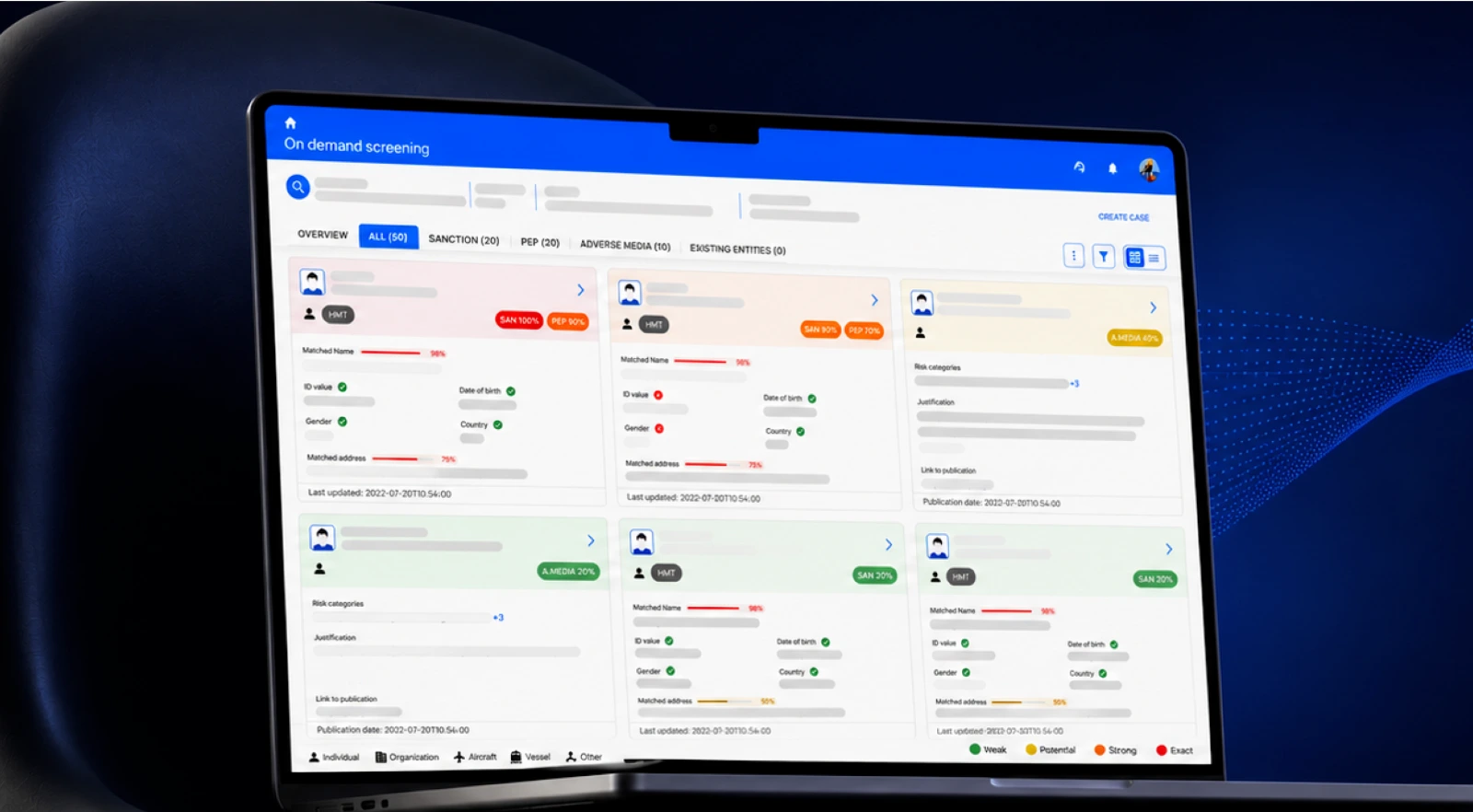
Name, entity and payment screening against sanctions, PEP and adverse-media lists, built to decide inside the transaction path. For a compliance-technology provider we built a real-time payment screening platform that validates payments before execution and made screening 50% faster and sanctions validation 40% faster, and an AI-powered screening platform on which information retrieval became 70% faster. The AML software development work that matters is the match logic and its record: tunable thresholds, documented rationale per rule, and a decision trail for every hit, release and override that an examiner can follow without an engineer in the room.
Sanctions & PEP screeningReal-time payment screeningFuzzy and phonetic matchingDecision audit trails
Identity verification, document checks, risk profiling and ongoing due diligence built as one governed journey rather than a chain of vendor widgets. The customer sees a fast onboarding; the compliance team sees risk scores with their inputs, consent and disclosures captured as evidence, and periodic refresh scheduled by risk tier. On an enterprise AML compliance platform, redesigning guided onboarding and role-specific dashboards made the onboarding flow 35% smoother and cut the training burden on compliance users by 30%. KYC software here is a workflow with an audit trail, not a form.
Digital identity verificationCustomer risk scoringPeriodic KYC refreshConsent & disclosure capture
Rules catch what you already know; behavioral analytics catches the pattern that is new this quarter and, done well, retires the alerts that were never suspicious. We built a real-time transaction monitoring platform that profiles customer behavior, detects suspicious activity 45% faster and improved monitoring workflow efficiency by 35%, with false-positive reduction as a design goal rather than a tuning afterthought. Every model ships with documented features, thresholds and review cadence, explanations attached to each alert, and drift monitoring in production, because in AML the model is itself an examined control.
Behavioral baseliningTypology and scenario librariesAlert scoring and triageModel risk documentation
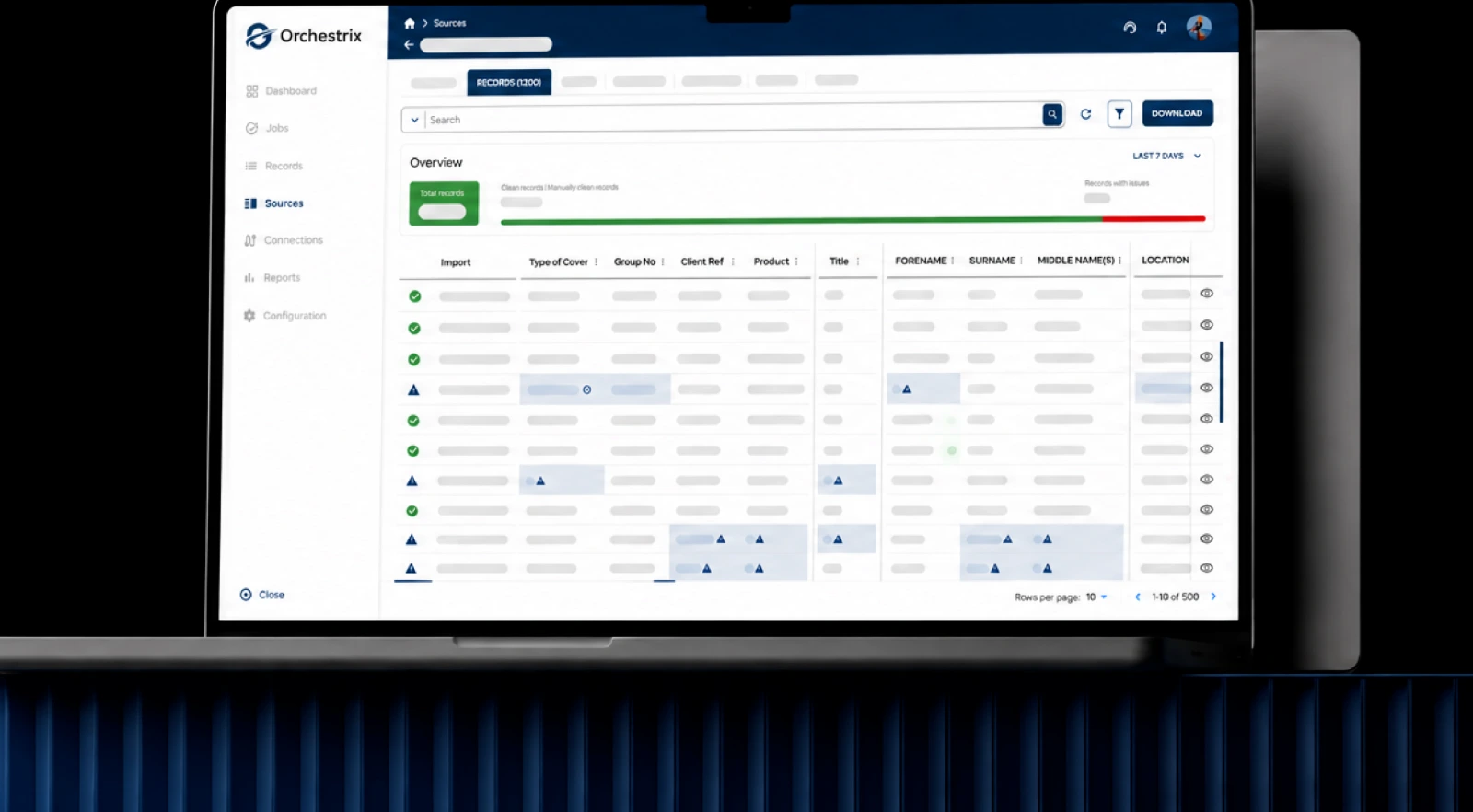
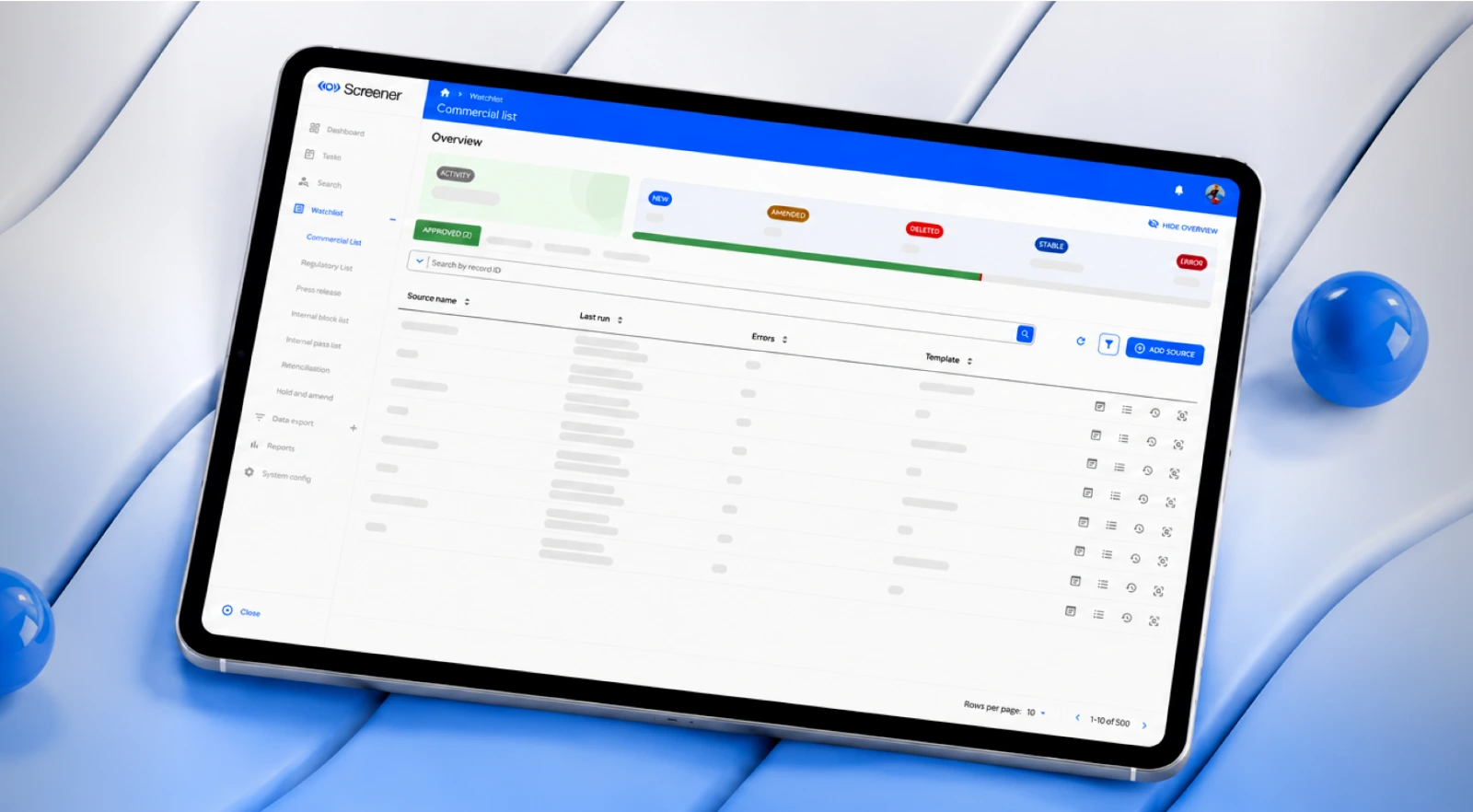
Screening is only as good as the lists behind it, and lists arrive from many sources in many formats with duplicates, stale entries and no shared identifiers. We build the governed data layer: ingestion from commercial and public sources, cleansing, enrichment, synchronization and versioning with effective dates, so any screening decision can be reproduced against the list that was live that day. On a watchlist governance platform that made updates 50% faster and cut duplicate or inconsistent records by 40%; on a SWIFT data orchestration platform, automating ingestion, validation and format standardization removed 60% of the manual spreadsheet work.
Watchlist ingestion & versioningEntity resolution & deduplicationSWIFT & ISO 20022 handlingData lineage for audit
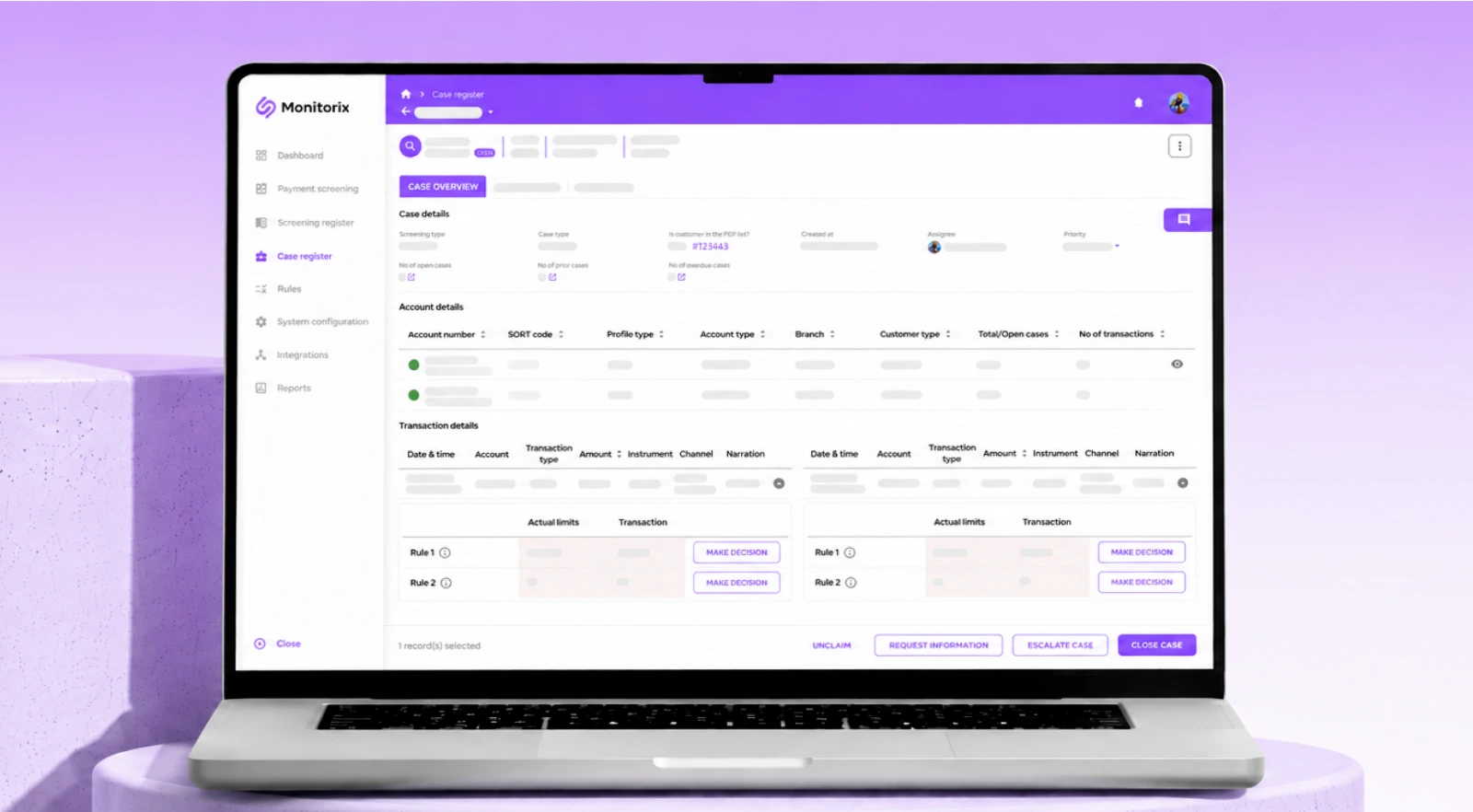
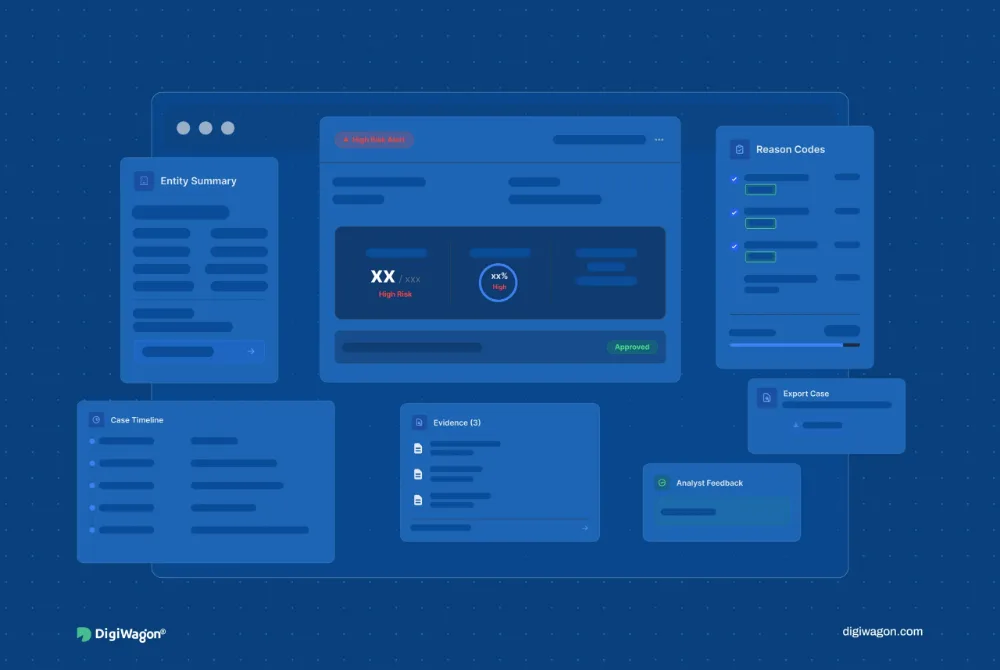
An alert becomes a case, a case becomes a decision, and a decision becomes a report to a regulator on a deadline; every hand-off is where evidence goes missing. We build the case management and reporting layer that keeps it: queues sized for analysts, four-eyes approval where the rule requires it, narrative and evidence assembled as the case progresses, and suspicious-activity and transaction reports generated in the regulator's format with the submission record kept. Repetitive steps such as re-screening, refresh and escalation are automated; exceptions route to people, and the audit pack is a by-product of the work.
A compliance platform lives between systems it does not own: core banking, payment rails, CRMs, ERPs, list vendors, identity providers and the regulators' own reporting portals. RegTech integration is the work of making those one system: connectors and webhooks, event streams so a monitoring engine sees a transaction as it happens, idempotent submission to regulatory APIs, and integration tests that certify each connection before it carries production data. For the compliance-technology provider whose platforms we build, integration is the layer that lets one product serve banks on different cores in different countries without a fork per customer.
Core banking & payment connectorsRegulatory API submissionEvent-driven integrationVendor and list-feed adapters
Compliance systems age badly: rules accumulate that nobody dares remove, batch jobs run overnight while payments move in seconds, and last year’s reporting format is still hand-assembled. We modernize without a rewrite the examiner would notice. An API layer first, so new screening and reporting capability ships against the old core; then rules and data migrated module by module, each run in parallel and reconciled before the old path is retired. The AI-powered screening platform we built replaced manual knowledge discovery that had consumed 60% of analysts' effort, and it was introduced alongside the system it replaced.
An analyst clears hundreds of alerts a day and a compliance officer signs off on what the platform tells them; interfaces that hide the evidence cost both time and the firm its audit. We design role-specific dashboards, guided investigation flows and reporting views in which the reason for a decision is on the screen, not three clicks away. RegTech UI/UX design work for an AML compliance platform made onboarding 35% smoother and reduced training burden by 30%; for a UAE AML regulatory resource, restructuring made compliance information 45% easier to discover. Design systems keep the product consistent as regulations change.
Analyst workbench designInvestigation flow UXExecutive compliance dashboardsDesign systems for regulated products
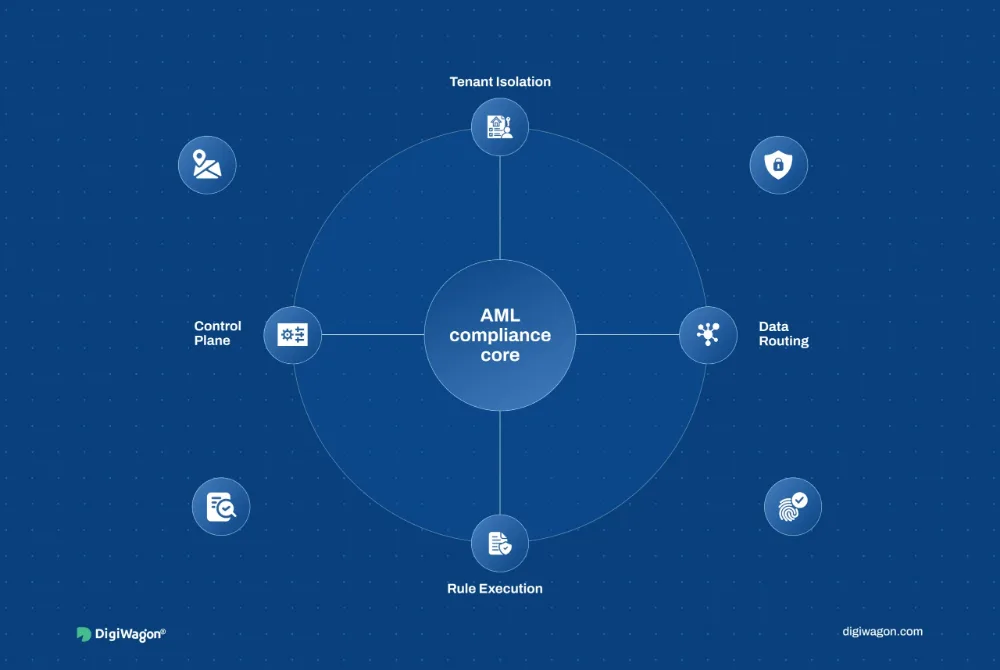
A compliance platform holds the most sensitive data a firm has and is examined in every country it operates in. We engineer the cloud estate and delivery pipeline so that the controls are structural: per-tenant and per-jurisdiction data residency, encryption and key management, segregated environments, signed releases, immutable logs and evidence collected automatically for SOC 2 and ISO 27001 audits. Multi-geography SaaS architecture for AML compliance is a pattern we have built and written about: one codebase, jurisdiction-specific rules and reporting as configuration, and a release process a compliance team can approve without slowing the engineers down.
Data residency by jurisdictionMulti-tenant compliance SaaSSecure CI/CD & change controlAudit-ready logging & evidence
The building blocks behind the platforms above, grouped the way a compliance product team scopes them. Pick a group to see what we have built inside it.
01 / 05
Screening & Monitoring
01Sanctions, PEP & adverse-media screening
02Real-time payment screening
03Transaction monitoring rules & scenarios
04Behavioral analytics & anomaly detection
05Fraud pattern detection
06Alert scoring & false-positive reduction
02 / 05
KYC & Onboarding
01Digital identity & document verification
02Customer risk profiling & scoring
03Ongoing due diligence & periodic refresh
04Beneficial ownership capture
05Consent & disclosure evidence
06Risk-tiered onboarding journeys
03 / 05
Case Management & Reporting
01Alert-to-case workflow
02Four-eyes review & escalation
03SAR / STR generation & submission
04Automated regulatory returns
05Investigation narratives & evidence packs
06Analyst workbench & executive dashboards
04 / 05
Regulatory Data & Integration
01Watchlist ingestion, versioning & governance
02Entity resolution & deduplication
03SWIFT & ISO 20022 message handling
04Core banking, ERP & CRM connectors
05Regulatory API & portal submission
06Event streams for real-time monitoring
05 / 05
Governance & Assurance
01Model documentation & validation support
02Rule-change control & versioning
03Audit trails & decision records
04Data residency by jurisdiction
05Access control & segregation of duties
06Evidence generation for SOC 2 / ISO 27001
Who we build for
RegTech Segments We Build For
Five kinds of customer, each examined by a different authority. The screening, monitoring and reporting patterns transfer; the obligations and the data-residency lines do not.
RegTech Product Companies
Compliance-technology vendors whose product is examined through their customers. We build screening, monitoring, watchlist and data platforms for a provider serving banks across several jurisdictions, and the engineering questions are theirs: multi-tenancy, per-jurisdiction rules, false-positive rates and the evidence each customer’s regulator expects.
Banks & Financial Institutions
Institutions supervised by FinCEN, the FCA, the RBI or the UAE Central Bank, replacing manual comparison and report preparation with monitored, auditable workflows. The core cannot pause, so screening and reporting are integrated through APIs and run in parallel until reconciled.
Money Service Businesses & Exchange Houses
High-risk categories under AML law, where thin margins meet heavy due-diligence obligations. Automated KYC, transaction monitoring and reporting bring the cost of compliance down without lowering the standard the regulator applies.
Virtual Asset Service Providers
Exchanges and custodians facing penalties for KYC and AML failures under the FATF travel rule and its national implementations. Onboarding, wallet screening and reporting are built for the pace of the asset class and the scrutiny of the supervisor.
Payment Processors & FinTech Platforms
Firms whose product is the payment path, integrating screening and monitoring through APIs so that compliance runs at transaction speed. Latency budgets are set in milliseconds and every hit is logged for the investigator who reads it later.
Compliance by design
Compliance Is Architecture
A RegTech platform is itself a control the examiner tests. We treat each framework as a design constraint: which events are reportable, what data is classified and where it may live, who can act on a case, and what evidence the system produces on its own. Every framework below binds at least one of the services above, because that is where it is implemented.
01
FATF Recommendations (2012, updated 2023) and the Travel Rule
The global AML/CFT standard: risk-based due diligence, screening, monitoring, reporting and, for virtual assets, originator and beneficiary information travelling with the transfer.
Screening enginesKYC platformsMonitoring
02
OFAC, UN, EU and UK HM Treasury sanctions regimes
List-based and ownership-based screening obligations, updated daily; the register requires versioned lists so any decision can be reproduced against the list live that day.
Screening enginesWatchlist data
03
FinCEN CDD Rule (2018) and the AML Act of 2020
Beneficial ownership, customer due diligence and suspicious-activity reporting for US institutions, with the Bank Secrecy Act’s recordkeeping behind them.
KYC platformsCase management & reporting
04
UK Money Laundering Regulations 2017 and FCA SYSC 6
Risk assessment, customer due diligence, ongoing monitoring and the systems-and-controls expectations the FCA examines a UK firm against.
EU AML Regulation 2024/1624 (applies from 2027) and 6AMLD
The single EU rulebook replacing national transpositions; a platform selling into the EU is built so the 2027 obligations are configuration, not a rewrite.
Product strategyMulti-jurisdiction deployment
06
UAE Federal Decree-Law No. 20 of 2018 and goAML reporting
The UAE’s AML/CFT regime, its Financial Intelligence Unit’s goAML portal and the Central Bank’s guidance, plus data-residency expectations for platforms hosted in the Emirates.
Case management & reportingMulti-jurisdiction deployment
07
India PMLA 2002 and the RBI KYC Master Direction
KYC, record retention and reporting to FIU-IND for regulated entities in India, with the RBI’s digital KYC provisions shaping the onboarding flow.
KYC platformsScreening engines
08
SR 11-7 Model Risk Management (Federal Reserve, 2011)
Documentation, validation and ongoing monitoring of the models that score alerts and risk; the reason every model here ships with its features, thresholds and review cadence written down.
MonitoringScreening engines
09
GDPR, UK GDPR, UAE PDPL and India’s DPDP Act 2023
Lawful basis, retention, residency and subject rights for the personal data a compliance platform necessarily holds, applied per jurisdiction the tenant operates in.
Information security management and evidenced controls. DigiWagon holds ISO/IEC 27001 and ISO 9001 certification; the platform’s pipeline generates the SOC 2 evidence as it runs.
Every engagement
Certification is a claim we make only about ourselves. For everything else on this list, the platform is built for the framework and the evidence is produced with the code.
RegTech in practice
RegTech in practice.
Screening, monitoring, watchlist and compliance data platforms. 6 of them are written up in full.
RegTech software development starts from the examination, not the feature list: which authority tests the platform, what it will ask to see, and which decisions have to be reproducible months later. Everything else is sequenced from there.
01
Discover the Examination
Map the regulators, reporting formats, data classes and jurisdictions the platform answers to before scope is fixed, so the evidence model and the residency lines are part of the plan and not a surprise at the first audit.
Focus
RegulatorsEventsData classesJurisdictions
02
Design for Reproducibility
Versioned lists, rule-change control, decision records, four-eyes approval and model documentation are designed as features, because a compliance decision that cannot be reproduced against the data live that day is a finding waiting to happen.
Focus
DecisionsVersioningControlsExplainability
03
Build in Parallel
New screening, monitoring and reporting capability runs alongside the system it replaces, reconciled case by case before the old path is retired, through segregated environments with signed releases and synthetic test data.
Focus
Parallel runReconciliationSecure CI/CDTest data
04
Run Under the Examiner’s Eye
False-positive rates, list freshness, model drift, submission outcomes and control failures are watched in production, with the evidence pack kept in the form each regulator expects to read.
Focus
Alert qualityList freshnessDriftEvidence
Discover01 Discover the ExaminationDesign02 Design for ReproducibilityBuild03 Build in ParallelRun04 Run Under the Examiner’s Eye
Insights
From the Compliance Floor.
Writing from the AML and RegTech work: how screening engines and watchlist pipelines are architected, what the analyst’s day actually looks like, and where AI does and does not belong in a compliance decision.
Software Engineering
How We Architect Multi-Geography SaaS Platforms for AML Compliance
Frequently Asked Questions About RegTech Software Development
Direct answers on what separates a regtech development company from a general vendor, whether to build or buy, how false positives come down, where regulatory data may live, and how AI is kept under model-risk control.
01What sets DigiWagon apart from other RegTech software development companies?
Shipped compliance platforms rather than a capability deck: an AI-powered AML screening platform, real-time payment screening, transaction monitoring with behavioral analytics, watchlist governance and SWIFT data orchestration for a compliance-technology provider serving banks across jurisdictions, each written up as a case study on this site. Every platform is built to be examined, with decision records, versioned data and model documentation designed in from the first sprint.
02Should we build a RegTech solution in-house or buy AML software from a vendor?
Buy when your obligations are standard and a packaged AML software or KYC software product covers them; build when your customers, jurisdictions or data make the packaged product the thing you spend your time working around. Most of our RegTech clients are product companies for whom the platform is the business, and regulated firms whose integration and reporting needs no vendor fits. Discovery answers the question from your obligations.
03How do you reduce false positives in AML screening and transaction monitoring?
By treating alert quality as a design goal rather than a tuning task: behavioral baselines instead of static thresholds where the data supports them, entity resolution and versioned lists so stale or duplicate records stop generating hits, match logic with a written rationale per rule, and alert scoring that surfaces evidence with the case. On one monitoring platform that detected suspicious activity 45% faster while improving workflow efficiency by 35%.
04How do you handle regulatory data in cloud-based RegTech systems across jurisdictions?
Residency is an architectural boundary, not a policy document. Tenants and jurisdictions get their own data stores in the regions their regulators require, encryption and key management are per tenant, access is segregated by role and logged immutably, and reporting formats are configuration, not code forks. The evidence for SOC 2 and ISO 27001 audits is generated by the pipeline as it runs, so each regulator sees its own pack.
05Where does AI belong in a RegTech platform, and how is model risk controlled?
In scoring, triage and retrieval, never as an unexplained decision. Behavioral models score alerts and knowledge assistants speed up investigation, as on the screening platform where information retrieval became 70% faster, but every model ships with documented features, thresholds and review cadence, an explanation attached to each output, human review for edge cases and drift monitoring in production, following SR 11-7’s model-risk expectations.
Build Compliance Technology That Survives the Examiner
Tell us which regulators your platform answers to and what it has to prove. We will map the obligations, the integrations and the first release, and show you comparable work before anything is scoped.
One click opens the assistant you already use with a question that points it at this page, so the answer comes from what we publish, not a guess.
The question it opens withRead https://digiwagon.com/regtech-software-development. Outline how DigiWagon approaches RegTech engineering and compliance, then tell me what a RegTech CTO should verify before choosing them or any similar partner. Stick to what the page says and mark anything you are not sure about.