Technological advancements and increasing customer needs are prompting businesses to upgrade their system to pace up with the ongoing trends. With the constant change in the digital ecosystem, companies are actively looking to transform their operations. While off-the-shelf solutions no doubt have revolutionized industries, they fail to address the intricacies of every business. It is where a new frontier, custom software development, emerges to efficiently address the market needs in many different aspects.
As per the report of Grand View Research, the global market size is estimated to reach $146.18 billion by 2030, driven by a projected CAGR of 22.6%.
It is a game-changing process that empowers businesses to customize solutions aligned with their unique needs. Unlike one-size-fits-all solutions, which come with limitations and affect the potential of business growth, custom software opens a gate to limitless possibilities. It enables the companies to redefine their digital infrastructure to drive growth efficiency and gain competitive advantage. In this blog, we will understand custom software, its importance for business, and common mistakes to avoid when creating this software.
What is Custom Software?
Custom software or bespoke software is a software application that aims to meet the unique needs of a business or organization. It is designed and developed by an in-house team or an external provider. The software is developed from the ground up, providing scalability, unparalleled flexibility, and addressing the growing needs and challenges, unlike commercial off-the-shelf software, which is designed for a broad range of users with generic features to cater to common problems within an industry. Custom software is developed for a personalized approach, ensuring it aligns with business objectives, workflows, preferences, and flexibility to adapt to evolving market demands.
Custom software development is the process of planning, designing, developing, and deploying solutions for a specific set of functions, users, and organizations. For example, a banking app is specifically designed to meet the banks' and customers' needs, and a healthcare app is built to meet medical professionals' and patient's needs.
However, irrespective of business domain and industry, it helps to streamline operations, enhance customer experience, and increase efficiency. It also helps to apprehend customers' pain points and enables businesses to understand future demands.
Importance of Custom Software for Your Business
Considering the manifold advantages of custom software, here is a comprehensive discussion on why it has been a dire necessity for your business and businesses of the 21st century.
Customer requirements are limitless, and that's what drives firms. Therefore, that's the reason why it is essential that businesses across industries are progressively turning to custom software over off-the-shelf software. Ready-made software falls short of meeting the market's changing requirements compared to customized software. Both are different in terms of performance, functionality, and usability. But still, there is a perpetual struggle for balance between purchasing and building. Here are a few reasons for custom software's ultimate success.
- Meet corporate requirements and streamline processes and procedures.
- Seamlessly integrate with the legacy systems and processes to ensure smooth operation and data flow.
- Existing applications become faster and more responsive.
- Provides a competitive edge with capabilities unavailable to competitors.
- Enhanced security and data privacy
- Reduces the dependency on software providers for updates, support, and additional features.
- The initial investment is too high but can be more cost-effective in the long run due to its tailored fit and adaptability.
Key difference between Custom Software and Off-the-shelf Software
Commercial off-the-shelf (COTS) comes pre-packaged with features and requires the vendor to update its versions. It is used by the mass market for universal needs, and enterprises use it by paying licensing fees. Zoom, online meetings, and video conferencing software are the best examples that gained popularity during the global lockdown age.
On the other hand, custom software is developed by a custom software application development company to meet your needs. As it is made on order, it highly weighs on features relevant to your requirements.
Below is a chart that help you understand the differences between off-the-shelf and custom software.

Types of Custom Software
There are countless types of customer software development in the market that cater to the diverse needs of businesses across industries. Here's a comprehensive description of various custom software and how they benefit businesses:

-
- Customer Relationship Management (CRM)
It is the most popular software businesses use to manage customer interactions, sales, and marketing campaigns. It improves relationships and increases sales.
Example: A CRM solution designed to meet your unique needs.
Benefit: Effectively track leads, increases customer experience and sales performance.
-
- Business Process automation software
Every business has repetitive tasks that consume valuable time and resources. The software helps to streamline business processes, improves efficiency, and automates repetitive tasks.
Examples: Workflow management systems, automated invoicing tools, and project management software.
Benefit: Saves time, reduces human error, and increases productivity.
-
- Enterprise Resource Planning Software (ERP)
The software integrates various functions into a single platform, providing numerous options for operations. It helps businesses manage the workflow in real time. ERP solutions enable organizations to collect, manage, store, and interpret data from different business verticals.
Example: Custom ERP for finance, HR, supply chain management, and manufacturing.
Benefit: Enhance decision-making, improve collaboration, and streamline business processes.
-
- Content Management Systems (CMS)
Content Management Software such as WordPress helps organizations design, update, create, and edit various types of website content without technical expertise. It offers customizable features for content authoring, publishing, and distribution.
Example: Custom CMS for news portals, enterprise knowledge bases, or e-learning platforms.
Benefit: Enables easy content updates, improves collaboration, and supports multi-channel publishing.
-
- Fintech Software
This software is valuable for financial institutions and their customers as it helps them manage their banking activities, maintain digital wallets, cryptocurrency investments, and so on. The software not only manages customer accounts but enhances user experience and protects customers against fraud and data theft.
Example: Mobile banking app, cryptocurrency exchange, robo-advisors for investment
Benefits: Increases transaction security, automates financial services, enhances financial services, and improves user experience.
-
- Healthcare software
The software is bliss for medical professionals and patients. It helps improve healthcare industry performance by managing patient records, scheduling appointments, personalized treatment plans, and maintaining medical histories.
Examples: Telemedicine platforms, Electronic Health Records (EHR), and hospital management systems.
Benefit: Ensures compliance with medical regulations, improves patient care, and enhances operational efficiency.
-
- eCommerce Software and online platforms
The software is beneficial for businesses expanding their online presence and helps generate higher ROI. It enables streamlining online sales, managing inventories, creating brand awareness, engaging customers, expanding markets, carrying on effective market campaigns, and so on.
Examples: B2B procurement platforms, online marketplaces, and increased personalized shopping experience.
Benefit: Provides tailored user experiences, integrates seamlessly with payment and inventory systems, and scales with business growth.
-
- AI and data analytics software
The software can automate complex tasks, perform predictive analysis, enhance data-driven decision-making, optimize operations, and predict future trends.
Example: AI-powered customer insights tools, predictive maintenance software, and chatbots for customer support.
Benefit: Gain valuable insights, increase decision-making capabilities, and enhance customer interactions.
What mistakes should be avoided while developing custom software?
Bespoke Custom Software is a highly complex software that requires technical expertise from a top company that provides valuable guidance throughout the development process. It is essential to be aware of the common mistakes while building the software that may hinder the success of the project. By avoiding and recognizing these pitfalls, businesses ensure a smoother development process and can get better outcomes. Here is a detailed list of common mistakes to avoid during the overall development process:

-
- 1. Unclear goals and requirements
Every custom software is distinct, as businesses belong to different domains and have unique requirements. It is essential to explain your project goals during the initial conversation. Highlighting clear goals and requirements before the development process begins helps avoid misalignment between the software and business needs. This stage involves clearly defining the project scope, outlining key features and functionality, and identifying target users.
-
- 2. Insufficient testing and quality assurance
Another significant factor contributing to mistakes is neglecting thorough testing. Negligence can result in the rise of software bugs, security vulnerabilities, and performance issues. To avoid this complexity, emphasize regular code reviews, perform rigorous testing, and use automated testing tools to maintain high-quality standards.
-
- 3. Inadequate documentation and training
It is one of the important stages that involves adequate documentation and training for the end user to be efficient in using the software. Lack of documentation and training can lead to confusion and inefficiencies.
-
- 4. Development of wrong features and overly complex solutions
The most essential of software development is wasting resources on unnecessary features.
-
- 5. Delay in making an important decision
Evaluating minute requirements at the initial conversation can save time, keep the project on track, and focus on the goal. A lack of critical decisions can lead to project delays that can extend beyond the agreed schedule and cause costs to rise.
Avoiding these common mistakes can enhance the effectiveness of the bespoke software development process.
Why choose DigiWagon for Custom Software Development?
Finding the right development partner for your custom software is as important as it is desirable. DigiWagon is a reliable and innovative software development company specializing in digital marketing, app development, web development, and UI/UX design.
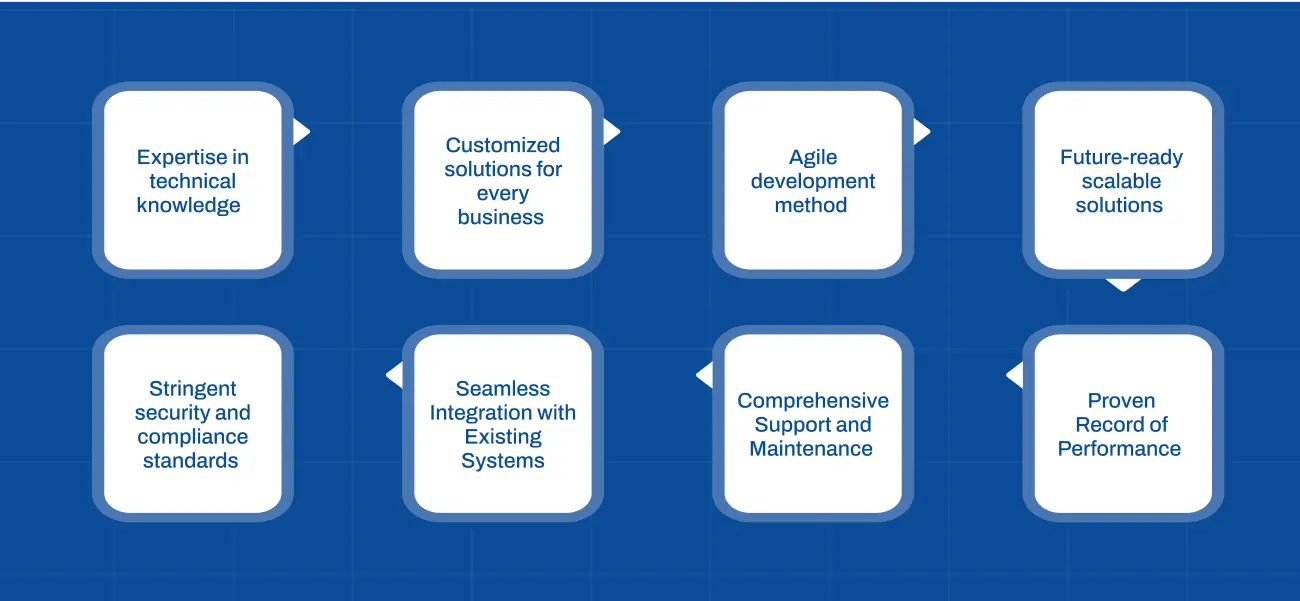
Our dedication to leveraging the latest technologies and addressing complex business challenges enables us to deliver scalable and robust solutions that meet customer's expectations and their unique go-to-market requirements. Here are a few reasons why you should partner with us:
-
- 1. Expertise in technical knowledge
We have extensive expertise in emerging technologies such as AI, cloud computing, blockchain, and IoT, assuring that your customized software is built upon the newest version.
-
- 2. Customized solutions for every business
Unlike ready-to-use software, DigiWagon focuses only on fully personalized solutions that work by your exact business processes and provide you with more advantages over others.
-
- 3. Agile development method
We embrace agile methodology as it ensures faster development cycles, continuous feedback integration, and quick adaptability to changing business requirements and marketing conditions.
-
- 4. Future-ready scalable solutions
We build highly scalable software, ensuring that the software keeps growing as per the needs of your business and easily accommodates new technologies as and when required.
-
- 5. Stringent security and compliance standards
We have worked with various companies from reputed sectors. Our security processes include data encryption, consultation with industry regulations, and regular security audits to protect sensitive information.
-
- Seamless Integration with Existing Systems
Your new software will tie nicely into the existing tools, databases, and any third-party applications that they may already have in the house, all of which afford it little downtime and maximum efficiency.
-
- Comprehensive Support and Maintenance
DigiWagon's comprehensive services guarantee that your software remains updated, secured, and optimized from initial consultations through post-launch maintenance.
-
- Proven Record of Performance
With a comprehensive history of projects in various industries, DigiWagon earned the reputation of developing top-quality solutions within software that are reliable in driving business growth.
Conclusion: Customer Software Development is the Way to GO
In the ever-evolving digital landscape, custom software can make all the difference compared to off-the-shelf software. It is a stepping stone to unparalleled competitive advantage that enables organizations to meet their demands and challenges. However, to work smoothly with this software, it is necessary to design and develop impactful solutions.
With the custom software development process, you have a clear understanding of several challenges faced and how to overcome them. Effective project management, proactive planning, and open communications ensure successful software delivery.
You must have seen many unfriendly products in the market. Like the key lock of a door between the door handle. Or confusing buttons in the lift for operation. Even the unclear ways to symbolise males and females outside a public washroom are confusing.
DigiWagon offers software solutions that fit your particular needs and has everything you need to partner with, whether it is a custom ERP in the CRM, an AI analytics tool, or an advanced mobile app.