The Death of the Single Channel
For Direct-to-Consumer (D2C) brands, particularly in competitive markets like the USA and UK, the battle is no longer won by selling the best product, but by offering the best experience. The modern customer journey is fluid: they might discover a product on TikTok, research it on the brand’s mobile app, try it on in a physical pop-up store, and ultimately purchase it via a voice assistant at home.
The foundation of this journey remains a robust digital presence. While social media and voice tech are rising, high-performance eCommerce Website Development serves as the vital anchor that connects these disparate touch points.
The brands that will thrive in 2026 are those that master omnichannel commerce, not just being present on multiple channels, but making those channels function as a single, synchronised entity. This is a non-negotiable step in Digital Transformation.
Omnichannel vs Multichannel: What’s the Difference?
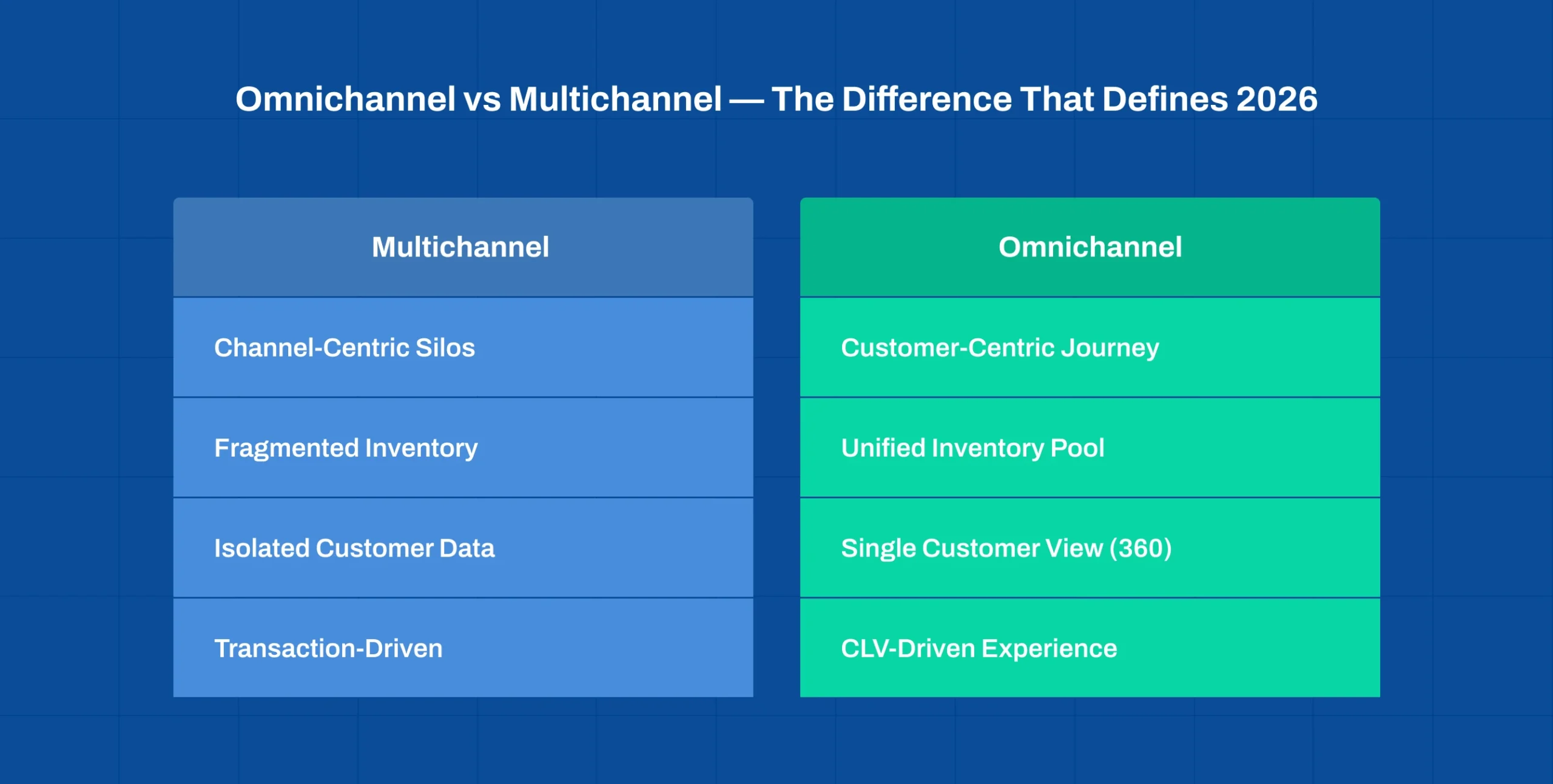
Omnichannel vs Multichannel
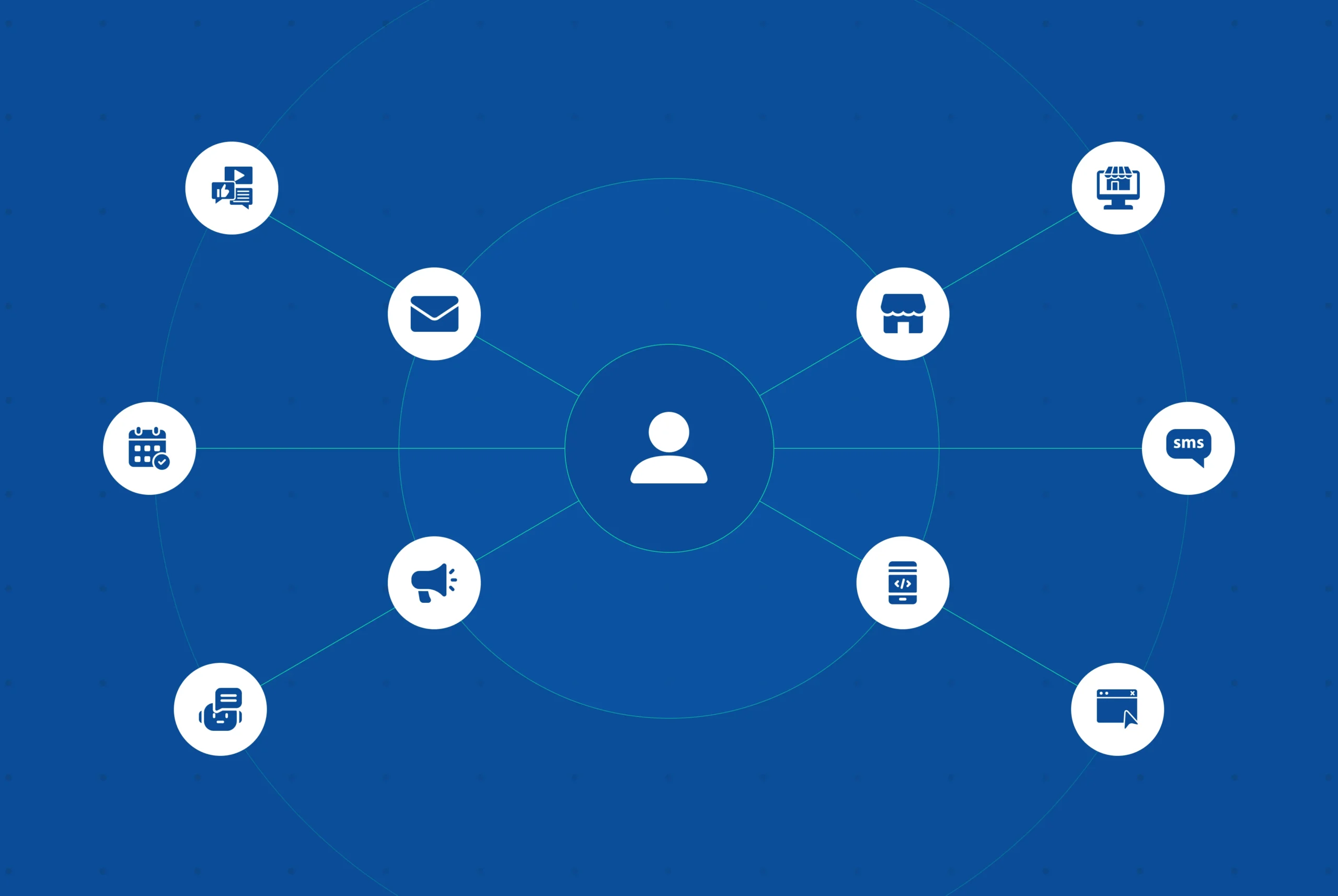
Multichannel brands operate disconnected touch points. Omnichannel brands unify inventory, data, and customer context so every interaction feels continuous. In 2026, CLV growth depends on journey continuity, not channel count.
Many brands believe they are omnichannel, but in reality, they are merely multichannel. The difference lies in the strategy, not the channel count.
| Multichannel Approach | Omnichannel Approach | |
|---|---|---|
| Focus | Channel-centric; each channel is a silo. | Customer-centric; focus on the unified customer journey. |
| Inventory | Separate inventory pools for store, web, and app. | Single, unified inventory pool visible across all channels. |
| Data | Fragmented; customer history is isolated to the channel used. | Single Customer View (Customer 360), all touchpoints are linked. |
| Goal | Maximise transactions on each channel. | Maximise Customer Lifetime Value (CLV) through seamless service. |
An omnichannel platform is a true UI/UX Design & Engineering effort. It ensures a customer can start a return on a mobile app, drop the item off at a physical store, and receive a personalised upsell email moments later; the experience is uninterrupted.
The Technology Imperative: Headless and Composable Commerce
Headless + Composable Commerce
True omnichannel requires decoupling experience layers from commerce logic. Headless architecture ensures consistent pricing, inventory, and promotions across every channel while enabling rapid channel innovation.
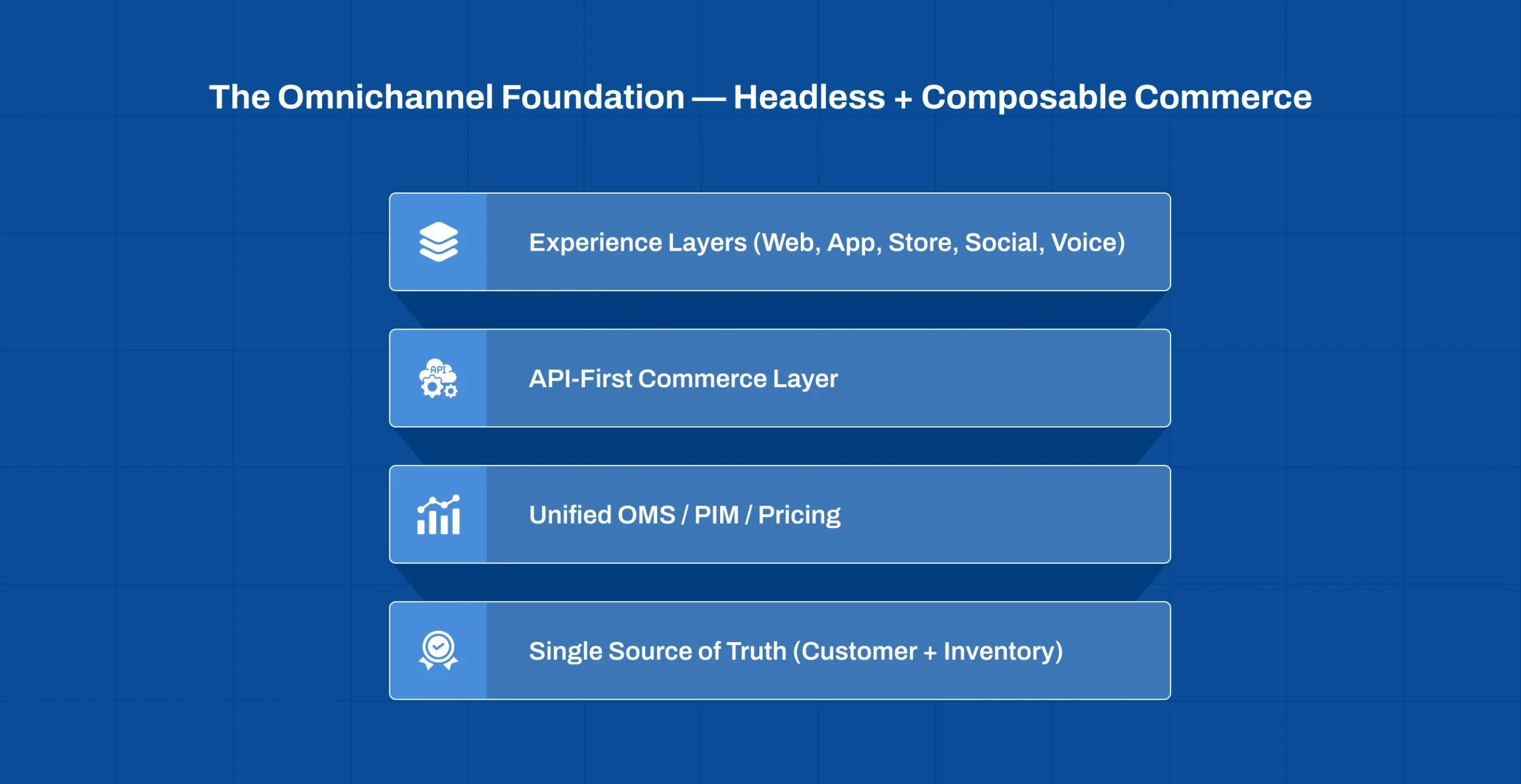
Achieving a unified experience demands an architectural pivot away from rigid, monolithic systems to flexible, composable architecture with a headless commerce core.
Composable commerce for D2C brands means choosing the commerce engine, CMS, search, checkout, loyalty and customer data platform separately and connecting them through APIs, so a brand can add a marketplace channel or a store point of sale without replatforming. The trade-off is integration ownership: someone has to run the API layer. That is why smaller D2C teams often start on a platform with strong APIs and decouple one capability at a time, rather than assembling everything on day one.
The Single Source of Truth: Data Unification
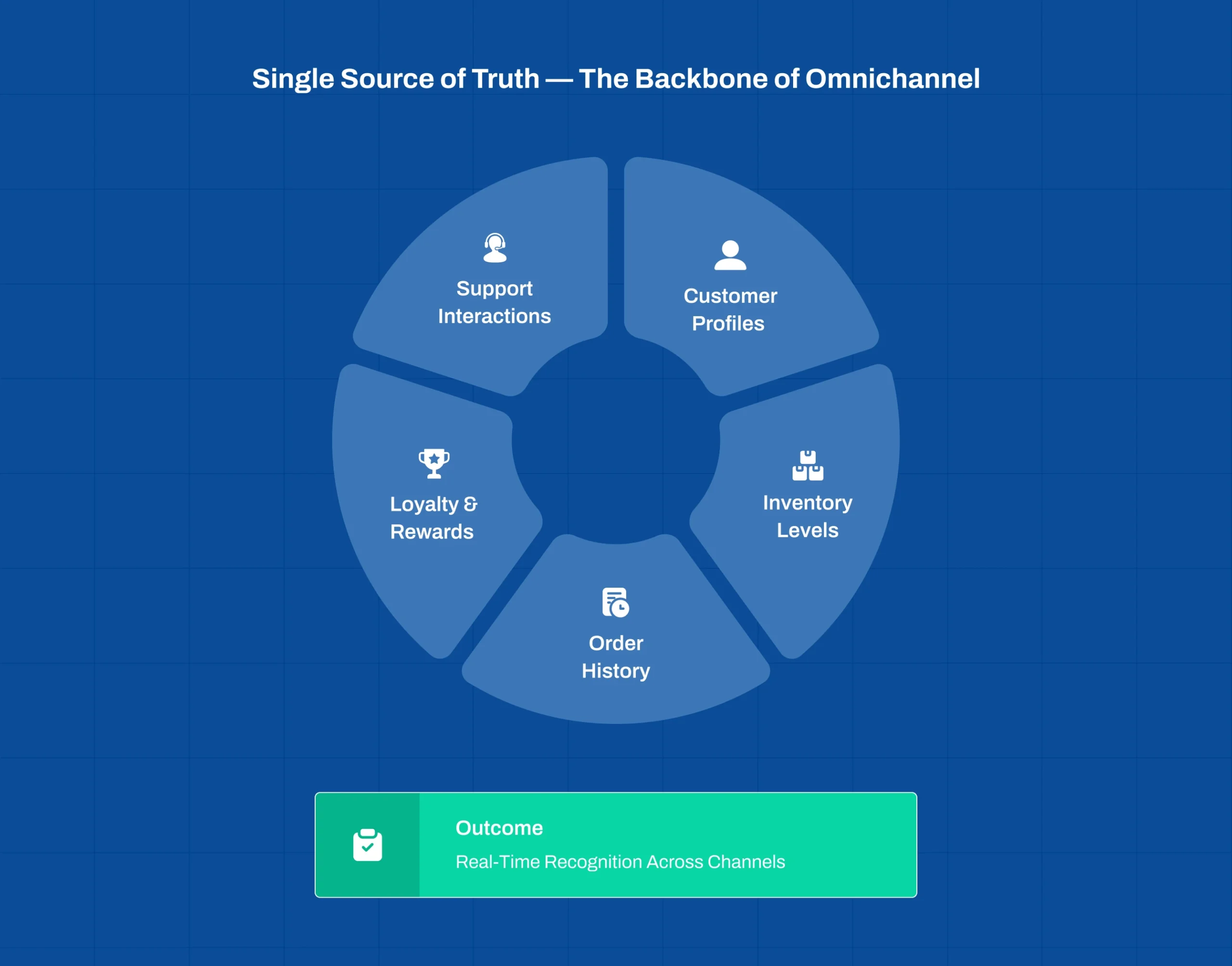
Single Source of Truth
Omnichannel collapses without unified data. A real-time CDP connecting customer, inventory, and order data allows brands to recognize customers instantly, whether online, in-store, or via messaging platforms.
The foundation of omnichannel is a Unified Customer Data Platform (CDP). Before any technology can be deployed, all critical data, customer profiles, inventory levels, order history, loyalty points, and support tickets, must be housed in one system and updated in real-time. Data unification requires dedicated Data & Analytics infrastructure to consolidate and clean these diverse inputs. This “Single Source of Truth” is what allows the system to recognise a customer in-store based on their online profile.
API-Driven Flexibility for Every Touchpoint
Headless commerce decouples the front-end (the “head”, your website, app, kiosk) from the back-end (the “body”, commerce logic). This is crucial for D2C because it enables:
- Rapid Deployment: New channels (like a smart speaker integration or a social commerce checkout) can be plugged into the central commerce engine via APIs without rebuilding the core logic.
- Consistent Experience: The same core product data, pricing, and promotion logic are served up via APIs to every “head,” guaranteeing accuracy across all customer touchpoints.
The AI-Powered Omnichannel Experience
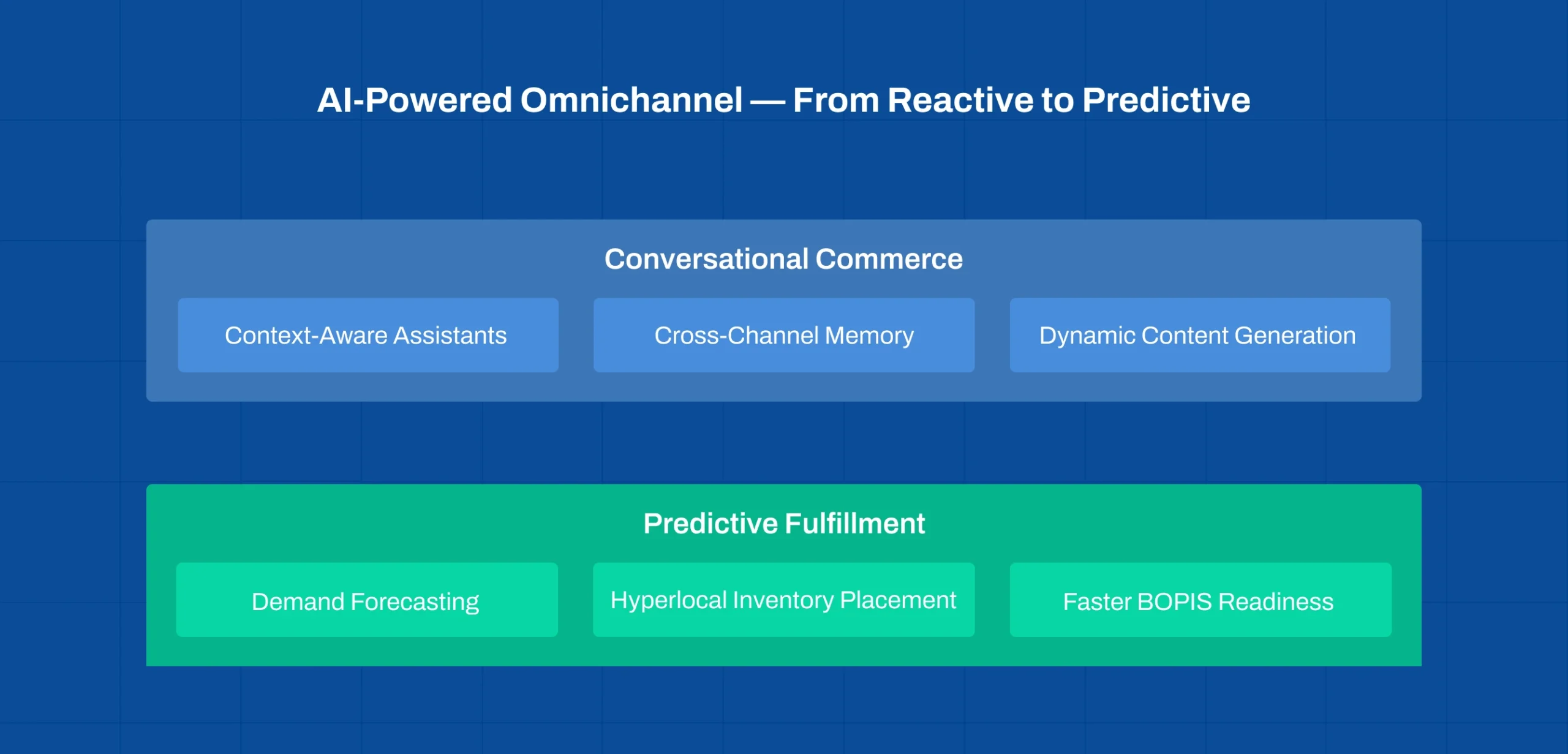
AI-Powered Experience
Generative AI enables conversational commerce and personalised content across channels, while predictive AI optimises fulfillment speed through hyperlocal inventory placement, powering quick commerce expectations.
In 2026, the intelligence layer built with Generative AI is what separates good omnichannel from great. This is where AI & Machine Learning solutions transform data into proactive, personalised actions.
Generative AI in Conversational Commerce
Instead of static FAQs, Gen AI powers a true Conversational Commerce experience.
- Contextual Shopping Assistants: A customer messaging the brand on WhatsApp can ask about an item they viewed in the physical store yesterday. The AI uses the unified data to pull the in-store browsing history and recommend specific sizing or complementary products in real-time.
- Dynamic Content Generation: Gen AI automatically tailors product descriptions and promotional copy on the fly, depending on the customer’s preferred channel and past interaction style.
Predictive Fulfillment for Hyperlocal Speed
AI is the engine of Quick Commerce and omnichannel fulfillment. Predictive AI analySes demand across all channels (web sales, app orders, in-store sales) to strategically place inventory in the most optimal locations (Micro-Fulfillment Centers or Dark Stores). This ensures that when a customer clicks Buy Online, Pickup In Store (BOPIS), the system knows the item is available, not just somewhere in the network, but specifically at that store’s hyper-local hub.
High-ROI Omnichannel Fulfillment Services
High-ROI Fulfillment Services
BOPIS, Ship-from-Store, and unified returns bridge online and offline journeys. These services reduce last-mile cost, increase store spend, and significantly improve customer retention.
True omnichannel success is measured by the operational services that bridge the online and offline worlds, driving tangible ROI (Return on Investment).
BOPIS (Buy Online, Pickup In Store) and Curbside
BOPIS is now a fundamental expectation. It increases store traffic (leading to impulse in-store purchases) and drastically lowers shipping costs. The platform must offer real-time inventory visibility and an integrated store associate app to ensure the item is picked, packed, and ready in minutes, fulfilling the customer’s demand for speed.
Ship-from-Store (SFS) and Unified Returns
Ship-from-Store turns physical stores into mini-distribution centres, utilising otherwise idle store inventory to fulfill online orders near the customer. This reduces last-mile delivery costs and allows brands to sell through inventory faster. Furthermore, a Unified Returns process, allowing a customer to return an item purchased online to any physical location, increases retention by up to 89% and speeds up the restocking process.
The Strategic Roadmap for D2C Success
Strategic Roadmap
Omnichannel success requires sequencing: unify data first, modernise commerce core next, then scale experiences and fulfillment. Skipping steps creates fragility instead of flexibility.
The move to a unified omnichannel platform is a journey requiring executive buy-in and a clear phased approach:
- Phase I: Data Foundation: Implement a CDP and unify all customer/inventory data. This must precede any front-end deployment.
- Phase II: Headless Core: Adopt a composable, API-first commerce engine (OMS/PIM) to replace monolithic back-end systems.
- Phase III: Experience Layers: Roll out new, channel-specific front-ends (mobile app, website) that connect to the new headless core.
- Phase IV: Fulfillment Orchestration: Integrate Ship-from-Store and BOPIS logic, supported by AI-powered inventory slotting and demand forecasting.
Conclusion: The Seamless Journey is the New Loyalty
The D2C winners of 2026 won’t be defined by a single viral product, but by an unwavering commitment to a seamless customer experience across every digital and physical touchpoint. Building a unified omnichannel E-commerce platform powered by headless architecture and enriched by Generative AI is the essential investment that transforms sporadic transactions into lifelong loyalty. Ready to architect your future-proof experience? Engaging specialised eCommerce Consulting partners like DigiWagon can provide a clear roadmap for this complex transformation.
Related reading: subscription commerce for D2C brands, the eCommerce migration risk playbook and custom vs composable vs platform architecture. For the platform-or-custom decision itself, try the free Build vs Buy Advisor.