

For a decade, the “alignment” of Sales and Marketing has been the holy grail of B2B enterprises. We’ve used shared KPIs, weekly syncs, and integrated CRMs, yet the friction remains. Marketing complains about ignored leads; Sales complains about low-quality pipelines.
As we move through 2026, the solution isn’t better communication, it’s better Data Science & Analysis.
Enter Predictive Analytics 2.0. Unlike its predecessor, which relied solely on historical internal data (first-party data), the 2.0 era is defined by the seamless integration of Intent Data. By understanding what a prospect is doing outside of your website, enterprises are finally unifying the funnel and identifying high-value accounts before they even fill out a form.
The Death of the Linear Funnel: Why Traditional Lead Scoring Failed
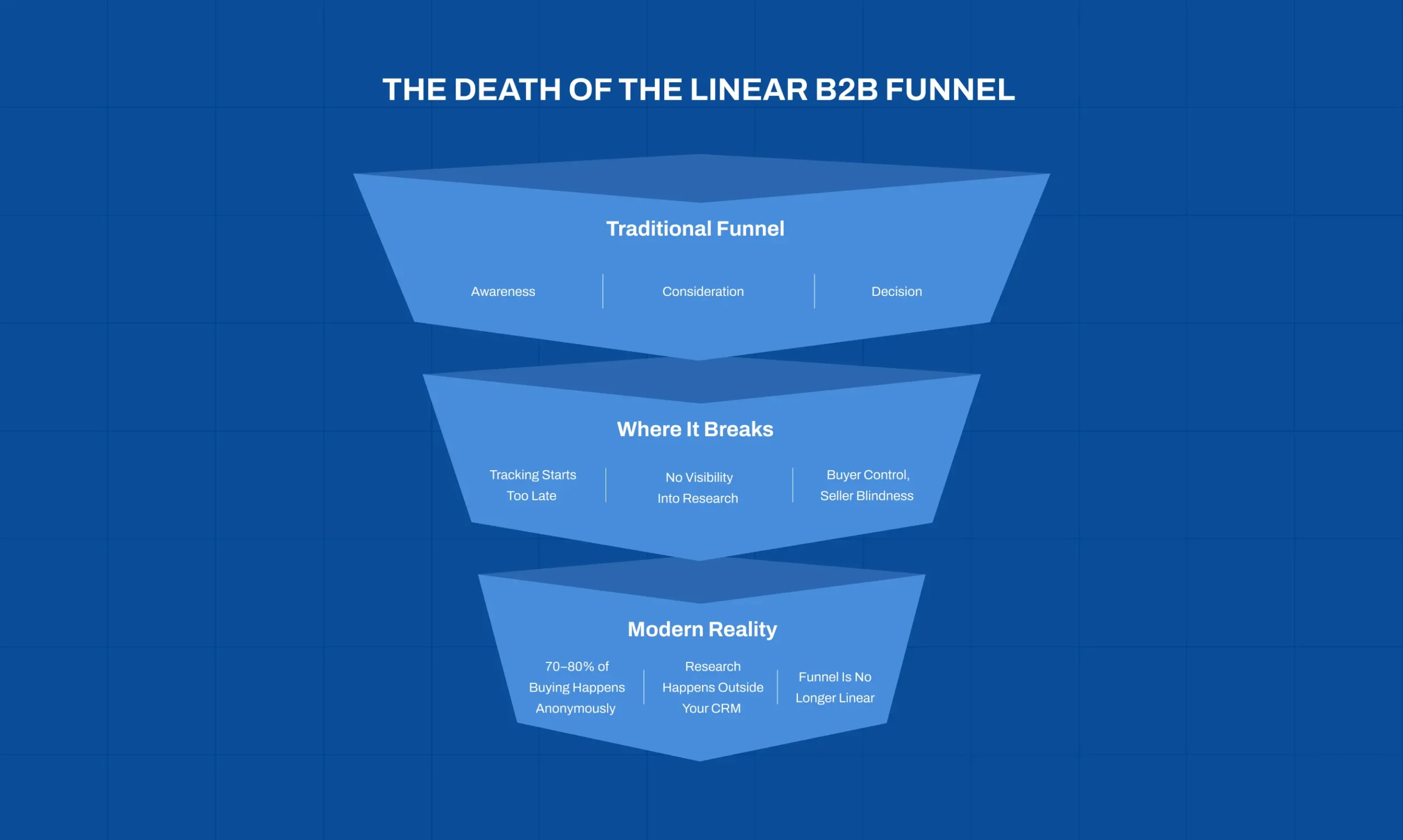
Traditional B2B funnels rely on form fills and late-stage signals. In 2026, most buying decisions happen anonymously, outside the CRM, breaking linear funnel assumptions and creating sales–marketing friction.
The traditional lead scoring model, assigning points for an eBook download or a webinar attendance, is officially obsolete. In 2026, the B2B buyer journey has become a “dark” process.
The 2026 B2B Buyer Journey: Anonymous, Research-Heavy, and Non-Linear
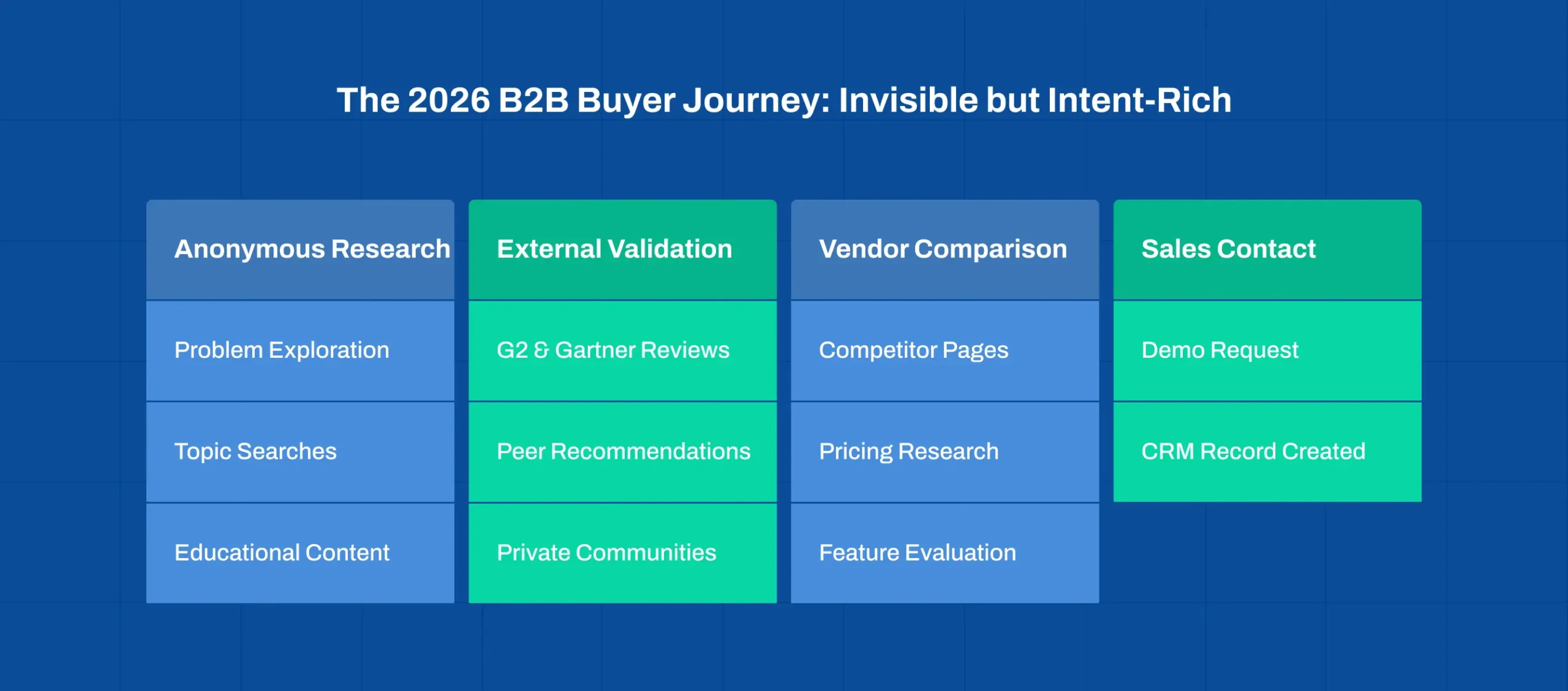
Modern B2B buyers research independently, reading reviews, comparing competitors, and consulting peers, long before engaging sales. Without visibility into this phase, revenue teams act too late.
By the time a prospect reaches out to your sales team, they are often 70-80% through the buying cycle. They’ve read third-party reviews, compared you with competitors on G2 or Gartner, and discussed your SaaS Product in private Slack communities.
If your marketing funnel only starts tracking at the “form fill” stage, you are blind to the most critical phase of the journey. This lack of visibility is the primary cause of Sales and Marketing misalignment.
What is Predictive Analytics 2.0? The Integration of Intent Data

Predictive Analytics 2.0 integrates real-time intent data with internal signals. This shift enables proactive engagement based on current buying behaviour, not historical activity.
Predictive Analytics 2.0 shifts the focus from “Who are they?” to “What are they doing right now across the entire web?”
Moving Beyond First-Party Data: The Power of Third-Party Intent

Intent data captures what prospects research across the web, topics, competitors, and pain points, providing early indicators of purchase readiness before any CRM interaction.
While first-party data (visits to your pricing page) is valuable, third-party intent data is the game-changer. It tracks:
- Topic Research: Are they reading articles about “Enterprise Software migration” on tech journals?
- Competitor Comparison: Are they looking at your competitors’ product pages or pricing?
- Problem-Solving Signals: Are they searching for solutions to specific pain points your software solves?
By feeding these external signals into your AI-Powered Automation engines, you create a 360-degree view of account interest long before they enter your CRM.
Unifying the Revenue Engine: Three Steps to Alignment
To leverage Predictive Analytics 2.0, CTOs and CMOs must collaborate on a technical framework that turns noise into actionable revenue intelligence.
Step 1: Building a Unified Data Schema (The Data Science Layer)
Sales and marketing alignment begins at the data layer. A unified schema connects marketing, sales, and third-party intent data to a single account identity, enabling a shared revenue view.
Alignment starts at the database level. You need a unified schema that maps marketing interactions, sales activity, and third-party intent to a single Account ID. This requires robust Custom Software or middleware that can ingest data from providers like 6sense or Bombora and pipe it directly into your Snowflake or BigQuery environment.
Step 2: Implementing Real-Time Intent Triggers
Real-time intent triggers allow teams to act at the perfect moment, alerting sales and activating personalised campaigns when buying signals peak.
In 2026, timing is everything. Predictive 2.0 allows you to set triggers: “If an account in our Target Account List (TAL) researches ‘Cloud Security Compliance’ three times in 48 hours, alert the assigned Account Executive and trigger a personalised LinkedIn ad campaign.” This is the essence of modern Digital Strategy.
Step 3: From Lead Scoring to Propensity Modeling
Propensity modeling replaces static lead scores with machine-learning predictions that estimate the likelihood of an account closing, enabling smarter prioritisation.
Traditional scoring is static. Propensity Modeling, a core feature of Data Science & Analysis, uses machine learning to calculate the likelihood of an account closing based on historical win patterns and current intent surges.
| Feature | Traditional Lead Scoring | Predictive Analytics 2.0 |
|---|---|---|
| Data Source | Internal/First-party only | Internal + External Intent Data |
| Logic | Static, rule-based points | Machine Learning/Propensity models |
| Focus | Individual leads | Account-based (ABM) |
| Speed | Reactive (after the form fill) | Proactive (during the research phase) |
The Business Impact: Efficiency, ROI, and Customer Lifetime Value
When revenue teams operate from a single, intent-driven source of truth, they reduce acquisition costs, increase win rates, and scale personalisation, driving higher lifetime value.
When Sales and Marketing operate from a single source of truth, powered by intent, the business results are transformative:
- Reduced Acquisition Costs (CAC): Marketing spend is hyper-targeted on accounts that are actually in a “buying window,” eliminating waste on cold leads.
- Increased Win Rates: Sales teams engage with prospects who have already been warmed by intent-triggered, personalised marketing content.
- Scalable Personalisation: AI-Powered Automation can generate custom landing pages or email sequences based on the specific topics a prospect was researching externally.
Predictive Analytics 2.0 isn’t just a technical upgrade; it’s a total reimagining of how B2B companies grow. By unifying the funnel through intent, you aren’t just predicting the future, you’re capturing it. At DigiWagon, we help organisations leverage advanced analytics and intelligent data strategies to turn predictive insights into measurable business growth.