To the CTOs, Security Architects, and Engineering Leads:
The perimeter is dead. In an era where 80% of enterprises have deployed Generative AI and your users connect from anywhere on any device, the idea that “inside the network” equals “safe” is the greatest vulnerability you face. In 2026, the most resilient SaaS Products are built on a single, uncompromising philosophy: Zero Trust. This is where Advanced Software Solutions come into play.
Zero Trust isn’t a single tool or a software package; it is a strategic shift. It requires moving from a model of implicit trust (where a user is trusted because they logged in) to explicit verification (where every request is validated in real-time based on identity, device health, and behavioural context).
Beyond the Firewall: Why Zero-Trust is the 2026 Standard
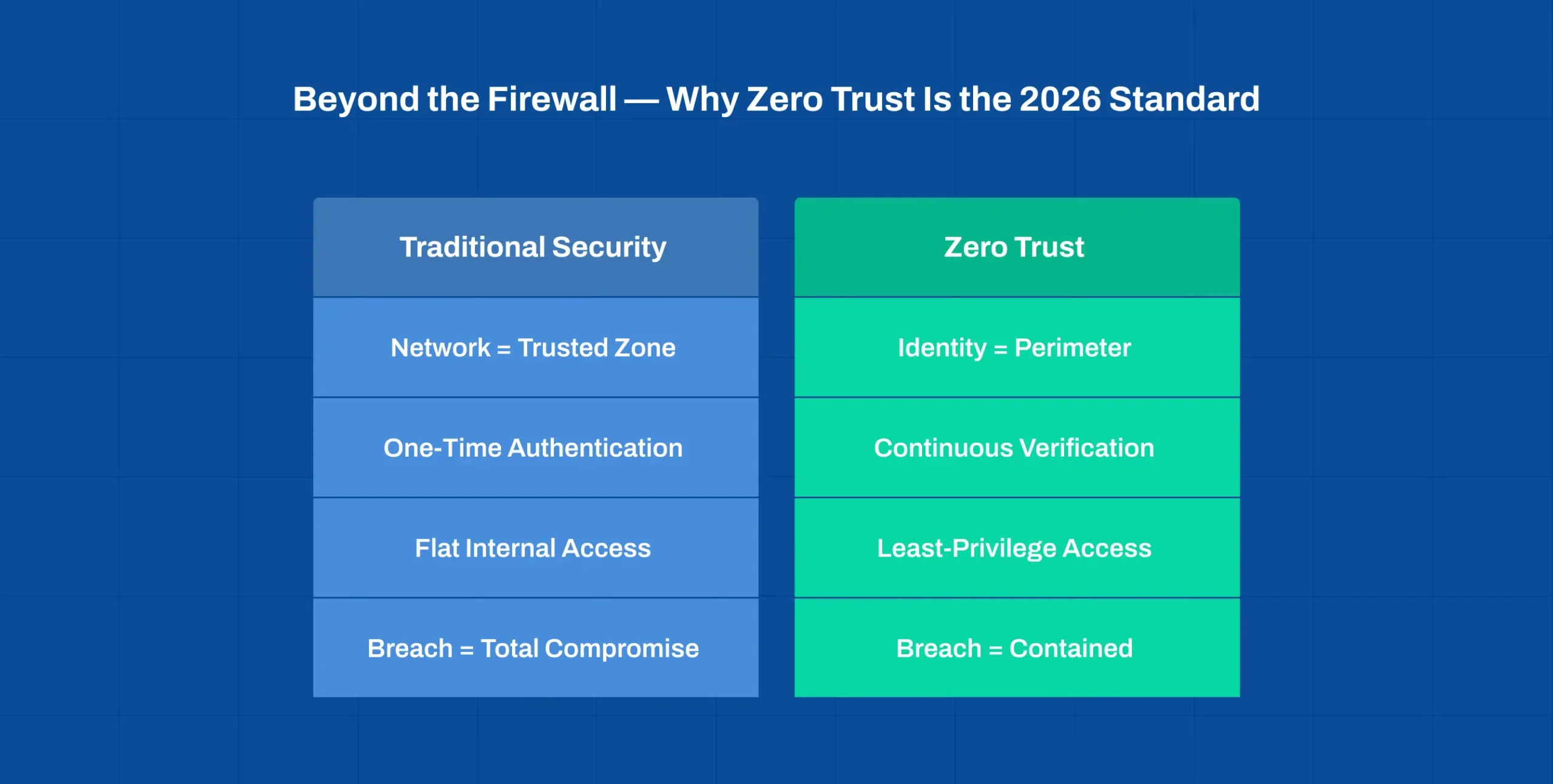
Traditional security models rely on network boundaries and implicit trust. Zero Trust replaces this with continuous identity verification, ensuring that every request is validated. In a multi-cloud, AI-driven world, implicit trust is no longer defensible.
Traditional security models were like a castle with a moat, secure on the outside, but once an attacker crossed the bridge, they had the keys to the kingdom.
Assume Breach: A Shift in the Architectural Mindset
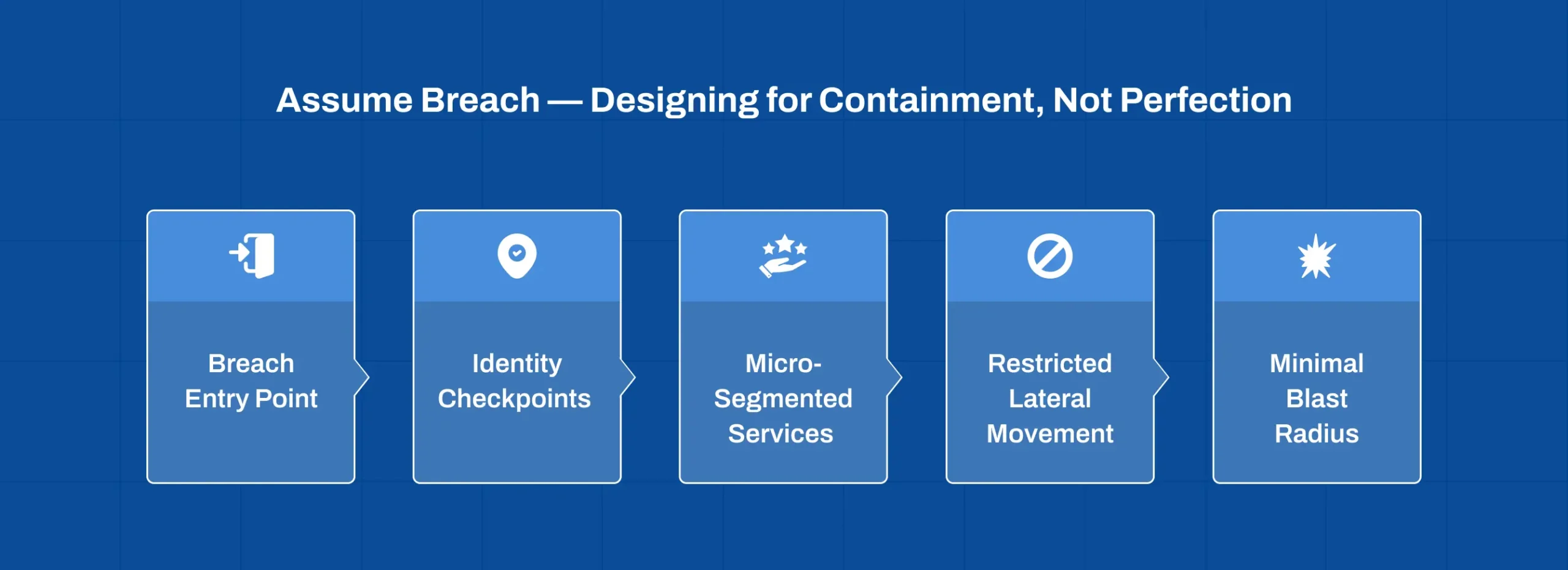
Zero Trust assumes attackers are already inside the system. By designing for containment through identity checkpoints and micro-segmentation, enterprises dramatically reduce the blast radius of any breach.
The “Assume Breach” mindset is the core of Zero-Trust SaaS Development. It forces architects to design systems under the assumption that an attacker is already in the environment. This shifts the focus from keeping people out to limiting lateral movement and shrinking the “blast radius” of any potential compromise.
The Three Pillars of the Zero-Trust SaaS Roadmap
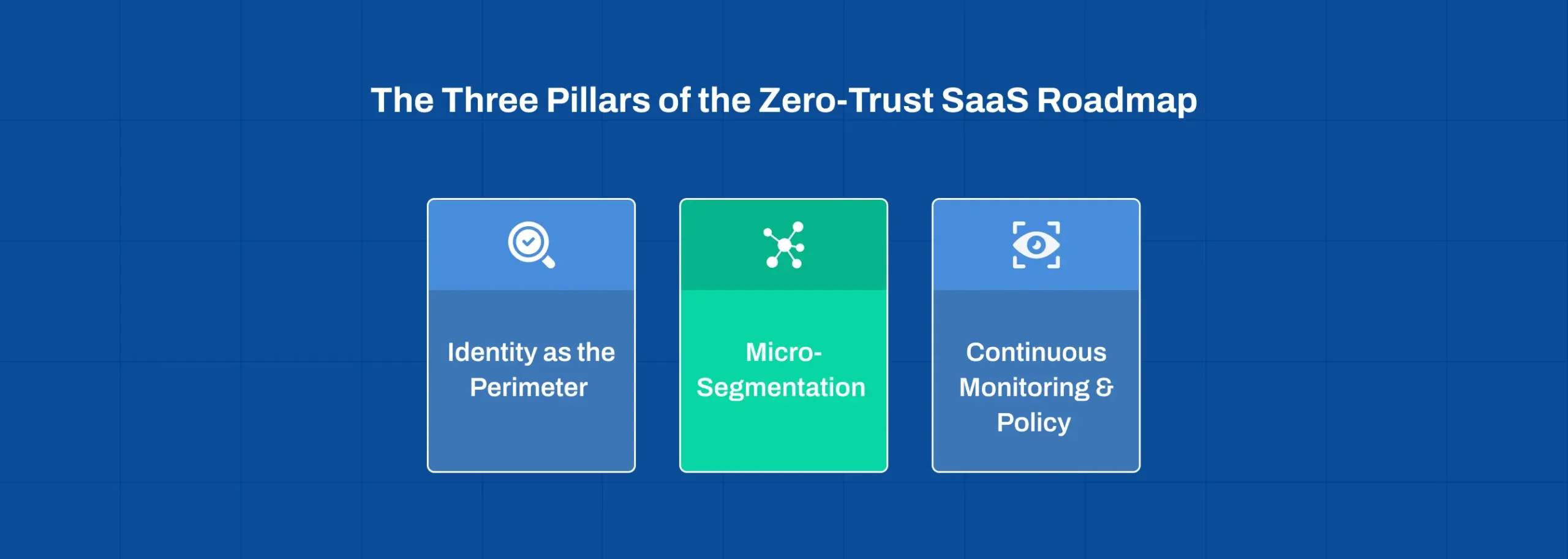
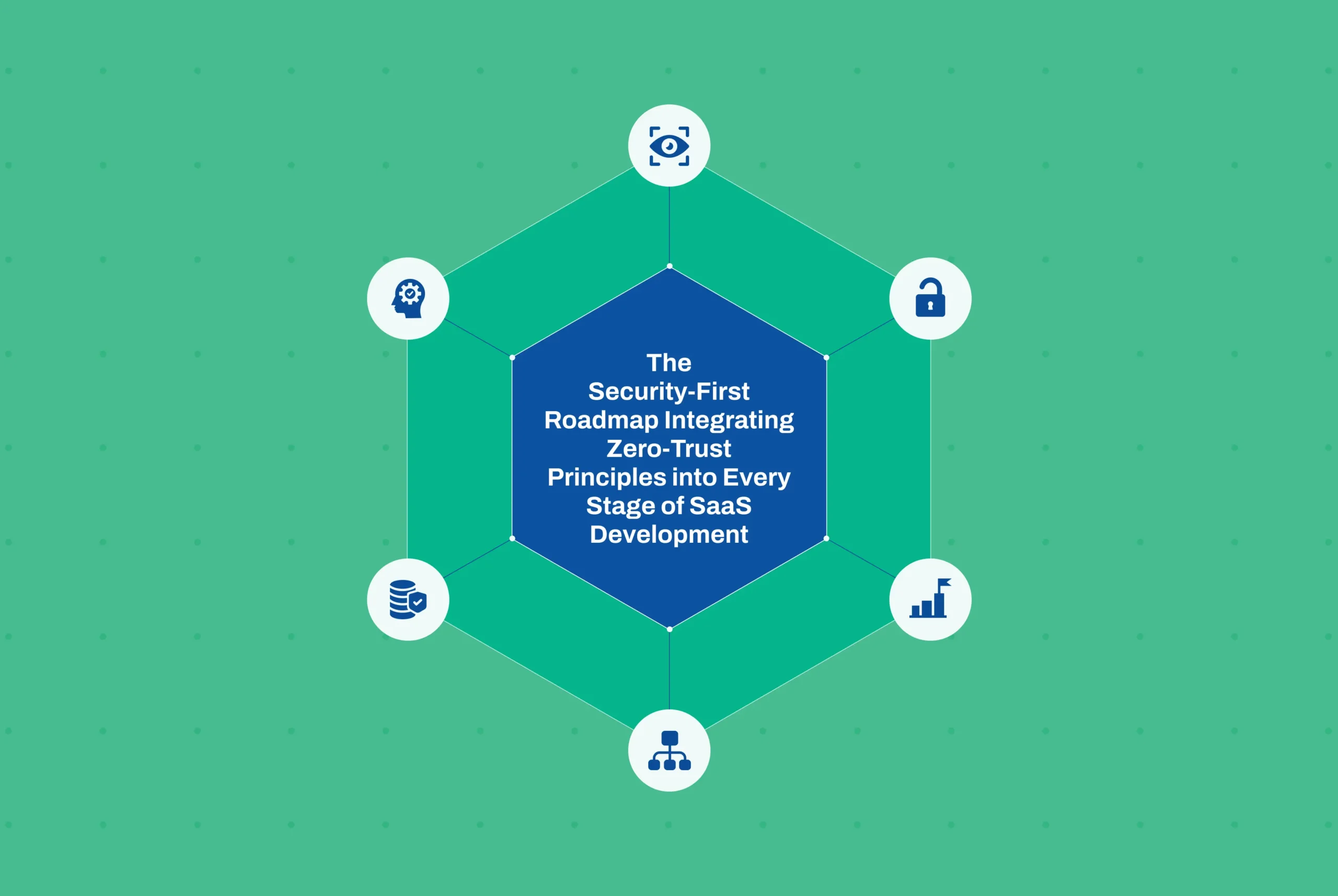
The Zero-Trust SaaS roadmap rests on three pillars: identity-first security, micro-segmentation, and continuous adaptive monitoring. Together, they replace static rules with dynamic, context-aware protection.
Pillar 1: Identity as the New Perimeter
In Zero-Trust architectures, identity, not the network, is the primary security control. Continuous authentication evaluates user, device, and service context before granting access to sensitive APIs or data.
In a decentralised world, the network is irrelevant; the Identity is everything. This applies not just to human users, but to the AI Agents and microservices that now make up your SaaS Architecture.
- Action: Implement Continuous Authentication. Instead of a one-time login, verify the session’s risk level every time a sensitive API call is made.
Pillar 2: Micro-segmentation and Blast Radius Control
Micro-segmentation isolates services into secure zones. Even if one service is compromised, attackers cannot move laterally without passing strict identity and policy checks.
If one microservice is compromised, it should not grant access to your entire database. Micro-segmentation divides your application into small, isolated zones with their own specific security policies.
- Service Alignment: Leveraging Quality Assurance & Testing and Software Development Outsourcing to ensure these segment boundaries are rigorously enforced during the build.
Pillar 3: Continuous Monitoring and Adaptive Policy
Static security rules cannot keep up with modern threats. Continuous monitoring establishes behavioural baselines and automatically adjusts policies when anomalies appear, stopping attacks in real time.
Static rules are too slow for 2026 threats. Your security must be Adaptive.
- Action: Use Data & Analytics to establish a baseline of “normal” behaviour. If a developer in Berlin suddenly tries to download a terabyte of data from a server in Singapore at 3 AM, the system should automatically step up authentication or revoke access immediately.
Integrating Zero-Trust into the SaaS SDLC (Stage-by-Stage)
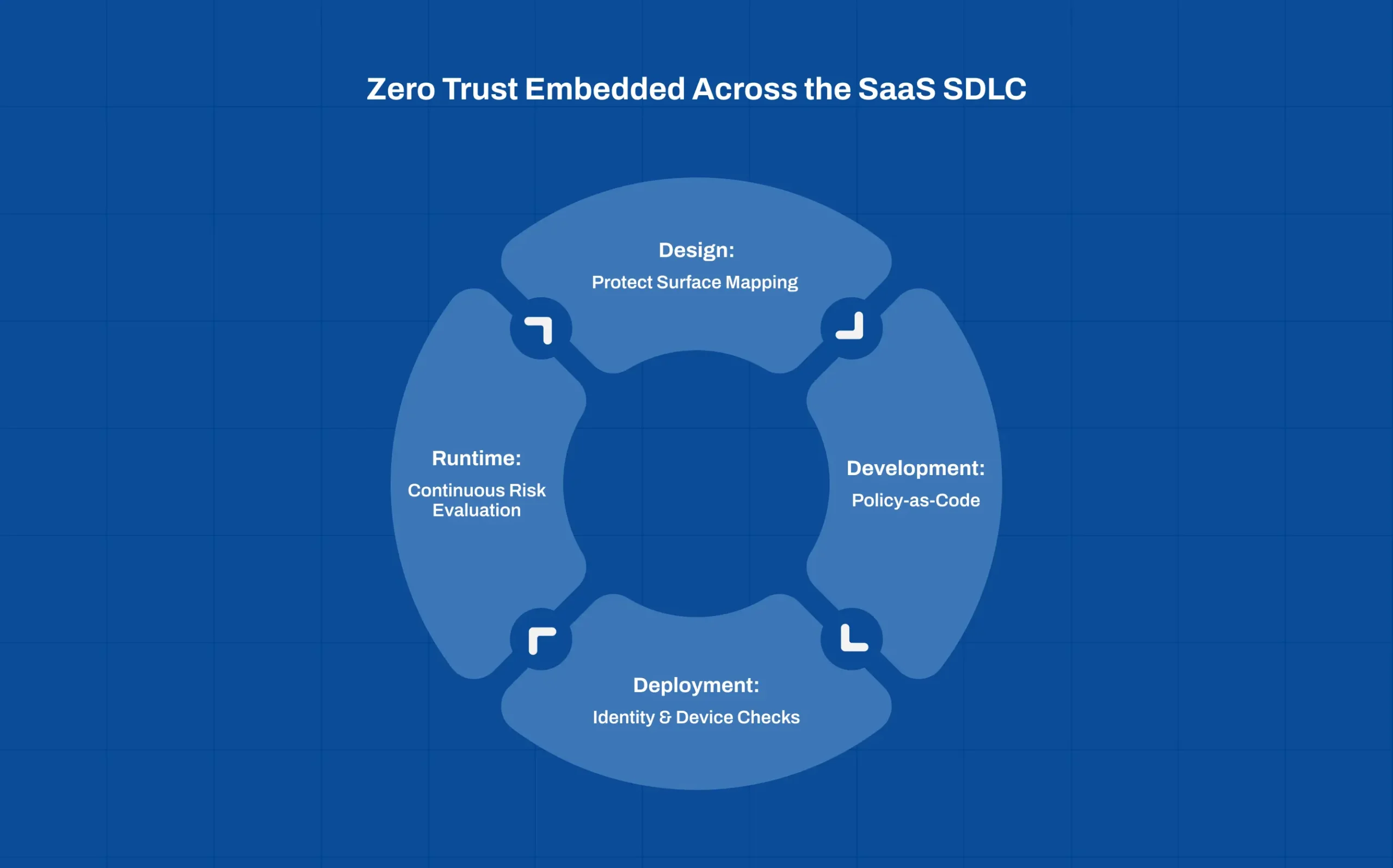
Zero Trust is not a bolt-on-it must be embedded into every stage of the SaaS SDLC. From defining protect surfaces in design to enforcing adaptive policies at runtime, security becomes part of how software is built.
Design Phase: Mapping the “Protect Surface”
You cannot protect what you haven’t identified. Start by defining your “Protect Surface”, the critical data (PII, PHI), applications, and assets that move your business.
Development Phase: Implementing Policy-as-Code
In a modern DevSecOps environment, security policies should be written as code. This ensures that every time a new microservice is deployed, it automatically inherits the correct Least-Privilege Access settings.
Deployment Phase: Automated Identity and Device Posture Checks
Before any device accesses your Enterprise Software, it must pass a “posture check.” Is the OS patched? Is encryption active? Is it a known device?
The Business ROI: Trust as a Transactional Asset
Zero Trust shortens enterprise security reviews, reduces breach impact, and builds measurable trust. In regulated B2B markets, this directly accelerates sales and positions security as a competitive advantage.
For B2B companies, Zero Trust SaaS Development is a massive sales accelerator. When selling to Fortune 500 companies or government entities in the USA, UK, or UAE, being able to demonstrate a Zero-Trust architecture shortens the security review cycle from months to weeks.
Trust is no longer a “feeling”; in 2026, trust is a verifiable, transactional asset.
Conclusion: Making Security Your Competitive Advantage
The roadmap to a Zero-Trust future is a journey of maturity, not a destination. By integrating these principles into every stage of your development lifecycle with DigiWagon, you transform security from a cost center into a powerful differentiator that enables you to scale fearlessly.
Ready to architect a high-security foundation for your next product? Let’s discuss your SaaS Architecture roadmap for 2026.