For the past decade, DevOps was the ultimate goal for high-performing engineering organisations. The “You build it, you run it” mantra promised speed and accountability. However, as we enter 2026, many Enterprise Software leaders have hit a wall. Instead of speed, they’ve found “Cognitive Load.”
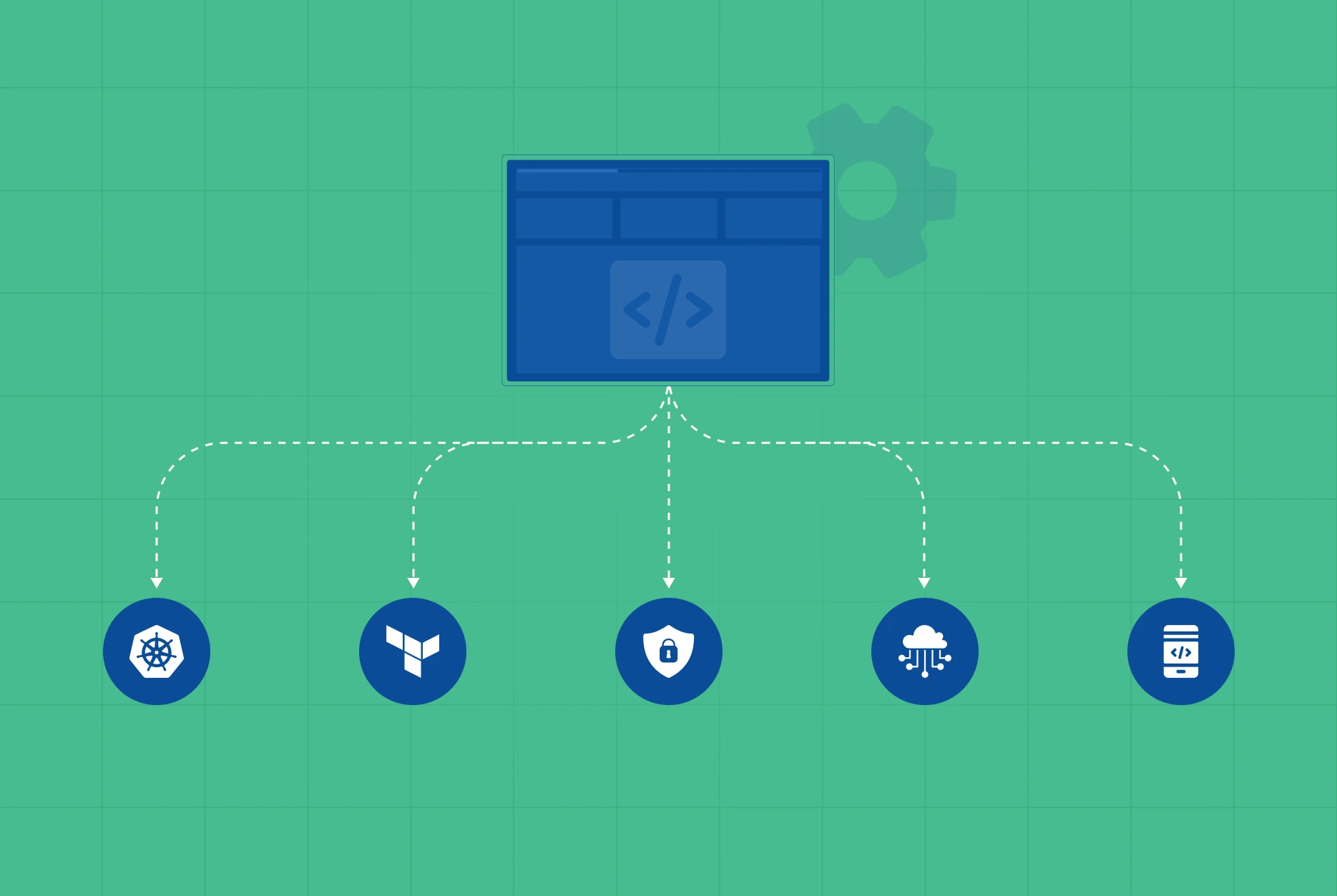
Developers are now expected to be experts in Kubernetes, Terraform, Security, and Cloud Networking, all while writing the actual product code. To overcome this, organisations are turning to Advanced Software Solutions to streamline their infrastructure. The result of the old model? Burnout, fragmented toolchains, and a significant drop in innovation velocity.
The solution is the next evolution of Digital Transformation: Platform Engineering. By building an Internal Developer Platform (IDP), enterprises are treating the developer experience as a product, paving the way for unprecedented scalability.
The Shift: Why DevOps Isn’t Enough for 2026
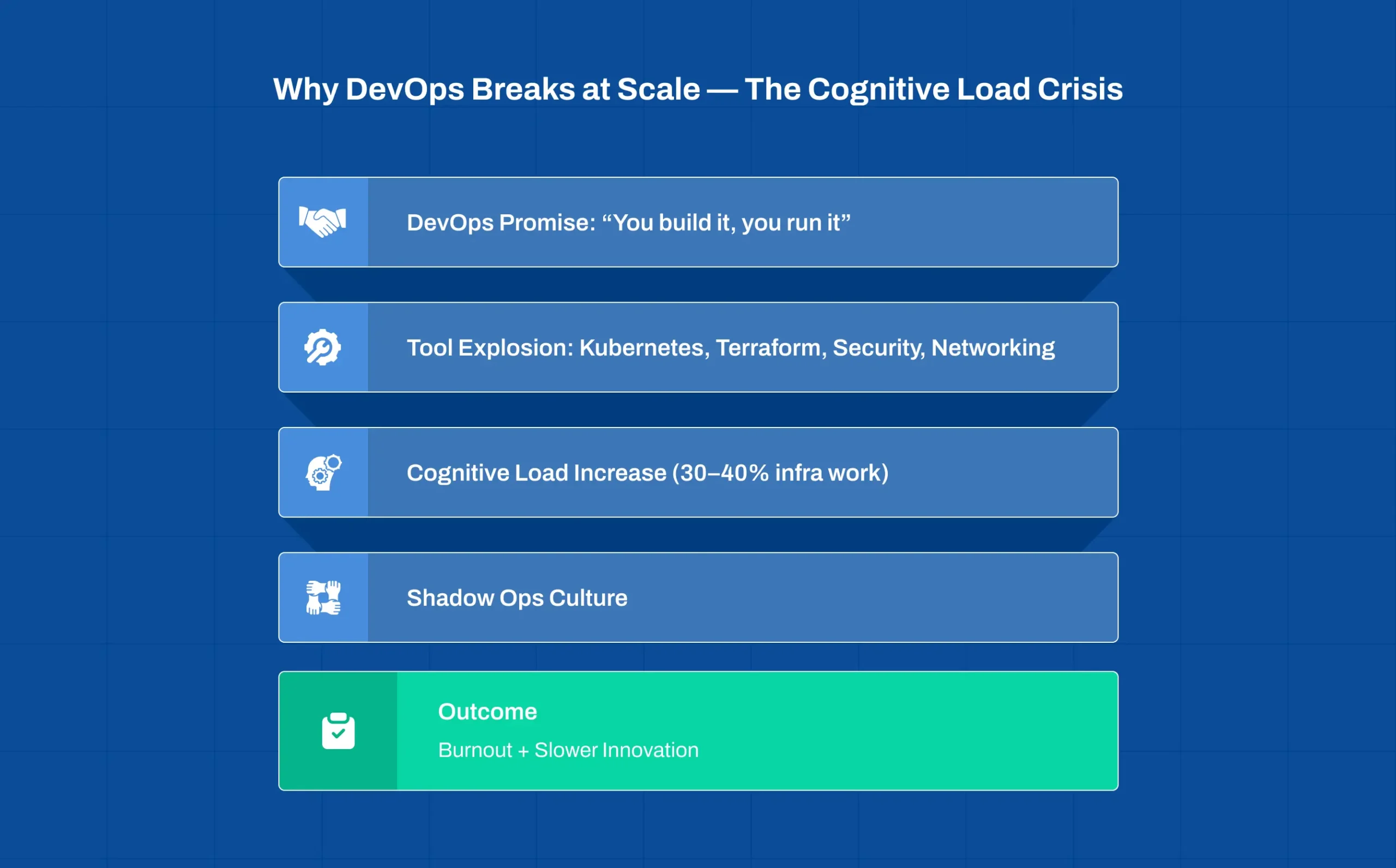
DevOps solved silos but created cognitive overload. In 2026, developers spend up to 40% of their time managing infrastructure instead of shipping features. This “Shadow Ops” reality slows innovation and drives burnout, signaling the need for a new model.
While DevOps broke down the silos between Dev and Ops, it inadvertently created a “Shadow Ops” culture where developers spend 30-40% of their time managing infrastructure rather than shipping features.
The Rise of Cognitive Load
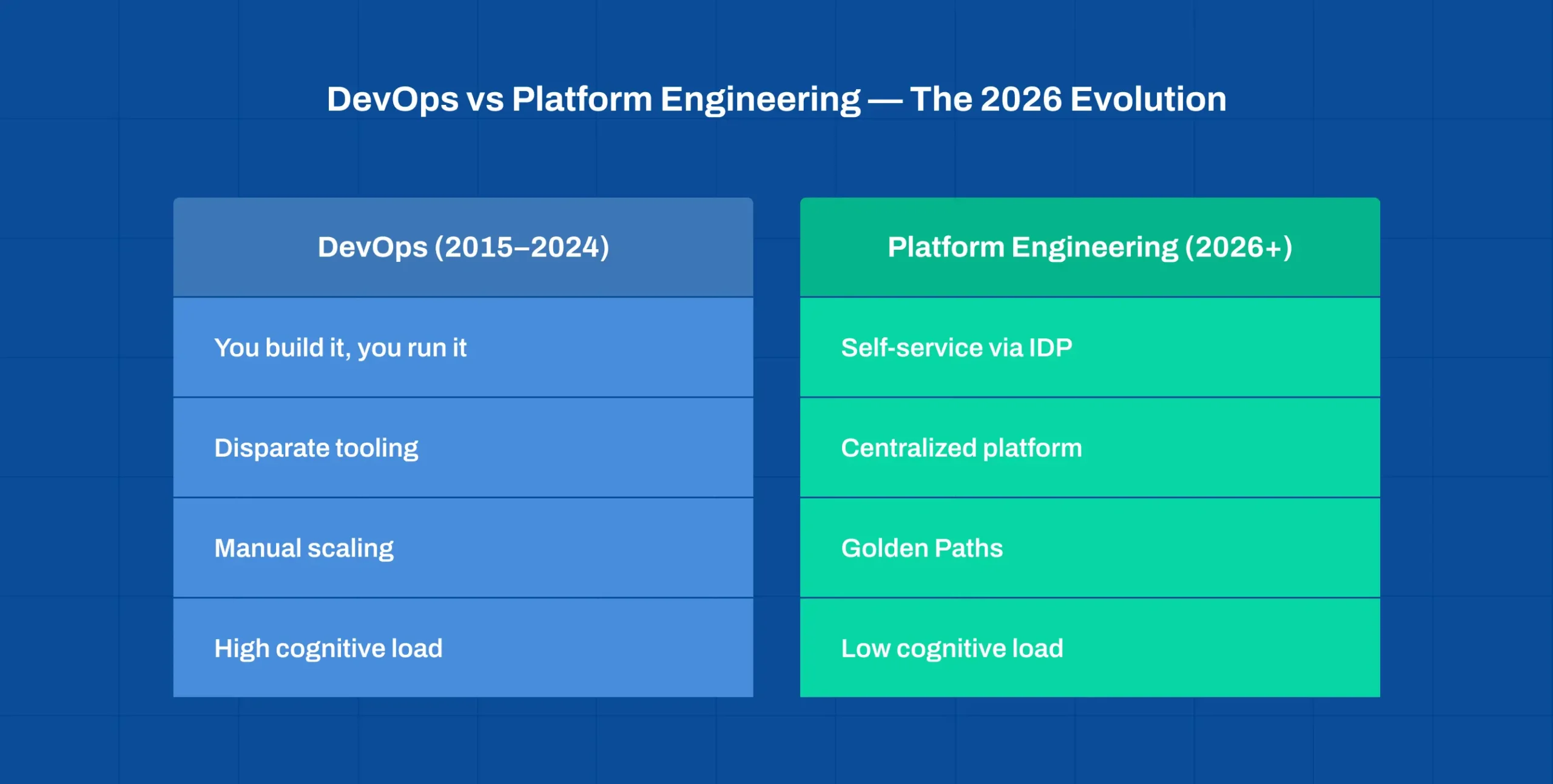
Platform Engineering evolves DevOps by shifting responsibility. Instead of developers managing infrastructure, a centralized Internal Developer Platform provides self-service workflows, allowing teams to focus on business logic rather than tooling complexity.
In 2026, the modern tech stack is too complex for a single developer to master. From managing Generative AI & LLM Solutions infrastructure to navigating complex Security Testing protocols, the burden is too high. Platform Engineering solves this by providing Golden Paths: pre-architected, self-service workflows that allow developers to deploy code without needing to understand the underlying complexity.
| Feature | The DevOps Approach (2015-2024) | The Platform Engineering Approach (2026+) |
|---|---|---|
| Responsibility | “You build it, you run it” (Full Stack + Ops) | “Self-service” (Devs focus on code, Platform handles Ops) |
| Tooling | Disparate tools managed by individual teams. | Centralized Internal Developer Platform (IDP). |
| Scalability | Hard to scale; requires hiring more DevOps engineers. | Scalable by design; automated “Golden Paths.” |
| Developer Focus | High cognitive load; distracted by infra. | Low cognitive load; focused on business logic. |
The 2026 Blueprint: Building a Scalable Platform
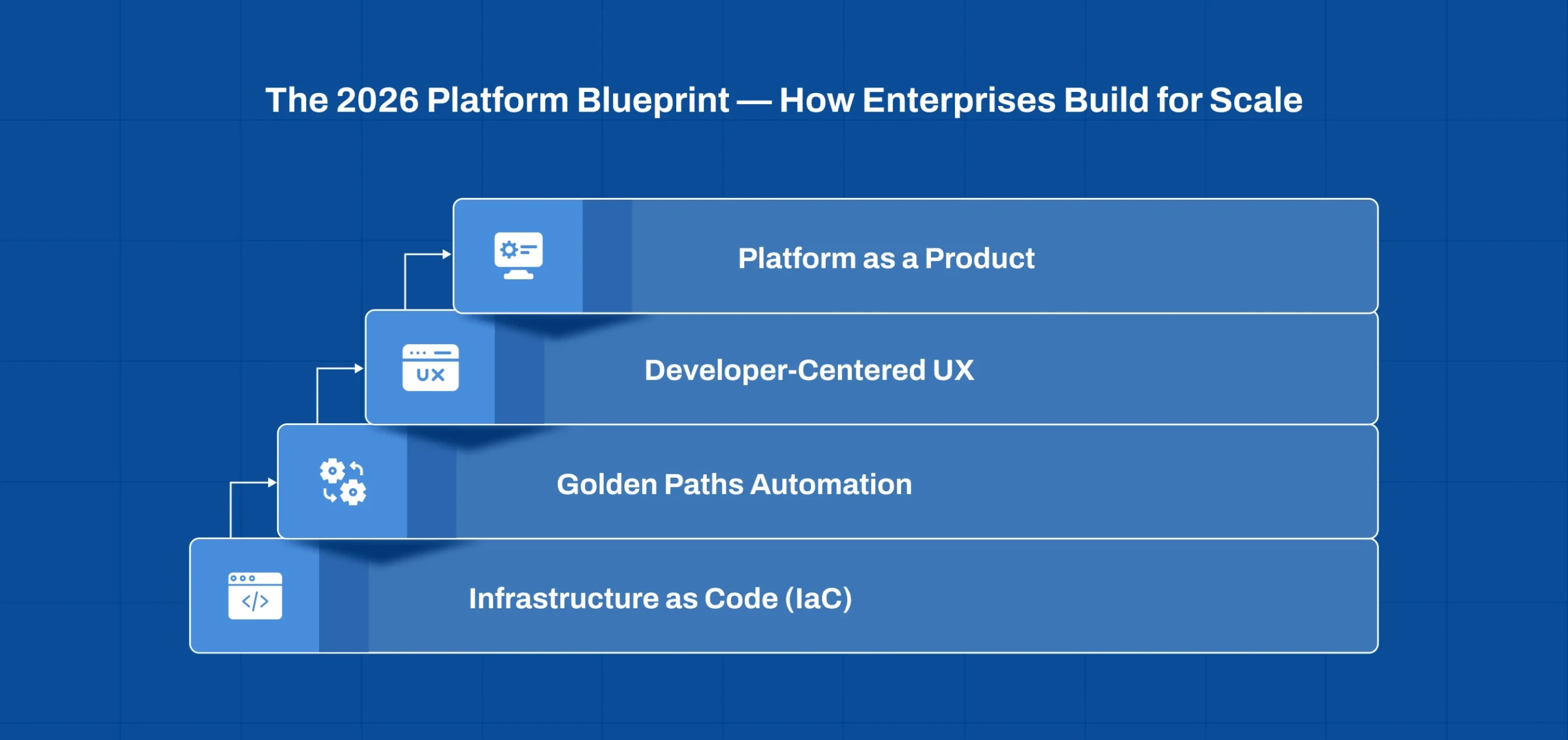
Successful Platform Engineering treats the platform as a product. This requires developer research, UX thinking, automation via Golden Paths, and Infrastructure as Code, ensuring scalability without operational chaos.
Transitioning to a platform-centric model requires more than just new tools; it requires a Strategy Consulting mindset that views internal engineers as “customers.”
1. Product Management for Platforms
A successful Platform Engineering team doesn’t just build scripts; they build a product. This involves:
- User Research: Interviewing your developers to find where the “friction” lies.
- UX Consulting: Ensuring the IDP is intuitive, whether it’s a CLI, a GUI, or an API.
- Design Systems: Standardizing how infrastructure components are presented and consumed.
2. Creating “Golden Paths”
Golden Paths are pre-approved, automated workflows that embed security, compliance, and performance best practices by default. They allow teams to move fast without introducing risk, especially critical in regulated industries.
A Golden Path is a task-oriented, supported road to getting a job done (e.g., “Deploy a new Microservice”). By using Custom Software to automate these paths, you ensure that every deployment follows your enterprise’s best practices for security, compliance, and performance by default.
3. Enabling Self-Service via Infrastructure as Code (IaC)
Self-service infrastructure eliminates ticket-based bottlenecks. Through IaC and IDPs, developers can provision databases or services instantly while platform teams enforce governance through automated guardrails.
In 2026, developers shouldn’t have to open a Jira ticket to get a database. Through an IDP, they can provision resources instantly within the “guardrails” set by the Platform team. This is the cornerstone of Modern Application Development.
The Business Impact: ROI of Platform Engineering
Platform Engineering delivers measurable ROI: faster releases, lower operational risk, improved developer satisfaction, and seamless onboarding of outsourced teams, making enterprise scalability sustainable.
For the CTO and CFO, the move to Platform Engineering isn’t just a technical upgrade, it’s a massive driver of ROI.
- Faster Time-to-Market: By removing infrastructure bottlenecks, features move from “Idea” to “Production” in hours, not weeks.
- Talent Retention: Top-tier developers want to write code, not fight with YAML files. A high-quality IDP is a major recruitment and retention tool.
- Reduced Operational Risk: When security and compliance are baked into the “Golden Paths,” the risk of human error in production is drastically reduced. This is critical for Fintech and Healthcare sectors.
- Optimised Outsourcing: When you use Software Development Outsourcing, a robust platform ensures that external teams can be onboarded and productive on Day 1, following your exact standards without hand-holding.
The Path Forward
The transition from DevOps to Platform Engineering is the defining Digital Transformation trend of 2026. It marks the maturity of the cloud-native era, where we stop asking developers to do everything and start giving them the platform to be great.
At DigiWagon, we recognize that if your organisation is struggling with “DevOps burnout” or slowing release cycles, it’s time to invest in your internal platform. The scalability of your software and your business depends on it.