DigiWagon brings nine-plus years of regulated-industry engineering – AML, HIPAA, threat modelling – to AI agent builds. US clients get a dedicated team aligned to US business hours, ISO 27001 certified architecture, and model-agnostic builds on AWS or Azure US regions. Founder accountability is part of the engagement, not an upsell.
PHI is redacted before the LLM call, BAAs are in place with model providers where required, and audit logs are structured to satisfy SOC 2 Type II evidence. CCPA opt-outs propagate through agent memory and vector stores, not just the UI layer. Compliance is engineered in at design time, not reviewed in at the end.
Most US clients land on a Dedicated Team for multi-quarter agent programs – a team that internalises your stack and compliance posture over time. Fixed Price suits well-bounded first projects; T&M fits R&D phases where the use case is still being discovered.
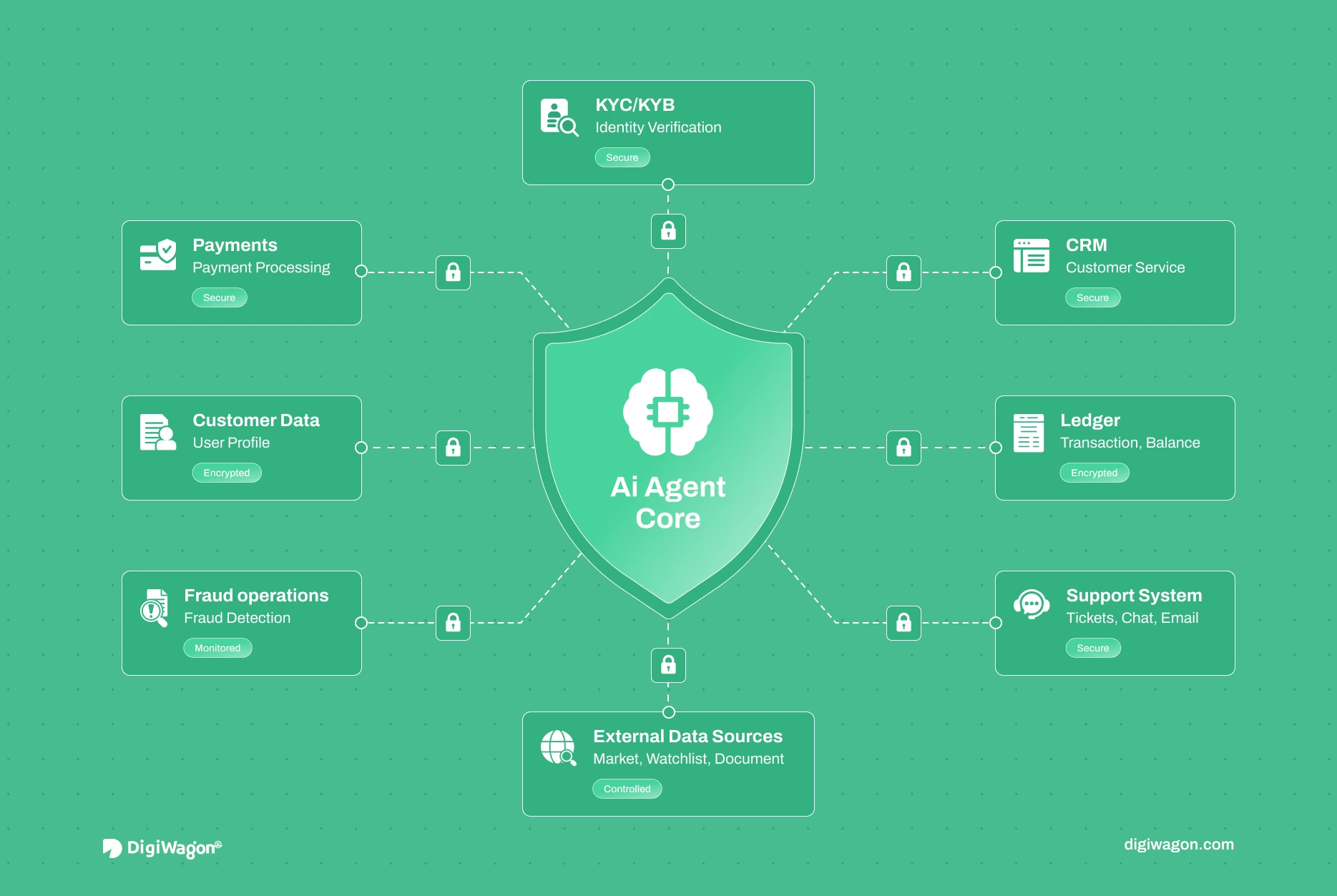
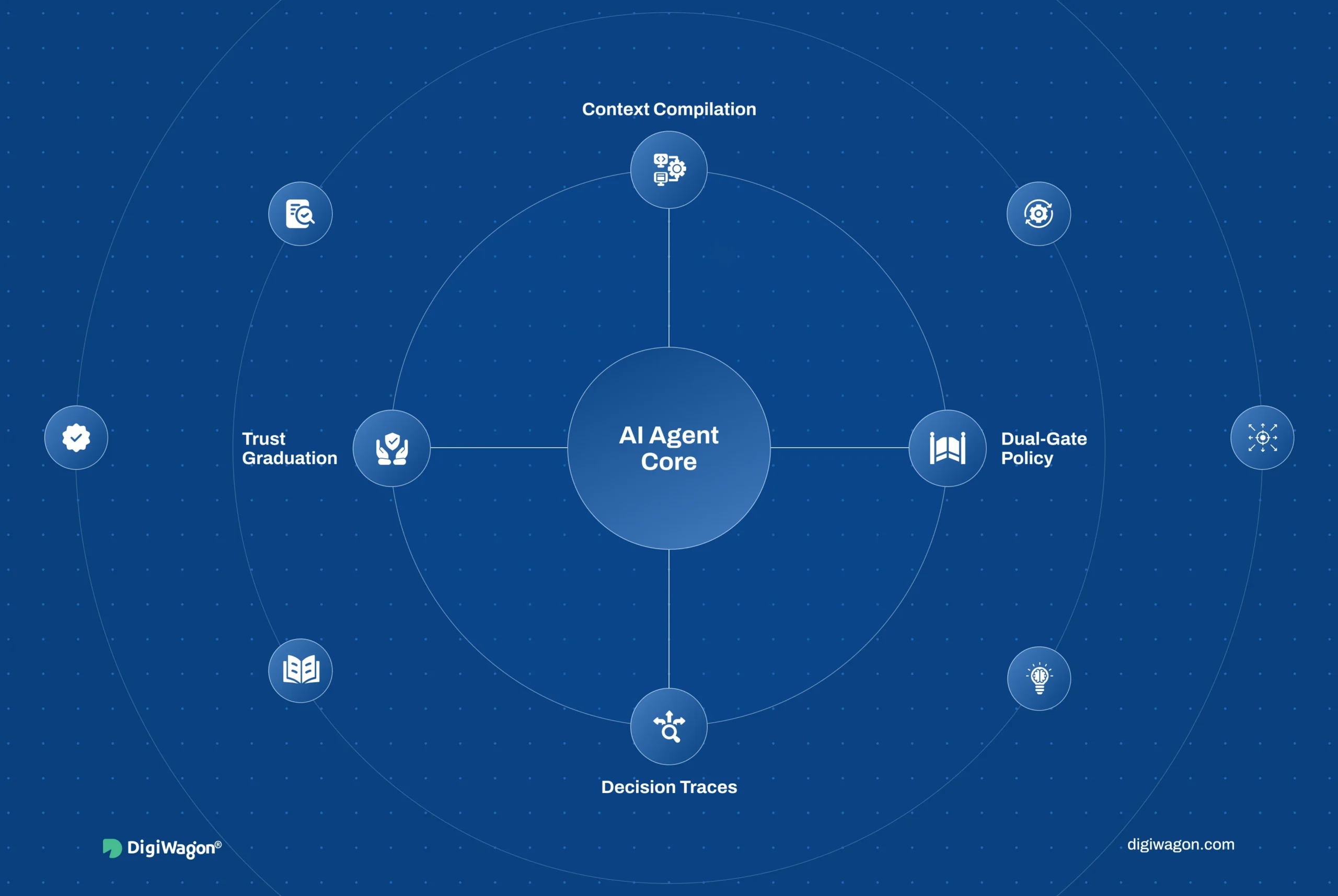
Yes – it’s the core of how we build. Every agent ships with structured decision logging, human-in-the-loop checkpoints for adverse actions, and prompt versioning. This decision-harness architecture carried a global AML/RegTech screening platform through real regulatory examination, and it’s the same foundation under our US fintech and healthcare agents.
Yes. We deploy to your AWS or Azure tenancy in US regions (us-east-1, us-west-2, East US, West US 2). Customer data, vector stores, and audit logs stay in US infrastructure, which keeps state-privacy laws and federal procurement preferences satisfied without extra workarounds.
We’ve shipped agents for AML and KYC in a global RegTech screening context, HIPAA-compliant healthcare workflows on a clinical platform, and DTC retail automation for consumer brands. Use cases include transaction review, prior-auth drafting, customer-support deflection, sales research, and internal-knowledge agents.
US AI agent projects with DigiWagon typically range from $25,000-$60,000 for a focused single-purpose agent (8-12 week build), $75,000-$180,000 for a production multi-agent system with full compliance integration (4-6 month build), and $200,000-$500,000+ annually for a dedicated team running a multi-quarter program. Cost drivers include the number of integrations (CRM, ERP, data warehouse), compliance scope (SOC 2 evidence, HIPAA BAA infrastructure, fair-lending review), model spend during evaluation and production, and whether the build includes guardrails, observability, and continuous improvement. Most US clients start with a $25-50K Fixed Price scoping or MVP engagement before committing to a Dedicated Team. Final quotes follow a 2-3 week discovery and a written cost-of-build estimate.
Timelines depend on complexity. A single-purpose agent (customer support, knowledge retrieval, sales research) typically ships to staging in 6-10 weeks and to production in 10-14 weeks. A multi-agent orchestrated workflow with compliance integration (KYC, prior-auth, clinical triage) runs 16-24 weeks for a production-ready first release. A dedicated team running a multi-quarter program ships incremental agents on a 4-8 week cadence after the first lands. We pace the build for US ROI cycles – first measurable value within the first quarter is the working assumption. Compliance evidence collection and security review with your procurement team is factored in, not bolted on at the end.
Traditional automation and RPA follow fixed rules: if X, then Y. They’re fast for stable, repetitive tasks but break the moment an input falls outside the script, then wait for a human. An AI agent reasons about a goal, plans the steps, calls the tools it needs, evaluates the result, and adapts when reality deviates – handling the exceptions a rule-based bot can’t. For US enterprises, the practical rule is: use RPA for narrow, unchanging tasks, and AI agents for workflows with variation, unstructured inputs, or decisions a rigid script can’t make, such as KYC review or prior-authorization drafting. Many US deployments combine both – RPA for the stable legs, agents for the parts that need judgment – all under the audit logging your compliance team expects.