DigiWagon is a development partner that builds AI agents for FinTech teams, automating workflows across on boarding, operations, customer support, fraud, and compliance. Because these agents can access sensitive data and take actions in connected systems, security can’t be an afterthought, it has to be designed into the agent architecture, tool access, and deployment model from day one. This AI Agent Security Guide for FinTech | DigiWagon frames that security work from the start.
This guide covers the practical agentic ai security risks that show up in agentic systems and the engineering controls that help you ship useful, trustworthy AI agents in real FinTech environments. It situates these practices within artificial intelligence security for financial services.
What an AI agent means in FinTech
In most FinTech use cases, an AI agent is not just a chatbot. It’s a system that combines an LLM with tools, permissions, and workflow logic to:
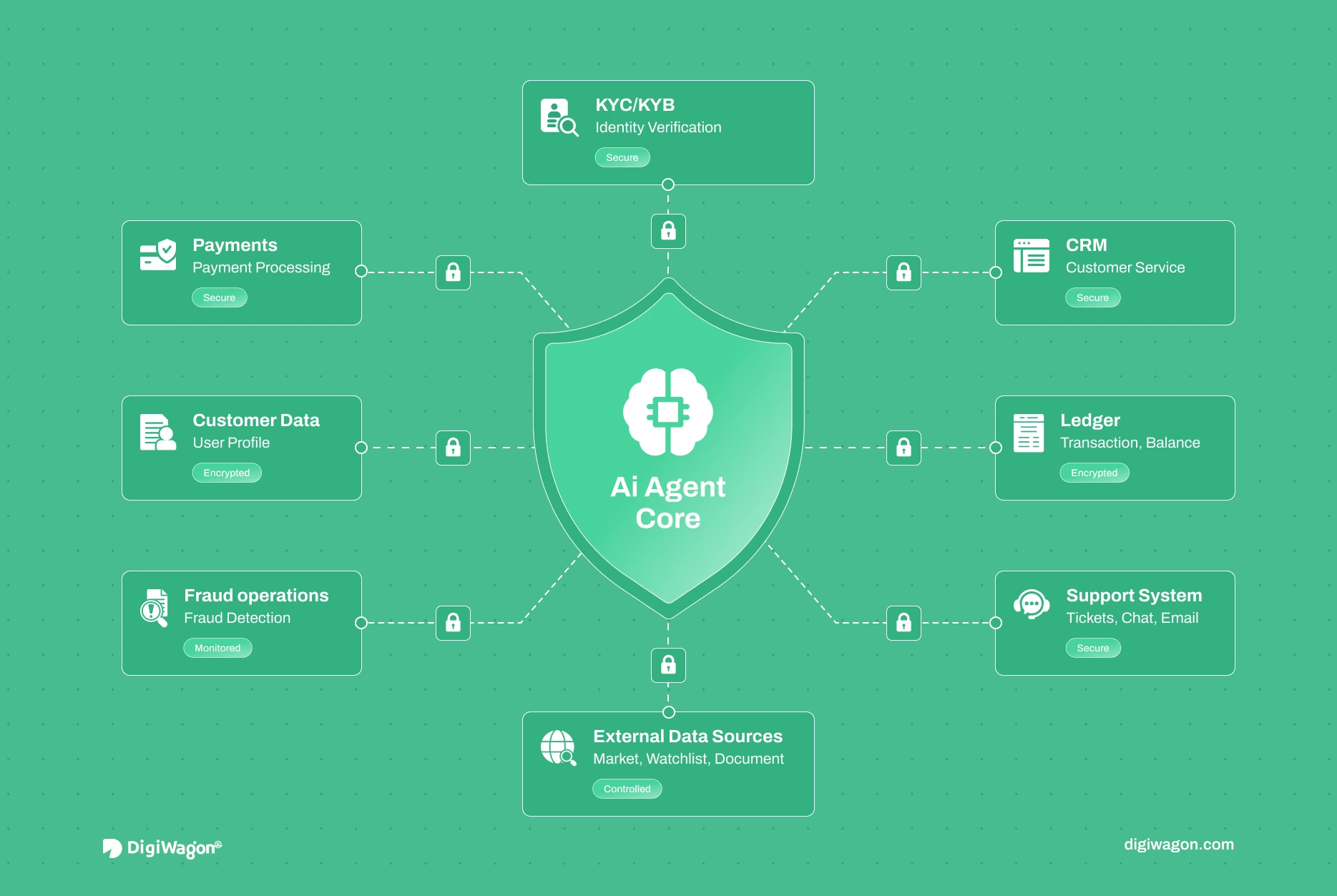
- Read and write to business systems (CRM, ticketing, KYC/KYB, payments, ledgers, data warehouses)
- Retrieve and summarize internal knowledge (policies, product docs, runbooks)
- Execute multi-step tasks (triage, escalation, reconciliation, follow-ups) with guardrails
That ability to take actions is exactly why agent security matters more than generic LLM security. This is a representative pattern of ai in security for FinTech operations, where ai and security considerations go hand in hand.
How DigiWagon approaches secure AI agent delivery
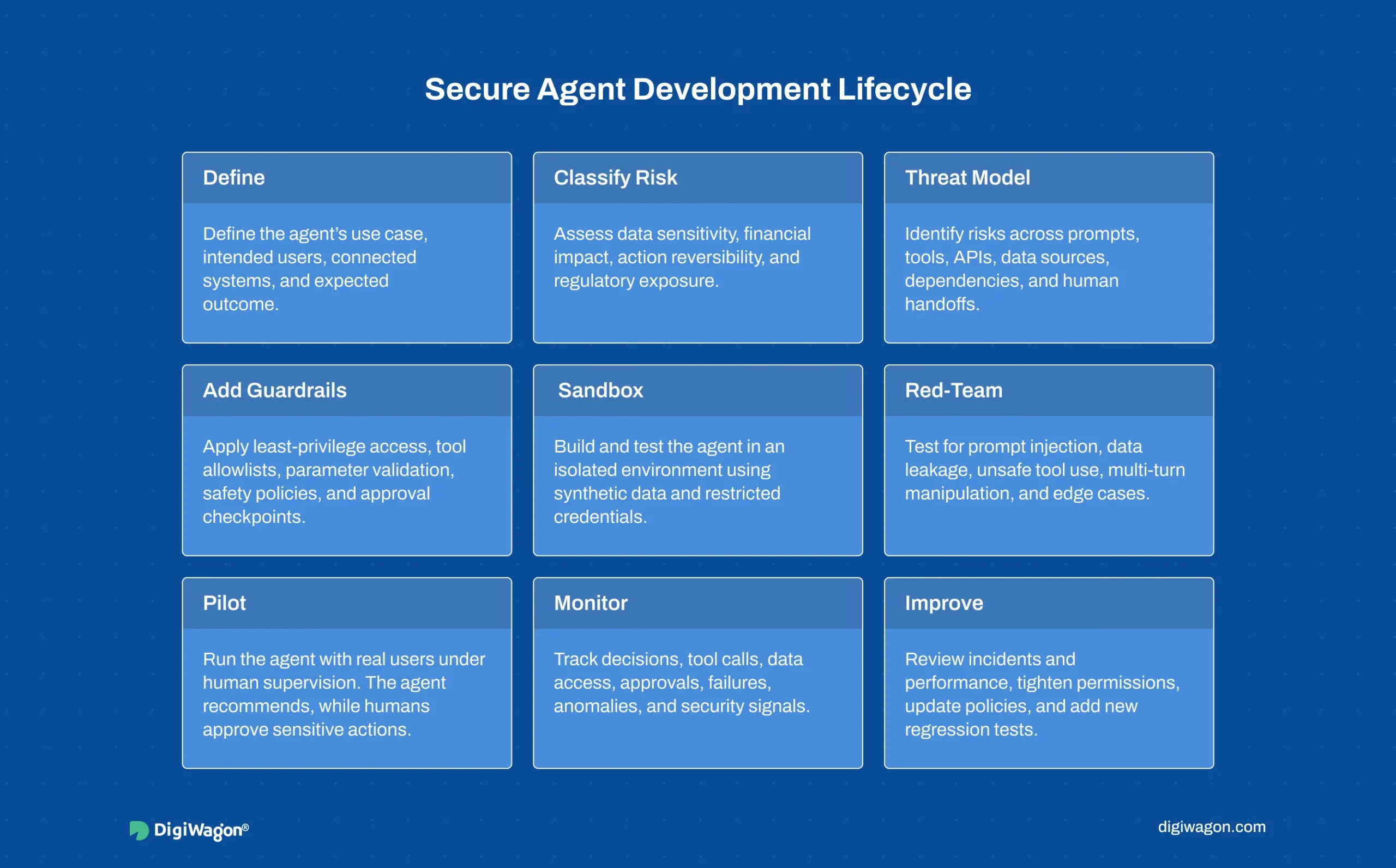
When you’re building AI agents for FinTech, security needs to be part of the delivery lifecycle, not a separate cyber project. Our goal is secure agentic ai in production without slowing delivery. A practical approach looks like:
- Threat modeling for agent workflows: what the agent can access, what it can do, and where it could be tricked
- Least-privilege tool access: narrow scopes, short-lived credentials, action allowlists, and step-up approvals for high-risk actions
- Evaluation and red-teaming: prompt-injection tests, data-leak tests, tool-misuse tests, and regression checks before release
- Observability by default: structured logs of agent decisions, tool calls, and data access, with audit-ready retention
- Safe deployment patterns: sandboxing, isolation, and graceful failure modes (including kill switches)
Key security risks of agentic AI in FinTech
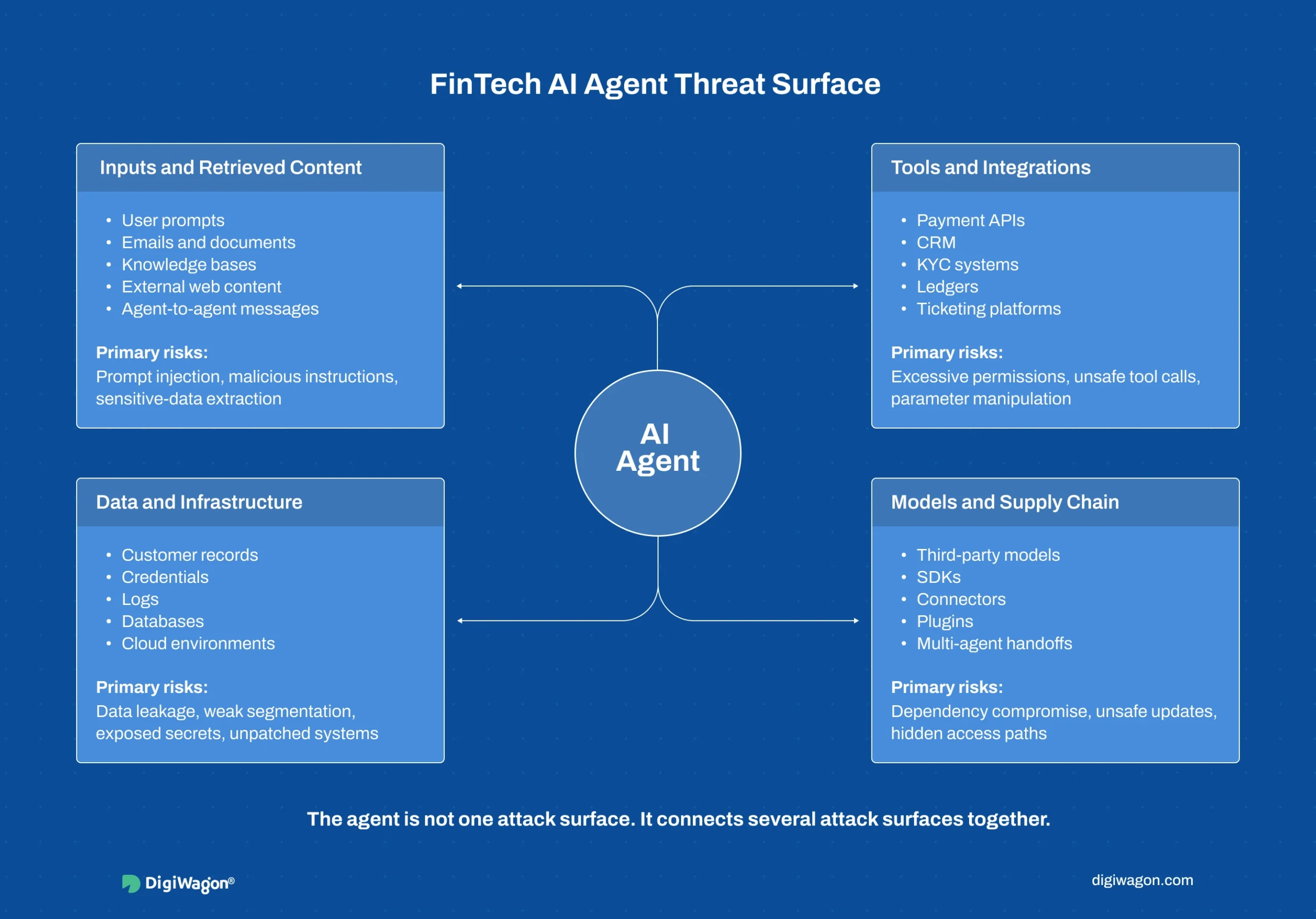
Agentic AI presents specific security challenges for FinTech companies. Because agents combine natural-language interfaces with real capabilities (tools, actions, integrations), risks must be identified and mitigated deliberately. These patterns mirror broader ai in cyber security themes and inform practical ai for cyber security controls.
Common risk categories include:
- Input and prompt-based attacks (prompt injection, data exfiltration)
- Tool and integration misuse (over-broad permissions, weak auth, unsafe automations)
- Data and system vulnerabilities (insecure storage, weak segmentation, missing patching)
- Supply chain and multi-agent risks (third-party tools, plug-ins, agent-to-agent handoffs)
Input and prompt-based attacks
Agents are vulnerable to instructions embedded in user messages or retrieved content. Attackers may try to override the agent’s rules, extract sensitive information, or trigger unsafe tool calls.
Controls that help:
- Strong input validation and content sanitization where applicable
- Clear system and tool-use policies (what the agent is and isn’t allowed to do)
- Prompt-injection testing as part of your pre-release evaluation suite
- Data access boundaries (don’t let the agent retrieve or disclose what it shouldn’t see)
- Use AI security tools to automate detection and guardrails where appropriate
Exploitation of agent capabilities and integrations
The highest-impact failures typically come from overpowered integrations: agents that can call internal APIs, move money, change account states, or edit customer data with insufficient controls.
Controls that help:
- Least-privilege authorization for every tool (per action, per resource, per tenant)
- Strong authentication and short-lived credentials for tool calls
- Action allowlists and parameter validation for tool execution
- Human approval checkpoints for irreversible or high-risk steps
- Regular audits of integration points and permissions
Data and system-level vulnerabilities
AI agents often touch multiple data sources. Weak infrastructure security can turn an agent into a new path to sensitive systems.
Controls that help:
- Encryption in transit and at rest, plus secrets management
- Environment segmentation (dev/staging/prod) and strict network boundaries
- Patch management and continuous vulnerability scanning
- Secure coding and code review practices across the agent stack
Supply chain and multi-agent risks
Third-party models, tools, SDKs, and connectors can expand your risk surface. Multi-agent handoffs can also create unexpected access paths. This is a core ai and cybersecurity concern.
Controls that help:
- Vendor and dependency reviews; pin versions and monitor for advisories
- Limit third-party tool access to only what’s required
- Secure communication between agents/services; log all cross-agent actions
- Clear ownership and accountability for every component in the chain
Foundational security practices (the basics still matter)
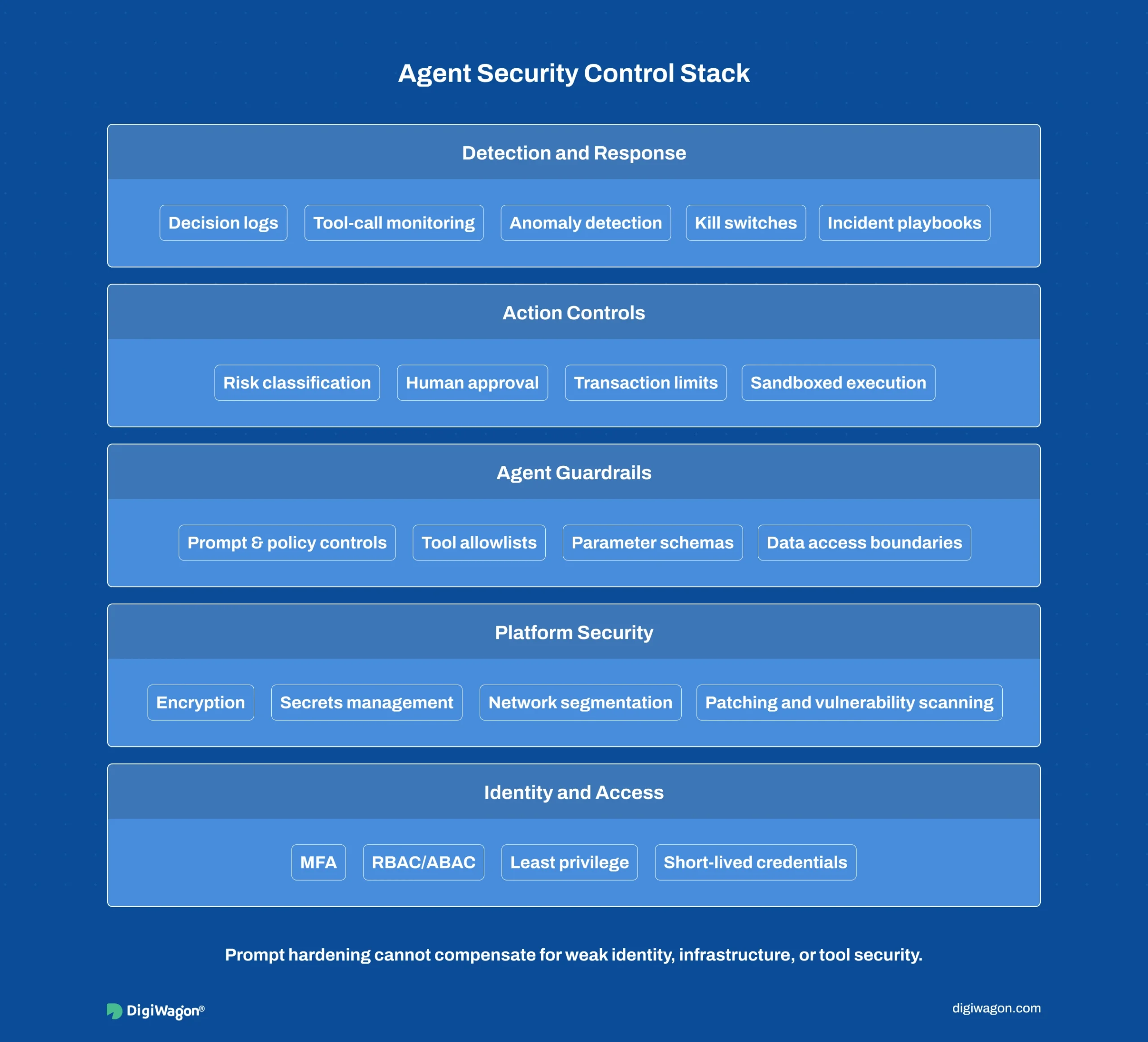
Even the best prompt hardening won’t save an insecure platform. Foundational controls reduce exposure across the environment:
- Robust authentication and authorization (MFA, RBAC/ABAC, least privilege)
- Secure coding and development practices (reviews, SAST/DAST, dependency scanning)
- Input validation and sanitization where applicable
Agent-specific security defenses
Agent-specific defenses focus on how the agent reasons, what it can access, and how it acts. These are common patterns we implement when building agents for FinTech workflows:
- Prompt hardening and policy clarity: explicit constraints and refusal rules for sensitive requests
- Tool gating: allowlists, parameter schemas, and pre-execution checks
- Content filtering and monitoring: detect unsafe content, prompt-injection attempts, and unusual requests
- Human-in-the-loop: approvals for high-risk steps and exception handling
- Sandboxing and isolation: contain tool execution and limit blast radius
Continuous monitoring and incident response
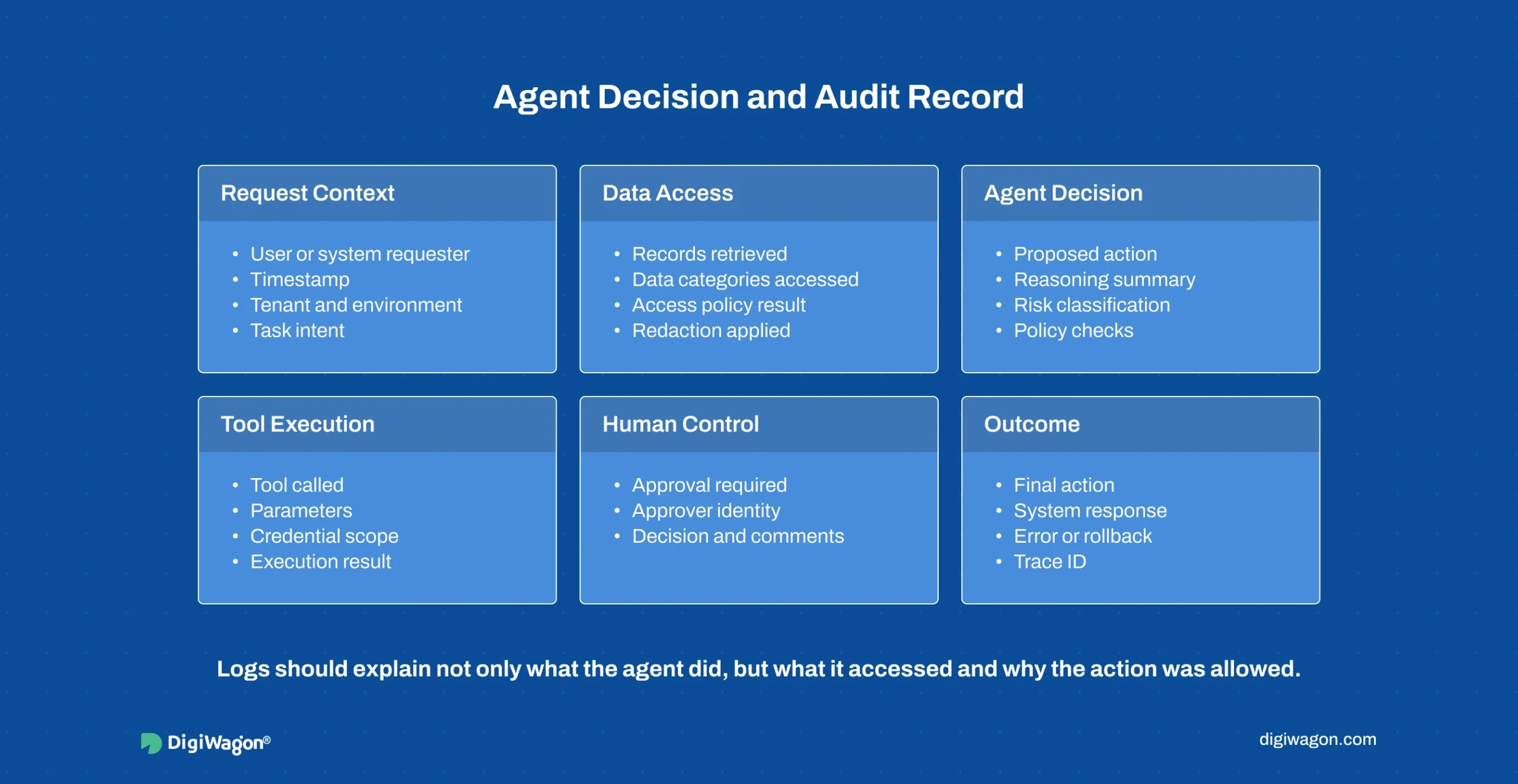
Agents are production systems. They need telemetry, auditability, and rapid containment options.
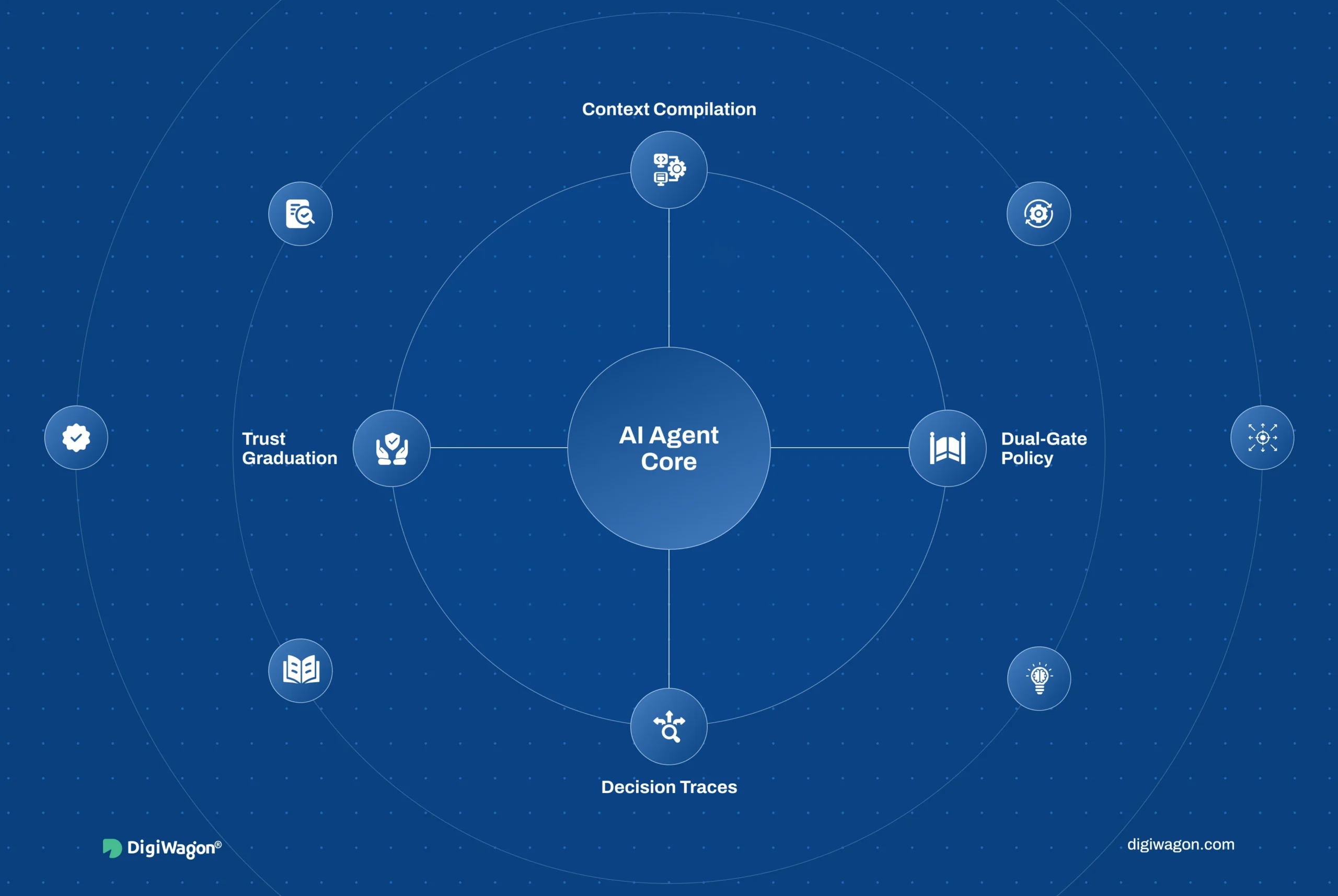
- Logging and auditing: record tool calls, data access, and decision traces in an audit-friendly format
- Anomaly detection: alert on unusual access patterns, repeated failures, or unusual tool usage
- Incident response: clear playbooks, rollback plans, and emergency off-switches for agent capabilities
Regulatory compliance and ethical considerations
FinTech teams need to balance fast iteration with privacy, security, and compliance obligations. Practical steps include:
- Data minimization and consent-aware handling
- Clear audit trails for agent actions and access
- Bias and quality evaluation for user-impacting decisions
- Regular reviews as regulations and internal policies evolve
Examples of secure AI agent use cases in FinTech
Security requirements vary by workflow, but common agent patterns include:
- Onboarding/KYC operations agent: drafts follow-ups, checks completeness, routes exceptions to human review
- Support and dispute triage agent: summarizes cases, suggests next actions, escalates based on policy
- Fraud operations copilot: assembles evidence packets, proposes actions, requires approval for enforcement steps
- Reconciliation agent: flags anomalies, prepares investigation notes, never posts ledger changes without checks
The key is to match tool permissions, approvals, and monitoring to the actual risk of the workflow.
Conclusion: build useful agents that are safe to operate
FinTech AI agents create leverage when they can safely connect to real systems and execute real work. The winning approach is security-by-design: least privilege, evaluation, monitoring, and controlled automation from the first iteration.
Want Help Building a Secure AI Agent for Your FinTech Product or Operations Team?
DigiWagon can scope the workflow, design the architecture, implement the agent with guardrails, and set up evaluation and monitoring so it’s production-ready.