Composable SaaS Architecture: Executive Overview
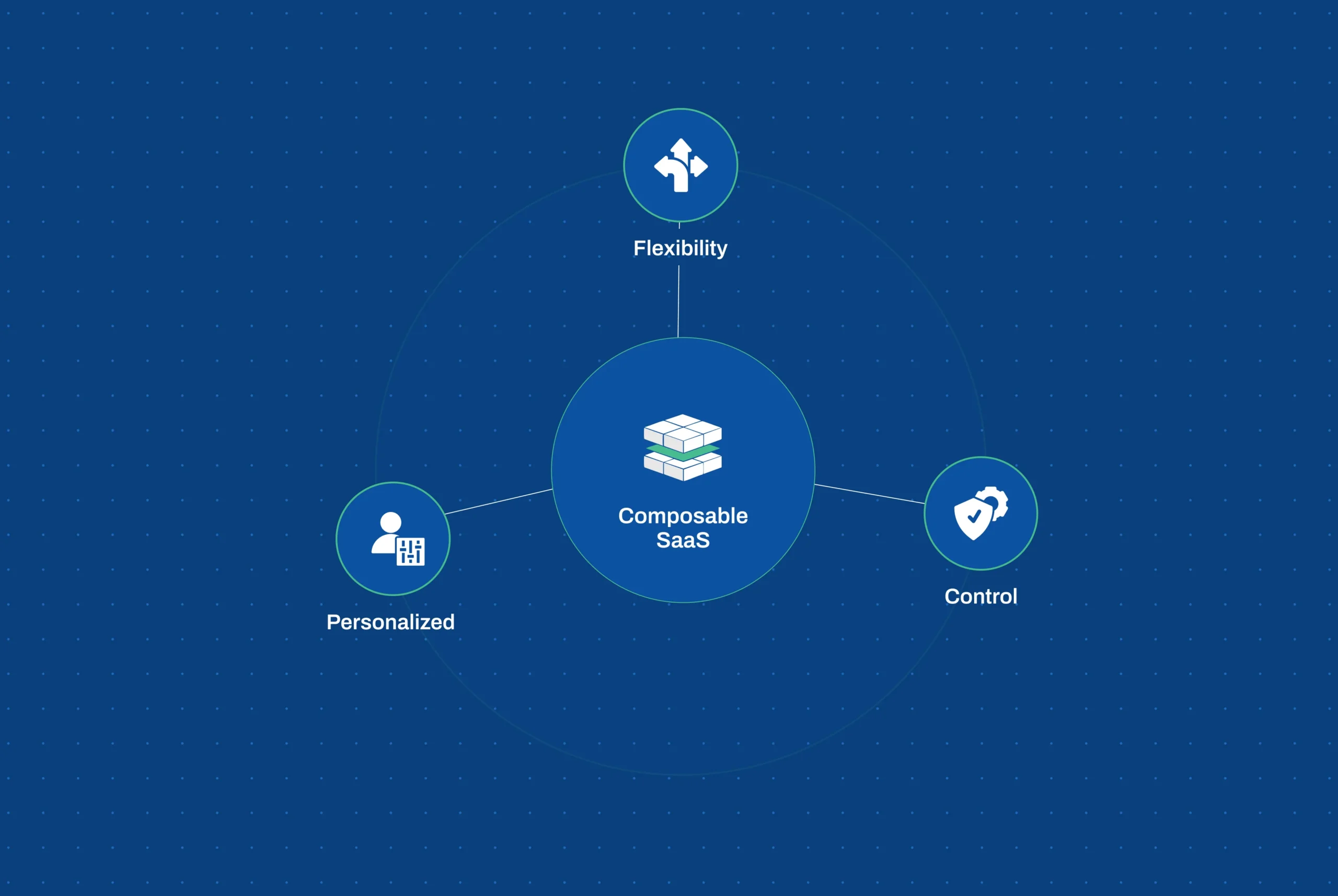
- Composable SaaS connects modular business capabilities through APIs instead of relying on one rigid suite
- It helps B2B platforms personalise faster, integrate better, and reduce vendor lock-in
- Unlike microservices alone, composable SaaS modularises business capabilities, not just code
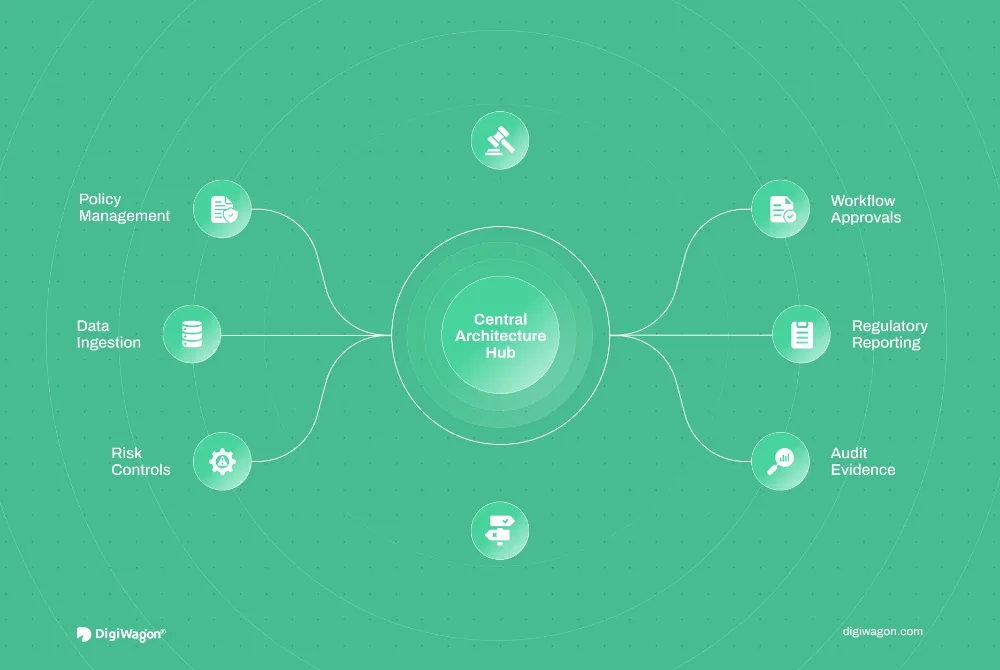
- It also supports sovereignty-ready architecture by isolating sensitive systems and governance-heavy workflows
What Is Composable SaaS Architecture?
Composable SaaS architecture is a modular software approach where a platform is assembled from independent business capabilities connected through APIs. Instead of relying on one all-in-one suite, enterprises can combine specialised components, often called Packaged Business Capabilities (PBCs), to create more flexible and scalable digital products.
This is what makes composable SaaS different from older software models. The platform is no longer a single fixed system. It becomes an orchestrated ecosystem of capabilities that can be selected, replaced, and improved over time.
In simple terms:
PBCs + APIs + orchestration = composable platform
That shift matters because enterprise software in 2026 is expected to do more than function. It must adapt quickly, personalise deeply, and integrate cleanly with the rest of the business.
Why Composable SaaS Matters in 2026?
Composable SaaS matters in 2026 because enterprise platforms are under pressure to do three things at once: personalise faster, integrate more flexibly, and evolve without full-platform rewrites.
Traditional monolithic systems struggle with that level of change. They slow down feature delivery, limit personalisation, and make modernisation riskier than it should be. Composable architecture solves this by turning the platform into a set of modular business capabilities that can evolve independently.
For B2B enterprises, this means:
- faster rollout of personalised experiences
- easier integration of best-of-breed tools
- lower dependency on a single vendor roadmap
It also matters because modern software teams increasingly need more control over where data is processed, where identity systems are hosted, and how sensitive AI or customer data is governed. We call this architectural sovereignty: the ability to isolate specific capabilities, apply region-aware controls, and design around requirements like GDPR, data residency, and the EU AI Act without forcing the entire platform into one rigid model.
That is why composable SaaS is becoming less of an architectural preference and more of a competitive requirement.
Composable Architecture for B2B vs B2C Platforms
The same building blocks serve both markets, but the capabilities worth decoupling first are different. In B2B platforms the friction sits in account hierarchies, contract pricing, approval workflows, quoting and the integrations with each customer’s ERP or procurement system. Composable architecture lets each of those become a separately owned capability, so a pricing rule or an approval flow can change without a platform release.
In B2C platforms the pressure is traffic peaks, product discovery, checkout speed and content. Here composability is usually used to swap search, CMS, checkout or promotions for best-of-breed services while the core catalogue stays put. The principle is identical: modularise the business capability that limits you most, not the whole stack at once.
Monolithic vs Microservices vs Composable SaaS
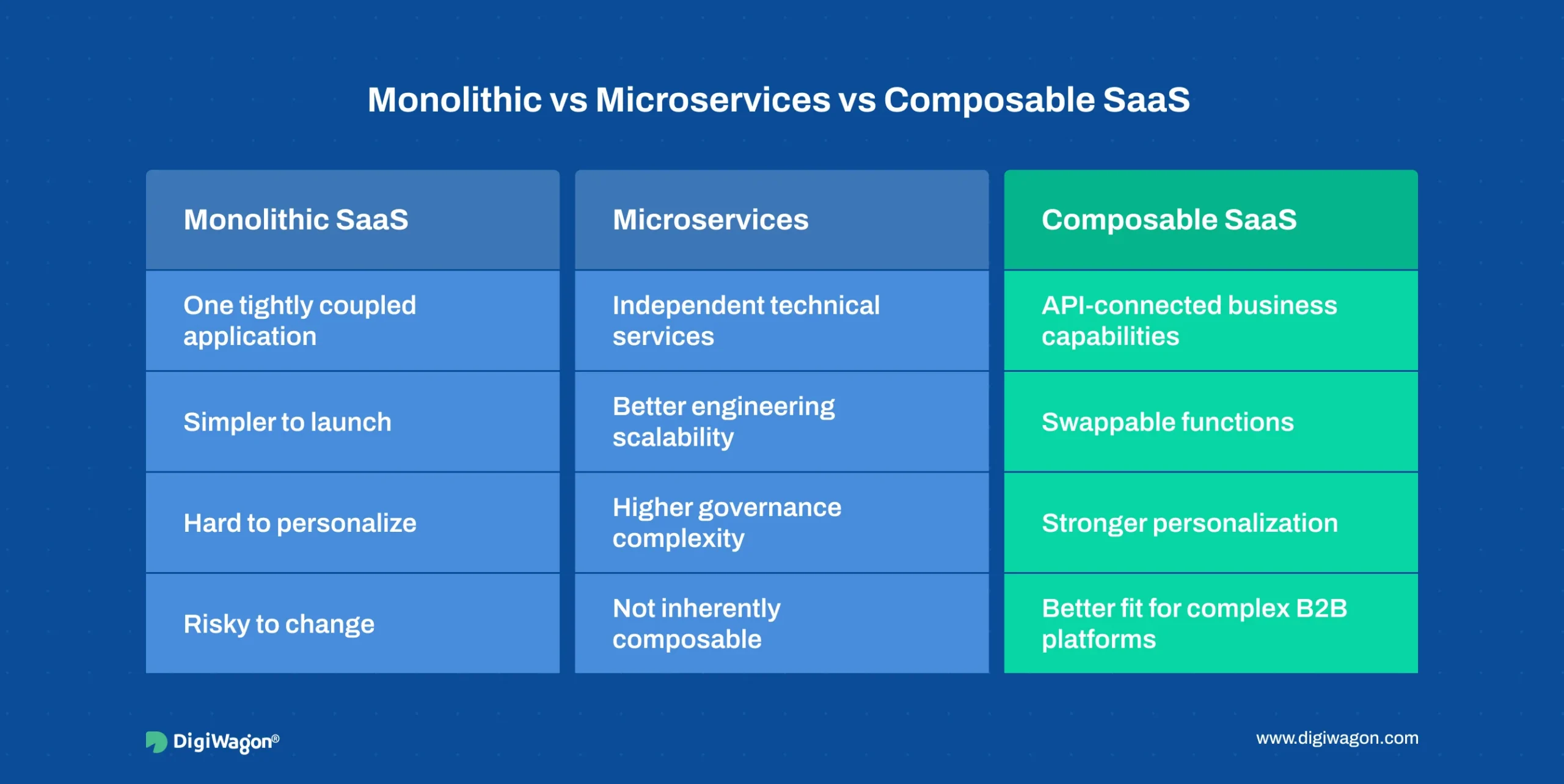
One of the biggest misconceptions in enterprise architecture is treating microservices and composable SaaS as the same thing.
They are related, but they are not the same.
Monolithic SaaS
Monolithic SaaS is one tightly coupled platform where front end, back end, and business logic are bundled together. It is simpler to start with, but harder to customise, personalise, or modernise over time.
Microservices
Microservices are a technical engineering approach where the platform is broken into smaller independently deployed services. Each service handles an individual function and is developed and deployed independently.
Composable SaaS
Composable SaaS is a broader business architecture model where modular business capabilities are assembled through APIs. It is not just about splitting code. It is about structuring the platform around swappable functions such as search, pricing, checkout, identity, or content.
Comparison table
| Model | What it is? | Main strength | Main weakness | Best fit |
|---|---|---|---|---|
| Monolithic SaaS | One tightly coupled application | Simpler to launch | Hard to personalize and risky to change | Smaller or stable platforms |
| Microservices | Independent technical services | Better engineering scalability | Can become complex without governance | Engineering-led modernisation |
| Composable SaaS | API-connected business capabilities | High agility, swappable functions, stronger personalisation | Needs strong orchestration and standards | Complex B2B platforms and multi-market enterprises |
Core Building Blocks: PBCs, APIs, and MACH
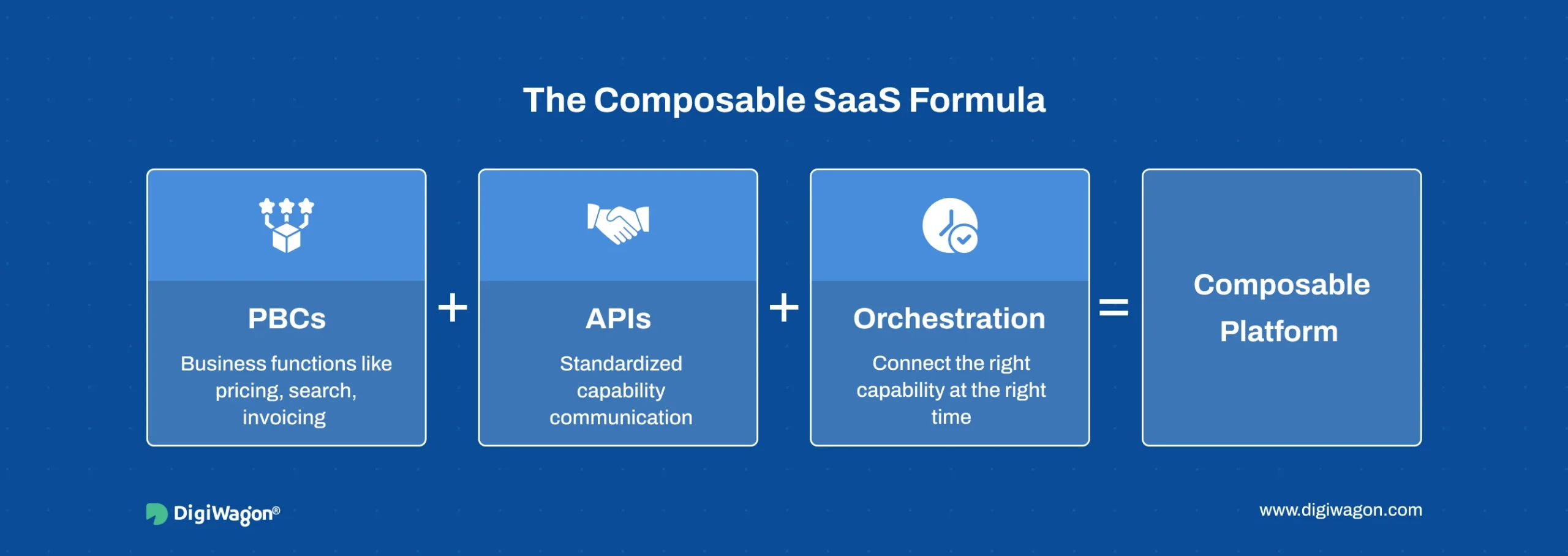
At the core of composable SaaS are Packaged Business Capabilities. A PBC is a focused mini-application designed to do one business function extremely well, such as pricing, search, authentication, or invoicing.
These capabilities are typically supported by a MACH foundation:
- Microservices: independent services for separate functions
- API-first: standardised communication across components
- Cloud-native: elastic scaling and resilient deployments
- Headless: decoupled front-end experience layer
These principles are widely associated with the MACH Alliance, which has helped formalise composable standards around Microservices, API-first, Cloud-native, and Headless architecture.
How Composable SaaS Enables Hyper-Personalisation
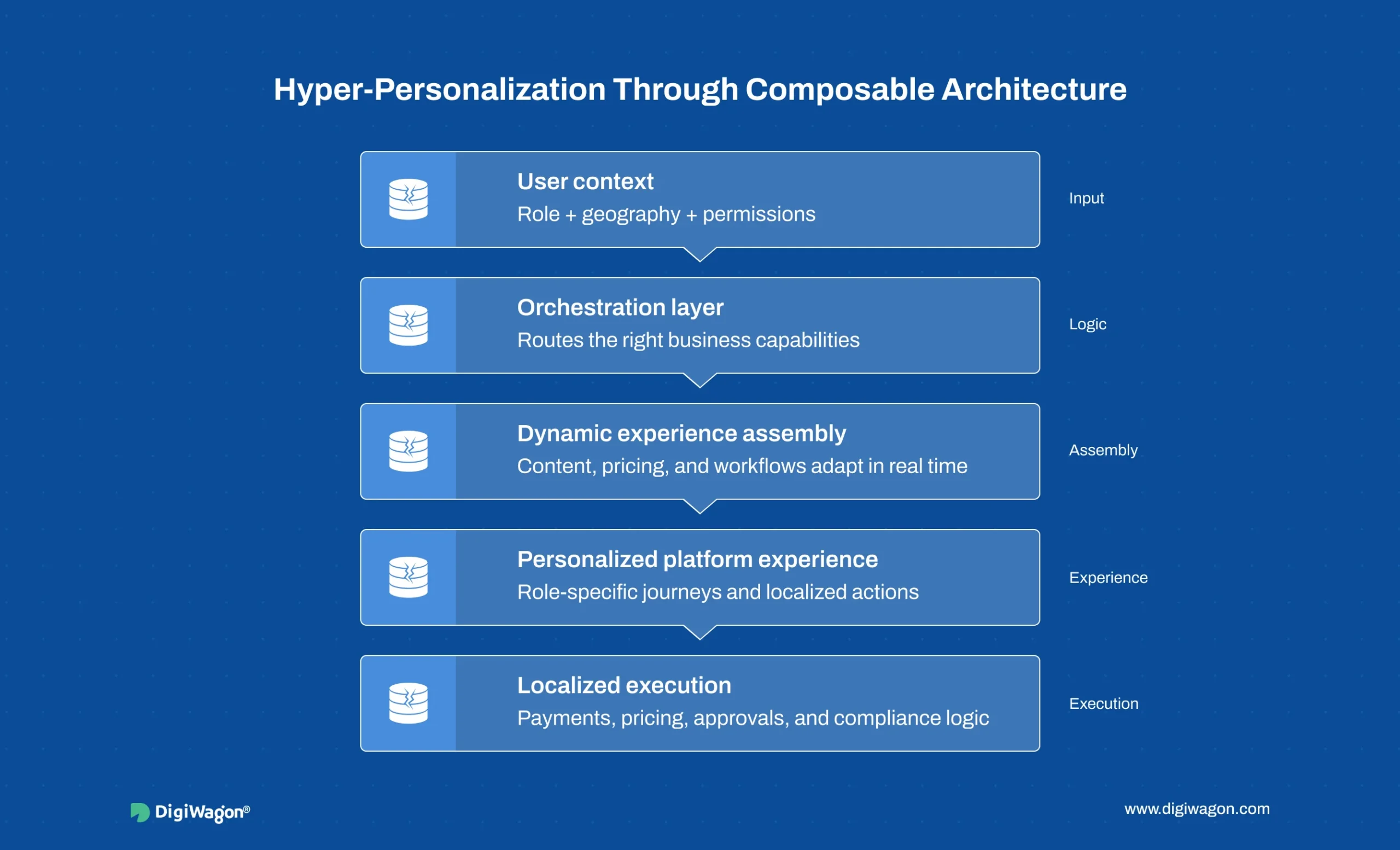
Hyper-personalisation is one of the strongest reasons enterprises move toward composable SaaS.
In a composable architecture, the front end acts as an orchestration layer. It can assemble different experiences based on role, geography, permissions, workflow type, or account context. A procurement officer and a field engineer can see completely different dashboard experiences while using the same platform.
This is powerful because personalisation in modern B2B software is not only about content. It is also about:
- workflows
- data visibility
- pricing logic
- localised payment and invoicing options
- approval and access paths
Composable SaaS makes that possible without forcing the entire product to change as one unit.
This becomes even more important for businesses operating across multiple markets. A composable platform can support country-specific tax rules, language logic, invoicing formats, payment providers, and approval workflows without rewriting the core stack. That flexibility is especially valuable in European environments, where localisation and regulatory requirements often vary by country and by data category. That is why composable design connects so directly to high-touch localisation and sovereign-ready architecture.
How DigiWagon Helps Enterprises Move to Composable SaaS
DigiWagon’s SaaS product development services help enterprises modernise platforms through architecture audits, API-first modernisation, modular capability planning and phased migration strategies, with systems integration for the API gateway and orchestration layer.
The first step is not replacing everything. It is identifying the highest-friction capability inside the current platform. In many cases, this is search, CMS, checkout, identity, or another core business function that slows down user experience and product agility.
DigiWagon supports enterprises through:
- architecture and API audits
- PBC selection and integration
- orchestration design across modular services
- phased decoupling of monolithic systems
- modernisation paths with lower risk and lower lock-in
For enterprises dealing with regulated data, localised user experiences, or future AI governance needs, DigiWagon also helps design sovereign-ready architectures. That includes isolating identity-heavy capabilities, structuring PII storage by region, supporting localised execution, and planning for regulatory models like GDPR and the EU AI Act without over-constraining the full platform.
For enterprises facing personalisation bottlenecks, integration complexity, or rigid product stacks, DigiWagon helps translate composable architecture from a concept into a practical roadmap.
Implementing the Composable Roadmap: A Strategy for CTOs
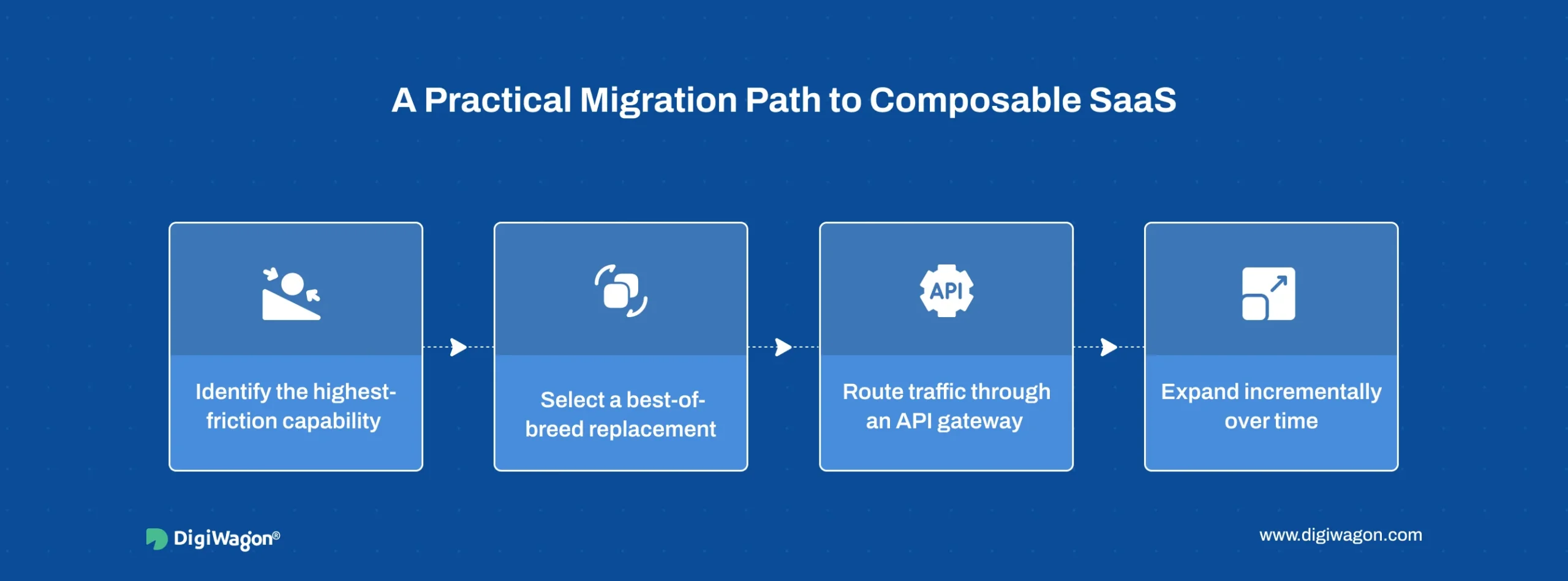
Composable transformation should begin with business value, not architectural theory.
A practical path looks like this:
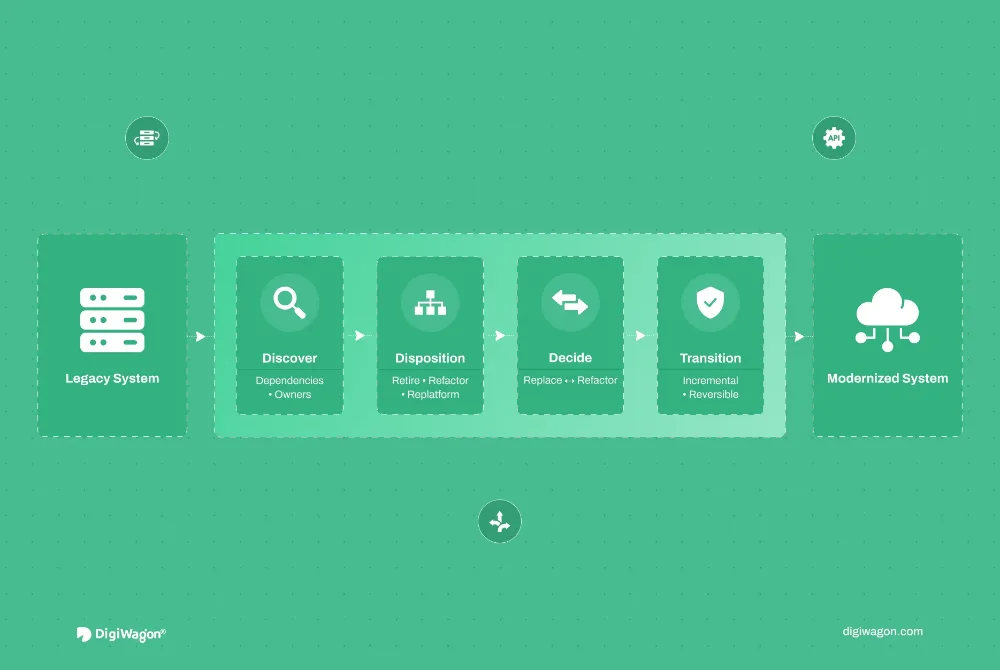
1. Identify the highest-friction capability
Start with the module creating the most business pain, such as search, CMS, checkout, or identity.
2. Select a best-of-breed replacement
Replace that one function with a modular specialised capability instead of rebuilding the entire platform.
3. Route traffic through an API gateway
Allow the new component to coexist with the legacy platform while reducing migration risk.
4. Expand incrementally
Continue replacing adjacent business capabilities over time until the monolith becomes a shrinking dependency rather than the core of the product.
This is why composable SaaS is practical for enterprises. It does not require a dangerous full-platform replacement on day one. It supports controlled modernisation.
Conclusion
Composable SaaS architecture is becoming the new foundation for hyper-personalised B2B platforms because it gives enterprises what monolithic software cannot: flexibility without total instability.
It helps teams personalise faster, integrate more cleanly, reduce vendor lock-in, and modernise one capability at a time. It also gives businesses more control over how sensitive systems are governed, localised, and scaled across different regions. The most valuable platform is no longer the one that owns every feature inside one stack. It is the one that orchestrates business value most effectively.
For businesses dealing with slow releases, rigid workflows, or platform constraints, the next step is not another workaround inside the monolith.
It is a composable roadmap.
Related reading: the CTO’s guide to the composable enterprise, B2B eCommerce architecture: custom vs composable vs platform and composable commerce for D2C brands. Weighing a full replatform against decoupling one capability? The free Build vs Buy Advisor frames that decision.