The year 2026 is not just another fiscal cycle; it’s a strategic inflection point. For CTOs, the mandate is clear: move beyond incremental upgrades and build an enterprise architecture that is fundamentally designed for speed, resilience, and continuous evolution.
The rigid, all-in-one monolith that defined the last decade is now a liability. In an era where Generative AI agents are driving commerce and customer expectations are set by the most agile digital-native brands, success belongs to the Composable Enterprise.
This is not just a technological shift; it’s a strategic consulting priority that redefines how business and IT collaborate, delivering an estimated 80% faster time-to-market for new features compared to competitors locked in monolithic systems.
What is a Composable Enterprise, and Why Now?
What is a Composable Enterprise? The PBC Model Explained
Think LEGO blocks , but for your enterprise, not toys.
- PBCs = Packaged Business Capabilities
- Modular, autonomous, API-connected components
- Replace or upgrade components with zero system-wide impact
- Example: Replace your payment service without touching inventory or catalog
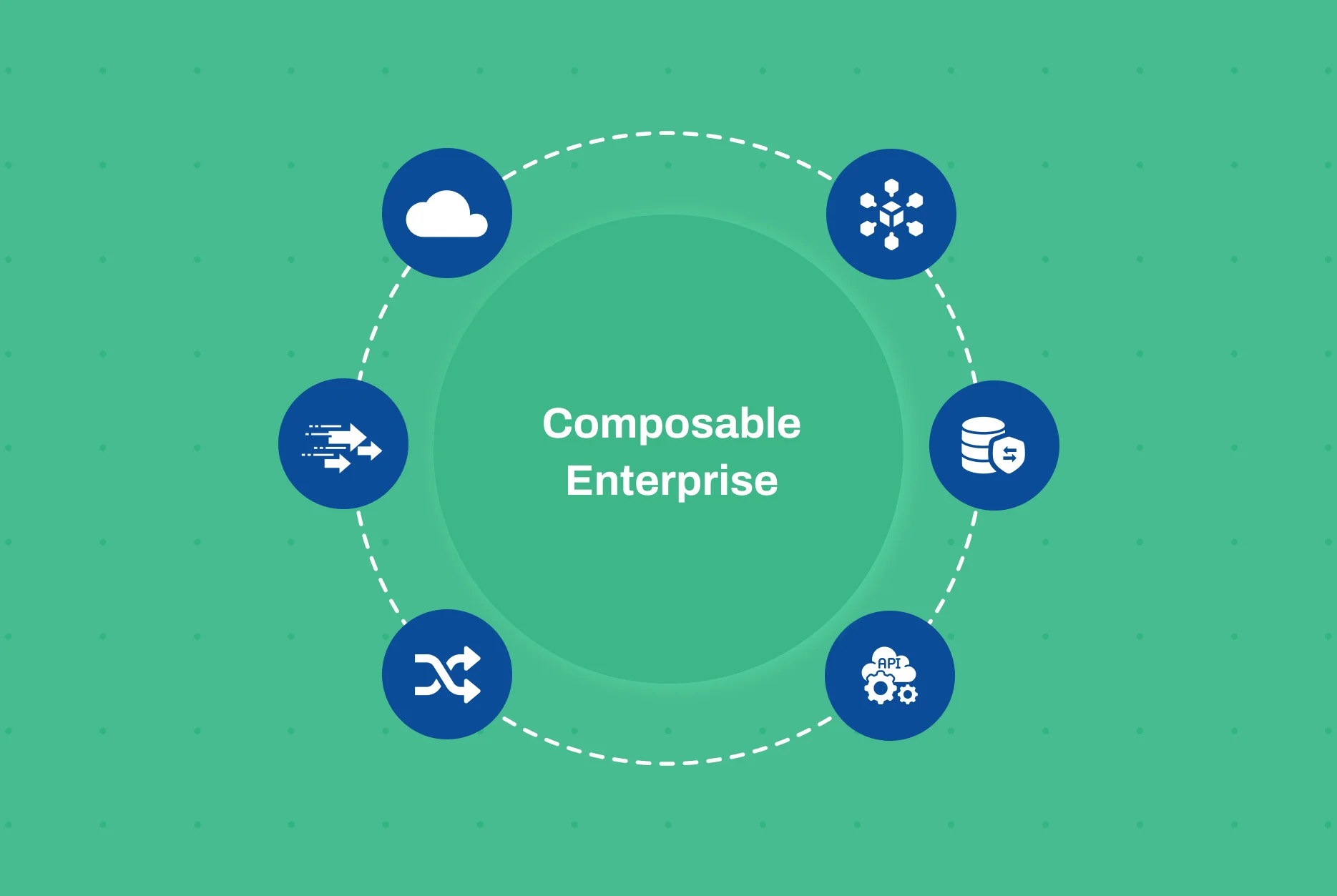
The Composable Enterprise is an organization built on Packaged Business Capabilities (PBCs), autonomous, modular, and reusable software components (often microservices) that are assembled via APIs to meet specific business needs. Think of it as a LEGO set for your entire business application ecosystem.
Unlike a monolithic system, where upgrading one piece requires overhauling the whole, the composable model allows you to mix-and-match best-of-breed solutions and replace underperforming modules without causing a system-wide outage.
The Problem with Monoliths in a 2026 Context
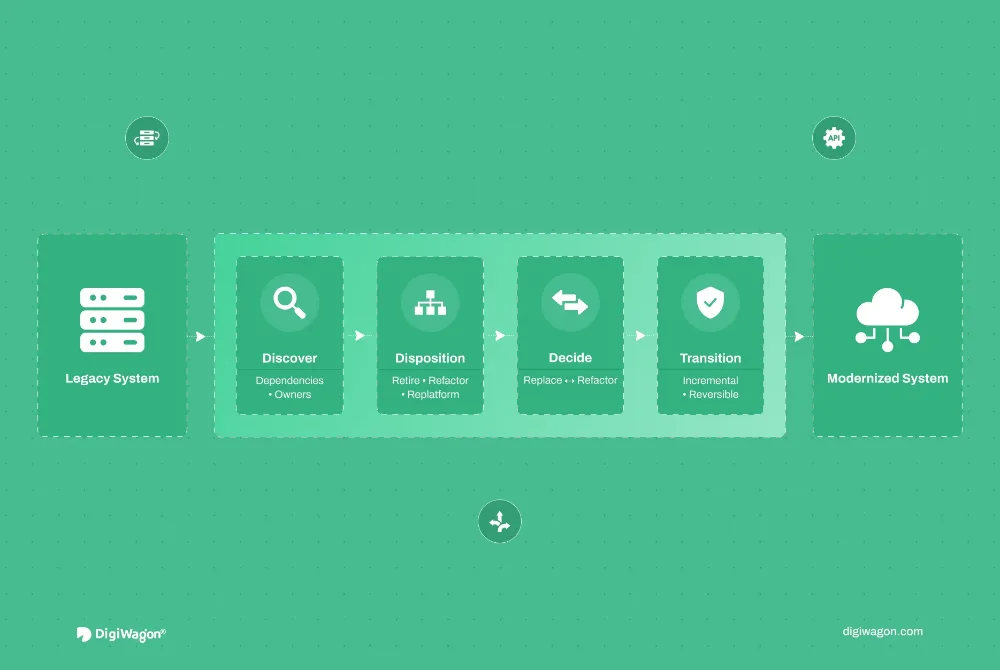
Why Monoliths Fail in 2026 – The Enterprise Bottleneck Map
Rigid systems can’t compete in an agile, AI-driven market.
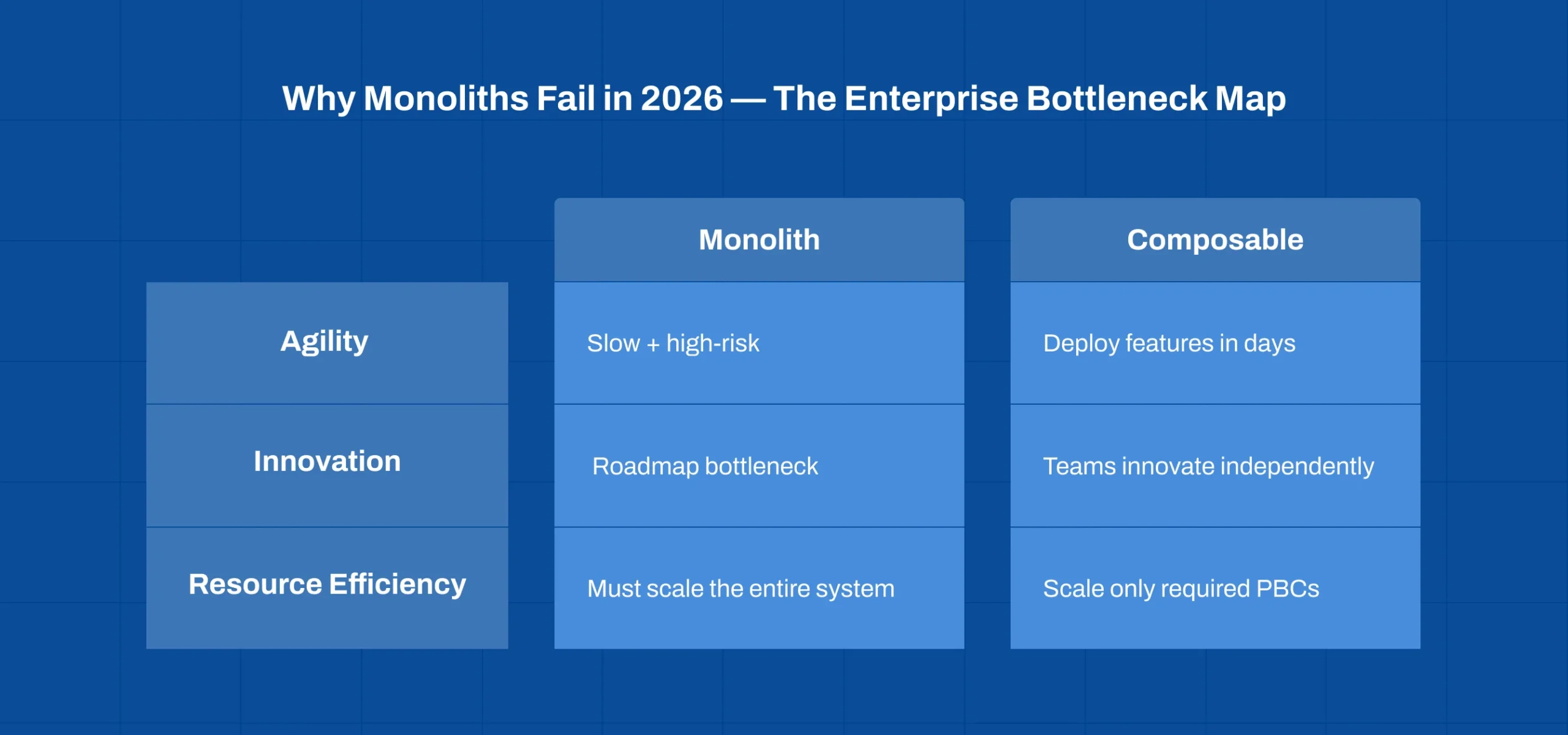
| Aspect | Monolithic Architecture | Composable Enterprise Architecture |
|---|---|---|
| Agility/Adaptation | Slow, costly, high-risk. Changes in one area affect the whole. | Rapid, low-risk. New features/integrations deployed in days, not months. |
| Vendor Lock-In | High dependency on a single vendor for core functions. | Low. Allows “best-of-breed” tools from multiple vendors (MACH principles). |
| Innovation Cycle | Feature backlogs grow long; innovation is bottlenecked by the entire system’s release schedule. | Accelerated. Teams can innovate and scale components independently. |
| Resource Efficiency | Requires scaling the entire system, leading to over-provisioning and wasted cloud spend. | Optimized. Components scale independently, aligning resources precisely with demand (FinOps friendly). |
The Strategic Roadmap: Transitioning to Composable
The Strategic Roadmap – 3-Phase Transformation
Strategy → Architecture → Acceleration.
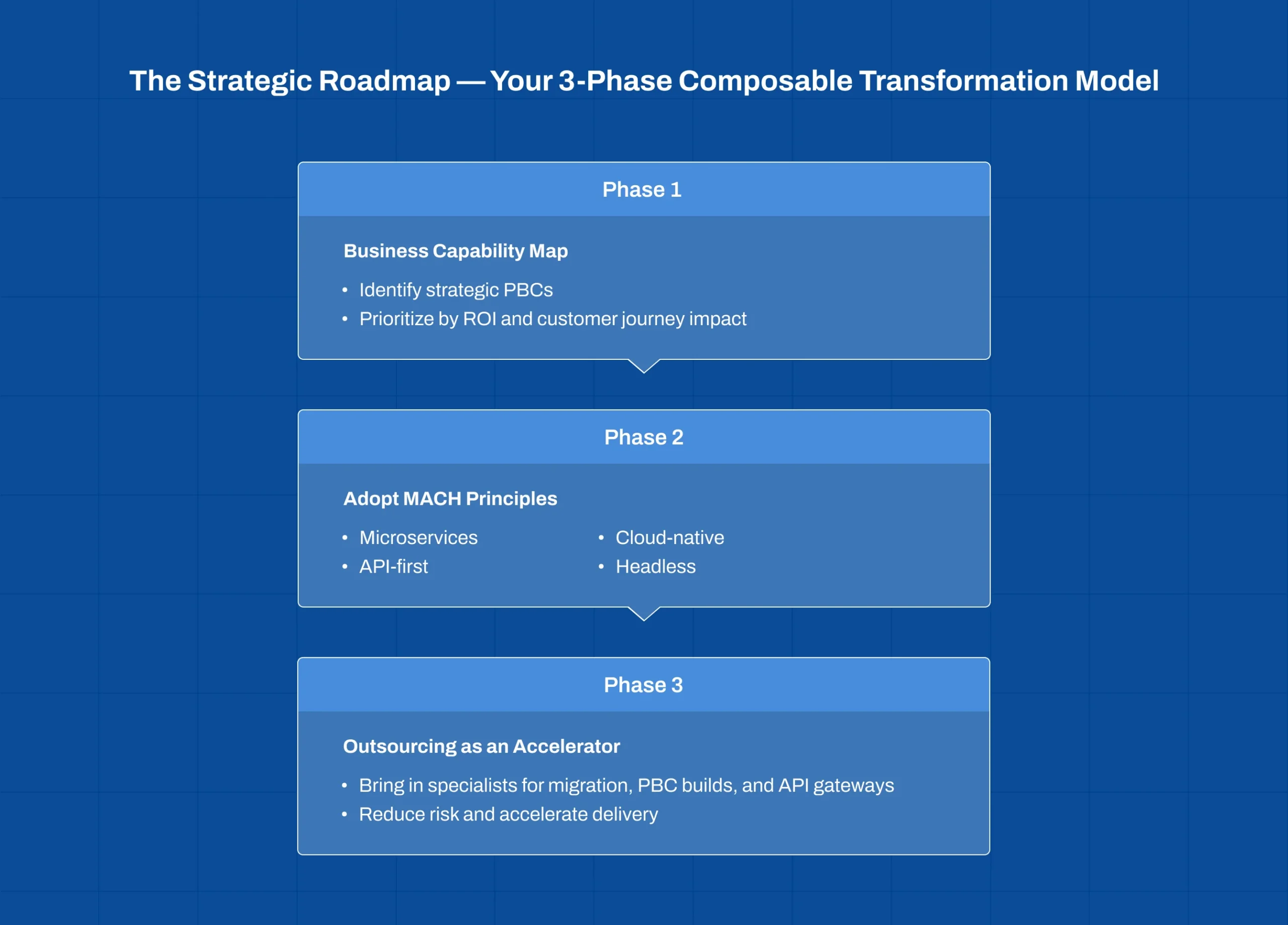
A successful transition to a composable model is a journey that requires strong Strategy Consulting and a phased approach. It should be led by business value, not just technology.
1. The Business Capability Map: Strategy First
Before writing a single line of code, the CTO’s office must lead the effort to map the entire organization’s capabilities.
- Identify Core PBCs: Break down the business into recognizable, standalone functions. For an eCommerce business, this might be Product Catalog, Payment Processing, Customer Loyalty, or Real-time Inventory.
- Prioritize by Value: Focus modernization efforts on the 2–3 PBCs that offer the highest measurable ROI and impact the key customer journey (e.g., checkout flow in B2B eCommerce). This early success builds momentum and secures continued funding.
2. Adopting the MACH Principles
The MACH Blueprint – Architecture for Speed & Scale
The four pillars of modern enterprise engineering.
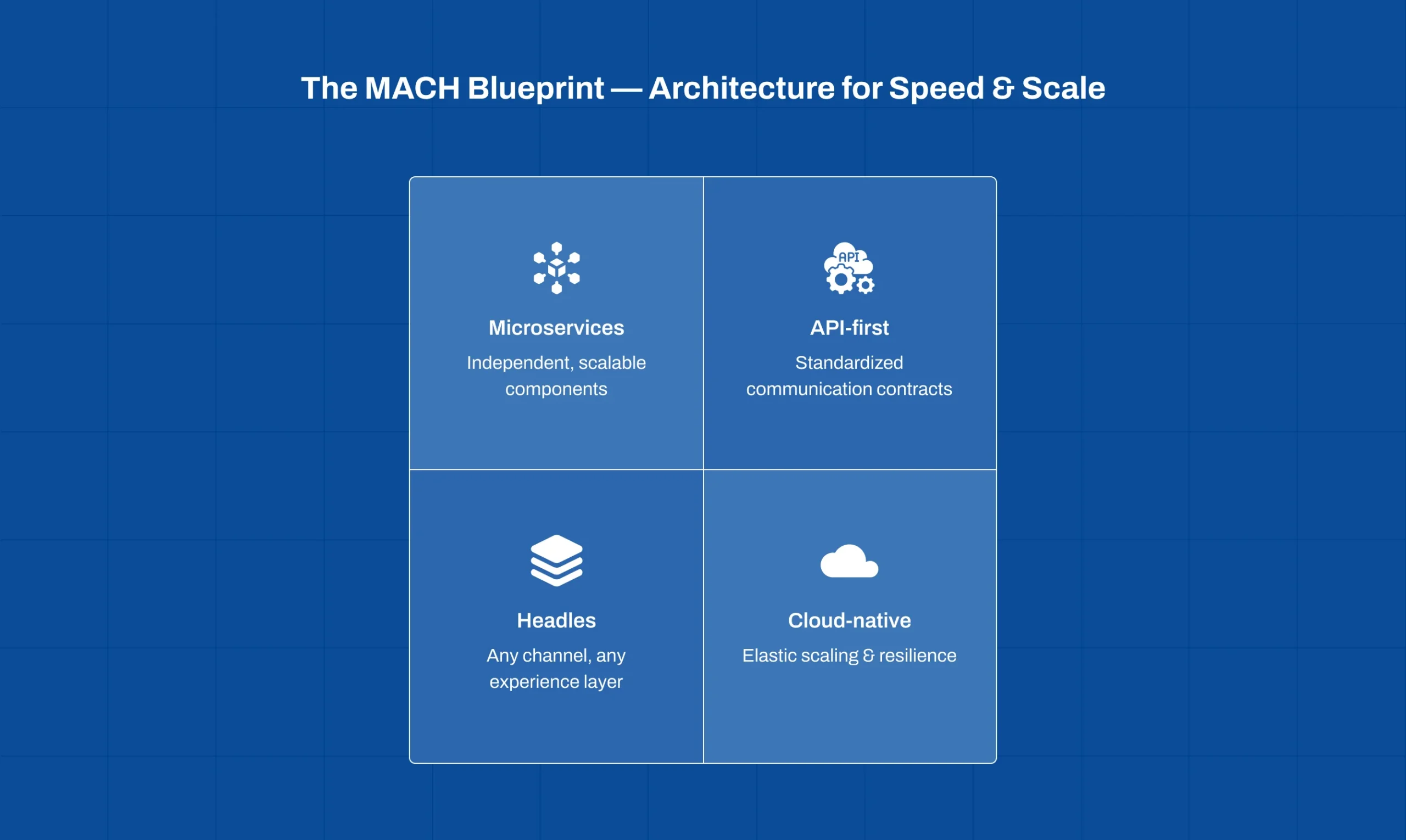
The architecture should adhere to the foundational MACH principles, which are the blueprint for composability:
- Microservices: Breaking the application into small, independent services.
- API-first: Using APIs as the standardized ‘contracts’ for communication between all components.
- Cloud-native: Leveraging the elasticity and scalability of the cloud for resilient deployment.
- Headless: Decoupling the front-end (presentation layer) from the back-end (logic/data), enabling seamless omnichannel experiences.
3. Smart Modernization via Software Development Outsourcing
Why Outsourcing Accelerates Composable Enterprise Adoption
Specialists reduce risk, cost, and timelines.
- Offload migration, data pipelines, containerization
- Bring in expertise for cloud-native + microservices
- Reduce dependency on slow internal hiring
- Ideal for regulated industries needing audit-ready engineering
Few enterprises have the in-house capacity or specialized expertise to execute a full composable re-architecture while maintaining existing operations. This is where strategic Software Development Outsourcing becomes a vital accelerant.
- Focus on Core Competency: Outsource the non-core but complex tasks, like building the new API gateway, containerization, or migrating data from legacy databases, to a trusted partner.
- De-Risking the Process: A specialized partner brings deep E-E-A-T in microservices and cloud-native development, significantly lowering the risk associated with a large-scale Digital Transformation project. This is especially true for regulated industries like FinTech and RegTech.
- Talent Augmentation: Leveraging outsourcing allows you to rapidly onboard expertise in technologies like Generative AI & LLM Solutions for specialized PBCs (e.g., AI-driven product recommendations or autonomous workflow agents), without the time and cost of internal hiring.
Unlocking True Business Agility
The Composable Advantage – Agility, Innovation, and Future-Proofing
Adapt instantly. Innovate continuously. Evolve endlessly.
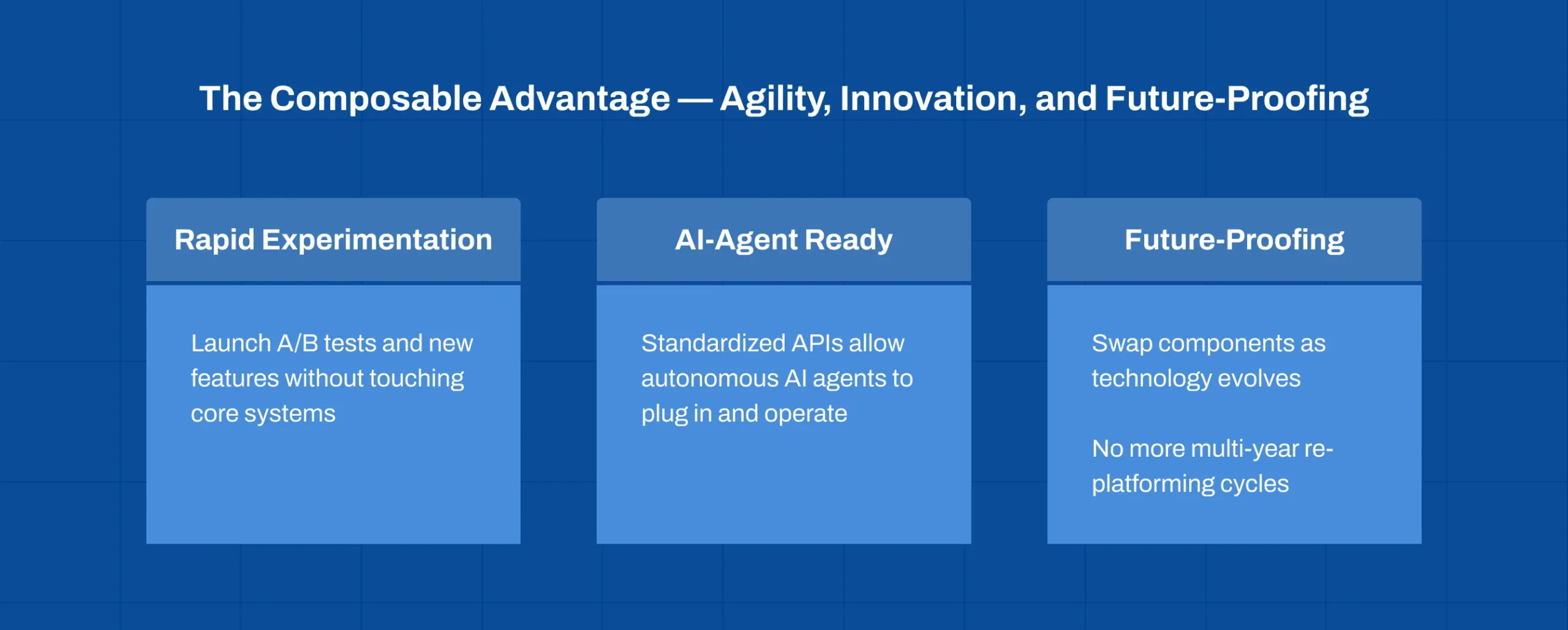
The ultimate benefit of the Composable Enterprise is not a faster website; it is the unprecedented organizational agility it creates.
- Rapid Experimentation: Teams can launch new product features or customer experiences, test them in a live environment, and roll them back, all without touching the core system. This rapid feedback loop is essential for competing in a data-driven market.
- AI-Agent Ready: As AI agents begin to drive more transactions and customer interaction in 2026, your technology stack must be ready to integrate with them seamlessly. Composable architecture, with its standardized APIs, is inherently “Agent-Ready,” providing the necessary endpoints for AI to operate and orchestrate services dynamically.
- Future-Proofing the Business Model: By making every piece of functionality interchangeable, you are positioning the business to adapt to unforeseen technological shifts. If a new data platform or a quantum computing layer emerges, you simply unplug the old component and plug in the new one. The business doesn’t skip a beat.
The CTO’s Call to Action
The move to a Composable Enterprise is the single most effective way to future-proof your organization. It’s a fundamental investment in agility, resilience, and innovation that directly contributes to market share and revenue growth.
Don’t wait for your monolithic constraints to become insurmountable competitive disadvantages. Start with a strategic consulting engagement to map your business capabilities, identify the highest-value PBCs, and partner with experts who can accelerate your digital transformation without introducing vendor lock-in. The time to start composing your 2026 success is now.