The C-suite has successfully navigated the first wave of Digital Transformation. You’ve adopted the cloud, invested in modern data infrastructure, and perhaps even deployed initial AI & Machine Learning models. Yet, for many large organisations in the USA, UK, and Europe, the expected leap in agility and decision speed hasn’t materialised.
Why? Because technology alone is not enough.
By 2026, the real bottleneck is not the data pipeline; it’s the human pipeline. A global survey recently noted that while 90% of business leaders recognise data literacy as critical, less than 25% of their employees feel confident in their ability to read, analyze, and argue with data.
For enterprise leaders, data literacy is not a training issue, it is a competitive advantage. It’s the essential ingredient that converts complex, expensive Enterprise Software, advanced platforms, and even specialised Data & Analytics Services into tangible, measurable business outcomes.
The 2026 Reality: Your Data is Only as Smart as Your People
The power of your data stack, from your ETL processes to your Generative AI insights, is constrained by the organisational ability to interpret its output.
The Data Overload Paradox: Why Access Doesn’t Mean Understanding
We have achieved data democratisation by providing access to Business Intelligence & Data Visualisation tools. But access without competence creates a paradox: people can pull up a dashboard, but they lack the critical thinking to ask, “Is this data biased? Is this correlation causation? What story does this number tell me about our customer?”
This gap leads to:
- Slow Decisions: Teams hesitate, waiting for “the expert” to validate obvious findings.
- Misguided Strategy: Decisions are based on superficial metrics instead of deep, contextualised insights.
- Wasted Investment: The ROI on sophisticated Data & Analytics tools remains low because only a small fraction of the workforce can fully utilise them.
Defining Data Literacy: More Than Just Reading a Dashboard
Data Literacy Is Not Dashboard Literacy Data literacy has three core dimensions:
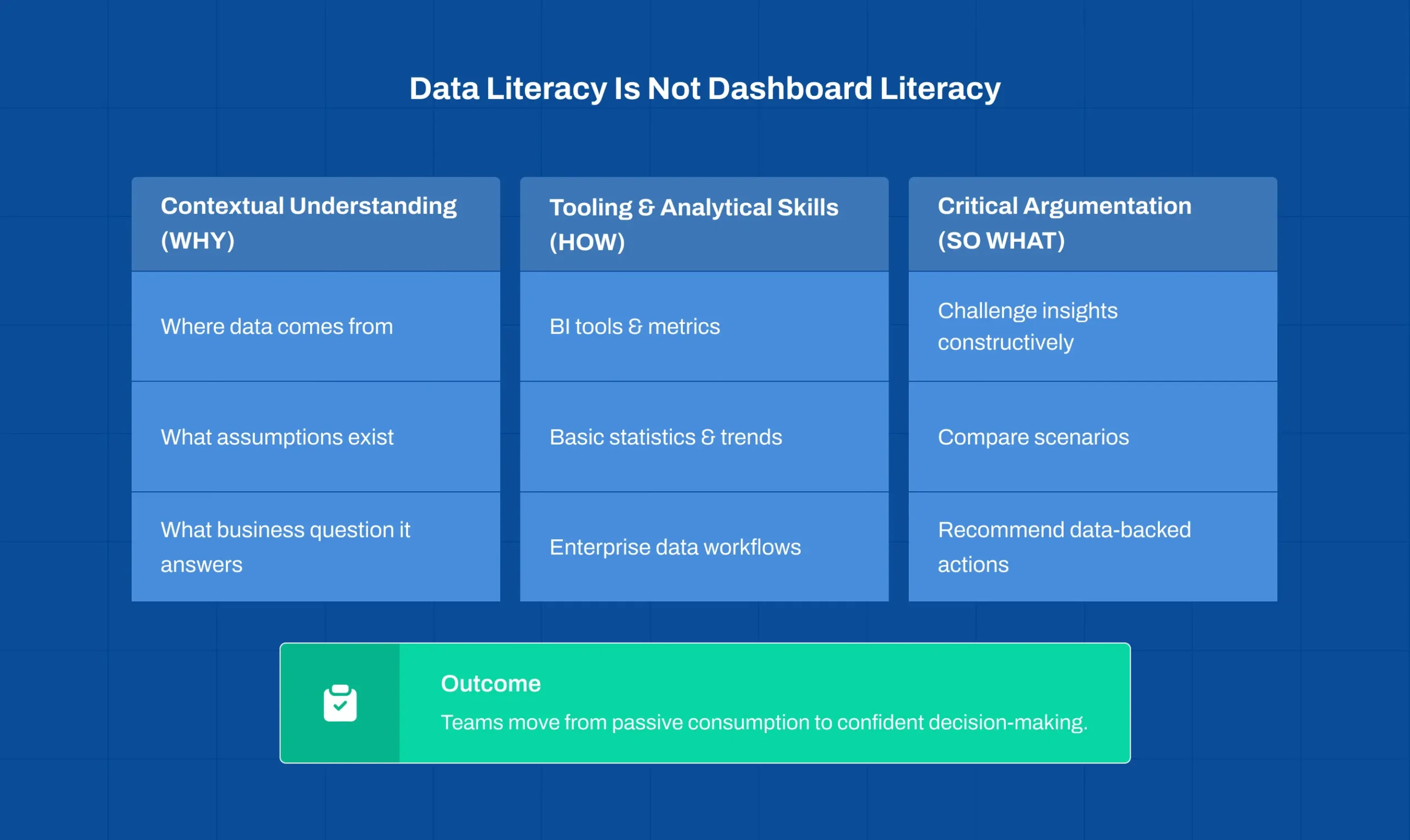
Data literacy is the ability to read, work with, analyze, and argue with data. For a modern enterprise, this must be defined by three key pillars, moving beyond simple spreadsheet skills:
The Three Pillars of Data Literacy for Enterprise Teams
- Contextual Understanding (The “Why”): Knowing the source of the data, its inherent biases, its limitations, and how it aligns with the business goals. (e.g., A marketing manager understands why their data funnel metrics differ from the sales team’s CRM metrics).
- Tooling Proficiency (The “How”): The ability to use self-service BI platforms, navigate centralised Enterprise Software, and understand basic statistical concepts like averages, variance, and sample size.
- Critical Argumentation (The “So What”): The confidence to challenge data, ask probing questions, and use data-backed evidence to propose or reject a strategic initiative. This is the difference between reporting what happened and predicting what should happen.
Building the Data-Driven Culture: A Leader’s Roadmap
Engineering a Data-Driven Culture: The Leadership Roadmap
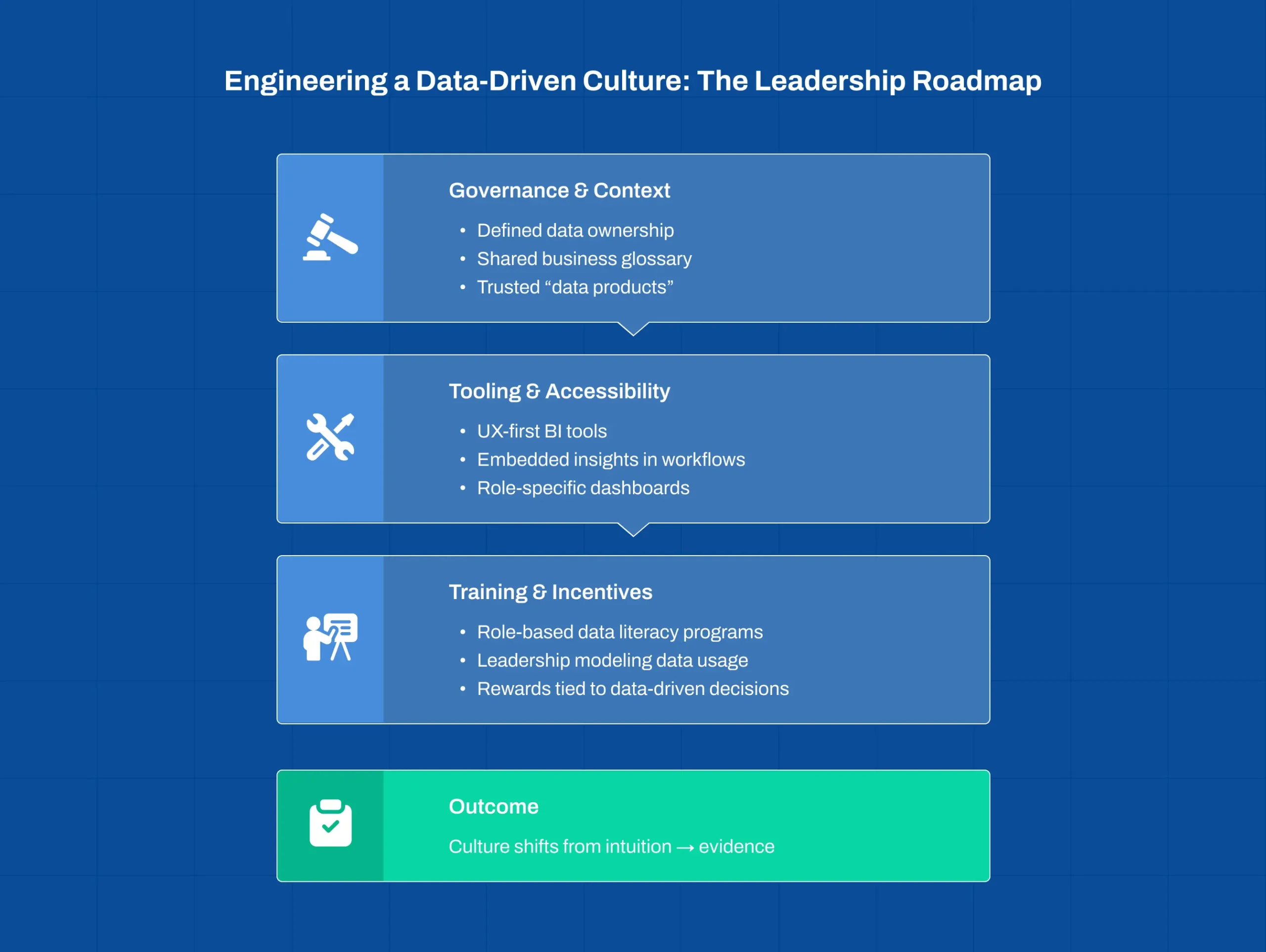
A data-driven culture cannot be decreed; it must be engineered. This requires a coordinated approach that integrates Strategy Consulting principles with practical technology solutions.
Step 1: Governance and Context (The Strategy Consulting Role)
Before training begins, you must simplify the data landscape. We recommend:
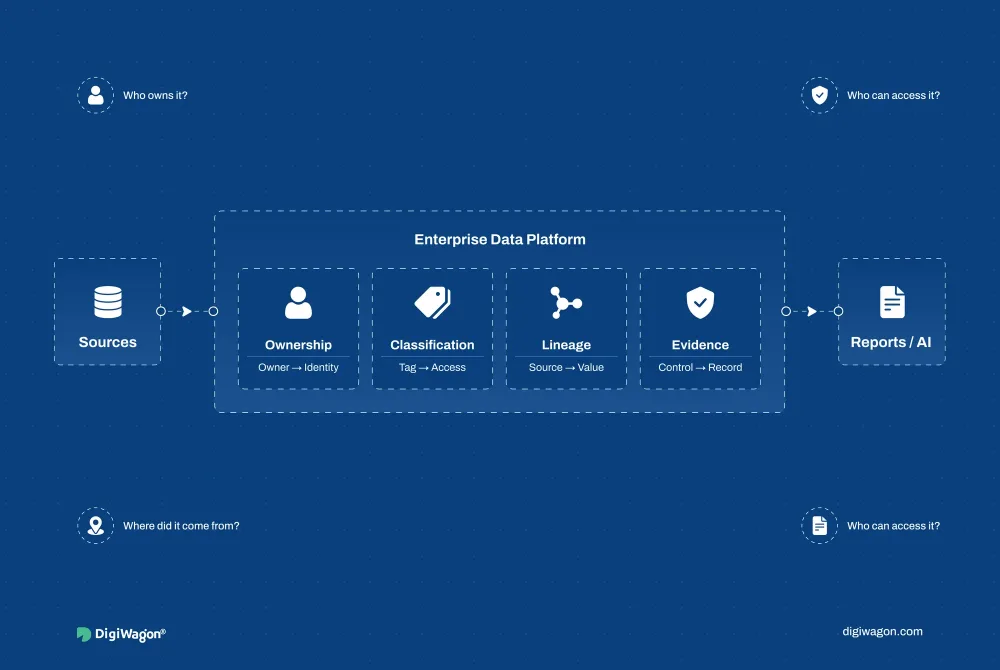
- Define Authority: Clearly label data assets (the “data products” from the Modern Data Stack) and assign domain ownership. Teams need to know which source to trust.
- Establish a Glossary: Create a common, enterprise-wide dictionary for all key metrics (e.g., Customer Churn must mean the exact same thing to Finance, Sales, and Product). This eliminates ambiguity and builds institutional Trustworthiness.
Step 2: Tooling and Accessibility (Democratisation)
The most elegant Business Intelligence & Data Visualisation tool is useless if the UX is complex.
- Prioritise UX/UI: Invest in UX Consulting to ensure your BI tools are intuitive and that data visualisations clearly communicate the message to non-technical users.
- Contextual Delivery: Integrate key data insights directly into the platforms where people work (e.g., sending performance alerts directly into Slack channels or CRMs), instead of requiring them to navigate to a separate dashboard.
Step 3: Training and Incentivisation (Cultural Shift)
Training must be personalised and goal-oriented.- Role-Specific Training: A Financial Analyst needs statistical modeling training; a Sales Manager needs training on interpreting lead scoring models. Generic courses fail.
- Incentivize Use: Tie data usage, not just data consumption, but data-backed proposal generation, to performance reviews and recognition. When employees see data literacy rewarded, the culture naturally shifts.
The Measurable ROI of a Data-Literate Workforce
The Measurable ROI of a Data-Literate Workforce
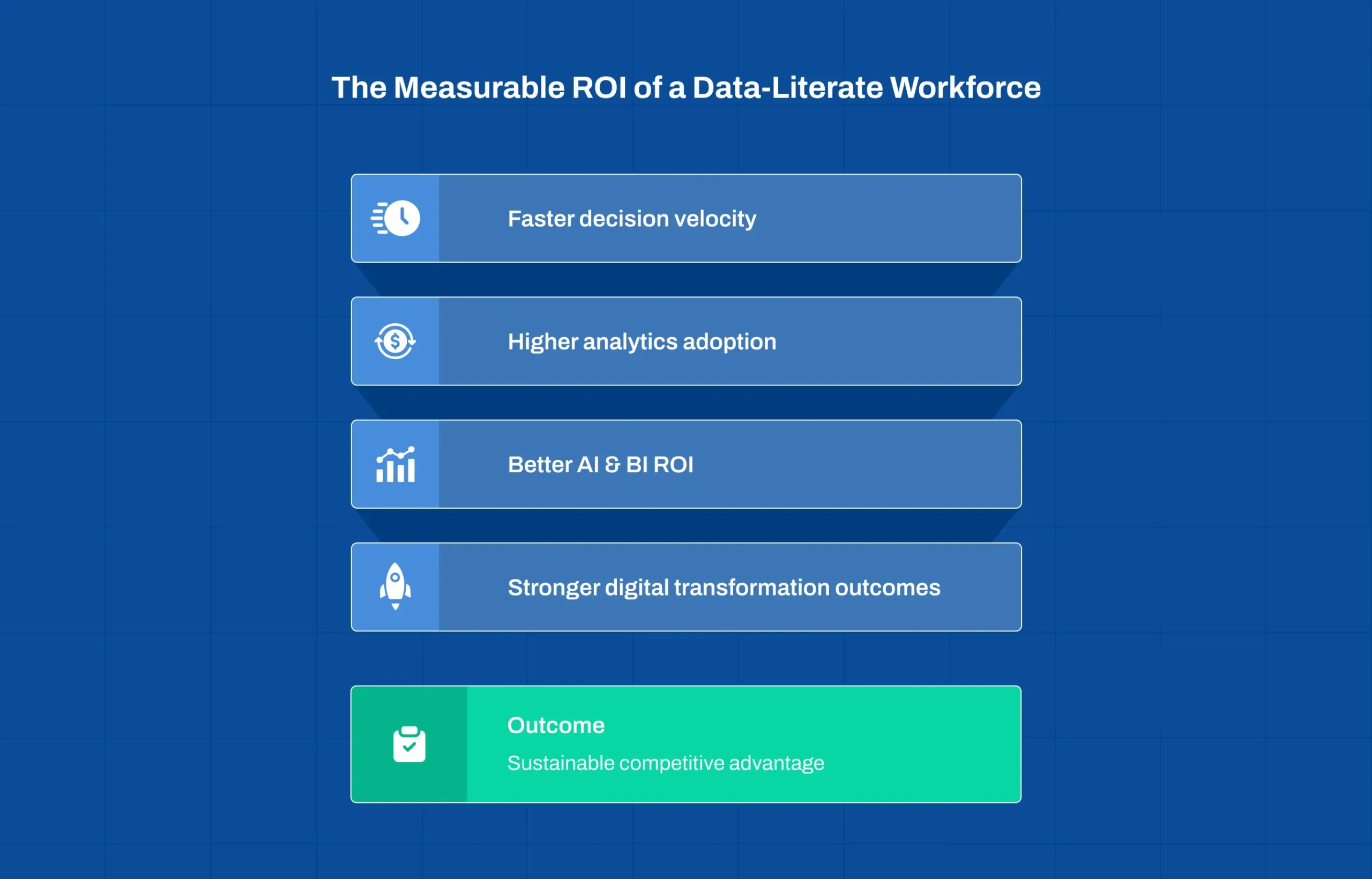
The true return on investment in data literacy is not soft. It’s quantifiable, especially across large enterprises:
- Faster Decision Velocity: A Forrester study indicated that data-driven organisations are 58% more likely to beat their revenue goals. This speed comes from teams that don’t need gatekeepers to validate simple data inquiries.
- Higher Adoption of Enterprise Tools: When employees understand why the data in your ERP or CRM is important, they use the Enterprise Software correctly, improving data quality from the source.
- Successful Digital Transformation: At its core, Digital Transformation is the journey from intuition to evidence. Data literacy is the fuel for that shift, ensuring every innovation is tested, measured, and validated.
Data stack may be ready for 2026, but is your team? Making data literacy a core competency is the final frontier in achieving true, sustained competitive advantage.
Conclusion
By 2026, data access and advanced analytics will be table stakes, not competitive advantages. What will truly differentiate enterprises is data literacy the ability of teams to confidently interpret, challenge, and act on data. Organisations that embed strong governance, UX-led analytics, and leadership-driven data culture with partners like DigiWagon will make faster, better decisions and realise real ROI from AI and analytics, while those that treat data literacy as an afterthought will continue to struggle despite modern data stacks.