For CTOs and data leaders across Europe, the mandate is clear: accelerate digital transformation. This isn’t about shiny new apps; it’s about making data liquid, trustworthy, and actionable at speed. The core challenge lies not in the data volume, but in the data architecture.
Two modern philosophies – Data Mesh and Data Fabric – dominate the conversation, each promising to unlock enterprise value. But which delivers the better Return on Investment (ROI) for a complex, regulated European enterprise?
The answer, as we’ll explore, is that ROI is less about technical superiority and more about organisational alignment.
The Digital Transformation Bottleneck: Why Centralized Data Fails
Why Centralised Data Fails – The Bottleneck to Digital Transformation Monolithic data slows innovation – distributed ownership fuels it.
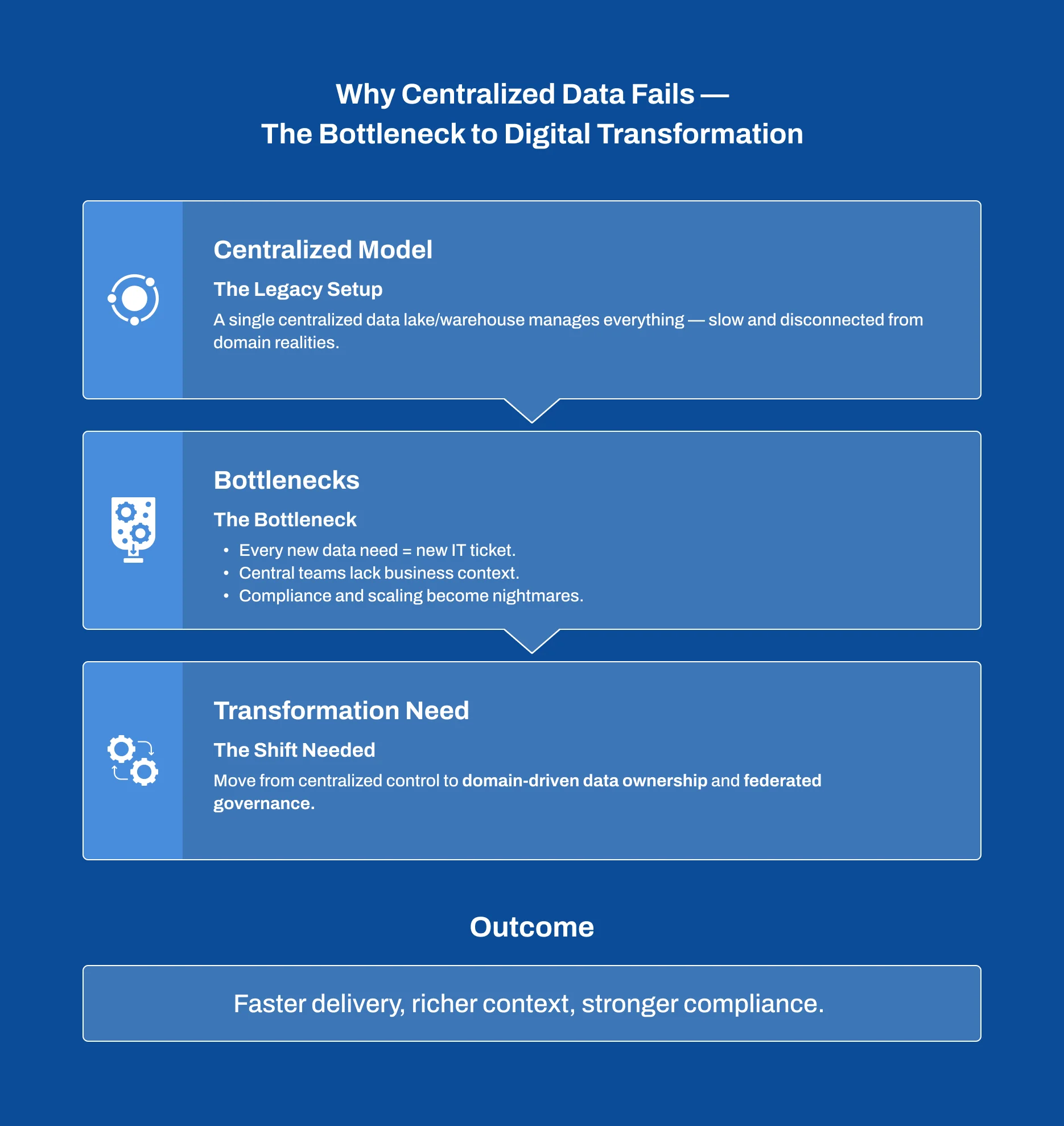
In large, established European companies – from manufacturing giants in Germany to global logistics firms in the UK – data traditionally flowed through a centralised team. This monolithic approach, often built on a single data lake or warehouse, worked for years.
The Monolithic Data Problem in European Enterprises
The modern enterprise, however, is domain-driven (Sales, Logistics, Finance). This central data team quickly becomes a bottleneck:
- Slow Delivery: Every request becomes a ticket, delaying strategic initiatives.
- Context Loss: The central team lacks the granular business context needed to interpret and model domain-specific data accurately.
- Scalability Blockage: The single platform struggles to scale with the diverse, rapid needs of multiple business units simultaneously.
This bottleneck directly hurts ROI by increasing time-to-market for data-driven products and insights. The need to transform this siloed approach is key to achieving true Digital Transformation.
Data Mesh: The Decentralised Path to Agility (A Socio-Technical Shift)
Data Mesh is a socio-technical paradigm shift. Its core principles are not just technical; they are cultural:
1. Domain Ownership: Data is owned by the business domains that produce it (e.g., the Retail team owns customer transaction data).
2. Data as a Product: Data assets must be discoverable, addressable, trustworthy, and usable – just like a software product.
3. Self-Serve Platform: A central team provides the tooling, but domain teams operate autonomously.
4. Federated Governance: A global set of rules is enforced locally by domain owners.
The ROI of Autonomy: Faster Time-to-Market for Data Products
For organisations prioritising rapid innovation and have a mature, distributed tech culture, the Data Mesh offers clear ROI:
| ROI Driver | Data Mesh Outcome |
|---|---|
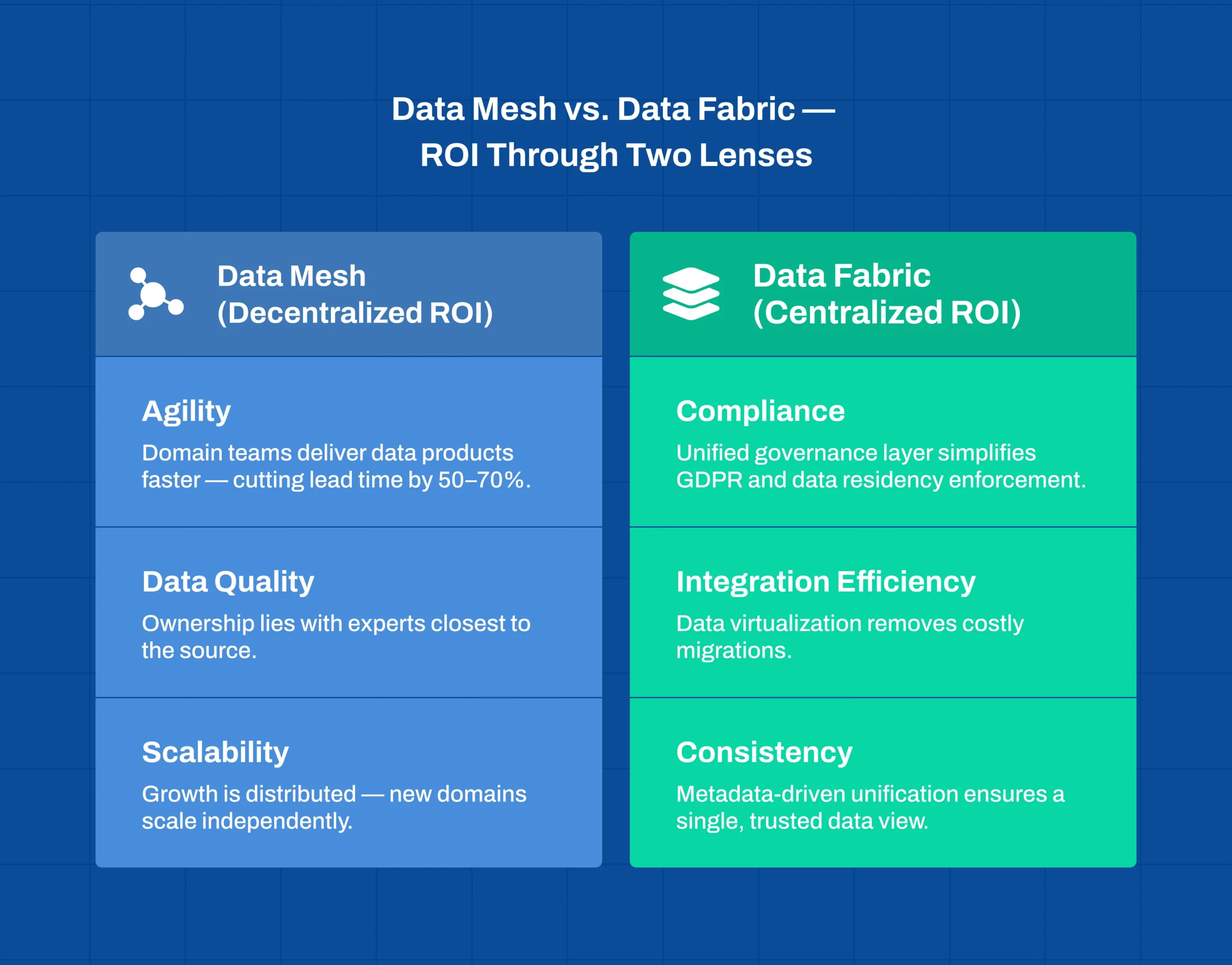
| Agility | Domain teams cut through the centralized queue, delivering data products (e.g., custom risk scores) in weeks, not months |
| Data Quality | The business experts who understand the data are responsible for its quality, leading to higher reliability and better decision-making. |
| Scalability | Scaling is decentralised. Adding a new business line (domain) doesn’t crush the central platform; it simply adds another node to the mesh. |
In short, Data Mesh maximises the ROI of speed and autonomy. It’s often ideal for large, complex organisations (like Next-Gen SaaS or multinational Retail) that thrive on internal competition and rapid feature release.
Data Fabric: The Unified Layer for Control (A Technology-First Solution)
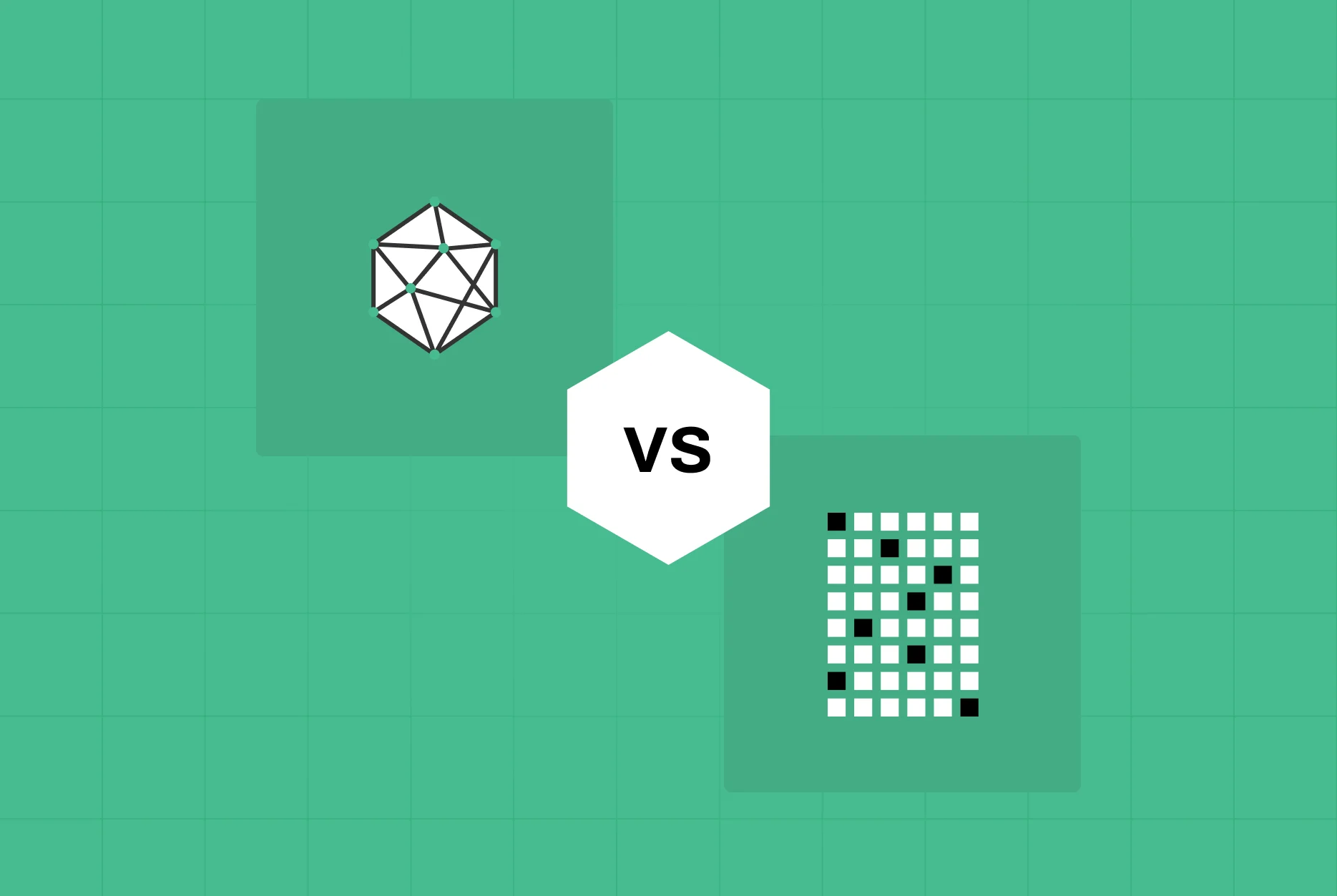
Data Mesh vs. Data Fabric – ROI Through Two Lenses Speed vs. Control – both deliver value when aligned with culture.
Data Fabric is a technology-centric architectural approach. It does not require a massive cultural re-org. Instead, it uses intelligent technology to abstract away complexity, unifying disparate data sources (on-premise, multi-cloud, legacy systems) through a single, virtualized layer.
Key technologies used include data virtualisation, active metadata management, and AI-driven automation (part of our Data & Analytics service, which includes essential Data Engineering & ETL capabilities).
The ROI of Unification: Centralized Governance and Compliance in the Age of GDPR
For European enterprises where data governance and regulatory compliance are non-negotiable, the Data Fabric delivers a measurable ROI in risk reduction and efficiency:
| ROI Driver | Data Fabric Outcome |
|---|---|
| Compliance (GDPR) | The centralised, metadata-driven layer makes it simpler to apply and enforce policies like data masking, residency rules, and lineage tracking across all connected data sources. This is vital for industries like FinTech & InsurTech. |
| Data Democratisation | Users gain a unified view of data via a self-service layer, regardless of where the data physically resides. This dramatically cuts the time spent locating and integrating data. |
| Integration Efficiency | It eliminates the need for massive data migration projects, reducing infrastructure costs and improving data freshness via virtualisation. |
Data Fabric maximises the ROI of control and consistency. It’s often the best fit for highly regulated industries like FinTech & InsurTech or Healthcare Transformation, where a centralised layer of governance is vital for adhering to EU standards. The unified data also feeds directly into better Enterprise Software functionality.
Choosing Your Architecture: Alignment Drives True ROI
Choosing the Right Data Architecture for ROI Start with your culture, not your codebase.
The debate isn’t about which is “better,” but which is a better fit for your corporate culture and strategic goal.
| Factor | Choose Data Mesh If… | Choose Data Fabric If… |
|---|---|---|
| Organisational Structure | You have autonomous, cross-functional business domains (Decentralised culture). | You have a strong, centralised IT/Data team structure. |
| Core Goal | Agility, speed of data product release, and domain innovation. | Data consistency, governance, and seamless integration across silos. |
| Key Challenge | Eliminating IT bottlenecks; empowering data literacy in business units. | Unifying data across a complex legacy/hybrid, multi-cloud environment. |
| Transformation Path | Requires a Socio-Technical shift (Culture first, then Tech). | A more Technology-First approach (Layered solution over existing systems). |
The Hybrid Reality: Combining Strengths for Maximum Value
The Best of Both Worlds – Hybrid Data Architecture Combine autonomy and control to achieve sustainable ROI.
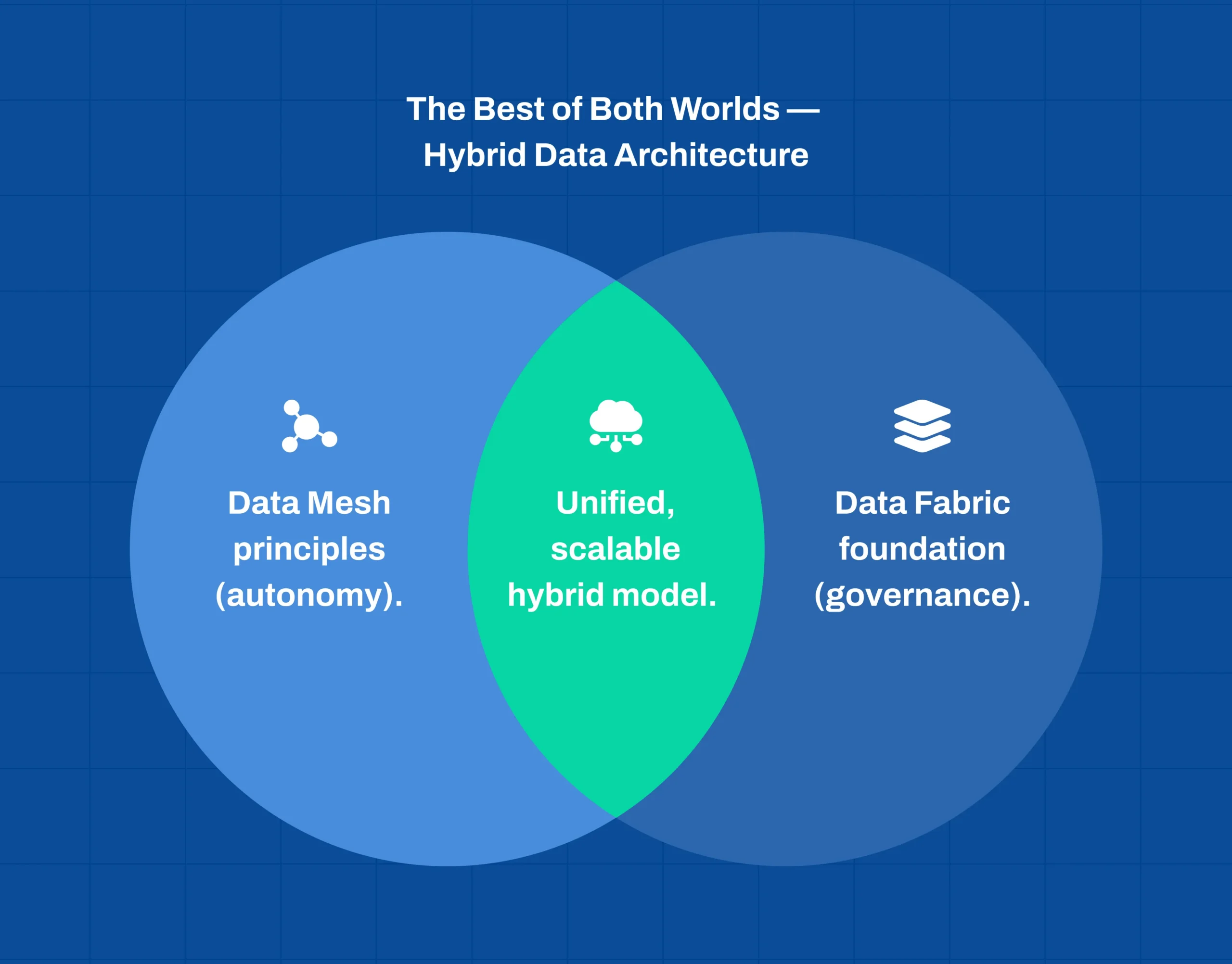
Foundation Layer (Data Fabric):
Provides unified metadata, lineage, and compliance control across all domains.
Domain Layer (Data Mesh):
Business teams own, publish, and manage their data as products on top of the fabric.
Resulting Synergy:
- Central governance meets local innovation.
- Compliance by design with domain-level agility.
- Faster time-to-value with minimal duplication.
For many large European organisations, the true Digital Transformation success lies in a hybrid approach. A Data Fabric can serve as the technical enabling layer – providing centralised governance, metadata management, and connectivity across all sources. On top of this layer, Data Mesh principles can be implemented by domain teams to treat the data they consume and enrich as a product.
This blend delivers both the centralised control needed for GDPR and the decentralised speed required for innovation.
Beyond the Debate: Making the Strategic Decision
The choice between Data Mesh and Data Fabric is a Strategy Consulting decision before it is a Data Engineering one.
Before investing millions in either architecture, a CTO must:
1. Audit Culture and Maturity: Do your domain teams have the technical chops and the mandate to own their data? (Mesh) Or do you need rapid, universal governance first? (Fabric)
2. Prioritise ROI Driver: Is your biggest cost the slow pace of data delivery (Mesh), or the risk of non-compliance and manual integration (Fabric)?
We specialise in helping global enterprises navigate this exact architectural inflection point, ensuring your data strategy directly maps to measurable Digital Transformation outcomes. Don’t chase the trend; build the architecture that is right for your unique European enterprise.