
Vertical AI: Executive Summary
- Generic LLMs fail in regulated, domain-heavy enterprise workflows
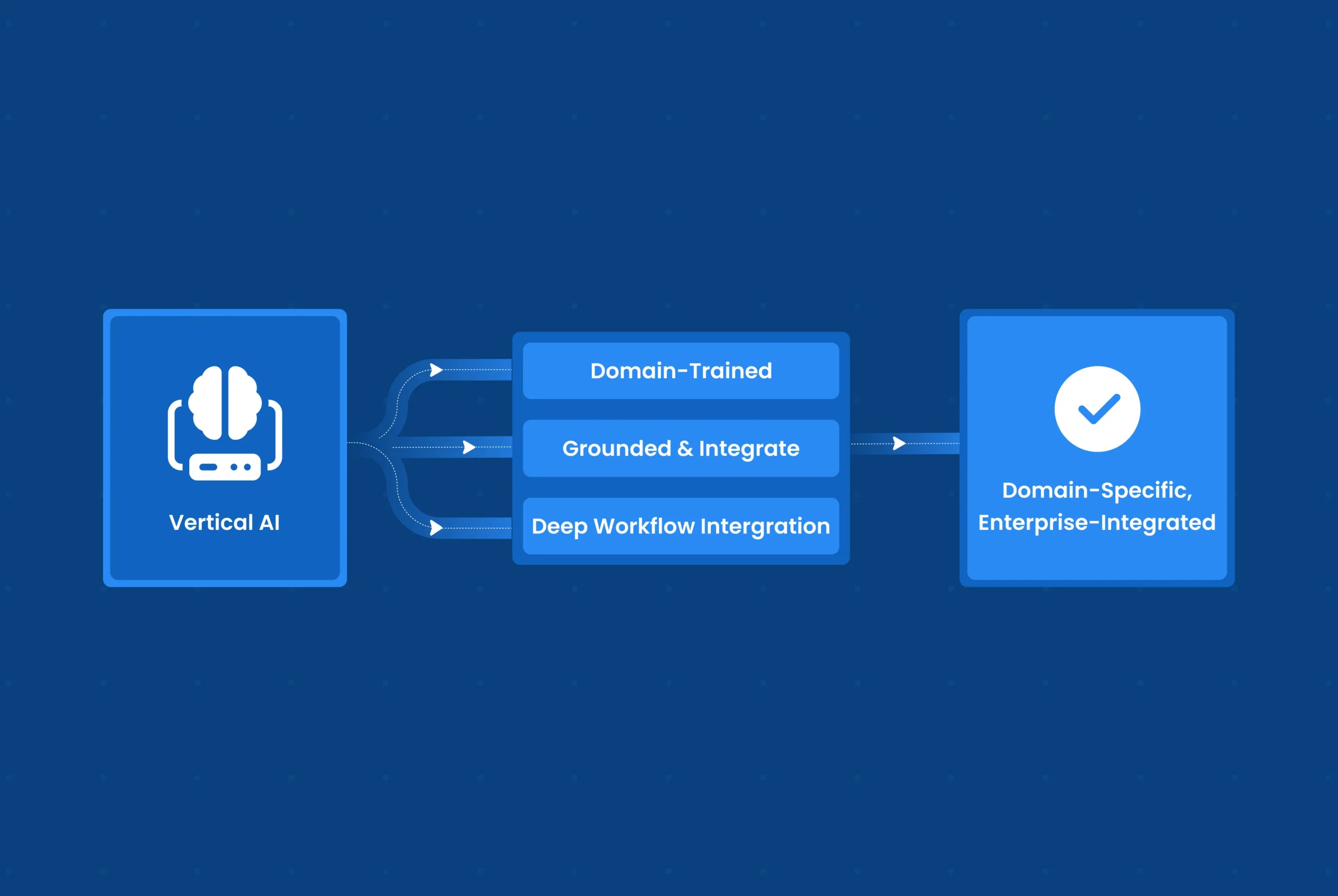
- Vertical AI is domain-trained, grounded, and integrated into real systems, not chat-only
- The blueprint is SLMs + fine-tuning, domain-aware RAG, and deep workflow integration
- In high-stakes contexts, domain grounding can cut error rates from ~20% to under 2%
Introduction: The Enterprise Shift From “Novelty” to Utility
In 2026, the conversation around AI & Machine Learning has matured. The early excitement of general-purpose LLMs is being replaced by a harder enterprise requirement: measurable accuracy, compliance readiness, and real operational outcomes.
For teams building custom software in regulated or high-stakes industries, generic LLMs often fail where it matters most: technical precision, domain rules, proprietary context, and deterministic execution.
This is why Vertical AI is becoming the dominant enterprise pattern.
What is Vertical AI?
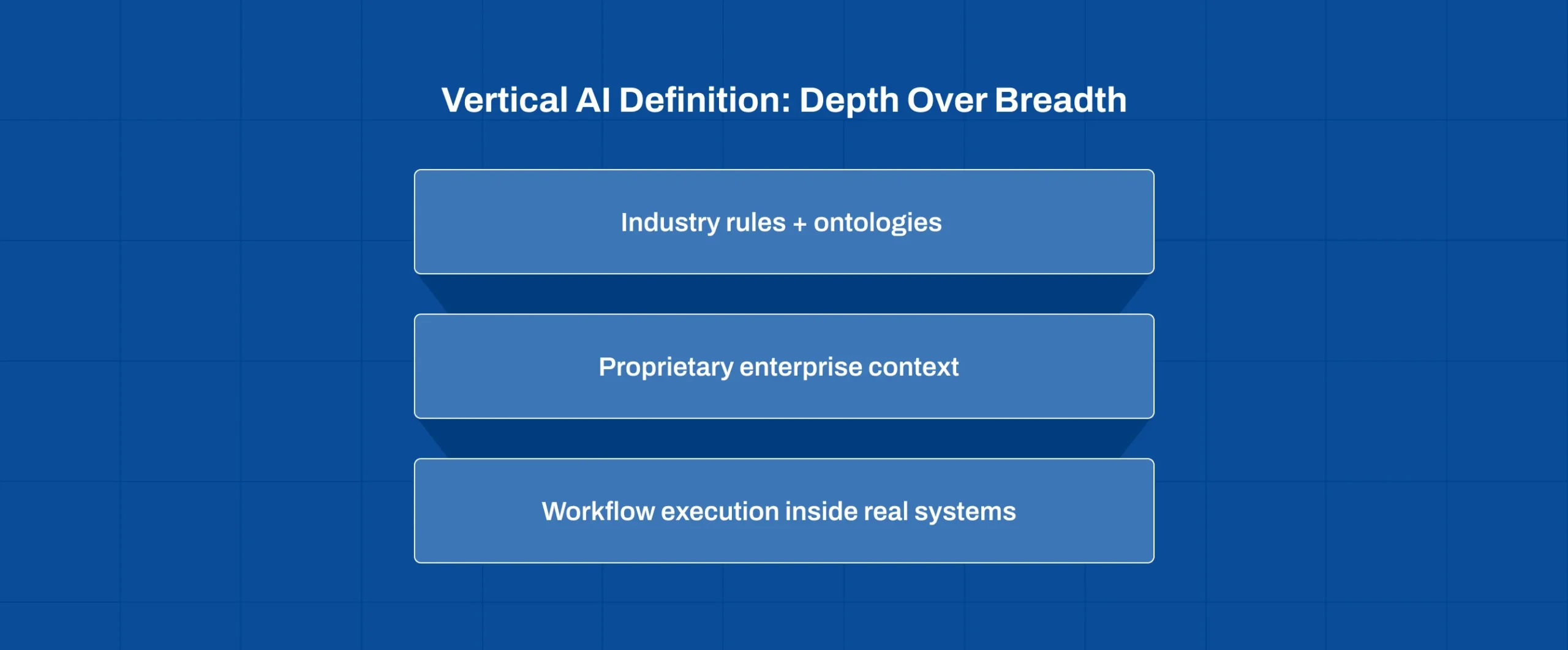
Vertical AI is an industry-specific AI designed for one domain, grounded in its language, rules, workflows, and compliance constraints.
Unlike generic models trained broadly on public internet data, Vertical AI is engineered to:
- Understand domain ontology and rules (clinical coding, insurance clauses, equipment specs)
- Use proprietary knowledge safely (SOPs, manuals, policies, internal data)
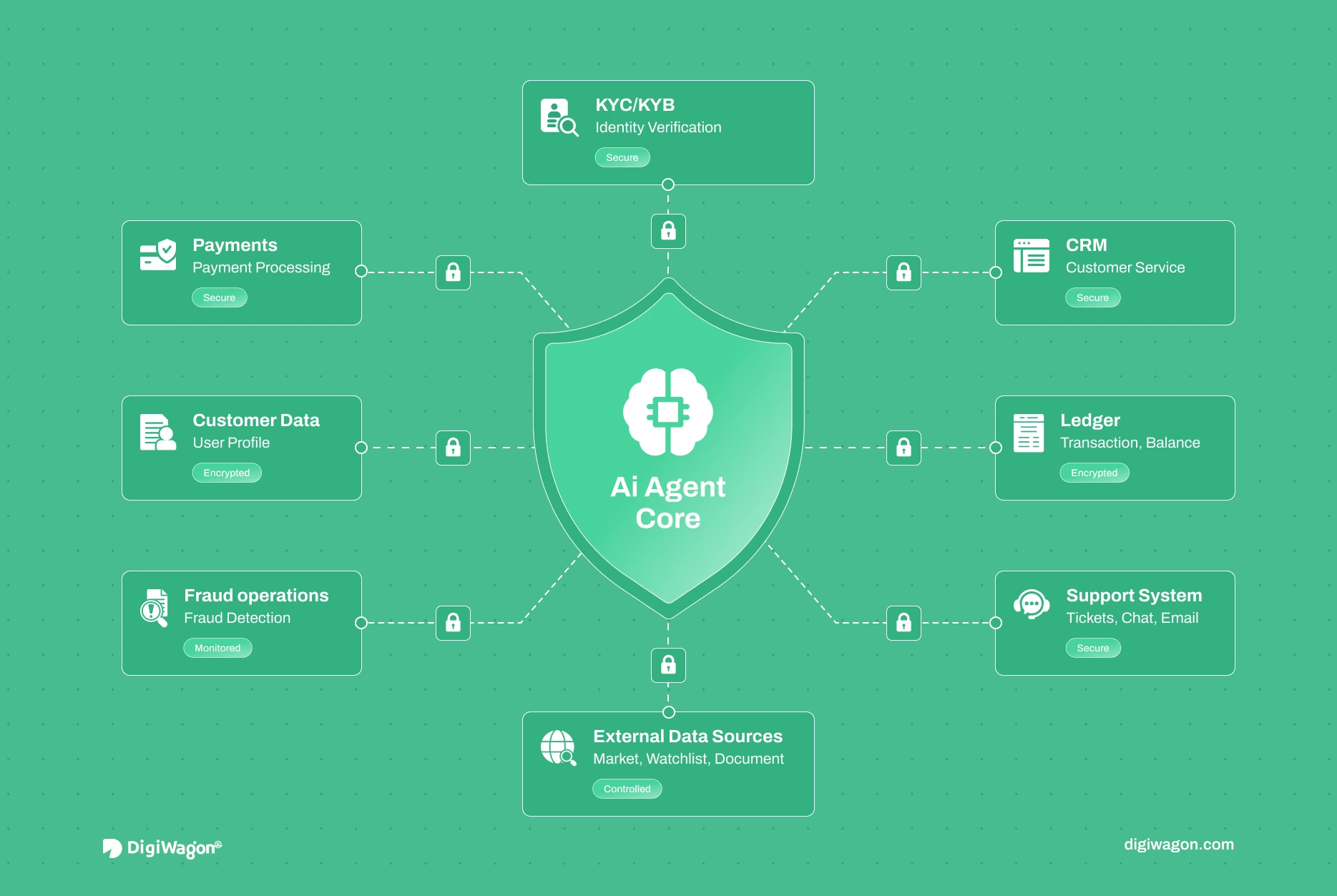
- Operate inside real enterprise systems (ERP, EHR, logistics platforms) rather than staying in a chat layer
Put simply: Vertical AI delivers domain intuition, not generic plausibility.
Why Vertical AI is Important in 2026
- “Close enough” accuracy is not acceptable In fintech, regtech or in any industry, even a small error rate can translate to legal exposure, false report, compliance breaches, or financial loss. The draft makes the key point: plausibility is not reliability, especially in regulated interpretation.
- Generic LLMs lack proprietary context Generic models do not know your internal workflows, your data structures, your business logic, or your policies. Without grounded data, the system behaves like a “tourist” inside the enterprise and can produce confident but incorrect responses.
- Token bloat becomes an operating cost problem Using large models for narrow, high-volume domain tasks creates slow latency and rising inference cost, especially when the system must ingest excessive context to compensate for missing domain understanding.
The Proven Advantage: Reducing High-Stakes Errors
Vertical AI grounded in domain ontologies can reduce hallucination-style errors significantly in regulatory interpretation use cases, from roughly 20% to under 2%.
This is not a “prompting trick.” It is the result of building domain structure into the system.
The Vertical AI Blueprint DigiWagon Builds
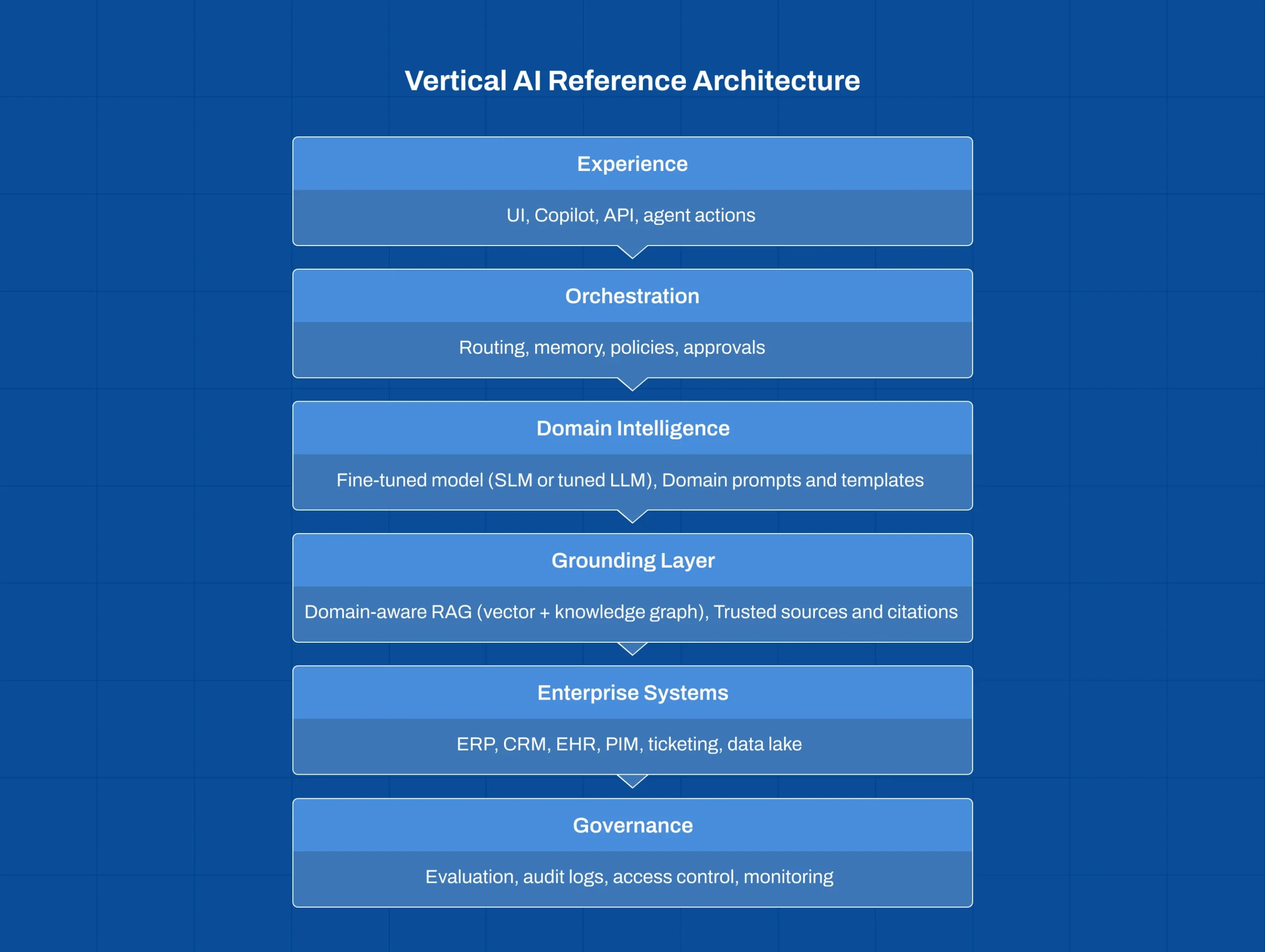
Vertical AI is not about training a model from scratch. It is about engineering a domain-specific intelligence layer around your software and workflows.
Step 1: Use SLMs and fine-tuning for domain precision
Start with smaller language models (SLMs) or tuned models for your domain. Fine-tuning on curated, vertical datasets enables expert-level performance with lower inference cost and latency.
What DigiWagon delivers:
- Use case selection and feasibility
- Dataset strategy (curation, labeling, governance)
- Fine-tuning and evaluation harness
Step 2: Add domain-aware RAG with semantic reasoning
RAG is required, but generic RAG is not enough. Vertical AI needs domain-aware retrieval powered by vector databases and knowledge graphs that preserve relationships and meaning, not just keyword similarity.
What DigiWagon delivers:
- Grounding layer design (vector + knowledge graph where needed)
- Retrieval evaluation, citation policies, and confidence scoring
- Guardrails for sensitive domains
Step 3: Integrate into real workflows to unlock ROI
Vertical AI should be embedded into systems where work happens: ERP, EHR, logistics, and operational tooling. This is where AI moves from “assistant” to “execution”
What DigiWagon delivers:
- API-first integration
- Action orchestration and approvals
- Audit logs, observability, and role-based access
What Vertical AI Looks Like by Industry
Manufacturing
Generic LLMs cannot interpret IoT sensor patterns or specialized equipment documentation reliably in the manufacturing industry. Vertical AI solutions designed for manufacturing can analyze machine signals, detect anomalies, and automatically trigger predictive maintenance workflows with strong domain grounding.
Healthcare
In the healthcare industry, generic LLMs risk misreading shorthand or generating unsafe outputs. Vertical AI trained on medical ontologies (SNOMED,ICD) can automate coding and billing while enforcing accuracy constraints.
Logistics and Supply Chain
Within the logistics and supply chain industry, generic models struggle with operational dependencies and real-time optimisation. Vertical AI can use weather, port congestion, and carrier constraints to support rerouting decisions.
How DigiWagon Helps Enterprises Build Vertical AI
DigiWagon builds Vertical AI as a product-grade capability, not a demo.
Our delivery model includes:
- Vertical AI strategy and use case prioritization
- Data engineering for grounded, governed AI inputs
- Model tuning and evaluation for precision and cost control
- Workflow and system integration for operational outcomes
- Governance: human-in-the-loop checkpoints, audit trails, compliance alignment
Conclusion: Generic LLMs Are Utilities. Vertical AI Is the Moat
Generic LLMs are becoming abundant. Competitive advantage will come from what you own: domain-specific intelligence that is grounded, governed, and integrated into the workflows.
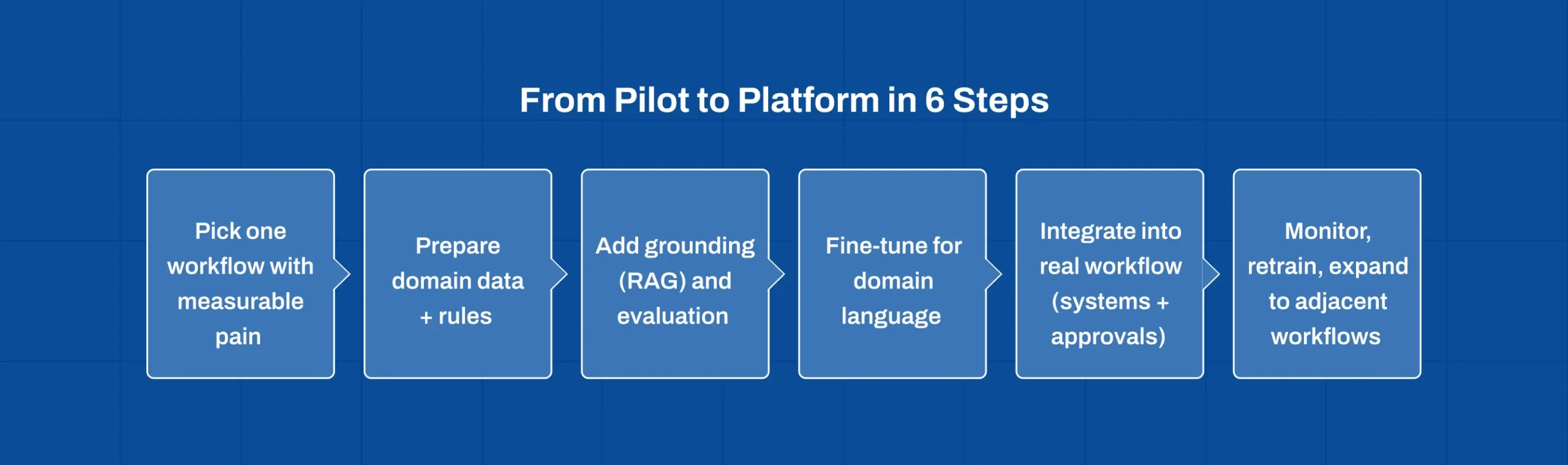
The practical path is to start narrow: pick one high-value workflow where generic AI fails, deploy a Vertical AI pilot with fine-tuning and domain-aware RAG, then scale it into a platform capability.
Launch a Domain-Specific AI Pilot
Start with one high-value workflow. Validate accuracy and governance, then scale with confidence across the enterprise.