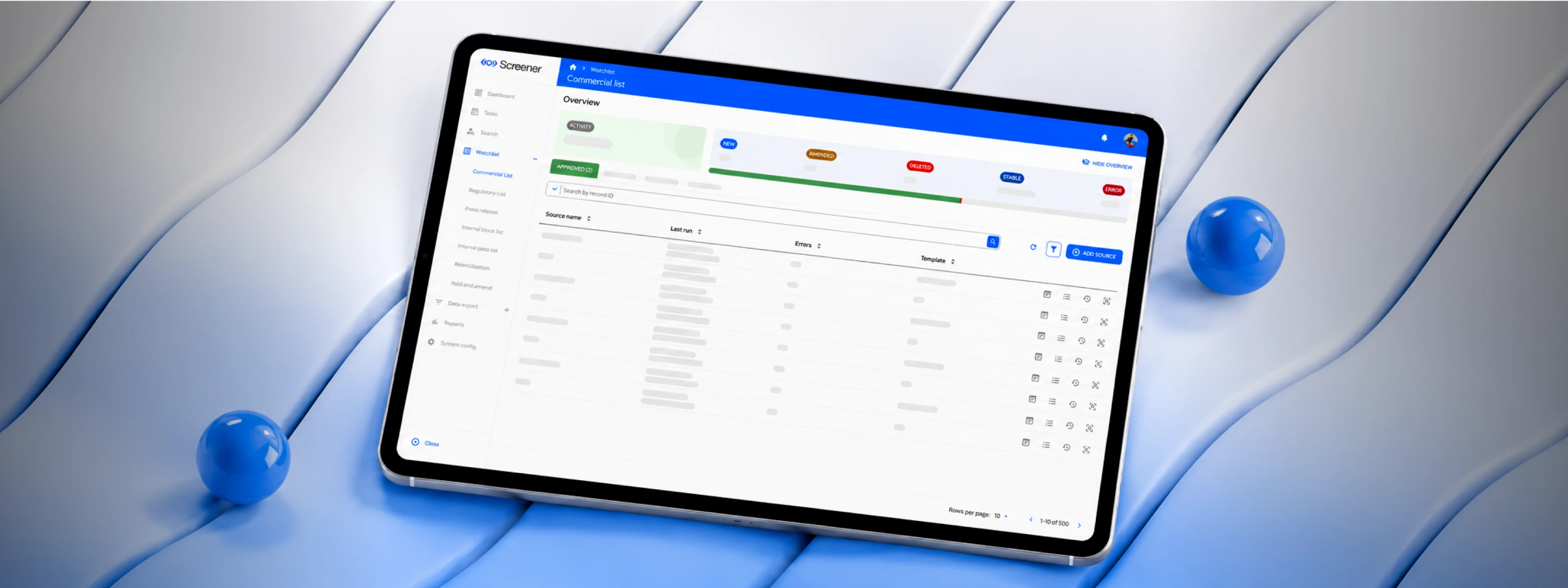
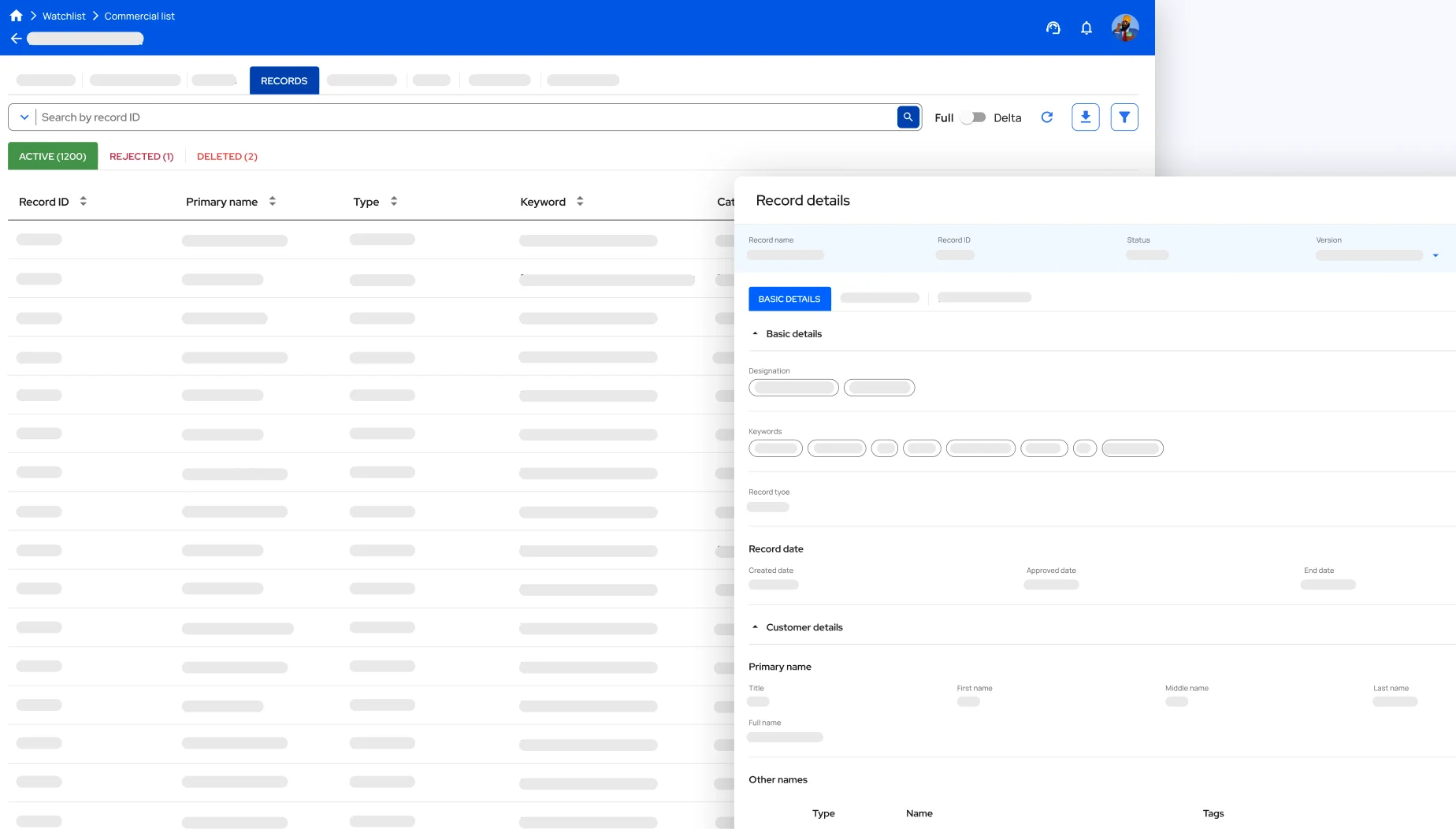
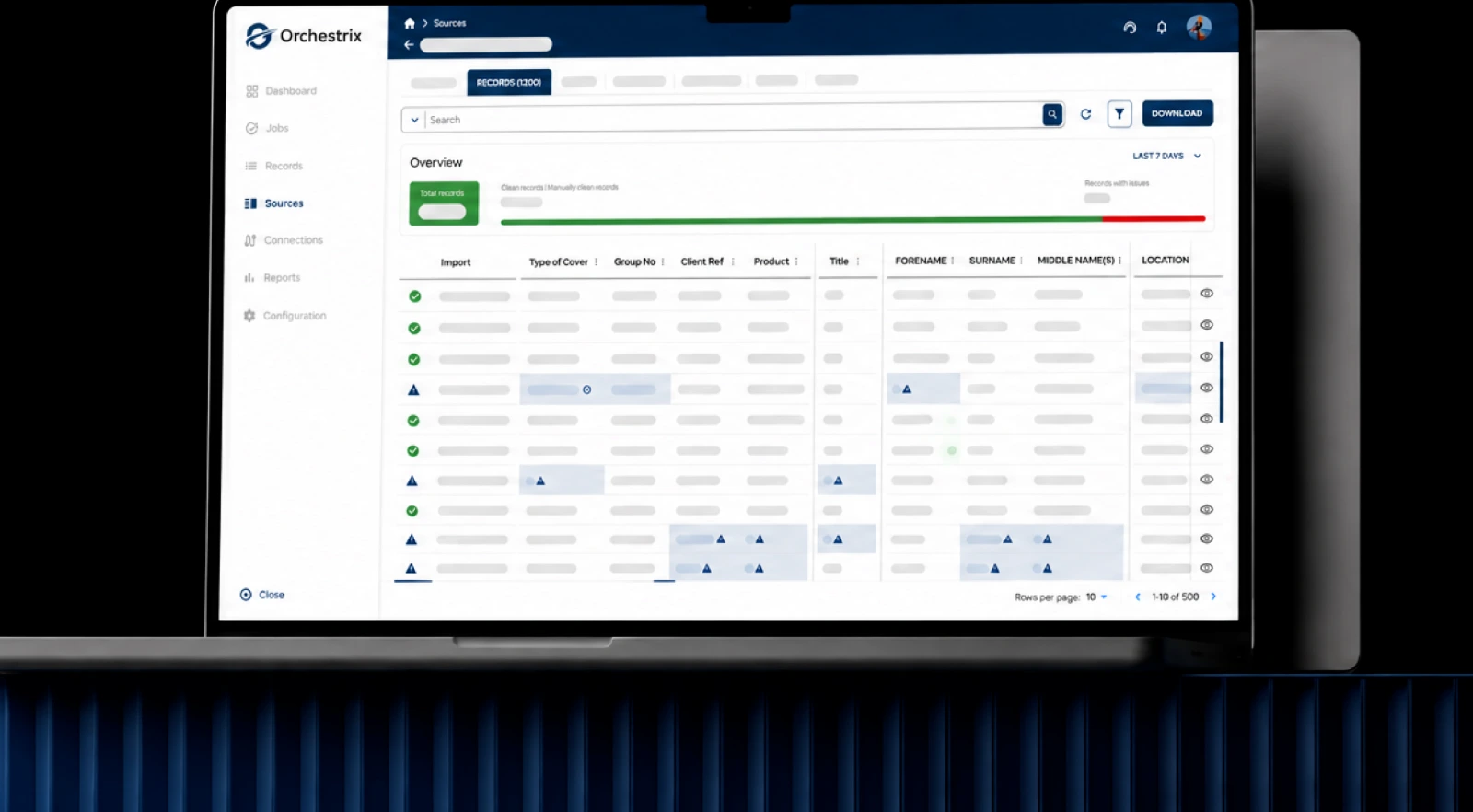
Financial institutions depend on accurate watchlist data for sanctions screening, AML checks, PEP monitoring, and financial crime compliance. A financial technology provider needed an enterprise-grade platform to bring regulatory, commercial, and internal watchlists into one governed ecosystem. DigiWagon designed a scalable watchlist management solution with automated intake. It includes data normalisation, de-duplication, and enrichment. It also supports version control, approval workflows, and real-time synchronisation. It provides audit-ready traceability.
The result was a compliance intelligence platform that improved screening data quality, reduced operational burden, and strengthened governance across enterprise AML operations.
Why it mattered
Why Watchlist Governance Needed a Stronger Data Foundation
AML and sanctions screening depend heavily on the quality of underlying watchlist data. When lists are fragmented, duplicated, outdated, or poorly standardised, screening accuracy drops. Compliance teams then face more false positives, slower reviews, and weaker audit readiness. The client needed a governed watchlist platform that could handle growing global list volumes. It had to standardise data from many sources. It also had to manage changes with approval controls. It needed to keep downstream screening systems updated in near real time.
Business Challenge
Regulatory, commercial, and internal watchlists were managed across disconnected systems.
List formats, naming conventions, and data structures varied across sources.
Manual ingestion delayed updates from sanctions, regulatory, and internal risk sources.
Duplicated and inconsistent data increased false positive exposure.
Version control and change traceability were limited.
Legacy infrastructure struggled with growing global sanctions, PEP, and internal risk data volumes.
Governance workflows lacked clear ownership, approvals, and role-based controls.
RegTech Context
Watchlist governance is not only a data storage problem. It is a compliance intelligence problem.
Financial institutions must make sure each screening decision uses the right list version at the right time. A strong watchlist data pipeline must ingest, normalize, resolve, version, sync, and preserve audit records. This keeps downstream screening decisions accurate and easy to reconstruct.
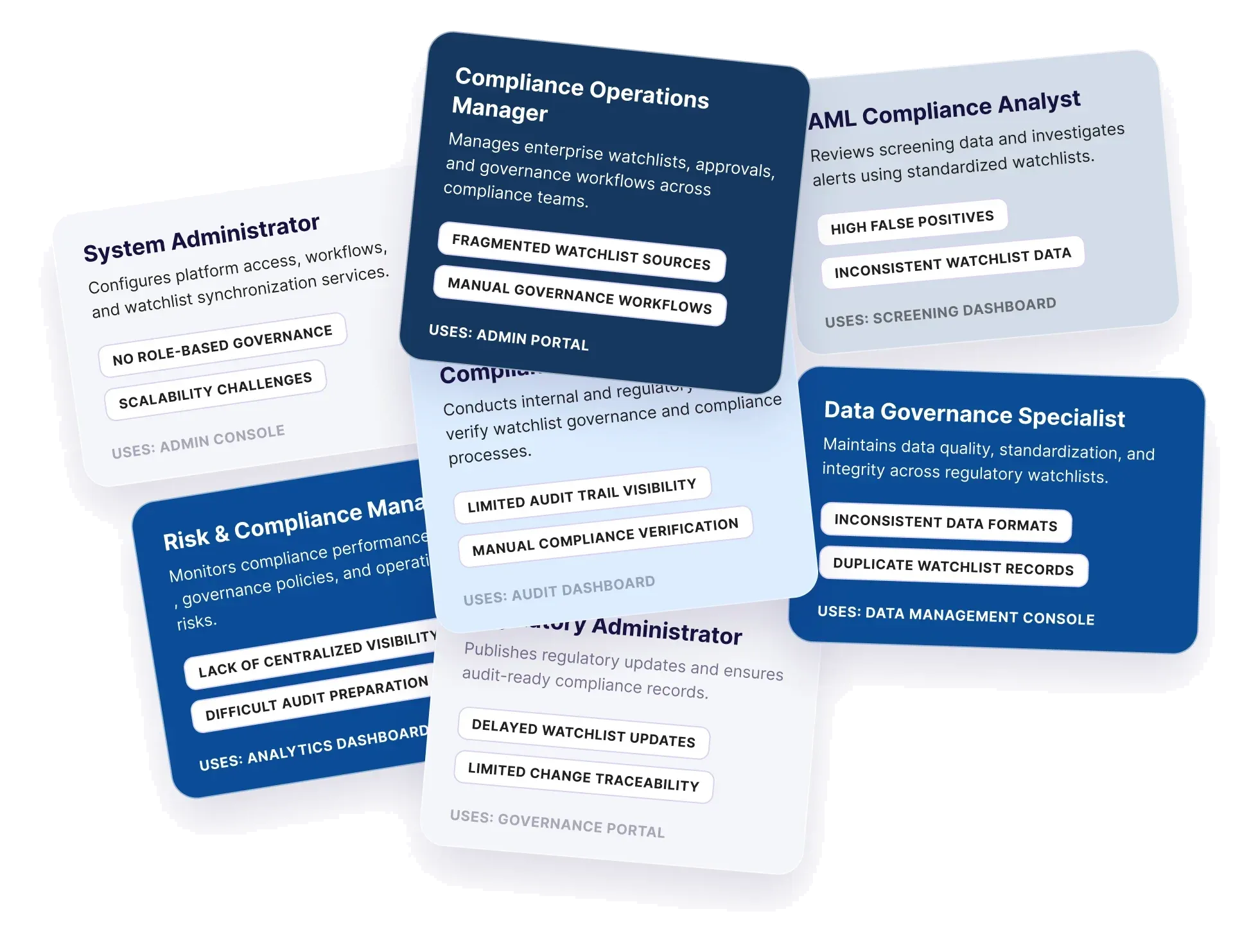
User Problem
Compliance teams needed cleaner, more reliable watchlist data for accurate screening.
AML analysts needed fewer duplicate or low-quality alerts.
Sanctions teams needed faster updates when regulatory lists changed.
Data operations teams needed automated ingestion, standardisation, and validation workflows.
Administrators needed approval controls and role-based access.
Audit teams needed clear evidence of what changed, when it changed, and who approved it.
How we delivered
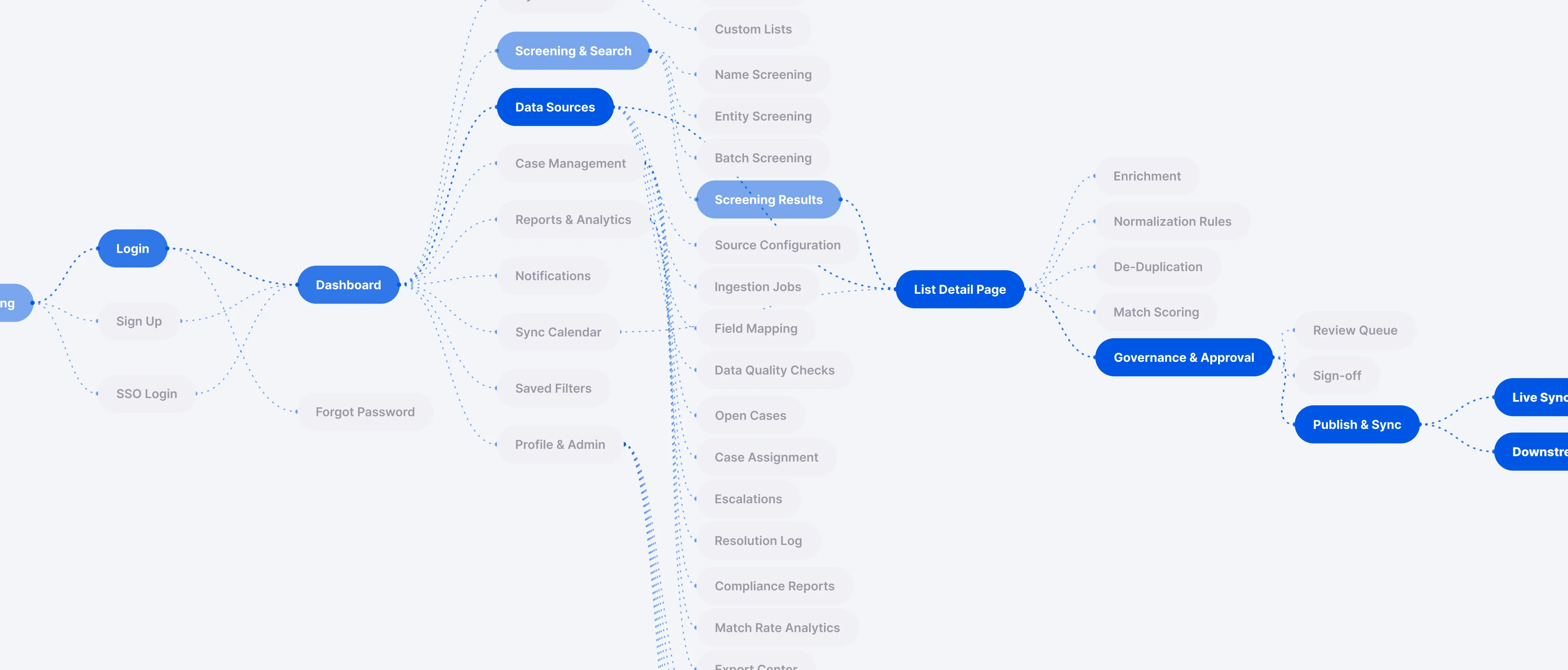
How We Built the Watchlist Governance Platform
Ingest
Centralised watchlist intake from multiple sources
Regulatory lists
Commercial watchlists
Internal risk lists
Multi-format data sources
Automated source intake
Standardise
Prepared raw list data for accurate screening
Data normalisation
Structural mapping
Format standardisation
Entity clean-up
Canonical data model
Govern
Added control across ownership, approvals, and changes
Role-based access
Approval workflows
Change management
Version control
Ownership visibility
Sync
Kept screening systems updated and audit-ready
Real-time list synchronisation
Immutable audit trails
Reporting workflows
Downstream screening readiness
Historical traceability
What we built
The platform we shipped.
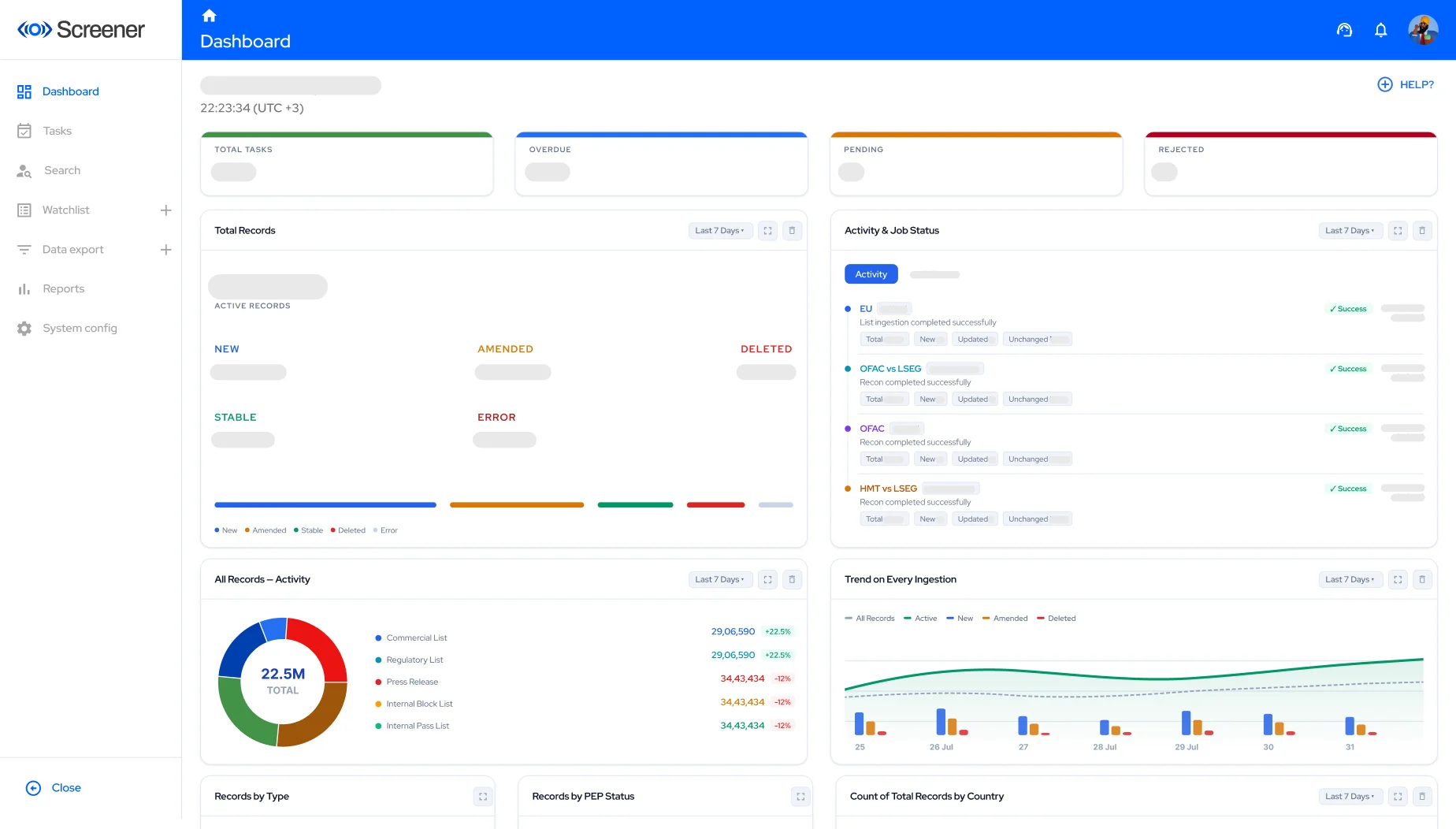
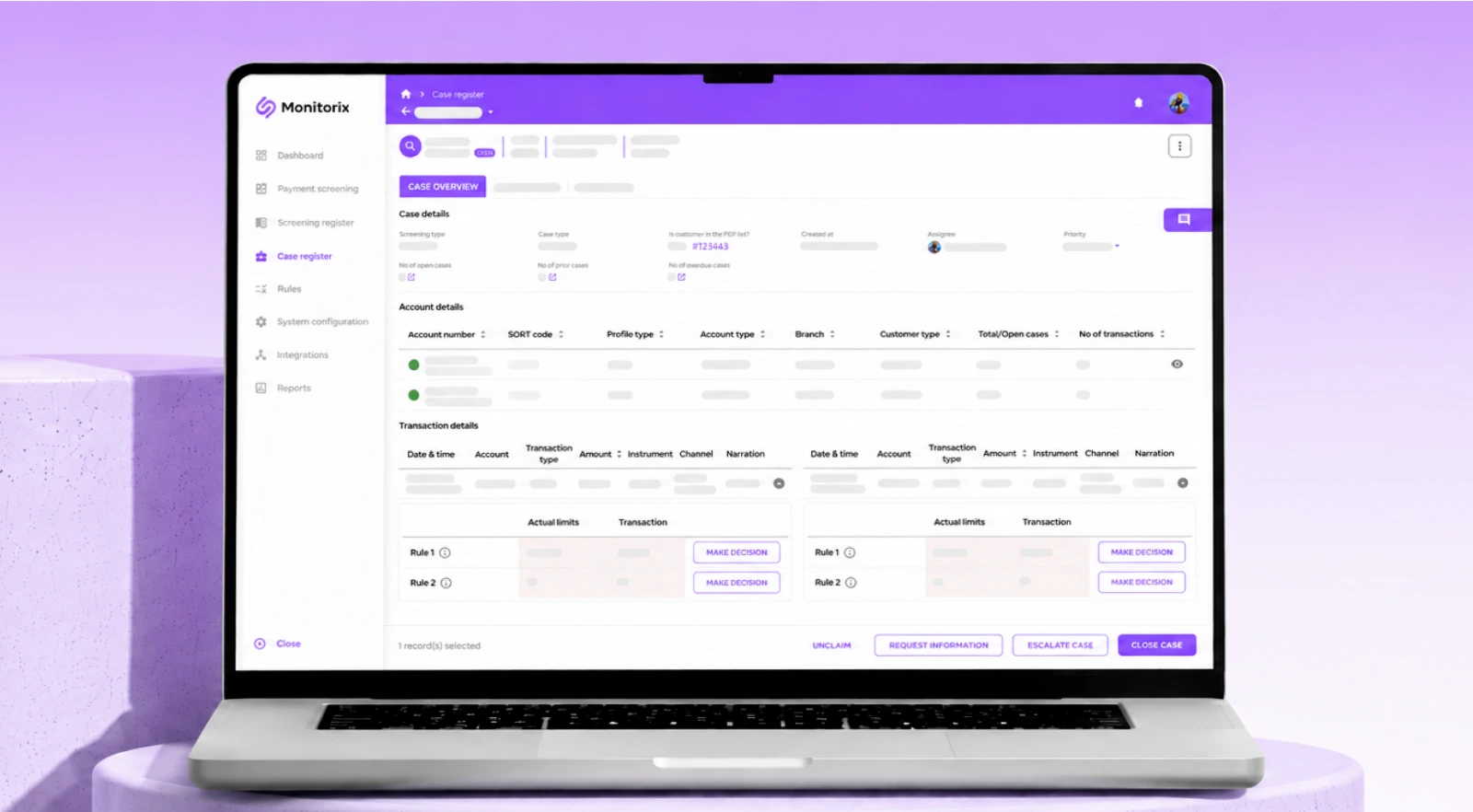
DigiWagon built an enterprise watchlist management platform that consolidates regulatory, commercial, and internal watchlists into one governed data ecosystem. The solution automates data ingestion, normalisation, de-duplication, enrichment, synchronisation, approval workflows, version control, and audit logging. This makes watchlist data cleaner, more reliable, and ready for screening.
Centralised regulatory, commercial, and internal watchlist management.
Automated ingestion, normalisation, cleansing, enrichment, and de-duplication.
Real-time synchronisation with downstream screening systems.
Configurable approval, governance, and version-control workflows.
Role-based access and immutable audit trails.
Scalable architecture for growing enterprise watchlist volumes.
The filmWatch how it works.
Key features
Eight capabilities, one per constraint.
Centralised Watchlist Management Platform
Consolidated regulatory, commercial, and internal watchlists into one governed ecosystem.
Removed fragmented list management across disconnected systems.
Created consistent data control across compliance operations.
Improved screening data reliability for AML and sanctions workflows.
Automated List Ingestion & Normalisation
Built a scalable ingestion engine for multi-format watchlist sources.
Automated structural mapping, standardisation, and normalisation.
Reduced dependency on manual file handling.
Prepared clean, consistent datasets for downstream screening.
Intelligent De-Duplication & Data Cleansing
Implemented matching and validation mechanisms to identify duplicates.
Resolved inconsistent records before they reached screening workflows.
Improved list quality and downstream screening accuracy.
Helped reduce false positive exposure caused by poor data quality.
Real-Time List Synchronisation
Enabled low-latency updates across connected screening systems.
Helped institutions use the latest regulatory, sanctions, and internal risk data.
Reduced delays caused by manual update cycles.
Supported faster response to list changes and regulatory updates.
Structured Governance & Approval Workflows
Designed configurable approval workflows for list creation, modification, and publication.
Added role-based controls to reduce unauthorised changes.
Improved ownership visibility across compliance data operations.
Strengthened governance over critical watchlist data.
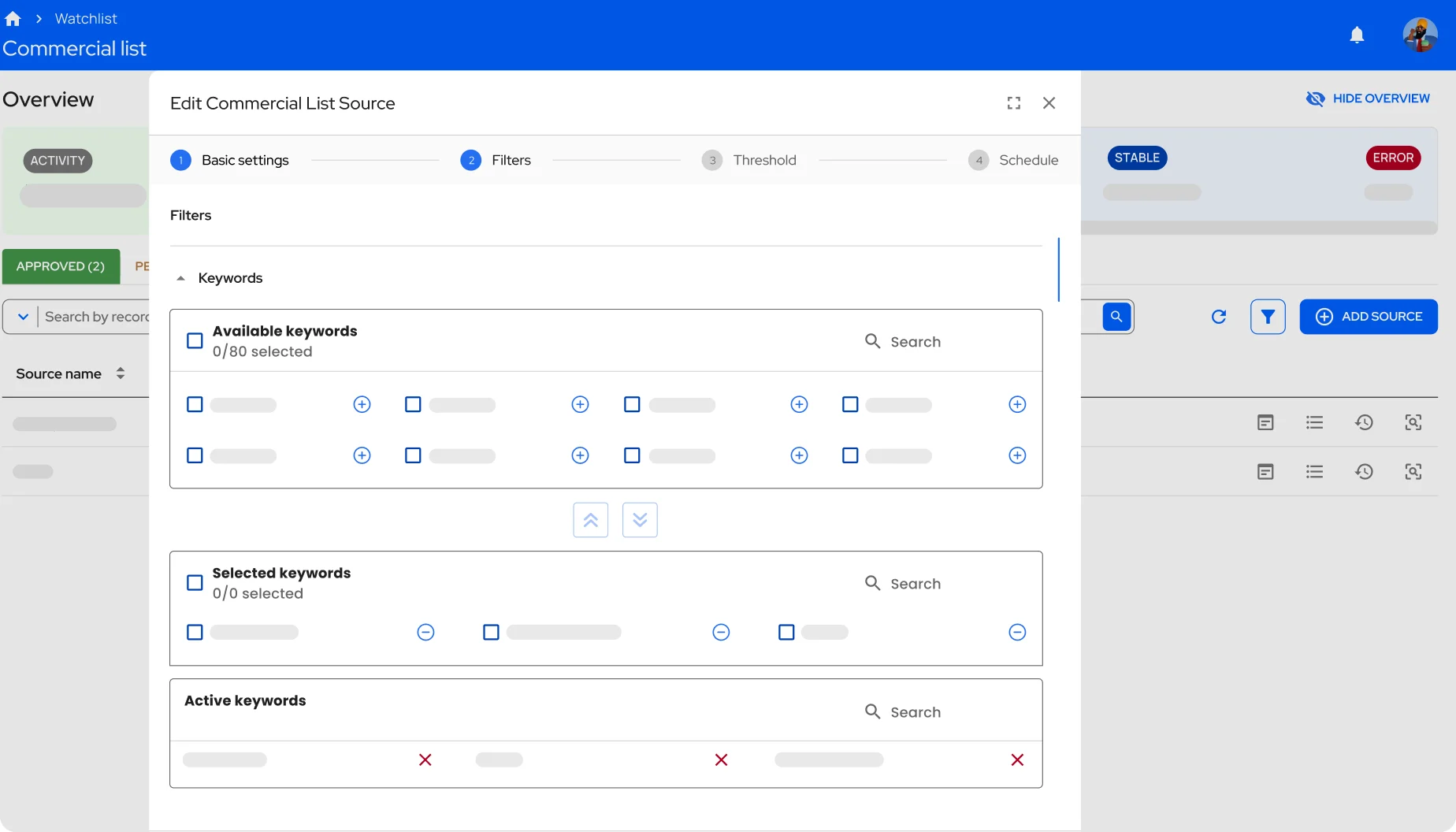
Data Enrichment & Metadata Tagging
Added structured metadata, categories, and contextual attributes.
Supported refined screening logic and risk-based filtering.
Improved how records were classified, searched, and reviewed.
Enhanced compliance intelligence beyond basic list storage.
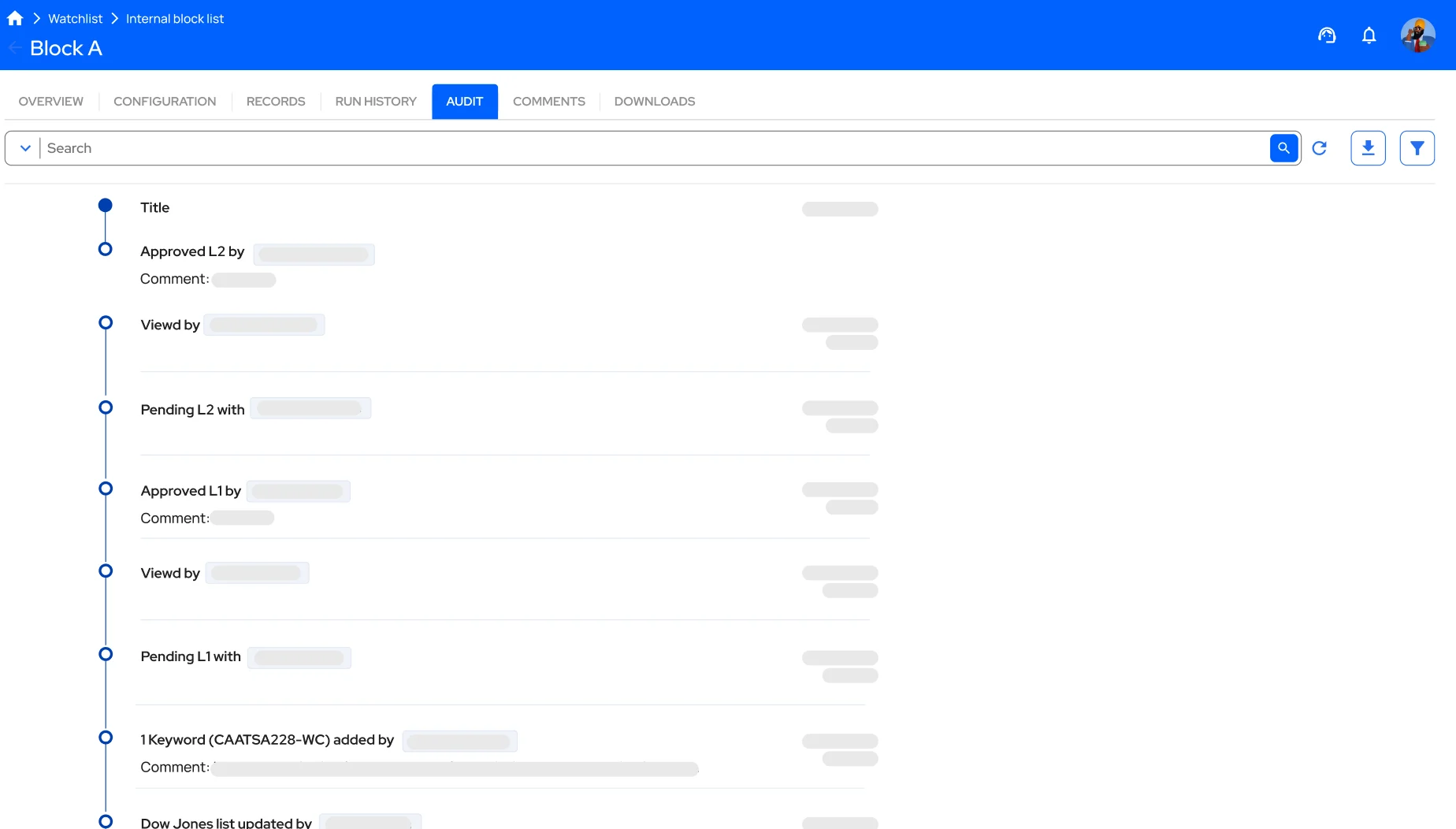
Version Control & Audit-Ready Traceability
Logged every addition, modification, and deletion.
Preserved historical versions for review and reconstruction.
Enabled complete change history for internal and regulatory audits.
Improved transparency across list updates and governance actions.
Performance-Optimised Architecture
Engineered the platform to handle expanding global watchlist volumes.
Supported scalable data processing without compromising reliability.
Created a strong foundation for future source expansion.
Improved operational agility across enterprise AML operations.
Technology
The stack behind this build.
Frontend
ReactJS
Backend
Node.js
Data
PostgreSQL
Cloud & DevOps
AWS
DevOps & Deployment
AI & ML
AI / ML
Impact
What changed for the client.
The platform helped the client turn fragmented watchlist handling into a governed, traceable, and scalable compliance data operation.
1
centralised watchlist governance platform created for enterprise AML operations.
3
watchlist categories unified: regulatory, commercial, and internal lists.
50%
faster watchlist updates through automated ingestion and real-time synchronisation.
40%
reduction in duplicate and inconsistent list data through de-duplication and cleansing.
35%
improvement in screening data accuracy through normalisation, enrichment, and metadata tagging.
In closing
Where this leaves the product.
The Watchlist Governance & Compliance Intelligence Solution gives financial institutions a stronger foundation for AML and sanctions screening. By combining centralised watchlist management, automated ingestion, and data normalisation, DigiWagon built a compliance data platform. It uses intelligent de-duplication, enrichment, and approval workflows. It also supports real-time sync, version control, and audit-ready logging. The platform operates with strong governance, delivers accurate results, and scales efficiently. The result is a RegTech platform that improves screening data quality and reduces manual effort. It strengthens governance and helps institutions keep regulatory confidence as watchlist operations grow.
DigiWagon helps FinTech and RegTech businesses design and develop compliance intelligence platforms with governed data pipelines, watchlist orchestration, AML workflows, audit trails, approval controls, and scalable SaaS architecture.
Pick a question, then the assistant you use. It opens in a new tab with this case study as its source.
The question it opens withRead https://digiwagon.com/case-studies/watchlist-governance-compliance-intelligence-solution. Explain the problem, the approach and the result in plain language for a CFO. Stick to what the page says and mark anything you are not sure about.
The question it opens withRead https://digiwagon.com/case-studies/watchlist-governance-compliance-intelligence-solution and tell me what would need to be true about my company, team and systems for a similar approach to work for us. Stick to what the page says and mark anything you are not sure about.
The question it opens withRead https://digiwagon.com/case-studies/watchlist-governance-compliance-intelligence-solution and list the questions I should ask DigiWagon on a first call if I wanted a result like this one, based only on what the page says.