If you are searching for an ecommerce agency london brands trust with a replatform, here is the other option: a build partner. DigiWagon builds storefronts, web platforms and the integrations behind them for London and UK brands from Ahmedabad, four and a half hours ahead, with UK VAT, post-Brexit cross-border rules and peak-season load designed in rather than discovered.
This is the London version of our eCommerce development practice, with web alongside it because London brands ask for both together — a web development company london teams can reach in their own hours. What changes here is tax, cross-border trade, payments and the sales calendar; the practice itself is on the parent page.
The four things UK retailers and marketing teams ask first, answered as we do them.
The whole London morning, and then some
London is four and a half to five and a half hours behind Ahmedabad, so your nine o’clock is our afternoon and our day runs into your early afternoon. Stand-ups, reviews and decisions happen live in your hours every working day; incident cover is agreed in the contract, not assumed.
One Indian entity, UK-ready paperwork
You contract with DigiWagon Technologies Private Limited in India under a master agreement with statements of work, IP assignment on payment and an NDA before discovery, invoiced in GBP or USD. Services from a non-UK supplier are reverse-charged for VAT by a UK business; your advisers confirm that and anything an R&D claim needs, and we supply the documentation.
Peak season is rehearsed
Black Friday, Boxing Day and January decide a UK store’s year. We load-test the checkout and the integrations against those peaks before launch, put Core Web Vitals budgets in the pipeline and staff the launch window in your hours.
Two-week releases, evidenced for the FCA and your auditor
Fortnightly increments into your environment, every decision recorded, ISO/IEC 27001 and ISO 9001 controls applied to our side — so an FCA outsourcing question, an operational-resilience review or a customer’s due diligence can be answered from records.
What we build here
UK retail and web, built.
The work London brands commission — commerce and web together more often than not — each row exiting to the practice page that goes deep on it.
01
D2C Storefronts for the UK
Shopify, Magento, WooCommerce or headless — chosen for your catalogue and team — with GBP pricing and UK VAT applied correctly, the UK payment rails and buy-now-pay-later options shoppers expect, Royal Mail and the carriers integrated, and the performance a product page needs on a mobile connection on the Tube.
Platform chosen for the catalogueUK VAT and GBP pricingUK payment rails and BNPLCarrier integration
Selling into the EU and beyond after Brexit — EU VAT via the one-stop schemes, customs data, duties and delivered-duty-paid options, localised storefronts — and marketplace feeds to Amazon and the rest, kept in sync with one catalogue.
EU VAT and customs handlingLocalised storefrontsMarketplace feedsOne catalogue, many channels
Fast, indexable, accessible sites and web applications on Next.js or your framework — marketing sites the team ships to without a developer, customer portals, booking and quoting tools — measured on Core Web Vitals and built to WCAG 2.2 AA.
Next.js and headless CMS buildsPortals, booking and quoting toolsWCAG 2.2 AA by constructionCore Web Vitals budgets
Fulfilment and 3PL sync, accounting and CRM integration, subscription and loyalty logic, and the mobile companion app when the brand needs one — an app development company london brands can pair with the web team rather than hire separately.
3PL and fulfilment syncAccounting and CRM integrationSubscriptions and loyaltyCompanion mobile apps
The rules and expectations that bind web and commerce work for London brands.
01
UK VAT and post-Brexit EU trade
Twenty percent VAT displayed, invoiced and refunded correctly; EU sales handled through the import one-stop shop or EU registration; customs data and duties on the parcel — configured and tested with your accountant before launch.
D2C storefrontsCross-border commerce
02
UK GDPR and PECR
Customer, order and marketing data under UK GDPR, and the Privacy and Electronic Communications Regulations for cookies, email and SMS — consent captured and provable, retention set, preferences honoured everywhere.
D2C storefrontsWeb platformsIntegration
03
Strong customer authentication for payments
UK payment rules require strong customer authentication on most online card payments; the checkout, the gateway and the exemptions are configured so conversion does not pay for compliance.
D2C storefrontsCross-border commerce
04
Equality Act 2010 and WCAG 2.2 AA
Reasonable adjustments for disabled users under the Equality Act, and WCAG 2.2 AA where public-sector regulations or procurement require it — built in, tested with assistive technology and documented.
Web platformsD2C storefronts
These are the decisions that separate a UK store from a US template with the currency switched. Discovery makes them with your finance and marketing leads before the platform is chosen.
Work
Work that transfers.
2 published builds — an interactive product hub for a consumer-goods brand and a compliance brand’s website — neither a London store, both the shape of work UK brands ask us for.
The industry pages that carry the full commerce and logistics registers.
01
Retail & eCommerce
Storefronts, marketplaces and the omnichannel plumbing behind them — the industry page carries the platform decisions, the peak-season work and the proof.
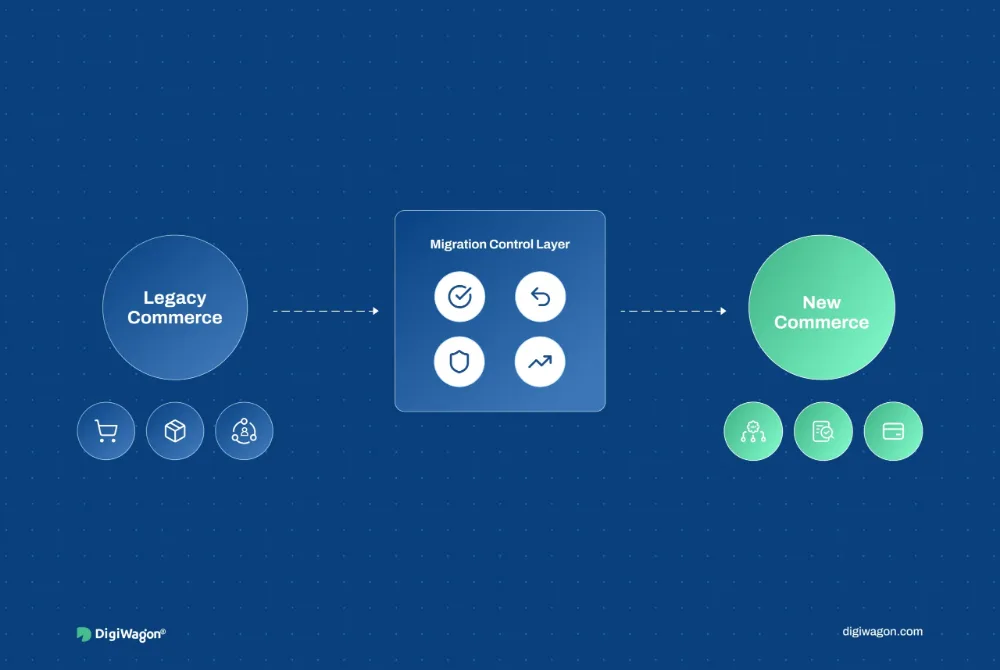
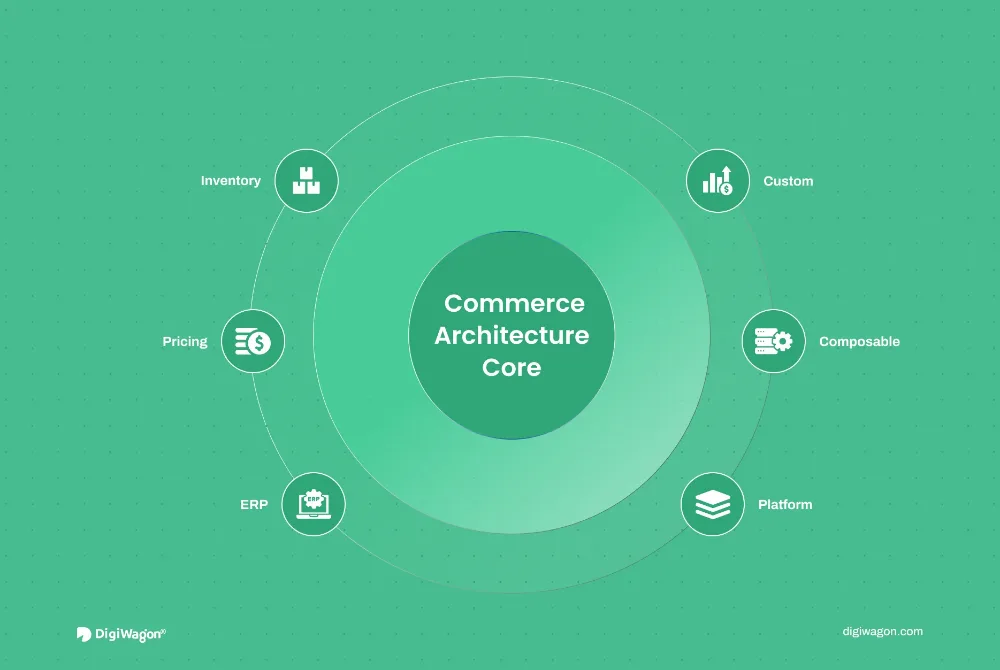
Writing that transfers to London commerce: a strategic risk playbook for eCommerce migration, building a true omnichannel platform for D2C brands, and B2B eCommerce architecture — custom, composable or platform.
Software Engineering
eCommerce Migration: A Strategic Risk Playbook for Enterprise Replatforming
· Divyarajsinh Gohil · 6 min read
Software Engineering
B2B eCommerce Architecture: Custom vs. Composable vs. Platform
· Divyarajsinh Gohil · 10 min read
Software Engineering
Unifying the Experience: Building a True Omnichannel E-commerce Platform for D2C Brands in 2026
Direct answers to what London retailers and marketing teams ask before a web or commerce build.
01What eCommerce platform suits a UK D2C brand?
Shopify for most: GBP, UK VAT, the UK payment rails and BNPL are supported, the checkout is solved and launches are fast. Magento or a custom build when the catalogue is complex or B2B is central; WooCommerce when content leads the sale and you want to own the platform. We recommend by catalogue, integrations and team.
02How do you handle UK VAT and EU cross-border after Brexit?
UK VAT is configured in the checkout — displayed, invoiced and refunded correctly — and tested with your accountant. For EU customers we set up the import one-stop shop or EU registration your advisers choose, customs data and duties on the parcel, and delivered-duty-paid where you want the customer to see one price.
03How long does a replatform take?
A replatform of an existing catalogue takes three to five months: mapping and migrating products, customers and orders, rebuilding integrations, redirecting every URL so rankings survive, and running the old store until a rehearsed cutover in a quiet window. Larger catalogues and B2B logic push it toward six.
04Which UK payment and shipping rails do you integrate?
The UK card acquirers with Shopify Payments, Stripe, Adyen or Checkout.com, Apple Pay and Google Pay, buy-now-pay-later providers such as Klarna and Clearpay, and Royal Mail, DPD, Evri and the rest for shipping with live rates and labels. Each integration gets reconciliation and monitoring so an order never fails silently.
05Can you keep our search rankings through a migration?
Yes, if the migration is done properly: every old URL mapped and redirected, product and category content preserved, structured data carried across, and rankings and crawl errors monitored for a month after cutover. The migration is rehearsed on a staging store so the live cutover is a quiet window, not a gamble.
06What does support look like through the retail calendar?
Peak-season readiness before Black Friday, Boxing Day and January — load tests, integration checks, staffing in your hours — plus platform and plugin updates, performance and accessibility monitoring and a quarterly conversion review. Documentation and admin training are handed over at launch.
Tell us what the store or site has to do, and where it sells.
We will show you comparable commerce and web work and the UK decisions behind a build before anything is scoped.