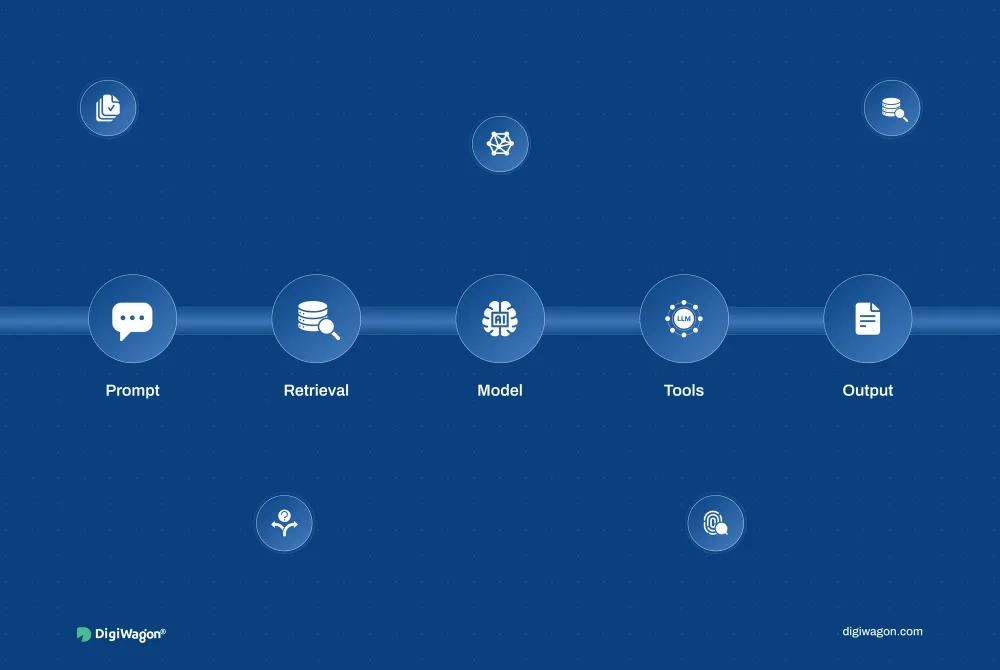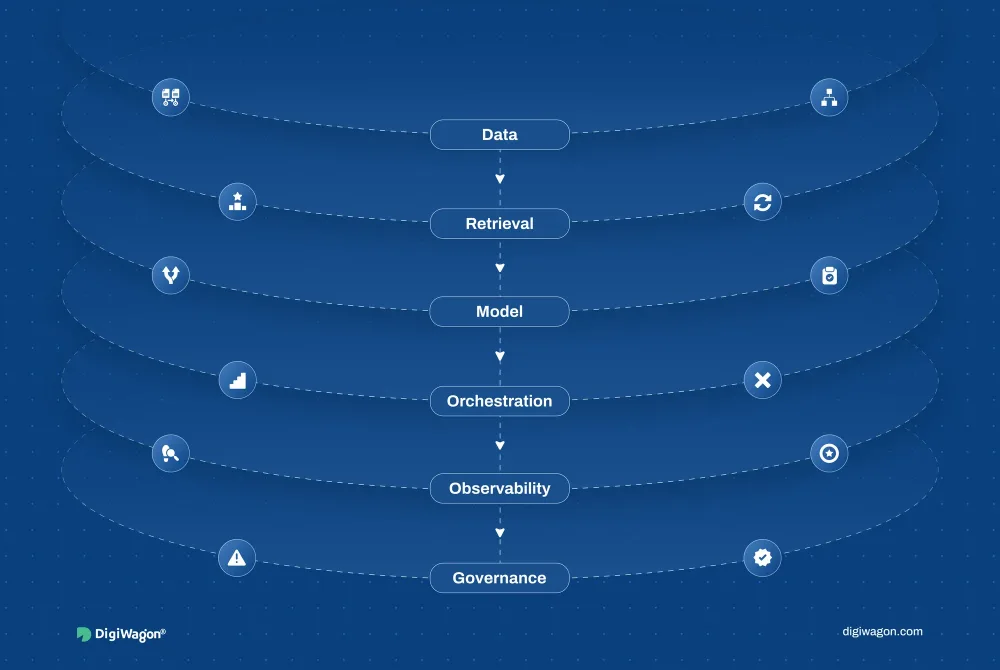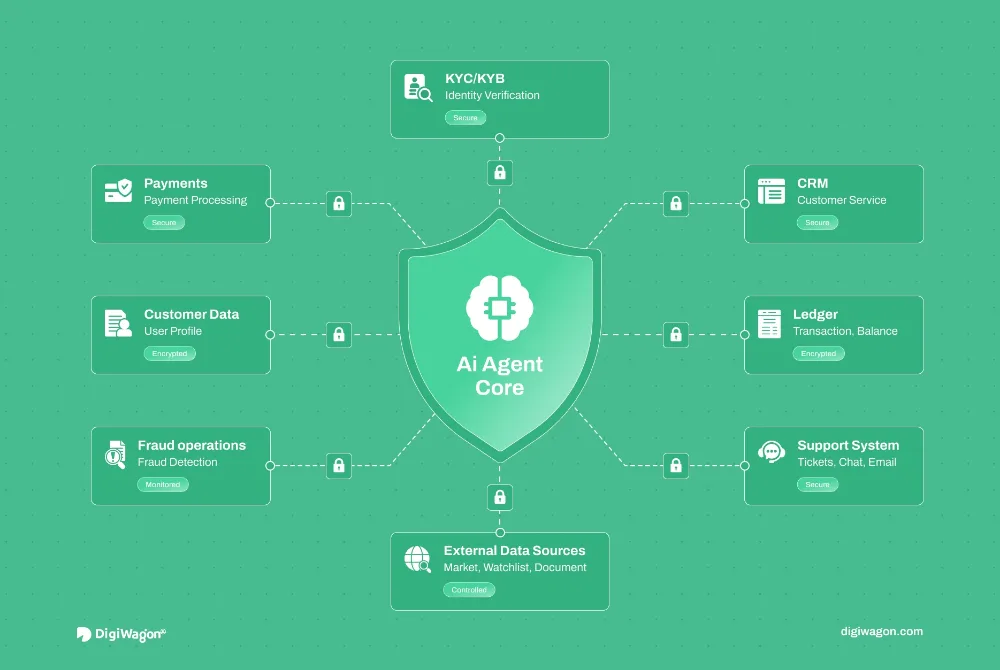
The New B2B Expectation
In the bustling B2B landscape of the USA and UK, the days of generic catalogs and one-size-fits-all purchasing experiences are rapidly fading. Business buyers, conditioned by the seamless interactions of their personal lives, now demand the same level of personalised attention from their suppliers. They expect relevant product suggestions, intuitive assistance, and tailored solutions-not just a transaction.
The challenge for CTOs, Product Heads, and Founders is immense: how do you deliver this individualised experience at scale when dealing with complex product lines, multi-tiered pricing, and diverse customer segments? This is where Generative AI & LLM Solutions step in, transforming passive platforms into dynamic, responsive, and truly personalised ecosystems.
The Personalisation Gap in Traditional B2B E-commerce
Historically, B2B e-commerce lagged behind its B2C counterpart in personalisation. This isn’t for lack of trying, but due to fundamental differences in the buying journey.
The B2B Personalisation Gap – Why Traditional Tools Fall Short Complex stakeholders. Complex data. Simple personalisation no longer works.
| Feature | B2C E-commerce | B2B E-commerce |
|---|---|---|
| Buyer Persona | Often a single individual making emotional decisions. | Multiple stakeholders (procurement, engineering, finance) with rational, long-term goals. |
| Product Complexity | Relatively straightforward; static descriptions. | Highly technical, configurable, requires deep documentation and support. |
| Pricing | Fixed, transparent. | Negotiated, tiered, contract-specific, dynamic. |
| Purchase Frequency | High, often impulse-driven. | Lower, larger orders, often recurring via contracts. |
Outcome:
The lack of contextual personalisation leads to lower conversions, slower deal cycles, and eroded buyer trust.
Traditional personalisation tools, largely built for B2C, struggle with B2B’s nuances. Rule-based engines can’t adapt fast enough, and basic recommendation algorithms miss the intricate, context-specific needs of business buyers.
Generative AI: Beyond Basic Recommendations
From Static to Smart – How Generative AI Transforms B2B Commerce Context-aware, dynamic, and self-evolving personalisation.
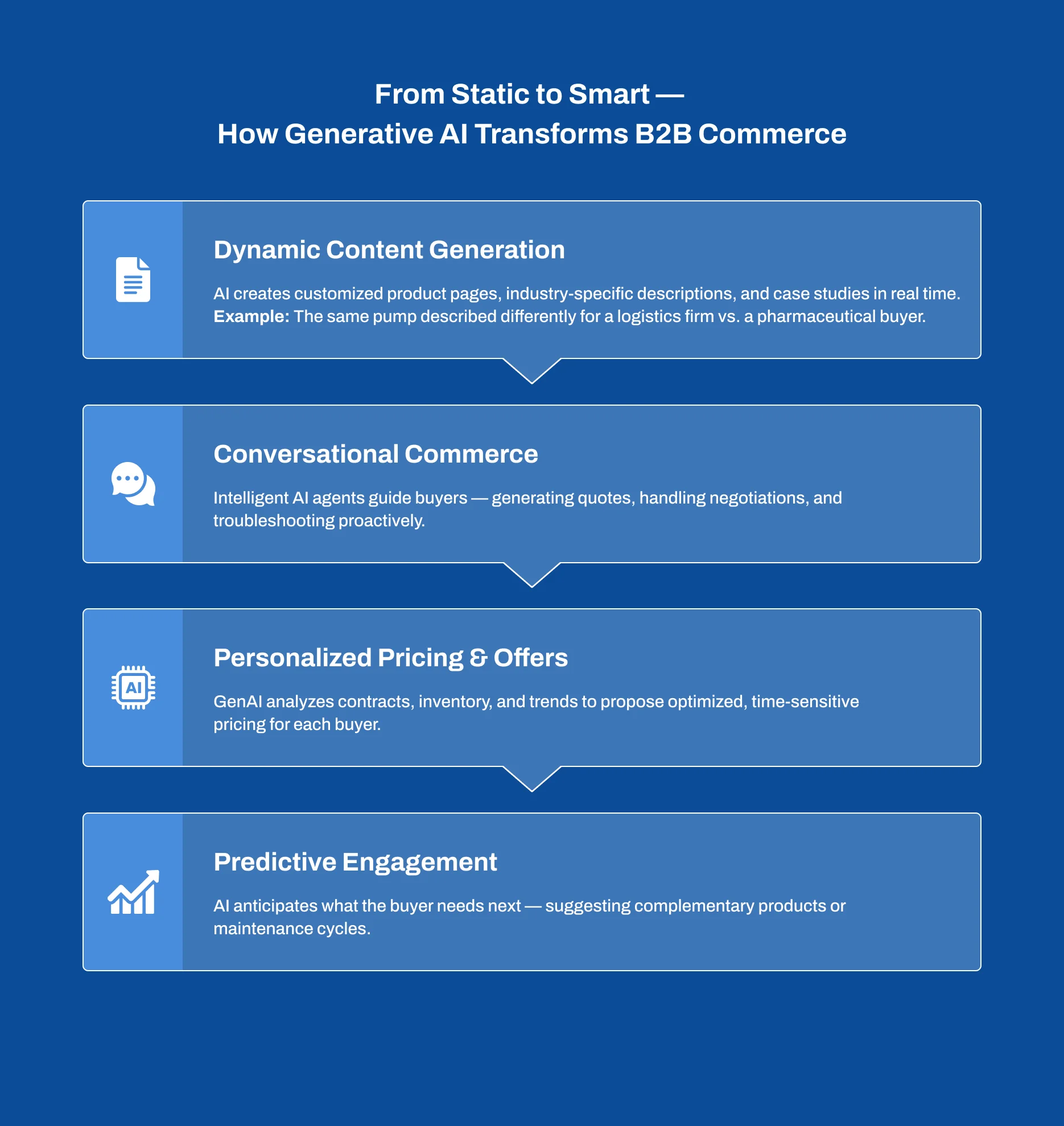
Generative AI, powered by Large Language Models (LLMs), moves beyond simply suggesting “customers who bought X also bought Y.” It understands context, generates novel content, and adapts in real-time to complex B2B scenarios.
Dynamic Content Generation for Product Pages
Imagine a B2B e-commerce platform that doesn’t just display product specs, but generates tailored descriptions, use cases, and even comparative analyses on the fly.
- Personalised Product Descriptions: For a manufacturing client, Gen AI can highlight a product’s durability and integration with existing machinery. For a client in healthcare, it might emphasise compliance and sterile processing.
- Custom Case Studies: Based on a customer’s industry and past purchases, Gen AI can auto-generate snippets of relevant success stories, dramatically increasing perceived relevance.
AI-Powered Conversational Commerce & Sales Agents
The next generation of B2B digital sales isn’t just chatbots; it’s intelligent AI agents capable of complex dialogue and problem-solving.
- Automated Quote Generation: Buyers can simply ask the AI agent for a quote on a complex order, including custom configurations, and receive an instant, contract-compliant offer.
- Proactive Support & Troubleshooting: An AI agent can analyse a buyer’s purchase history and technical specifications to offer pre-emptive troubleshooting tips or suggest maintenance parts, reducing support tickets and improving customer satisfaction. This directly enhances the experience, often outperforming traditional methods.
Proactive, Tailored Offers & Pricing
B2B pricing is rarely static. Generative AI can analyse vast datasets-including historical purchases, market trends, contract terms, and even competitor pricing-to create truly individualised offers.
- Dynamic Discounts: Offer specific, time-sensitive discounts on bulk orders or complementary products based on a buyer’s current projects or inventory levels.
- Contract-Specific Negotiations: AI can guide a buyer through custom contract terms, explaining implications and suggesting optimal packages, effectively acting as a digital sales representative.
Strategic Implementation for US & UK Enterprises
Strategic Roadmap to AI-Powered Personalisation Think long-term: Data first, AI second, value always.
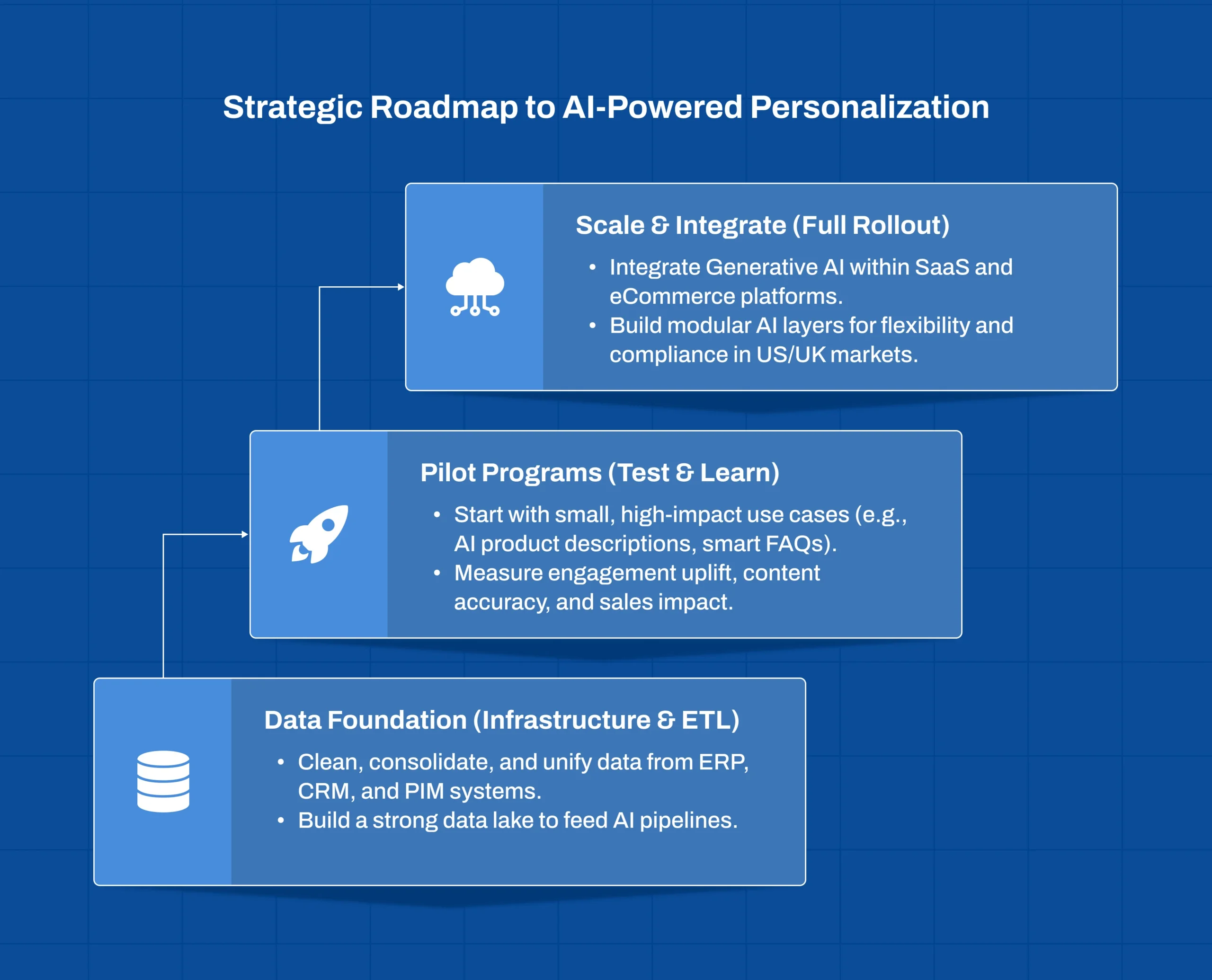
Adopting Generative AI for hyper-personalisation isn’t a flip of a switch; it requires a strategic, phased approach, particularly for sophisticated markets like the US and UK. Enterprises need Custom Software solutions that are flexible enough to integrate cutting-edge AI.
Data Infrastructure as the Foundation
Generative AI is only as good as the data it’s trained on. For B2B, this means consolidating disparate data sources-ERP, CRM, PIM, customer interactions, website analytics-into a unified, clean, and accessible format. This necessitates robust Data Engineering & ETL to consolidate and clean diverse data sources.
Without a solid data foundation, AI’s potential remains untapped.
Iterative Adoption and Pilot Programs
Begin with focused pilot programs. Instead of a full-scale rollout, start with one specific use case, such as dynamic product descriptions for a single product category or an AI-powered FAQ section. Measure the impact, gather feedback, and iterate. Integrating Gen AI capabilities directly into your B2B SaaS Product Development can create a distinct market advantage. Engaging in eCommerce Consulting can provide a clear roadmap for this complex integration.
The Tangible ROI: Why Generative AI is a Must-Have
The Equation – Why Generative AI is a Growth Multiplier Every personalisation event compounds value across your enterprise.
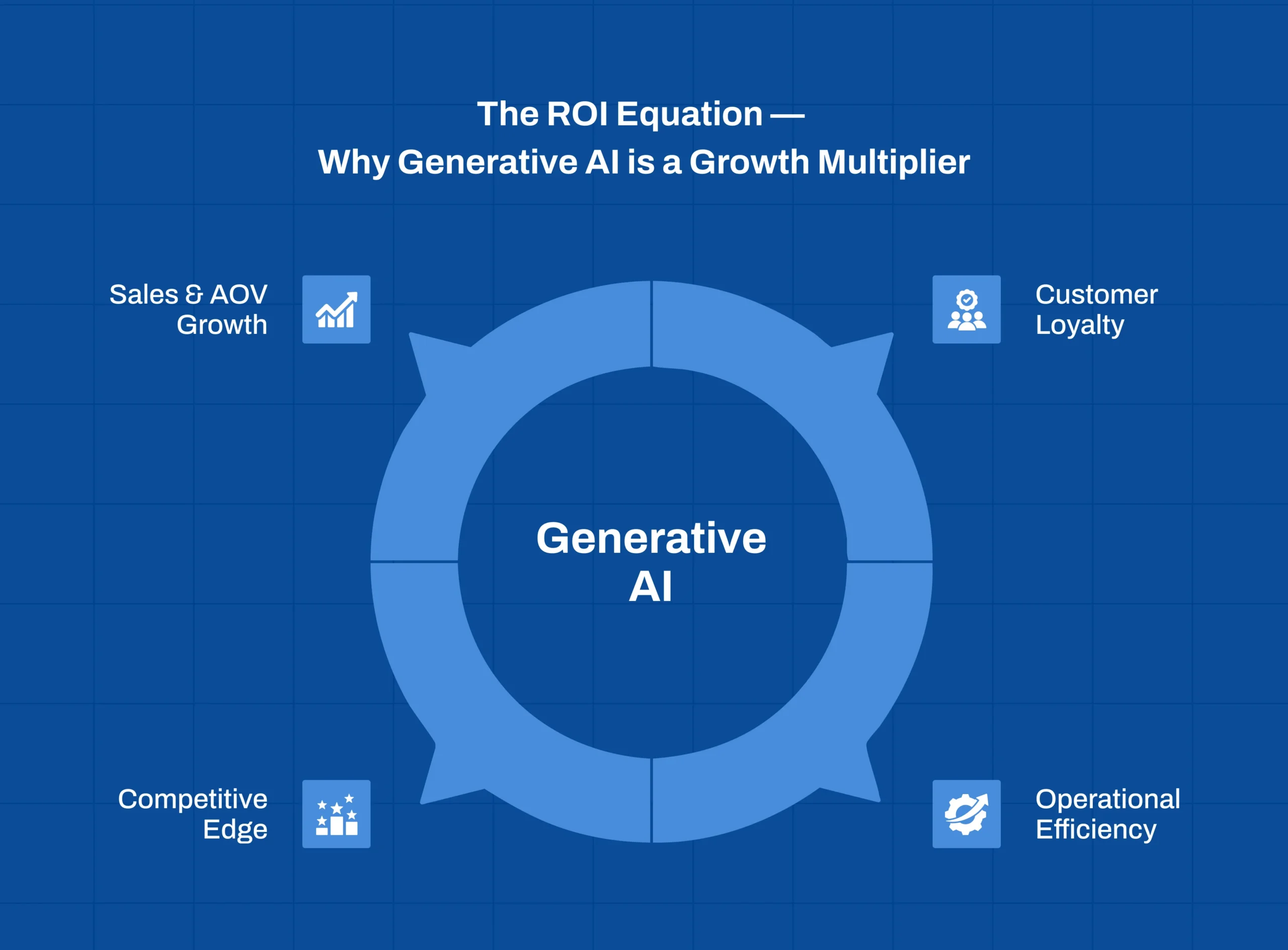
1. Sales & AOV Growth:
Personalised recommendations increase average order value and repeat purchase rate.
2. Customer Loyalty:
Tailored experiences reduce friction and improve retention.
3. Operational Efficiency:
AI automates content creation and customer interactions, freeing teams for strategic tasks.
4. Competitive Edge:
Early adopters gain unmatched differentiation in mature US/UK markets.
The investment in Generative AI for B2B e-commerce yields significant returns:
- Increased Sales & Average Order Value (AOV): By presenting highly relevant products and offers, Gen AI drives higher conversion rates and encourages larger purchases.
- Enhanced Customer Loyalty & Retention: A personalised, efficient buying experience reduces friction, fosters trust, and makes your platform indispensable to buyers.
- Operational Efficiency: Automating personalised content generation and sales support frees up human resources for more complex, high-value tasks.
- Competitive Differentiation: Enterprises in the US and UK that master Gen AI personalisation will carve out a significant advantage in fiercely competitive markets.
Conclusion: The Future is Personalised, The Future is Now
The future of B2B e-commerce in the US and UK is not just digital; it’s deeply personal. Generative AI is the key to unlocking this next frontier, moving beyond static platforms to create dynamic, intuitive, and highly responsive buying experiences. For CTOs and product leaders ready to innovate, the time to integrate Generative AI for hyper-personalisation is now. Don’t just meet expectations-exceed them.
Related reading: B2B eCommerce UX strategies for manufacturers covers the interface these experiences live in, custom composable B2B eCommerce architecture covers the platform underneath, and our generative AI and LLM solutions page describes the engineering behind grounded, permission-aware personalisation.