The Correlation Is Obvious and Nobody Will Bet On It
Two things move together and the business is about to spend against the assumption that one causes the other, with no test that would have shown otherwise.
How we would investigate it
What you could end up with
A treatment-effect estimate rather than a correlation restated
Counterfactual analysis: what would have happened anyway
A decision framework that says what evidence would change the call
Explore complex datasets to uncover patterns, relationships and evidence that can guide further action.
Exploratory Data AnalysisStatistical ModellingTrend AnalysisDistribution AnalysisStatistical Testing
AI-enhanced data science
Explore Faster. Validate the Same.
Use AI alongside statistical analysis and decision science to explore data faster, investigate patterns, and make complex findings easier to understand.
01
Ask Naturally
Explore business data through conversational questions instead of relying on predefined reports.
Example“Why did customer retention drop in the last quarter?”
02
Spot What Changed
Surface patterns, anomalies, and relationships that may deserve deeper investigation.
ExampleAI highlights that the decline is concentrated among customers acquired through one channel.
03
Explore Possible Drivers
Generate hypotheses and explore possible drivers while keeping statistical validation at the centre.
ExampleCompare onboarding completion, pricing changes and support activity to identify likely causes.
04
Explain Clearly
Translate complex analytical findings into understandable, decision-ready insights.
ExampleTurn a statistical result into: “Customers who skip onboarding are significantly more likely to churn within 60 days.”
05
Compare Possibilities
Evaluate scenarios, assumptions, and trade-offs with AI-assisted analysis.
ExampleCompare the expected impact of improving onboarding versus offering a retention incentive.
06
Bring the Evidence Together
Connect the findings with business context so teams can choose the next step with greater clarity.
ExampleRecommend prioritizing onboarding improvements because they show stronger retention impact with lower ongoing cost.
Apply data science to understand behaviour, test assumptions, uncover performance drivers and support better decisions across different business environments.
01 / 09
FinTech
01Customer Analytics
02Portfolio Analysis
03Attribution
04Cohort Analysis
05Decision Support
02 / 09
RegTech
01Compliance Analytics
02Root Cause Analysis
03Cohort Analysis
04Statistical Testing
05Decision Support
03 / 09
InsurTech
01Claims Analysis
02Customer Segmentation
03Retention Analysis
04Driver Analysis
05Scenario Modelling
04 / 09
Healthcare
01Patient Analytics
02Outcome Analysis
03Cohort Studies
04Root Cause Analysis
05Scenario Modelling
05 / 09
Manufacturing
01Process Analysis
02Statistical Analysis
03Root Cause Analysis
04Scenario Modelling
05Performance Optimization
06 / 09
Retail & eCommerce
01Behavioural Analytics
02Retention Analysis
03Experimentation
04Attribution Modelling
05Pricing Analysis
07 / 09
Logistics & Supply Chain
01Operational Analytics
02Root Cause Analysis
03Scenario Modelling
04Performance Diagnostics
05Optimization
08 / 09
SaaS & Technology
01Product Analytics
02Cohort Analysis
03A/B Testing
04Churn Analysis
05Driver Analysis
09 / 09
Defence
01Operational Analytics
02Scenario Modelling
03Resource Optimization
04Root Cause Analysis
05Decision Support
Our work
Data Science in practice.
Engagements where this is what we actually built. 4 of them are written up in full.
We agree what decision the answer has to serve before touching the data, then test the explanation hard enough that the result is worth acting on either way.
01
Frame the Question
Establish the decision behind the question, what would count as an answer, and what the business would do differently in each direction.
Focus
DecisionHypothesisSuccess criteriaOwner
02
Assess What You Have
Check the quality, coverage and relevance of the existing data, and say plainly what can be answered with it and what cannot.
Focus
CoverageQualityGapsFeasibility
03
Test the Explanation
Run the analysis, experiment or causal design that could disprove the answer, and report the effect size and the uncertainty around it.
Focus
MethodSignificanceEffect sizeUncertainty
04
Turn It Into a Decision
State the finding in the language of the decision, with the trade-offs, the assumptions it rests on, and what would change the conclusion.
Focus
FindingTrade-offsAssumptionsNext step
Frame01 Frame the QuestionAssess02 Assess What You HaveTest03 Test the ExplanationDecide04 Turn It Into a Decision
Insights
Thinking Behind the Evidence.
Perspectives on decision intelligence, attribution and the analysis that has to happen before a number is worth acting on.
AI & Machine Learning
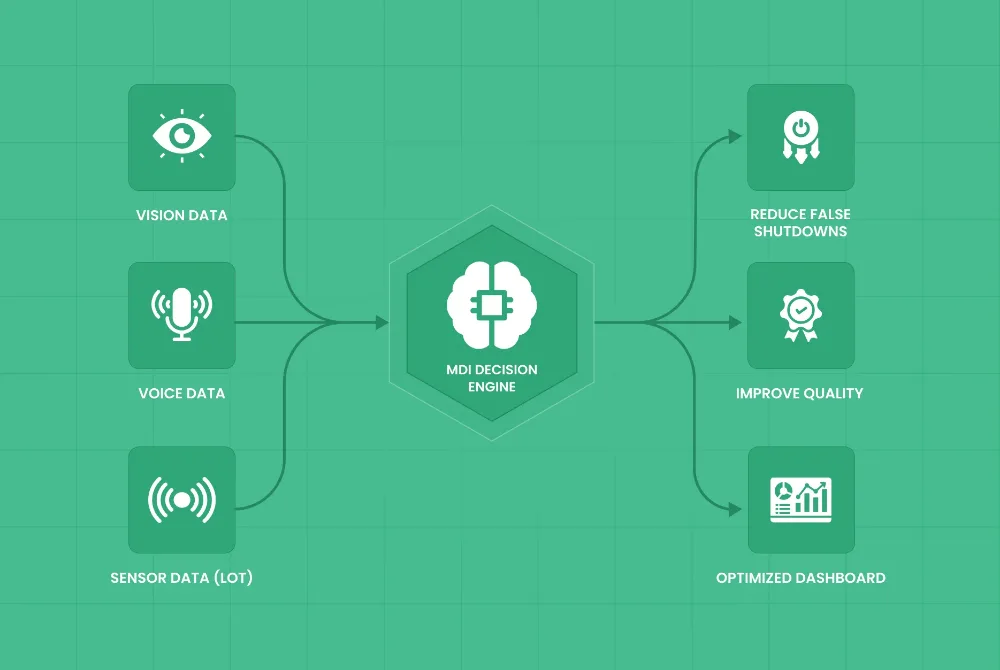
Multimodal Decision Intelligence in Industry 4.0
· Akash Thakor · 5 min read
Data & Analytics
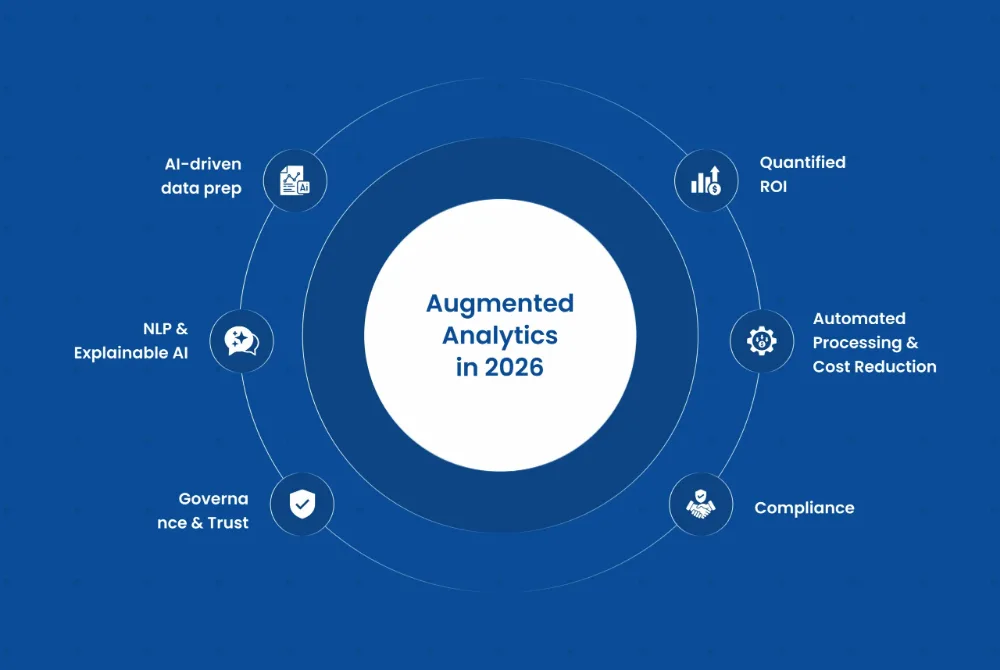
Augmented Analytics in 2026: Quantifying the ROI of AI-Driven Insights for Global Enterprises
· Charmi Shah · 3 min read
Data & Analytics
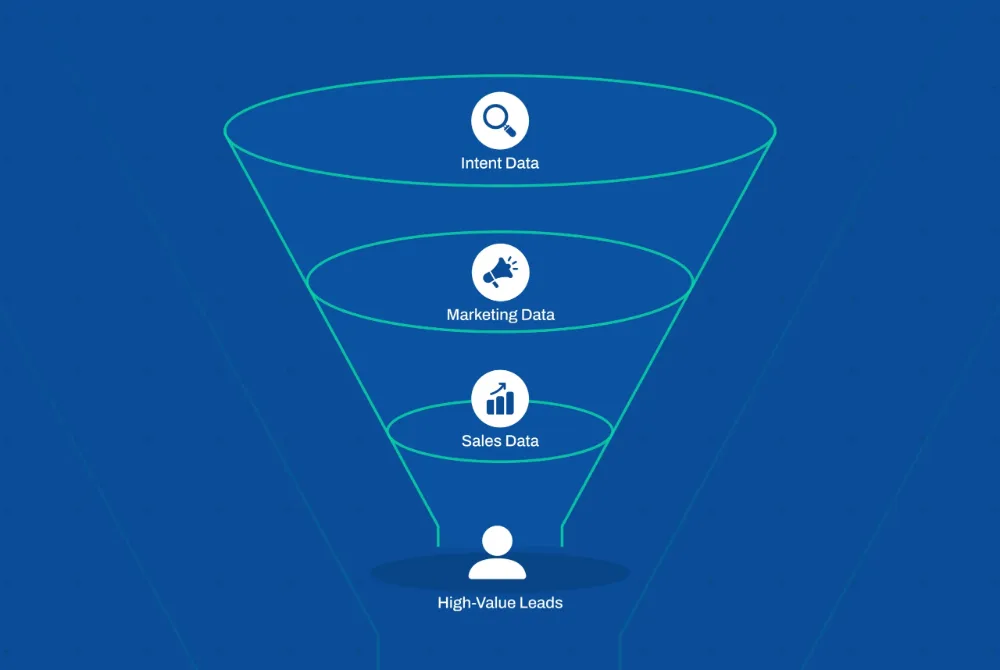
Predictive Analytics 2.0: How Intent Data Unifies B2B Sales & Marketing Funnels in 2026
Straight answers on what a data science engagement includes, how it differs from machine learning, and what to ask a data science company before you start.
01What does a Data Science service actually include?
A Data Science engagement can include behavioral analysis, experimentation, attribution, causal analysis, scenario modelling and statistical exploration. The exact mix depends on the business question, the data available, and the decision you need to make. Most engagements start from a single question the business already has, rather than from a list of techniques.
02How is Data Science different from Machine Learning?
Data Science focuses on analyzing data, testing hypotheses, and supporting decisions. Machine Learning is more focused on creating predictive models and AI systems that operate in production. Data science answers a question once, with evidence; machine learning builds something that keeps making the same judgement automatically.
03What business problems can Data Science help solve?
It can help investigate customer behavior, retention, marketing effectiveness, pricing, product performance, operational issues, attribution, and other questions where stronger evidence can improve a decision. It suits situations where reporting already shows what happened and the argument is about why, or about which of several options to take.
04Can Data Science work with the data we already have?
Yes. We first assess the quality, availability, and relevance of your existing data, then determine what analysis is possible and where additional data may be needed. Saying plainly what cannot be answered with the data you have is part of that assessment, not a later surprise.
05How can AI support Data Science?
AI can help analysts explore data faster, surface patterns, generate hypotheses, explain complex findings, and compare scenarios while statistical validation remains central to the analysis. It widens what can be looked at in the time available; it does not replace the test that decides whether a finding holds.
06Do we need a large data team to start a Data Science initiative?
Not necessarily. A focused engagement can begin with a specific business question, available data and a clear decision to support, then expand as the value and data maturity grow. A single well-chosen question is usually a better start than a platform, because it produces something the business can act on early.
Need a Clearer Answer from Your Data?
Bring us the question. We’ll help you examine the data, test the assumptions, and work out what it supports.
One click opens the assistant you already use with a question that points it at this page, so the answer comes from what we publish, not a guess.
The question it opens withRead https://digiwagon.com/data-science-services and explain how DigiWagon runs a Data Science Services engagement, what I should expect in the first 90 days, and how to judge whether a partner like this fits a team of our size. Stick to what the page says and mark anything you are not sure about.