InsurTech and Insurance Software Development for Claims, Underwriting and Policy
Policy and claims platforms built to pass the exam.
DigiWagon builds policy administration, claims, underwriting and distribution software for carriers, MGAs, brokers and InsurTech companies in the United States, the United Kingdom and India. Every platform is engineered for the market-conduct exam as carefully as for the policyholder.
Pick the situation closest to yours. We’ll show what we would build for it, where it sits in the insurance services below, and which regulation shapes it.
Pick what your platform has to prove
What it has to prove
A Claims Journey That Has to Settle Faster and Explain Itself
First notice of loss arrives by app, phone and partner API, adjusters work across five systems, and every reserve, payment and denial has to be reconstructable when the regulator or the reinsurer asks.
What we would build
What you could end up with
Intake that captures incident data, evidence and consent as one record
Routing rules with a written rationale and a decision log per claim
Claim status the policyholder can see without calling
What it works with
Your policy administration and billing systems
Repair networks, TPAs and payment providers
The complaint and market-conduct reporting you already file
Underwriting That Needs More Signals and Fewer Surprises
Applications carry more data than the rules use, pricing lags the risk, and any model that touches a decision now has to satisfy the NAIC AI bulletin and the unfair-discrimination tests.
What we would build
What you could end up with
Risk models with documented features, thresholds and bias testing
An explanation attached to every automated decision
Monitoring that shows drift before the market-conduct exam does
A Policy Admin System That Cannot Be Replaced in One Go
The core still issues and renews every policy, but a new product takes a quarter, the vendor’s roadmap is not yours, and the next state filing needs a data field the system does not have.
What we would build
What you could end up with
An API layer that ships new products against the old core
Migration by book of business, reconciled before each cutover
Modules retired one at a time, each with a rollback
What it works with
The policy administration system as it is, documented or not
Billing, reinsurance and statutory reporting feeds
Distribution That Has to Work for Brokers and Embedded Partners
Quotes need to bind inside a partner’s checkout or a broker’s console as readily as on your own site, with the same rating, the same disclosures and one source of truth for the policy.
What we would build
What you could end up with
Quote-bind-issue APIs a partner can integrate in weeks
One rating and disclosure logic behind every channel
Broker and agent consoles that see the same policy the carrier does
Insurance software development services for carriers, MGAs, brokers and InsurTech companies, and the insurtech software development a digital-first product needs: the platforms, models and integrations below, each linked to the DigiWagon practice that builds it.
01
Insurance Product Strategy & Discovery
An insurance product is a filing before it is a feature: the line, the states or markets, the rating basis and the distribution model decide what the software must do and what the regulator will read. Discovery settles those with you before a roadmap exists, then scopes a first release whose rating logic, disclosures and reporting will survive the second state and the first market-conduct exam. For an MGA or an InsurTech that means the carrier partnership and the binding authority are in the design, not discovered when the first policy has to issue.
Product and filing scope mappingCarrier and MGA operating modelRating and disclosure designMVP definition with compliance costed
Quote, bind, issue, endorse, renew and cancel as one governed lifecycle rather than a chain of vendor screens. Coverage is modeled as data — products, forms, rating tables and rules versioned under change control — so a new product or a state variation is configuration, not a release. Every transaction writes the audit record the market-conduct examiner will ask for, and every document is generated from the same policy record the portal and the billing system read. Built on Java, Node.js, React and PostgreSQL, the same stack that carried a bank’s deposit onboarding to 98% identity-verification accuracy.
Quote-bind-issue lifecycleProduct and rating configurationEndorsements, renewals and billingPolicy document generation
A claim starts with a stressed policyholder and ends with a reserve, a payment and a record the regulator may read years later. We build first-notice-of-loss intake that captures incident data, images and consent as one record; routing rules with a written rationale per assignment; straight-through processing for the simple claims and a documented reason for every one that is not; and status the policyholder can see without calling. Adjusters keep the judgment calls; the platform keeps the evidence, the reserves and the audit trail, so the complaint ratio and the exam both come down.
FNOL intake across channelsStraight-through claims processingAdjuster workbench and routingReserve, payment and audit records
Risk scoring, triage and pricing support from application data, claims history and third-party feeds, built to be examined as well as to perform. Since the NAIC’s 2023 model bulletin on insurers’ use of AI, a model that touches an underwriting or claims decision needs documented features and thresholds, bias and unfair-discrimination testing, an explanation attached to each decision and monitoring for drift. We build all four in, the way our AML models detected suspicious activity 45% faster while every alert stayed reviewable. Underwriters decide; the model shows its working, and the model-risk file writes itself.
Underwriting risk scoringClaims fraud and severity modelsBias and fairness testingModel documentation and monitoring
Policyholders want to update a vehicle, file a claim and pay a premium without a phone call; agents and brokers want one console for quotes, renewals and client history instead of five logins. We build both on the same policy record, so the customer, the broker and the carrier see one truth. Disclosures, consents and e-signatures are captured where the regulator expects them, self-service is designed against the call-center’s top reasons for contact, and the same design system carries hundreds of screens as regulation changes the copy. Redesigning an enterprise compliance platform this way made its onboarding 35% smoother and cut training burden by 30%.
Policyholder self-service portalsAgent and broker consolesE-signature and consent captureDesign systems for regulated products
Claims filed from the roadside, ID cards in a wallet, telematics and usage-based pricing that need the device’s sensors: insurance is mobile-first for the policyholder even when the carrier is not. We build in Flutter, React Native or native code depending on how much of the device the product needs, with device binding, certificate pinning, offline capture for field adjusters and consent screens the regulator will read. The app runs against the same APIs and policy record as the portal, so a claim started in the app and finished by an adjuster never needs reconciling.
Policyholder and claims appsTelematics and usage-based insuranceField adjuster and inspection appsDevice security controls
An insurance platform lives between systems it does not own: comparative raters, agency management systems, payment and premium-finance providers, reinsurers, bureaus, telematics feeds and the carrier partners an MGA writes for. We build the integration layer that makes them one platform — ACORD-standard data exchange, quote-bind-issue APIs partners can integrate in weeks, event streams so billing and claims see a policy change as it happens, and reconciliation that agrees with the ledger. Certification runs in sandbox before any connection carries a live policy, and every partner integration is documented for the day it has to be replaced.
ACORD data exchangeQuote-bind-issue partner APIsPayments and premium financeReinsurance and bureau feeds
Policy administration systems age into the business: rating tables nobody dares touch, a vendor roadmap that is not yours, and statutory reporting still assembled by hand. We modernize without a rewrite the examiner would notice. An API layer first, so new products and portals ship against the old core; then modules re-platformed one at a time — rating, billing, documents — each with a rollback and a reconciliation before the old path is retired. Migration runs by book of business, in parallel, proven against the general ledger before cutover. The regulator sees continuity; your team gets a system it can change in a sprint.
Policy core API enablementBook-of-business migrationRating and billing re-platformingParallel-run reconciliation
Insurance Data Platforms, Actuarial & Statutory Reporting
Loss triangles, reserve development, statutory and Solvency reporting and the exam’s data call all depend on one thing: policy, premium and claims data that reconciles and can be traced back to source. We build the pipelines, warehouses and reporting layers that give actuarial, finance and compliance one version of the numbers, with lineage from a filed report to the transaction behind it. Data that arrives from partners and bureaus in a dozen formats is governed the way we governed watchlist data for a compliance platform, where duplicate and inconsistent records fell by 40% and updates became 50% faster.
Policy, premium and claims data pipelinesActuarial and reserving data martsStatutory and regulatory reportingData lineage for the exam
The NAIC Insurance Data Security Model Law, New York’s 23 NYCRR 500 and IRDAI’s cyber guidelines all ask for the same thing in different words: a written information security program with evidence behind it. We build the cloud estate and delivery pipeline so the controls are structural — segregated environments, encryption and key management, access by role, signed releases, immutable logs and incident records — and the evidence for SOC 2 and ISO 27001 audits is generated as the platform runs. Where health data enters the product, HIPAA scope is engineered narrow; where card payments do, PCI DSS scope is kept to the payment path.
Information security program engineeringSecure CI/CD and change controlHIPAA and PCI DSS scope designAudit-ready logging and evidence
The building blocks behind the platforms above, grouped the way an insurance product team scopes them. Pick a group to see what we have built inside it.
01 / 05
Policy & Product Systems
01Quote, bind and issue workflows
02Product, form and rating configuration
03Endorsements, renewals and cancellations
04Parametric and usage-based coverage
05Policy document generation
06Multi-line and multi-state product tools
02 / 05
Claims & Servicing
01FNOL intake across channels
02Straight-through processing rules
03Adjuster workbench and routing
04Reserve and payment management
05Fraud flags with reasons
06Real-time claim status for policyholders
03 / 05
Distribution & Customer Experience
01Policyholder self-service portals
02Agent and broker consoles
03Embedded and partner quote-bind APIs
04Digital onboarding with consent and e-sign
05Mobile claims and ID card apps
06Design systems for regulated products
04 / 05
Underwriting, Risk & Intelligence
01Underwriting risk scoring
02Third-party data enrichment
03Claims severity and fraud models
04Bias and unfair-discrimination testing
05Model documentation and monitoring
06Actuarial and reserving data marts
05 / 05
Integration, Data & Compliance
01ACORD data exchange
02Payments and premium finance
03Reinsurance and bureau feeds
04Statutory and regulatory reporting
05Audit trails and evidence packs
06Information security program controls
Who we build for
InsurTech Segments We Serve
Five kinds of insurance business, each examined by a different authority. The policy, claims and distribution patterns transfer between them; the filings and the obligations do not.
Insurance Carriers
Licensed carriers whose core systems predate the products they now sell, supervised by state departments, the FCA and PRA, or IRDAI. We modernize the policy core through APIs and books of business, and build the portals and claims automation around it, so digital ambition does not wait for a replacement program.
MGAs & InsurTech Startups
Managing general agents and digital-first insurers who need a platform that binds under a carrier’s authority from day one. The product, the rating logic and the carrier reporting are designed together, so the first release is fileable and the second market is configuration.
Brokers & Agencies
Brokers answering a client question across five systems, and agencies whose renewals live in spreadsheets. One console for quoting, clients, renewals and communication, integrated with the carriers and raters already in use, built mobile-first for the people who work outside the office.
TPAs & Claims Administrators
Third-party administrators handling claims for many carriers, each with its own rules, reserves and reporting. Multi-tenant claims platforms with per-carrier configuration, straight-through processing where rules allow, and evidence packs that match each carrier’s examiner.
Reinsurers
Treaties, bordereaux and large datasets where clarity is the product. We build data platforms and reporting that reconcile cedant submissions, track exposure and settle into decisions rather than scattering across spreadsheets and email.
Compliance by design
Compliance Is Architecture
Insurance is examined by the state it is sold in, the market it is written in and the data it holds. We treat each framework as a set of design constraints: what is filed, what is disclosed, who may decide, where the data lives and what evidence the system produces on its own. Every framework below binds at least one of the services above, because that is where it is implemented.
01
NAIC Insurance Data Security Model Law (MDL-668, 2017)
A written information security program, risk assessment, incident response and breach notification for licensees, as adopted state by state.
Governance, access controls, multi-factor authentication, asset inventory, incident reporting and annual certification for New York licensees.
Security engineeringPolicy platforms
03
NAIC Model Bulletin on the Use of AI Systems by Insurers (2023)
Governance, documentation, testing and bias controls for any model that informs underwriting, pricing or claims decisions; state unfair-discrimination rules sit behind it.
Underwriting & risk modelsClaims automation
04
State market-conduct examination standards (NAIC Market Regulation Handbook)
Complaint handling, claims timeliness, disclosures and producer licensing records that the examiner samples; the reason every transaction here writes its own audit record.
Claims automationPolicy platformsPortals
05
FCA Consumer Duty (PRIN 2A, in force 2023) and PRA supervision
Good outcomes, fair value and clear communications for UK retail insurance, evidenced through product governance and customer-journey records.
PortalsProduct strategy
06
IRDAI Information and Cyber Security Guidelines (2023)
Cyber governance, data protection, application security and incident reporting for insurers and intermediaries regulated in India.
Security engineeringMobile apps
07
HIPAA Privacy and Security Rules; PCI DSS v4.0.1
Protected health information where the product serves health plans or life and health underwriting; card data where premiums are paid by card. Both scoped narrow by design.
Security engineeringIntegration
08
ACORD data standards
The industry’s forms and data exchange standards for carrier, broker, rater and reinsurer integration, so partners speak one vocabulary.
IntegrationPortals
09
GDPR, UK GDPR, CCPA/CPRA and India’s DPDP Act 2023
Lawful basis, consent, retention, residency and subject rights for the personal and sensitive data an insurer necessarily holds, applied per market.
PortalsData platformsMobile apps
10
ISO/IEC 27001:2022 and SOC 2 Type II
Information security management and evidenced controls. DigiWagon holds ISO/IEC 27001 and ISO 9001 certification; the platform’s pipeline generates the SOC 2 evidence as it runs.
Every engagement
Certification is a claim we make only about ourselves. For everything else on this list, the platform is built for the framework and the evidence is produced with the code.
FinTech, RegTech, InsurTech, SaaS & Technology
Insurance operations in practice
Insurance records, made SWIFT-ready.
Challenge
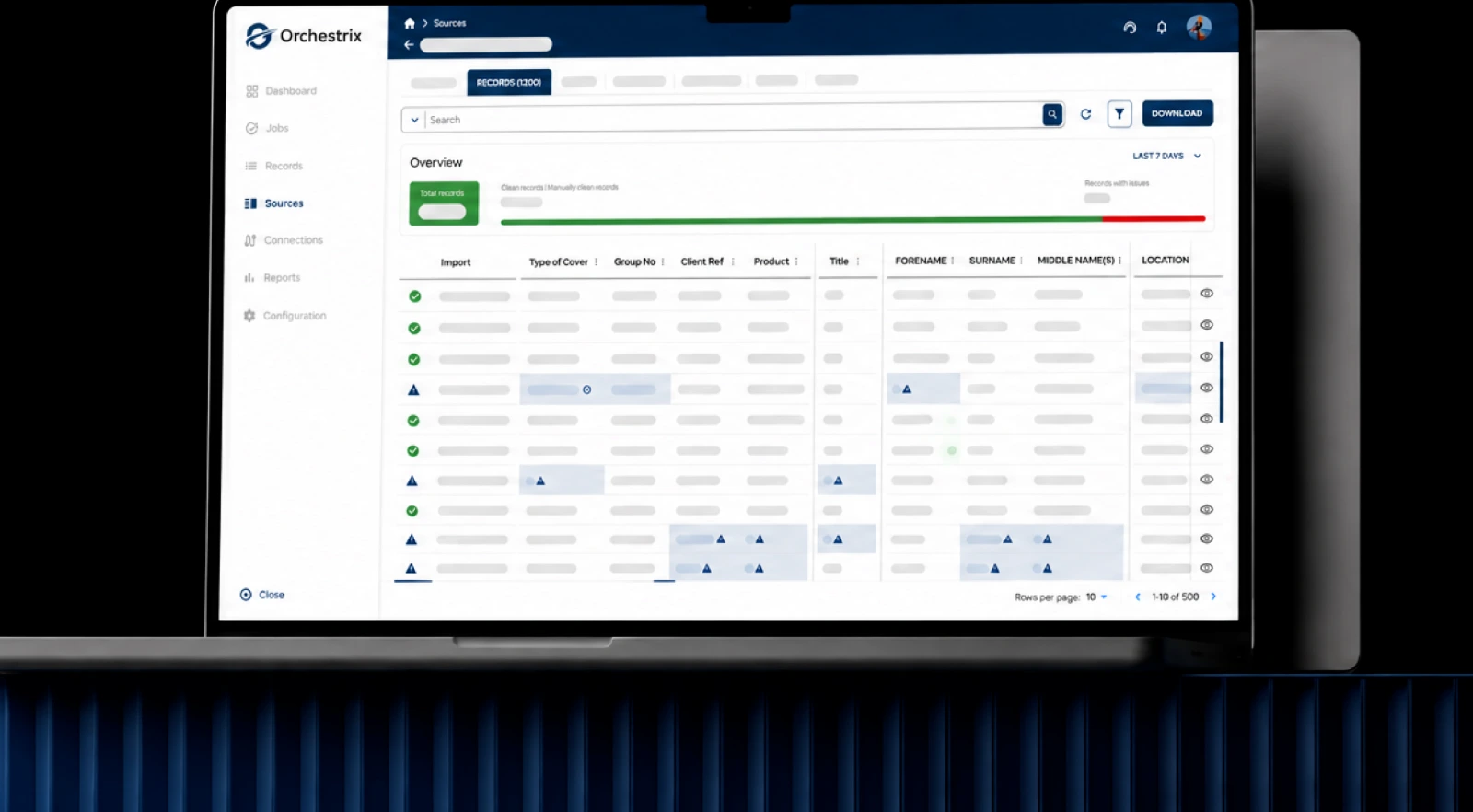
A centralised data automation platform engineered to replace high-risk manual spreadsheet processes with secure ingestion, task-based validation, and SWIFT-compliant standardisation workflows, ensuring data integrity, operational scalability, and audit-ready transparency for insurance operations.
What DigiWagon built
DigiWagon built a centralised SWIFT data platform for orchestration and automation. It replaces spreadsheet dependence with secure ingestion and workflow automation. It also adds structured validation, task-based processing, and audit-ready traceability. The platform monitors incoming files and routes records using source rules. It creates tasks automatically and supports analyst review. It validates SWIFT formats and stores records in a central system, and also logs every action for compliance visibility.
60%Reduction in manual spreadsheet50%Faster data validation
Insurance software development starts from the filing and the exam, not the feature list: which lines and markets the product is written in, what must be disclosed and recorded, and what the examiner will sample. Everything else is sequenced from there.
01
Discover the Filing and the Exam
Map the lines, markets, disclosures, data classes and partner integrations the product touches before scope is fixed, so the compliance work is part of the plan and not a finding after launch.
Focus
MarketsDisclosuresData classesPartners
02
Design for the Record
Audit trails, consent capture, decision logs, model documentation and segregation of duties are designed as features, because the cheapest time to produce the examiner’s evidence is while the platform does the work.
Focus
Audit trailsConsentDecision logsExplainability
03
Build in Controlled Increments
Releases move through segregated environments with signed artifacts, partner integrations are certified in sandbox before a live policy touches them, and rating tables change under version control.
Focus
Secure CI/CDCertificationRating tablesChange control
04
Run Under the Examiner’s Eye
Claims cycle times, complaint signals, model drift and control failures are watched in production, with incident and change records kept in the form the state or the FCA expects to read.
Focus
Cycle timesComplaintsDriftEvidence
Discover01 Discover the Filing and the ExamDesign02 Design for the RecordBuild03 Build in Controlled IncrementsRun04 Run Under the Examiner’s Eye
FAQ
Frequently Asked Questions About Insurance Software Development
Direct answers on what separates an insurance software development partner from a general vendor, how carriers, MGAs and brokers are served differently, where AI belongs in underwriting and claims, and how a legacy policy core is modernized without a rewrite.
01Do you build custom insurance software for carriers, MGAs and InsurTech startups?
Yes, and each is designed differently. A carrier needs a policy core modernized through APIs and books of business without a replacement program; an MGA or digital-first insurer needs a platform that binds under a carrier’s authority and reports to it from day one; a startup needs a first release that is fileable rather than a demo. Discovery settles the lines, markets and operating model before a roadmap is fixed.
02How do you integrate AI into an existing insurance product without failing the regulator?
By treating model governance as part of the model. Underwriting and claims models ship with documented features and thresholds, bias and unfair-discrimination testing, an explanation attached to each decision, human review for edge cases and drift monitoring in production, the controls the NAIC’s 2023 model bulletin expects. Our AML models were built the same way and detected suspicious activity 45% faster while staying reviewable.
03Can you modernize a legacy policy administration system without a big-bang rewrite?
Yes. We put an API layer in front of the core first, so portals, products and claims automation ship against it, then re-platform rating, billing and document modules one at a time with a rollback and a reconciliation before each old path is retired. Migration runs by book of business in parallel and is proven against the general ledger, so the examiner sees continuity throughout.
04Which regulations shape an insurance software build in the US, the UK and India?
In the US, the NAIC Insurance Data Security Model Law and New York’s 23 NYCRR 500 for security, the NAIC AI model bulletin for models that inform decisions, and state market-conduct standards for claims and disclosures. In the UK, the FCA’s Consumer Duty and PRA supervision. In India, IRDAI’s cyber guidelines and the DPDP Act. Each becomes a design constraint on the platform, not a policy document beside it.
05Have you shipped insurance platforms, or is your experience adjacent?
Adjacent, mostly, and we say so. One published case study is insurance-operations work: a data orchestration platform that replaced spreadsheet handling of sensitive insurance records with secure ingestion, task-based validation and SWIFT-format standardization, cutting manual spreadsheet work by 60%. The rest are banking and AML platforms whose controls transfer to the examiner’s sample. Named proof matters more than a longer client list.
Build Insurance Software That Passes the Exam
Tell us the lines, the markets and what the platform has to prove. We will map the filings, the integrations and the first release, and show you comparable regulated work before anything is scoped.
One click opens the assistant you already use with a question that points it at this page, so the answer comes from what we publish, not a guess.
The question it opens withRead https://digiwagon.com/insurtech-software-development. Outline how DigiWagon approaches InsurTech engineering and compliance, then tell me what a InsurTech CTO should verify before choosing them or any similar partner. Stick to what the page says and mark anything you are not sure about.