Beyond Generalists: How to Build a Hyper-Niche Platform that Dominates Logistics & Supply Chain
The supply chain is the backbone of the global economy, yet much of its software runs on brittle, expensive, and frustratingly generic systems.
The days of patching a horizontal ERP or CRM to fit the nuanced reality of Logistics & Supply Chain are over. B2B leaders in this sector are tired of systems that speak the language of sales but not the jargon of drayage, cold chain, or final-mile optimisation.
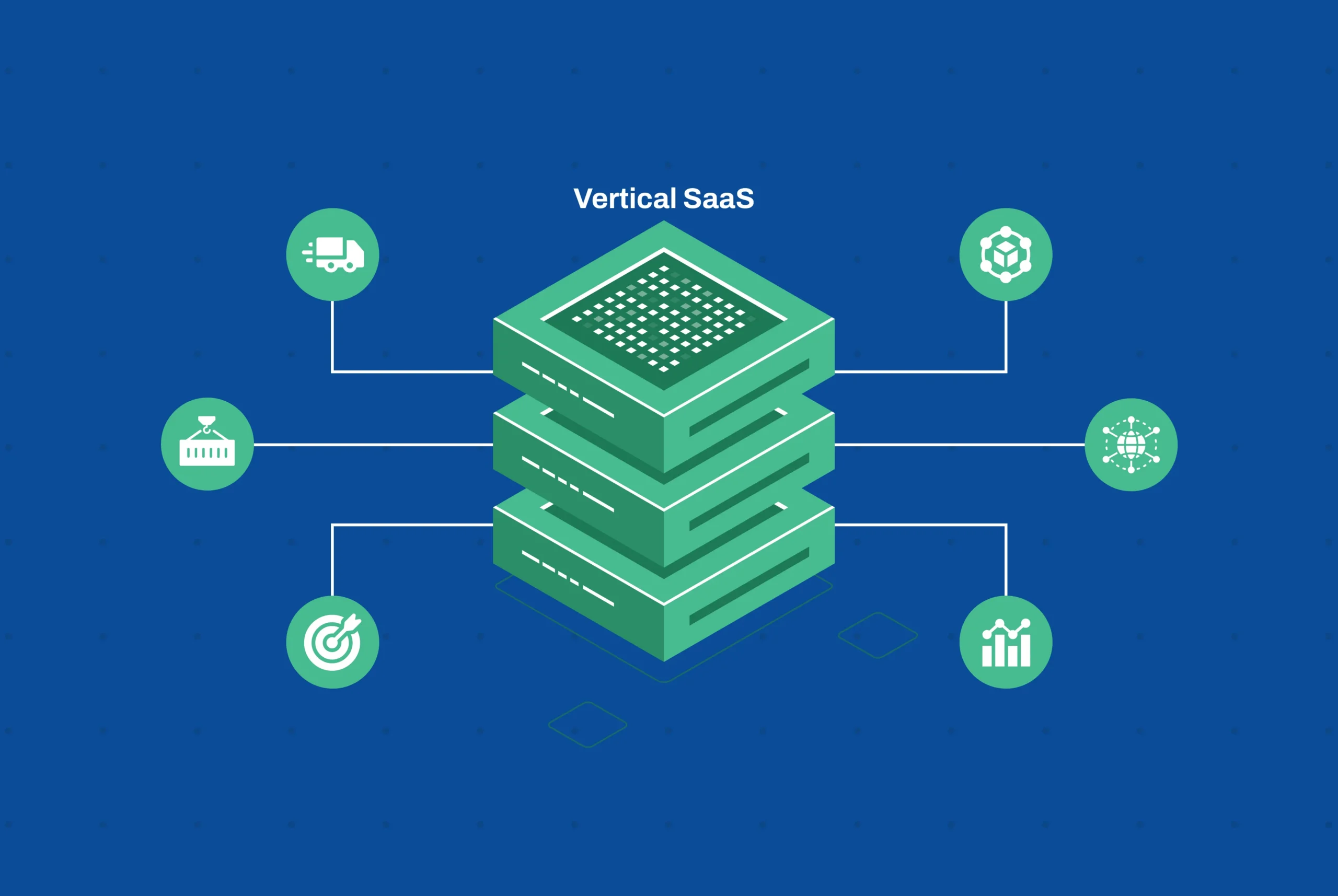
The new frontier is Vertical SaaS (vSaaS)-a highly specialised platform engineered to solve one industry’s specific, high-cost pain points. For the complex, data-intensive world of logistics, a hyper-niche vSaaS model isn’t just a better product; it’s a deep, unassailable competitive moat.
This is the strategic blueprint for building a vSaaS platform that commands its niche, using the power of deep functionality and embedded AI.
The Vertical Advantage: Why Niche Beats Broad
Why Vertical SaaS Beats Horizontal SaaS in Logistics Depth creates defensibility. Domain wins over generalisation.
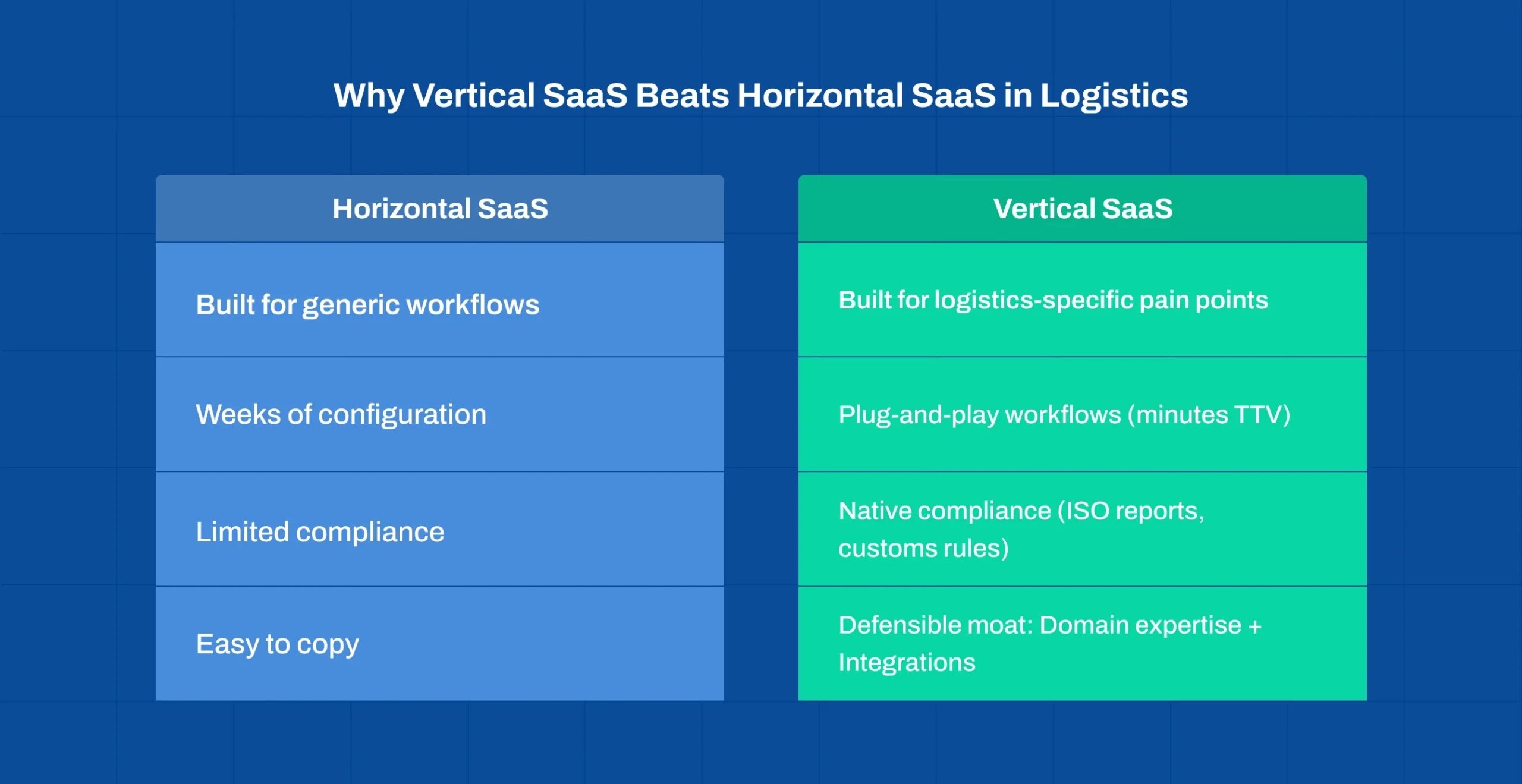
Horizontal SaaS offers breadth; Vertical SaaS offers depth. This depth translates directly into higher customer retention (lower churn) and more efficient customer acquisition.
| Metric | Horizontal SaaS | Vertical SaaS in Logistics |
|---|---|---|
| Value Proposition | “Manage projects for any team.” | “Automate customs clearance for perishable goods distribution” |
| Time-to-Value (TTV) | Weeks (due to configuration) | Minutes (built-in workflows) |
| Competitive Moat | Low (easy for competitors to copy) | High (requires deep domain expertise) |
| Compliance | Requires third-party plug-ins | Built-in (e.g., automatically generating ISO-compliant reports) |
In a market defined by razor-thin margins and regulatory complexity, a vSaaS tool that “just works” and speaks the user’s language provides immediate, undeniable ROI.
Phase 1: Defining the Hyper-Niche & Core Value
Phase 1: Identify & Build for the Hyper-Niche Domination starts with a focused niche.
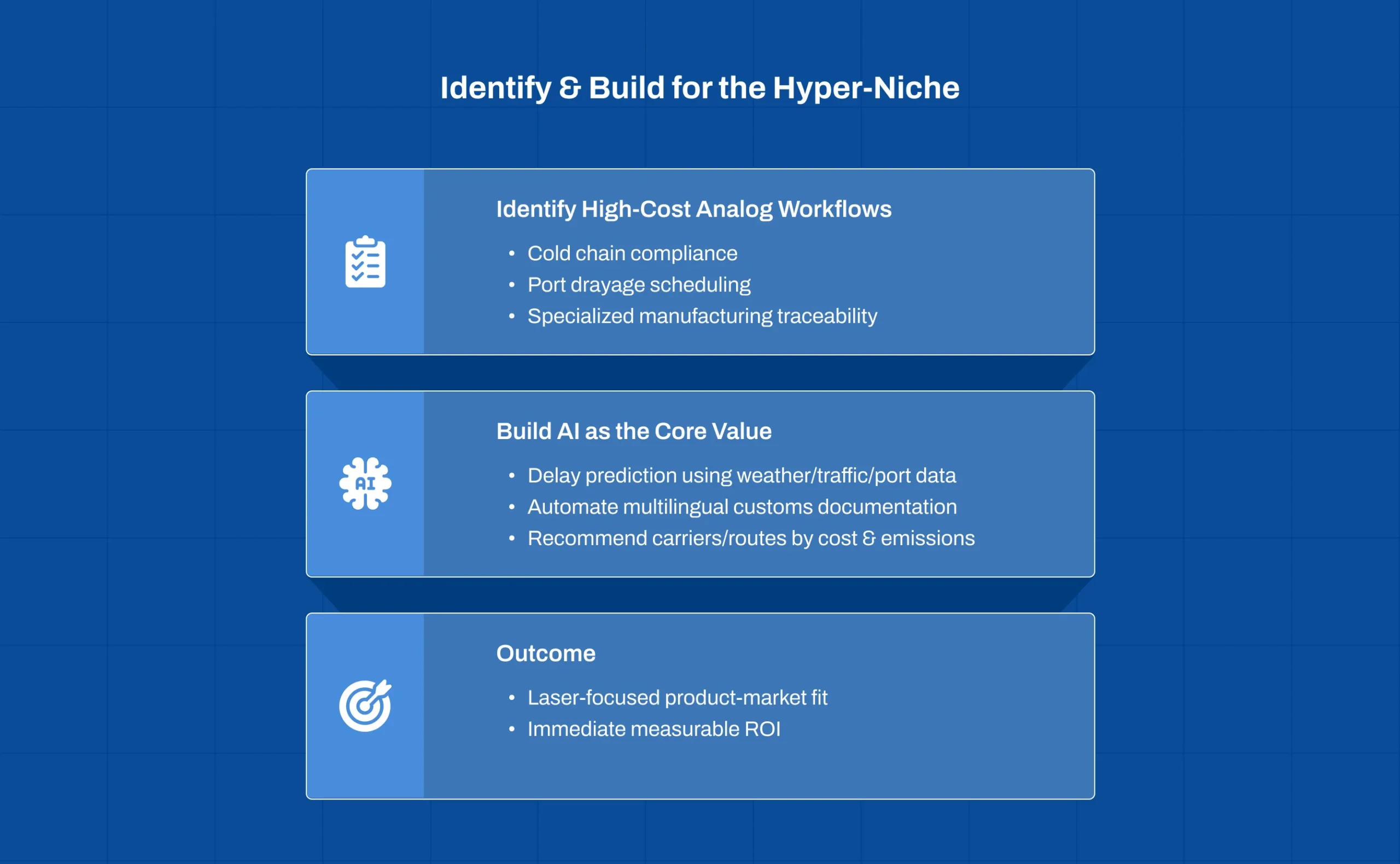
You cannot dominate all of Logistics & Supply Chain at once. You must choose a hyper-niche where existing solutions fail spectacularly.
Identify the High-Cost, Analog Process
Successful vSaaS starts by targeting workflows that are still dominated by spreadsheets, phone calls, or faxes-processes where friction equals millions in lost revenue.
Examples of Hyper-Niches:
- Cold Chain Logistics: Compliance automation and temperature-deviation prediction.
- Port Drayage: Real-time visibility and scheduling optimisation between ports and rail.
- Specialised Manufacturing: Compliance tracking for parts used in the aerospace or automotive supply chain.
Focus on Embedded AI and Automation
Your core value must be an AI-Powered outcome that a human cannot replicate efficiently. This requires deep integration of AI & Machine Learning from the ground up.
- Prediction: Use historical delivery data and real-time variables (weather, traffic, port congestion) to predict delivery delays with high accuracy.
- Automation: Automatically generate complex, multi-lingual customs documentation based on ingested bill-of-lading data, reducing human data entry errors.
- Recommendation: Recommend the optimal carrier, route, or warehouse based on cost, speed, and carbon emissions (a growing priority for large enterprises).
Phase 2: Architectural Best Practices for Niche Domination
Phase 2: The Architectural Playbook for Niche Domination APIs, mobility, and data – the logistics success triangle.
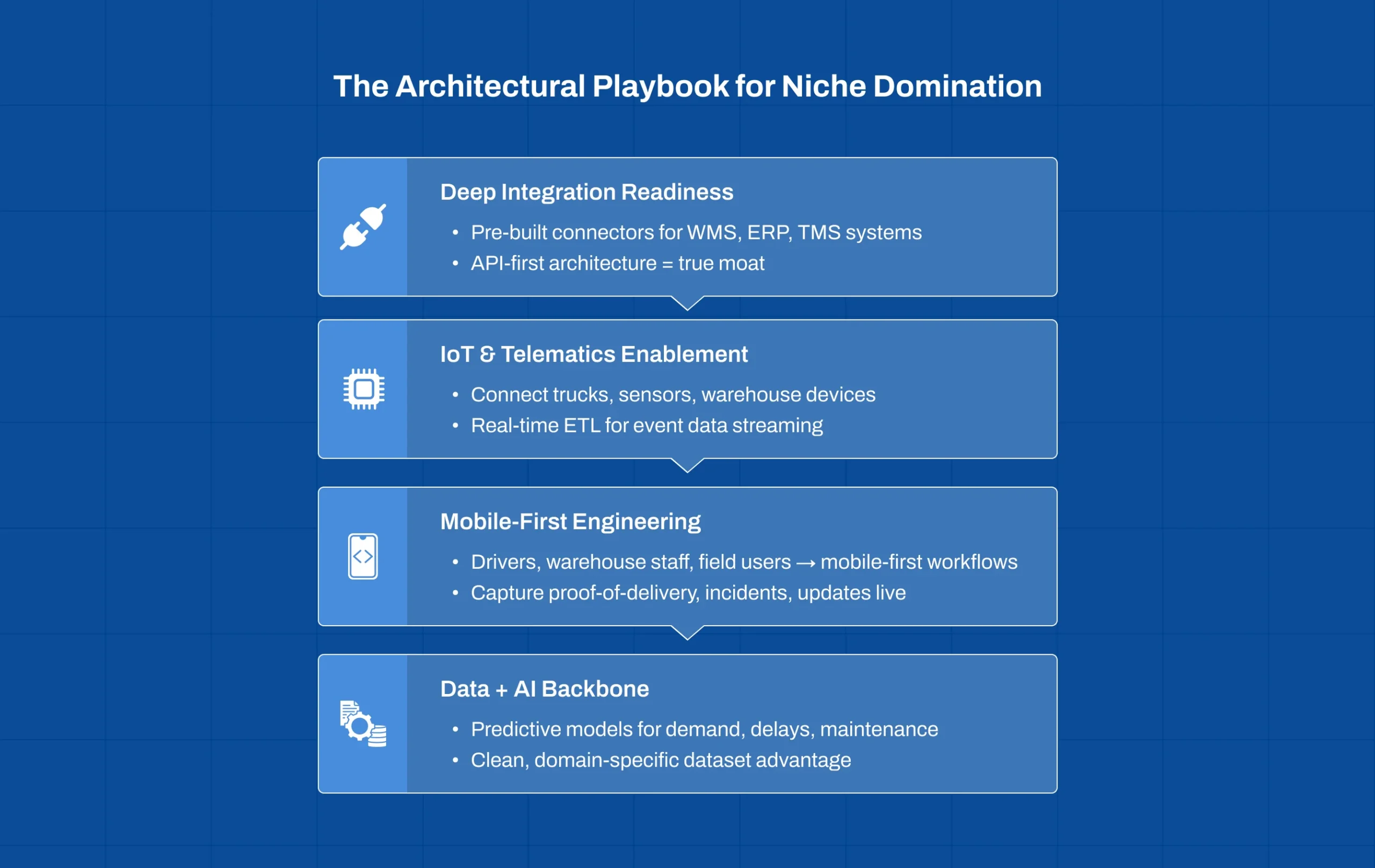
Building a dominant vSaaS platform requires architectural discipline. Your Custom Software solution must be ready for deep data integration.
Integration Readiness (APIs are the Moat)
Unlike horizontal tools that offer generic integrations, a logistics vSaaS platform must have pre-built, seamless APIs for other vertical systems in the ecosystem.
- ERP/WMS Integration: Your system must effortlessly push and pull data from common Warehouse Management Systems (WMS) and Enterprise Resource Planning (ERP) tools used in your niche (e.g., SAP, Oracle Netsuite).
- IoT & Telematics: Integrate directly with tracking devices on trucks, ships, or in warehouses. This requires a robust Data Engineering & ETL pipeline that can handle massive streams of Data & Analytics in real-time.
Mobile-First Workflow Engineering
The users of your logistics vSaaS are rarely at a desk. They are on the loading dock, in the truck cab, or at the client site.
- Mobile App Development: The core value proposition-like scheduling or proof-of-delivery capture-must be designed for mobile first. Use iOS Application Development and Android Application Development for native, robust performance.
- Intuitive UI/UX: The interface must be dead simple, reducing the number of clicks needed for critical tasks like confirming a pickup. Poor UI/UX Design in a fast-paced environment leads to user resistance and massive churn.
Phase 3: Monetisation and Expansion Strategies
Phase 3: Monetisation Engine for Vertical SaaS Price where value is created – not where seats are added.
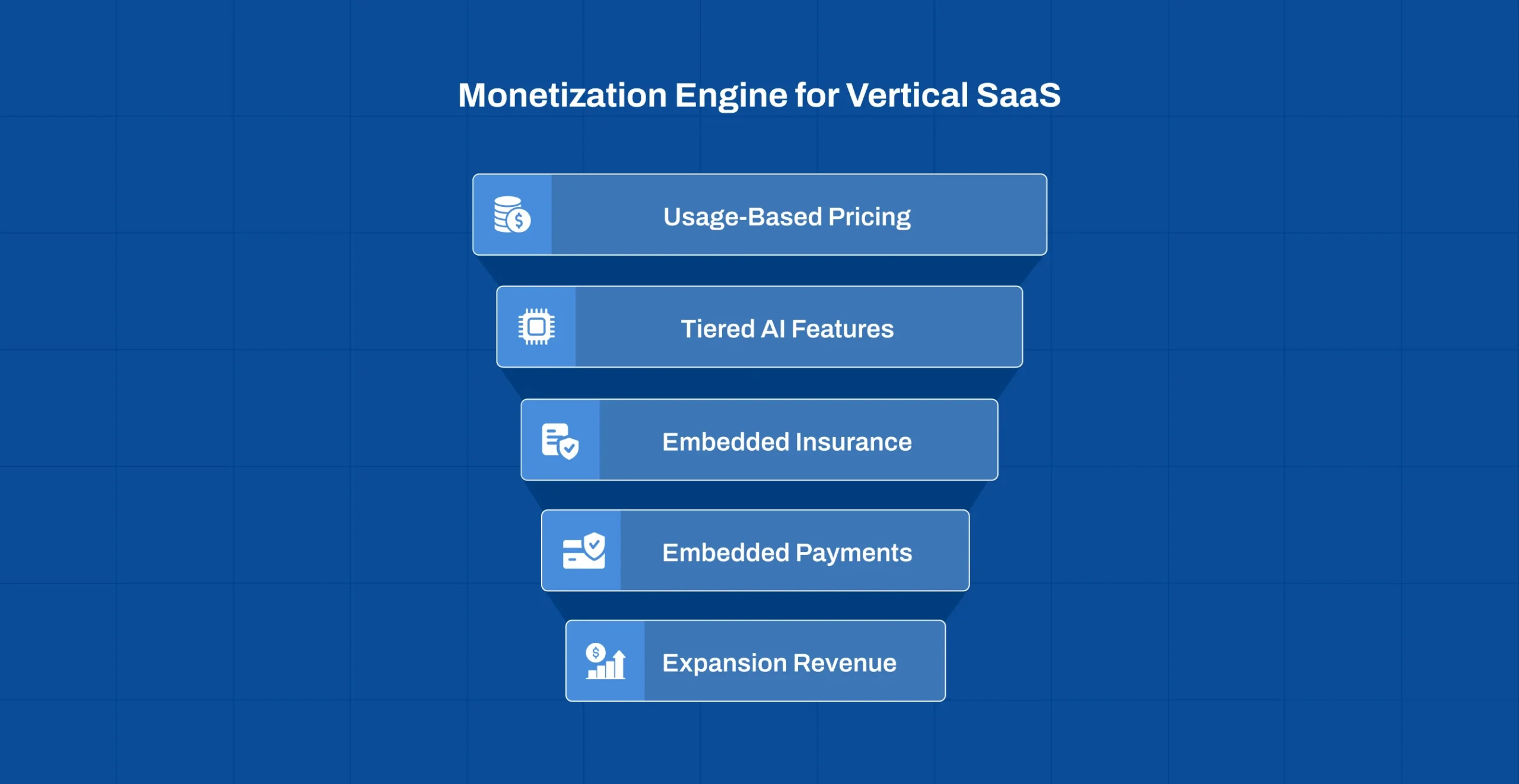
1. Usage-Based Pricing
Per route optimised
Per customs declaration
Per freight transaction
2. Tiered AI Features
Basic → Advanced → Enterprise predictive tools
3. Embed Services for Revenue Expansion
Insurance
Payments
Compliance services
4. Result
High expansion revenue
High switching cost
Deep customer stickiness
The nature of Vertical SaaS allows for highly defensible, value-based pricing. Move beyond simple seat licenses.
Usage-Based Pricing Aligned with Value
Pricing should be directly tied to the key business metric your platform improves. This creates a clear ROI for your customers and ensures expansion as their business grows.
- Cost-per-Transaction: Charge per successful freight booking, customs declaration, or automated warehouse transaction.
- Cost-per-Optimised-Route: Charge based on the number of routes optimised by your AI, directly correlating price with savings.
- Tiered Feature Pricing: Reserve complex, high-ROI features like Predictive AI & Deep Learning for your top enterprise tiers.
Land and Expand through Embedded Services
Once you own the core workflow, you can expand revenue through embedded FinTech and services:
- Embedded Insurance: Integrate and offer per-shipment insurance, generating a fee on the insurance premium.
- Embedded Payments: Facilitate carrier payments or customs duty payments directly through the platform, capturing a small transaction fee.
This strategic expansion solidifies your platform as the single source of truth for all operational and financial flows within the niche, creating an extremely high switching cost for the customer.
The Next Chapter: Dominate Your Vertical
The opportunity in Logistics & Supply Chain vSaaS is not in replicating a horizontal tool; it’s in obsessively solving a specialised problem better than anyone else. This requires combining deep industry knowledge with next-generation Software Product development expertise, AI & Machine Learning integration, and a focus on Digital Transformation in the field.
By building a hyper-niche platform with built-in compliance, intelligent automation, and monetisation aligned with true value, you won’t just compete-you will dominate your corner of the multi-trillion-dollar global supply chain.