Manufacturing Software Development for Connected Operations
Production systems built for the line, not the demo.
DigiWagon builds production, maintenance, quality and plant-data software for discrete and process manufacturers, OEMs and natural-resources operators in the United States, the United Kingdom and India. Every system is engineered for the shift that runs it, not the boardroom that approves it.
Pick the situation closest to yours. We’ll show what we would build for it, where it sits in the manufacturing services below, and which standard shapes it.
Pick what your line has to prove
What it has to prove
Machines That Fail Before Anyone Sees It Coming
Downtime arrives as a surprise, maintenance runs on a calendar rather than on condition, and the signals that would have warned you are sitting in a controller nobody reads.
What we would build
What you could end up with
Condition and failure models with documented features and thresholds
Service schedules driven by asset health, not the calendar
Legacy and connected fleets in one view
What it works with
PLCs, sensors and telematics already on the equipment
SCADA, MES, ERP, spreadsheets and a historian each hold part of the picture, OEE is calculated three different ways, and the weekly report is assembled by hand from all of them.
What we would build
What you could end up with
One production data layer with lineage back to the machine
OEE, MTTR and MTBF calculated once and trusted
Predictions and alerts delivered where the shift works
Output is recorded on the line, attendance in another system and wages in a spreadsheet, so month-end is a reconciliation exercise and disputes are settled by whoever kept the better notes.
What we would build
What you could end up with
Production, attendance and wage rules on one record
Wage calculation the worker and the auditor can both follow
Shop-floor apps built for gloves, glare and shift changes
Specifications, test reports, regulatory filings and decades of R&D notes exist, but finding the right one takes a day, and the person who knew where it was has retired.
What we would build
What you could end up with
A searchable, source-backed knowledge layer over your documents
Answers with the citation attached, not a summary
Access that respects who may see which document
What it works with
Document management, quality and regulatory systems
Your access-control model and retention rules
The R&D and compliance teams who ask the questions
Manufacturing software solutions for the plant, the fleet and the supply chain, and the industrial software development behind connected operations, from a manufacturing software development company that has shipped them: the systems, models and integrations below, each linked to the DigiWagon practice that builds it.
01
Manufacturing Digital Strategy & Discovery
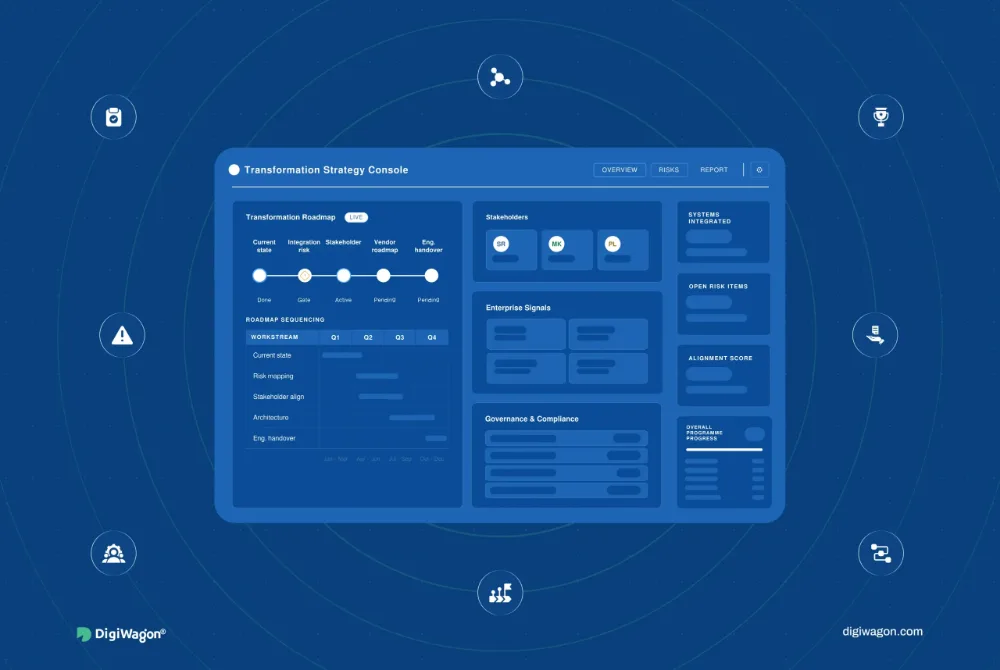
Most plant software fails on the floor, not in the boardroom: the system assumed a network the plant does not have, a workflow the shift does not follow, or a data model the ERP disagrees with. Discovery starts on the line — which machines can be read, which cannot, where the data already exists but is never joined, what the operator actually does at handover — and settles the sequence: what to connect first, what to modernize, what to leave alone. The output is a roadmap costed against downtime risk, not a transformation deck, and a first release the shift will use.
Shop-floor discovery and data auditConnect-modernize-retire sequencingOT and IT boundary mappingMVP definition with adoption planned
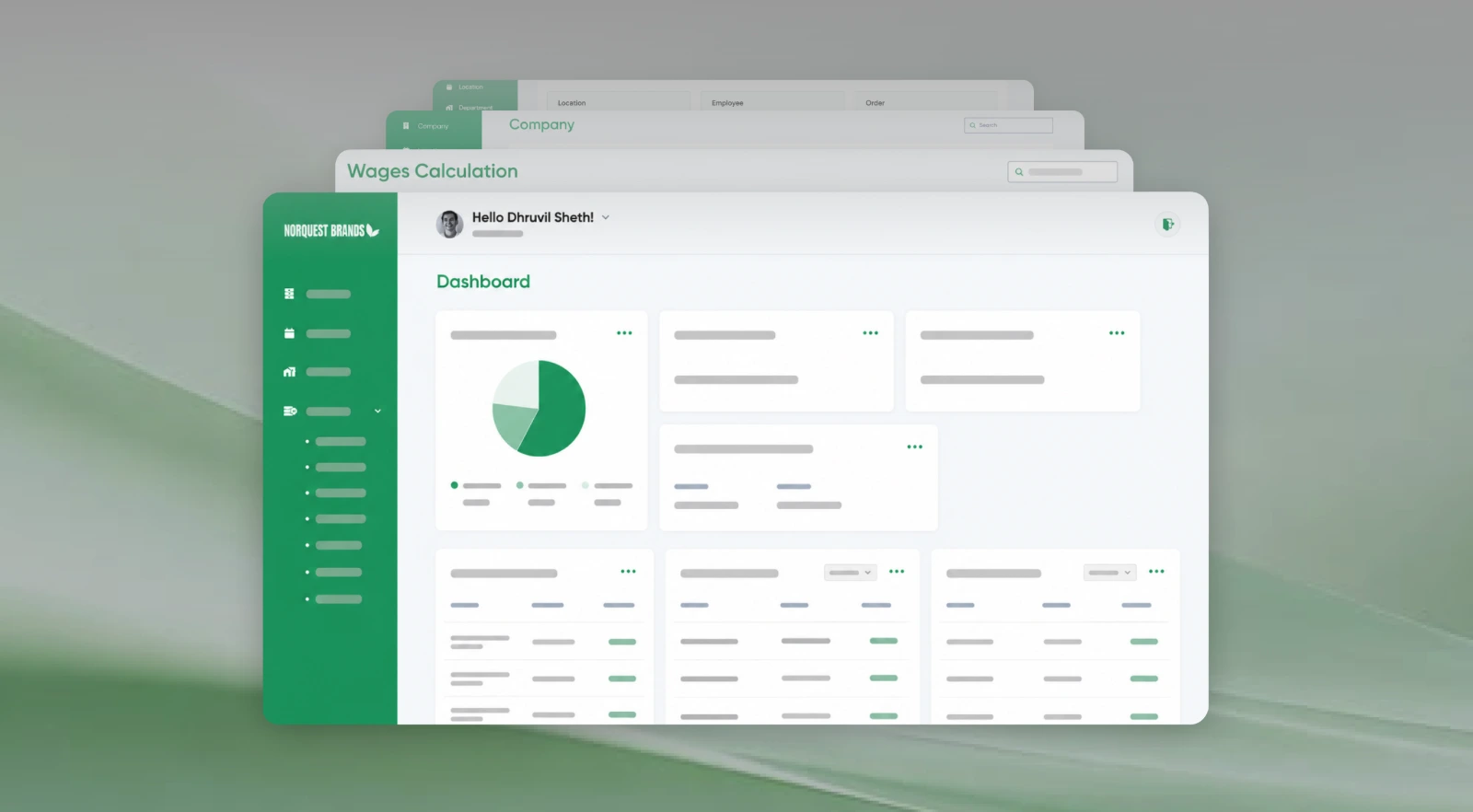
Production planning and scheduling, work-order tracking, digital Andon, shift handover and quality gates built in the plant’s own language rather than a vendor’s module list. For a multi-location manufacturer we built a production and workforce platform that put output, attendance and wage rules on one record, making wage calculation 55% faster and cutting manual payroll effort by half. Systems are designed for the conditions of the floor — gloves, glare, intermittent connectivity, three shifts — and integrated with the MES, ERP and SCADA layers already there, following ISA-95 so the boundaries between control, operations and business systems stay clear.
Production planning and schedulingWork-order and job trackingDigital Andon and shift handoverQuality gates and non-conformance
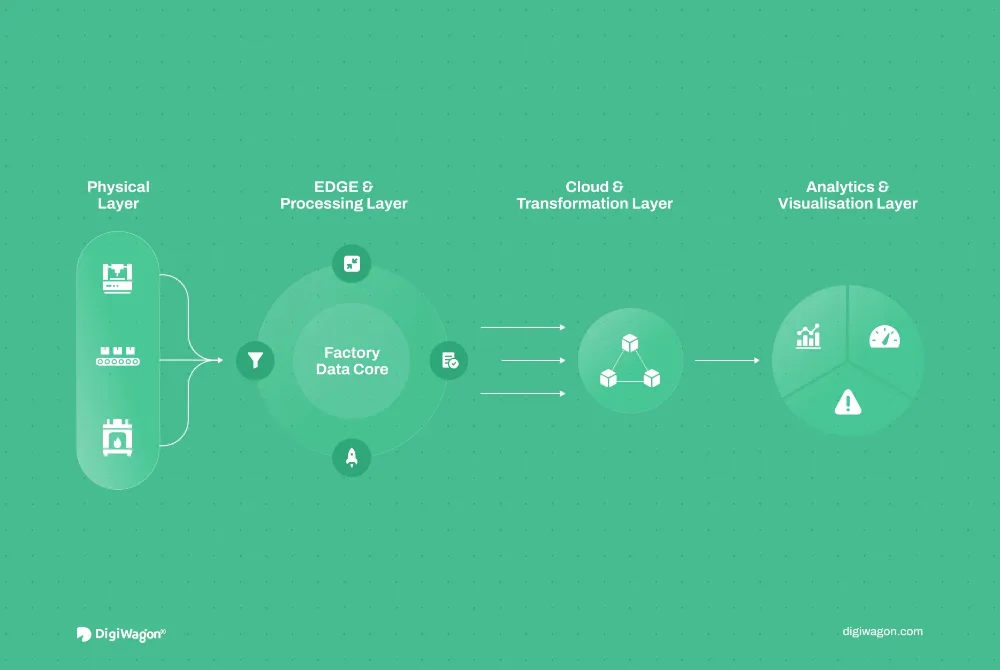
Machines speak OPC UA, Modbus, proprietary protocols or nothing at all, and the plant network was never designed to carry their data to the cloud. We build the connectivity layer that gets it there safely: edge gateways and OPC UA or MQTT with Sparkplug B for the machines that can talk, retrofit sensors for the ones that cannot, buffering and store-and-forward for the network that drops, and an IT/OT boundary designed under ISA/IEC 62443 so connecting a controller does not expose it. The predictive-maintenance platform we built for a tractor OEM connected legacy and modern fleets this way.
OPC UA, MQTT and Sparkplug BEdge gateways and retrofit sensorsStore-and-forward for plant networksIT/OT segmentation under IEC 62443
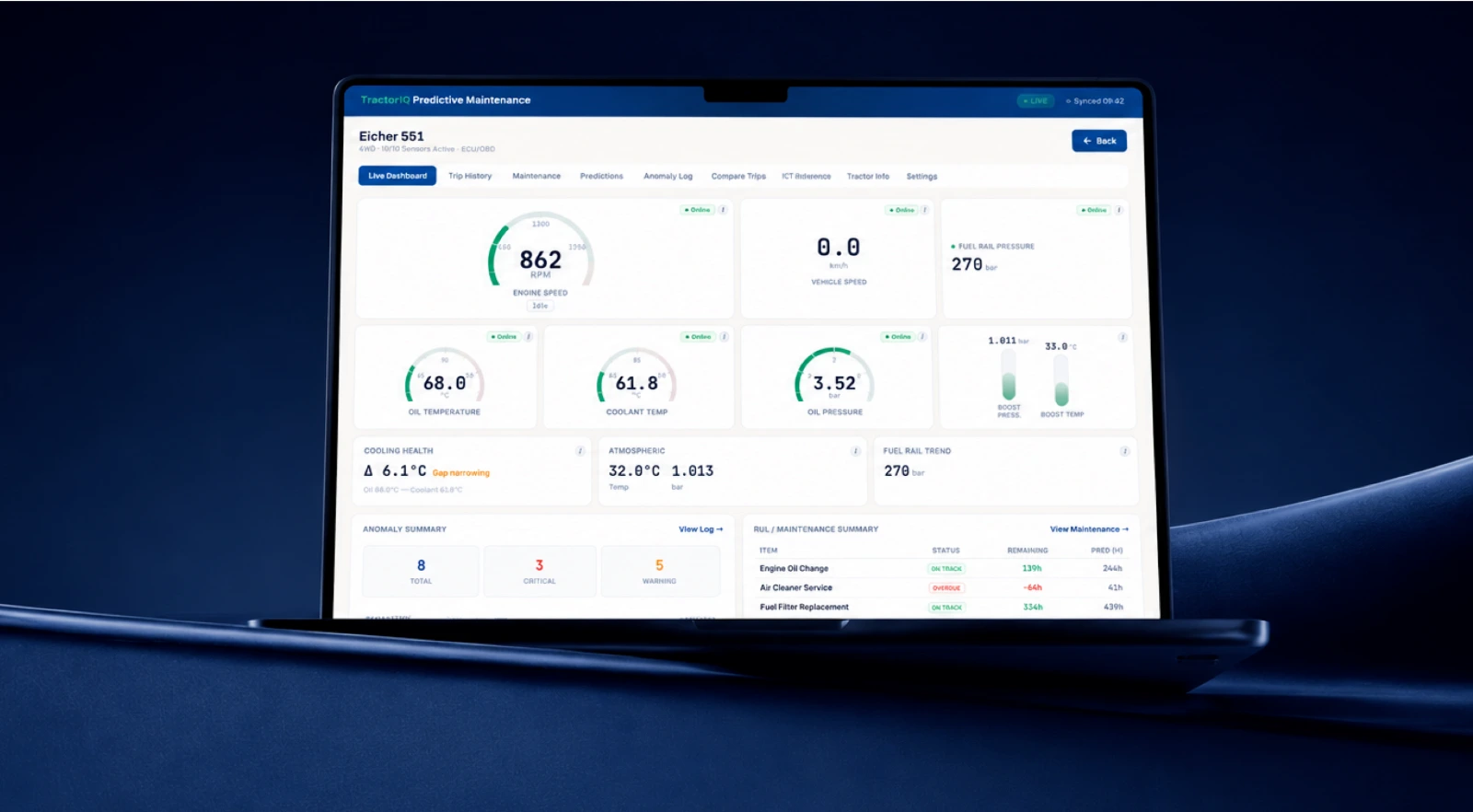
Condition-based and predictive maintenance models that forecast asset health from sensor, telematics and service data, and turn it into schedules the service network can act on. For a leading tractor OEM we built an AI-powered predictive maintenance platform that forecasts machine health, optimizes service schedules and connects legacy and modern fleets into one system; component issues were detected 45% faster and unplanned-downtime risk fell 35%. Every model ships with documented features, thresholds and review cadence, an explanation the maintenance planner can check, and drift monitoring, because a false alarm on the floor costs trust faster than a missed one.
Condition and failure predictionService scheduling optimizationFleet and asset health dashboardsModel documentation and monitoring
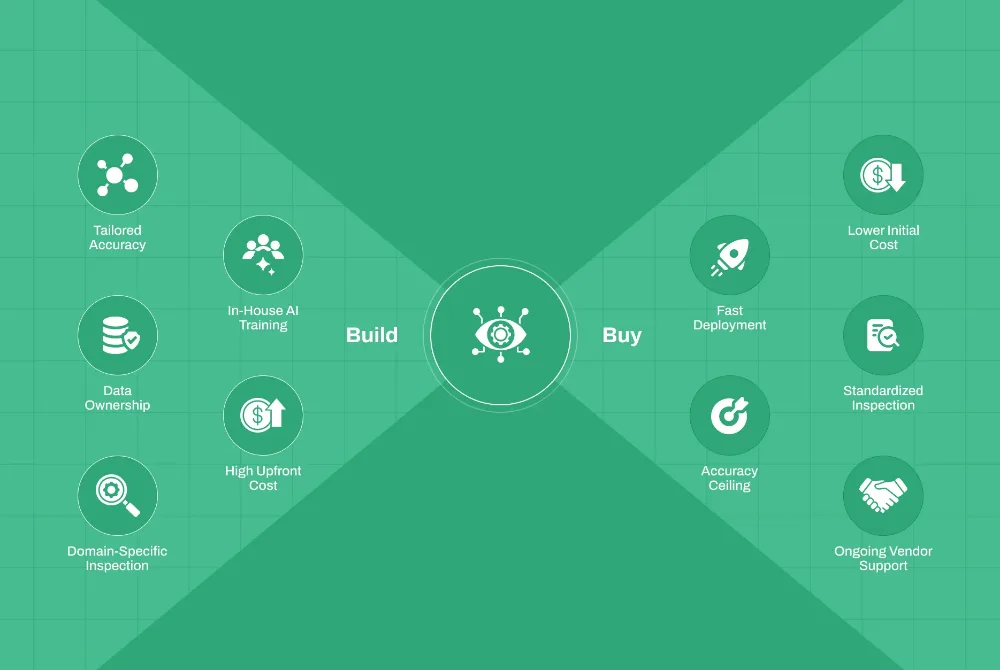
Surface defects, assembly errors, label and packaging faults and dimensional drift caught at line speed by cameras rather than sampled by hand at the end of the shift. We design the inspection pipeline from the optics and lighting to the model and the reject signal, decide with you what to build and what to buy, and integrate the result with the quality system so a defect becomes a non-conformance record with the image attached. Models are validated against the plant’s own defect library and retrained under change control.
Defect and assembly inspectionCamera, optics and edge deploymentBuild-versus-buy assessmentIntegration with quality systems
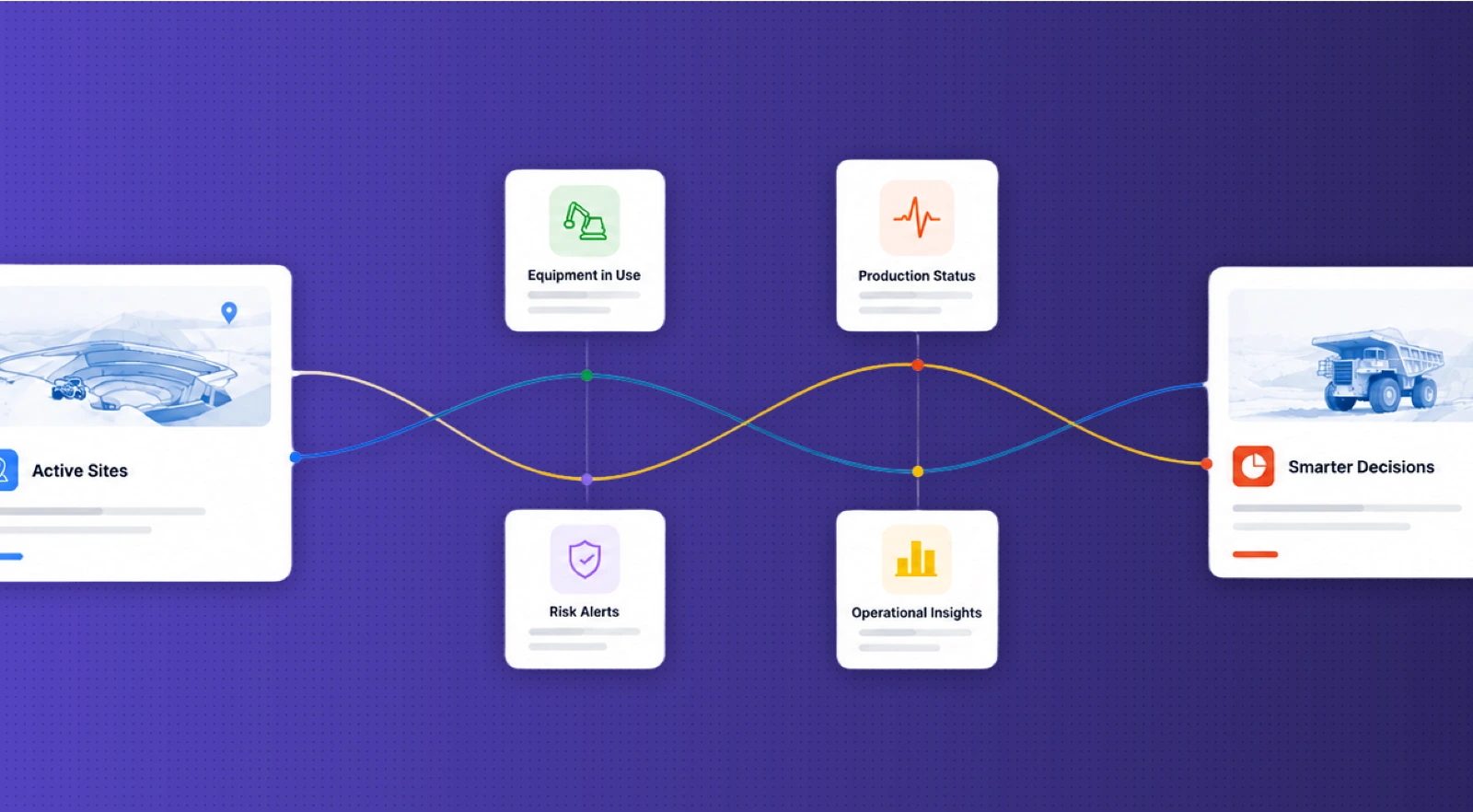
OEE, MTTR, MTBF, yield and energy calculated once from a governed production data layer, with lineage back to the machine and the batch, instead of three spreadsheets that disagree. For a global natural-resources operator we built a manufacturing intelligence platform that turned scattered plant data into automated predictions and production control decisions, making insight discovery 45% faster and cutting manual analysis effort by 35%. Pipelines ingest historians, MES, LIMS and ERP; dashboards are designed per role; and forecasting engines for demand, maintenance and energy run on the same trusted data.
Production data pipelines and historiansOEE, MTTR and MTBF analyticsForecasting for demand, maintenance and energyMulti-plant reporting with lineage
Attendance, skills, shift allocation, piece-rate and incentive wages, and the applications operators and supervisors touch every hour, built for the floor rather than the office. The production-to-payroll platform we built for a multi-location manufacturer joined real-time production visibility, workforce tracking and automated wage calculation on one record, so wage calculation became 55% faster and manual payroll effort fell by half, with a calculation the worker and the auditor can both follow. Interfaces are designed for gloves, glare and shift changes, and statutory and contract rules live as configuration under version control.
Attendance, skills and shift allocationPiece-rate and incentive wage enginesSupervisor and operator applicationsStatutory records and audit trails
Materials tracked by barcode and RFID from receipt to consumption, batch and lot traceability that survives a recall, stock-level alerts before the line stops, and supplier coordination that does not depend on a phone call. We build the data pipelines and applications that make inventory a fact rather than an estimate: event-driven movements from the warehouse and the line, reconciliation against the ERP, and traceability queries that answer in seconds when a customer or a regulator asks which lots went where.
Barcode and RFID material trackingBatch and lot traceabilityStock alerts and replenishment signalsSupplier and procurement workflows
Plenty of plant software runs on code written a decade ago, patched to keep going, on servers under a desk in the maintenance office. We do not tear it out unless the line requires it. An API layer first, so new applications and analytics ship against the old system; then modules re-platformed one at a time — reporting, scheduling, quality — each run in parallel against production and reconciled before the old path is retired, with cutovers planned around shutdowns and shift patterns. The plant sees continuity; the team gets software it can change between shifts instead of between shutdowns.
Plant system API enablementModule-by-module re-platformingParallel runs around shift patternsCutover planned to shutdown windows
Knowledge & Document Intelligence for R&D and Compliance
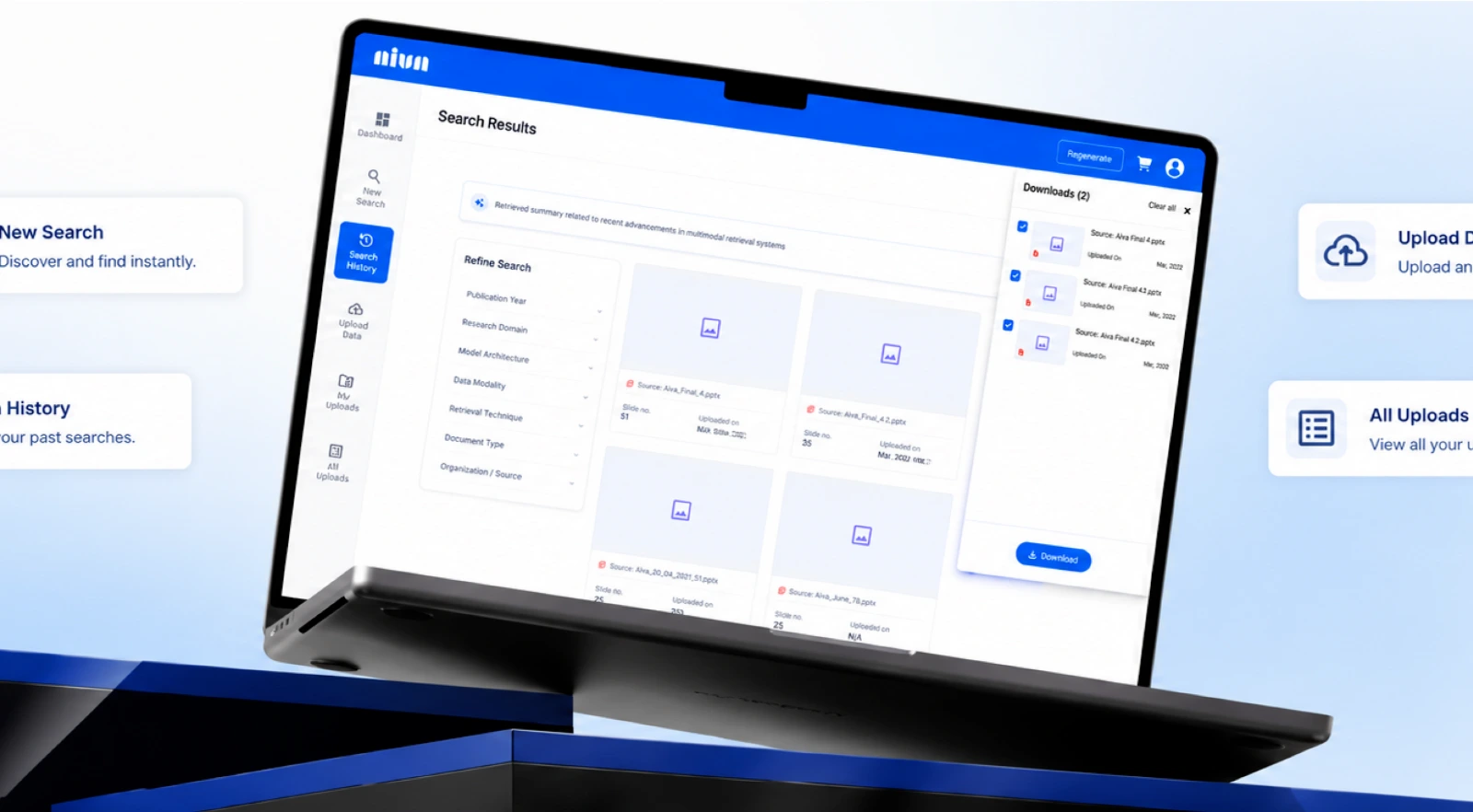
Specifications, test reports, regulatory filings, SOPs and decades of R&D notes hold the plant’s real knowledge, and finding the right document can take a day. For a global consumer-goods company we built a production-grade retrieval platform and internal AI data assistant that turned millions of scattered documents into a searchable, source-backed intelligence layer for R&D and compliance teams, making information retrieval 70% faster and cutting manual knowledge discovery by 60%. Answers come with the citation attached, access respects who may see which document, and the system is grounded in approved information.
Source-backed retrieval over document storesR&D and compliance knowledge assistantsAccess-aware searchGrounded answers with citations
The building blocks behind the platforms above, grouped the way a plant leadership team scopes them. Pick a group to see what we have built inside it.
01 / 05
Production & Operations Control
01Production planning and scheduling
02Real-time work-order tracking
03Digital Andon and shift handover
04Downtime tracking with root-cause insight
05Quality gates and non-conformance (NCR)
06SPC dashboards and defect analysis
02 / 05
Machine & Asset Intelligence
01IIoT machine monitoring
02Predictive and condition-based maintenance
03Service scheduling optimization
04Asset lifecycle and performance management
05Fleet health for OEMs
06Computer vision inspection at line speed
03 / 05
Plant Data & Analytics
01Production data pipelines and historians
02OEE, MTTR and MTBF analytics
03Forecasting for demand, maintenance and energy
04Multi-plant reporting with lineage
05Knowledge retrieval over documents
06Role-based operator and management dashboards
04 / 05
Workforce & Supply Chain
01Attendance, skills and shift allocation
02Piece-rate and incentive wage engines
03Barcode and RFID material tracking
04Batch and lot traceability
05Stock alerts and replenishment
06Supplier and procurement workflows
05 / 05
Connectivity, Security & Standards
01OPC UA, MQTT and Sparkplug B
02Edge gateways and store-and-forward
03MES, ERP and SCADA integration under ISA-95
04IT/OT segmentation under IEC 62443
05Audit-ready records for GMP and Part 11
06Cloud-hybrid infrastructure
Who we build for
Manufacturers We Build For
Five kinds of operation, each with its own rhythm, standards and failure modes. The data, maintenance and workforce patterns transfer between them; the constraints on the floor do not.
Discrete & Process Manufacturers
Units and cycles on one side, flow and volume on the other; either way, control is what matters. We connect the machines, join the data the plant already produces and build the production, quality and workforce systems the shift will actually use, integrated with MES, ERP and SCADA under ISA-95 boundaries.
OEMs & Industrial Equipment Makers
Everything after the build: where the machine is, what has been serviced, what is about to fail. For a tractor OEM we built predictive maintenance across legacy and connected fleets, detecting component issues 45% faster and cutting unplanned-downtime risk by 35%.
Natural Resources & Mining Operations
Plants where data lives in a dozen systems and decisions wait for a manual analysis. For a global natural-resources operator we built a manufacturing intelligence platform that automated predictions and production control decisions, making insight discovery 45% faster and cutting analysis effort by 35%.
FMCG & Consumer Goods
Products and demand that change fast, with R&D and compliance knowledge spread across millions of documents. For a global consumer-goods company we built the retrieval platform that made information 70% faster to find and cut manual knowledge discovery by 60%.
Multi-Plant & Contract Manufacturers
Several sites, one set of numbers to trust, and a workforce paid on what the line produced. For a multi-location manufacturer we joined production, attendance and wages on one platform, making wage calculation 55% faster and halving manual payroll effort.
Standards by design
Standards Are Architecture
Plant software is judged by the standards the plant already runs on: how control, operations and business systems are allowed to talk, how a controller may be exposed to a network, what a batch record must contain, and what an auditor samples. We treat each as a design constraint rather than a badge. Every standard below binds at least one of the services above, because that is where it is implemented.
01
ISA-95 / IEC 62264 — enterprise–control system integration
The levels and interfaces between control, operations and business systems; the reason our MES, ERP and SCADA integrations have clear boundaries and clear owners.
Production systemsConnectivityPlant data
02
ISA/IEC 62443 — industrial automation and control systems security
Zones, conduits and security levels for connecting OT to IT; connecting a controller for data never exposes it to the internet or the office network.
ConnectivityModernization
03
OPC UA (IEC 62541), MQTT and Eclipse Sparkplug B
The interoperability and messaging standards machine data travels in, so a new line or a new plant is configuration rather than a new integration.
The control mapping US manufacturers use for IT and the OT security guide for the plant; both are the reference for the security architecture of connected operations.
ConnectivityPlant dataModernization
05
ISO 9001:2015 and IATF 16949:2016
Quality management for the plant and for automotive supply chains; the quality gates, non-conformance records and traceability the software produces are what the auditor samples. DigiWagon itself is ISO 9001 certified.
Production systemsQuality inspectionSupply chain
06
FDA 21 CFR Part 11, cGMP (21 CFR Parts 210/211) and EU GMP Annex 11
Electronic records, electronic signatures and computerized-system validation for regulated process manufacturers in pharma, food and medical products.
Production systemsKnowledge platformsPlant data
07
ISO 14224:2016 — reliability and maintenance data
The taxonomy for equipment, failure and maintenance data that lets predictive models and CMMS records mean the same thing across plants and fleets.
Predictive maintenancePlant data
08
GDPR, UK GDPR and India’s DPDP Act 2023
Worker attendance, wage and skills data is personal data; consent, retention and access rights apply to the shop-floor applications that hold it.
Workforce applicationsPlant data
09
ISO/IEC 27001:2022 and SOC 2 Type II
Information security management and evidenced controls. DigiWagon holds ISO/IEC 27001 and ISO 9001 certification; the platform’s pipeline generates the SOC 2 evidence as it runs.
Every engagement
Certification is a claim we make only about ourselves. For everything else on this list, the system is built for the standard and the evidence is produced with the code.
Manufacturing in practice
Manufacturing in practice.
Predictive maintenance, plant intelligence, workforce and knowledge platforms. 4 of them are written up in full.
Manufacturing software development starts on the line, not in the requirements document: which machines can be read, what the shift actually does at handover, and what the plant cannot afford to have stop. Everything else is sequenced from there.
01
Discover on the Floor
Walk the line, read the controllers, find the data that already exists but is never joined, and map the OT/IT boundary before scope is fixed, so the plan is costed against downtime risk rather than against a demo.
Interfaces for gloves and glare, store-and-forward for the network that drops, ISA-95 boundaries between control and business systems, and records that satisfy the quality auditor are designed as features, not retrofitted.
Focus
Operator UXResilienceStandardsRecords
03
Build in Parallel With Production
New systems run alongside the ones they replace, reconciled shift by shift, with cutovers planned to shutdown windows, connectivity segmented under IEC 62443 and releases signed and staged so a bad deploy never reaches the line.
Model drift, sensor health, integration failures and adoption on the floor are watched in production, and the maintenance, quality and wage records the auditor samples are produced by the system as it runs.
Focus
DriftSensor healthAdoptionEvidence
Discover01 Discover on the FloorDesign02 Design for the ShiftBuild03 Build in Parallel With ProductionRun04 Run With the Plant
Insights
Notes From the Plant Floor.
Writing from the manufacturing work: how real-time plant data pipelines are built, when to build or buy vision inspection, and how a digital roadmap survives contact with the line.
AI & Machine Learning
Computer Vision for Quality Inspection: Build vs. Buy for Manufacturing CTOs
· Akash Thakor · 11 min read
Software Engineering
Manufacturing Digital Transformation Roadmap: From Strategy Consulting to Rollout
· Kartik Gajjar · 6 min read
Data & Analytics
Proven Real-Time Data Pipeline for Manufacturing: From Sensor Ingestion to Operational Dashboards
Frequently Asked Questions About Manufacturing Software Development
Direct answers on connecting legacy machines, how predictive maintenance is built and trusted, what OPC UA and ISA-95 change about a plant integration, how downtime risk is managed during a modernization, and what a manufacturing software development company should be able to show you.
01Can you connect legacy machines that were never designed to share data?
Yes, and it is most of the work in a connected-operations program. Machines with OPC UA or Modbus are read through an edge gateway; older equipment gets retrofit sensors; and everything buffers with store-and-forward so a plant network that drops does not lose data. The connection is segmented under ISA/IEC 62443, so reading a controller never exposes it to the office network or the internet.
02How do you build predictive maintenance the maintenance team will actually trust?
By treating a false alarm as a failure. Models are trained on the plant’s own sensor, telematics and service history, ship with documented features, thresholds and review cadence, and attach an explanation the planner can check before a work order is raised. Drift is monitored in production. For a tractor OEM this detected component issues 45% faster and cut unplanned-downtime risk by 35% across legacy and connected fleets.
03What do ISA-95 and OPC UA change about integrating with our MES, ERP and SCADA?
They decide where the boundaries are and what crosses them. ISA-95 separates control, operations and business systems into levels with defined interfaces, so a scheduling change in the ERP and a setpoint change on the line never share a code path. OPC UA and MQTT with Sparkplug B give machine data one vocabulary, so adding a line or a plant is configuration rather than a new integration project each time.
04How do you modernize a plant system without stopping production?
The new system runs in parallel with the old one and is reconciled shift by shift before anything is retired. An API layer goes in front of the legacy system first, so new applications and analytics ship against it; modules are then re-platformed one at a time, and each cutover is planned to a shutdown window with a rollback position. The line sees continuity throughout.
05What should a manufacturing software development company be able to show us before we start?
Shipped plant-side work, described precisely: which machines were connected, which data was joined, what the operators used and what changed. Ours includes predictive maintenance for a tractor OEM, a production-to-payroll platform for a multi-location manufacturer, a manufacturing intelligence platform for a natural-resources operator and a knowledge assistant for a consumer-goods company’s R&D teams, each written up in full on this site with its figures and its trade-offs.
Build for the Line, Not the Demo
Tell us what the plant cannot afford to have stop and what the shift needs to see. We will walk the line, map the machines and the data, and show you comparable plant-side work before anything is scoped.
One click opens the assistant you already use with a question that points it at this page, so the answer comes from what we publish, not a guess.
The question it opens withRead https://digiwagon.com/manufacturing-software-development. Outline how DigiWagon approaches Manufacturing engineering and compliance, then tell me what a Manufacturing CTO should verify before choosing them or any similar partner. Stick to what the page says and mark anything you are not sure about.