Kubernetes Consulting Services for Platforms at Scale
Clusters, Kept Boring.
Kubernetes is the operating system of the modern platform — and the fastest way to build a platform team’s worth of complexity if it is adopted for the wrong reasons. We run it where it earns its keep: many services, many teams, real availability targets — and we say plainly when a managed container service would serve you better.
Our Kubernetes consulting services cover managed cluster platforms on EKS, AKS and GKE, GitOps delivery, multi-tenancy and security, observability and autoscaling, and the operations that keep a cluster the boring part of the stack.
From a managed cluster designed for the teams that will share it to GitOps pipelines that make a deploy a pull request, our Kubernetes consulting services build platforms that stay boring.
01
Cluster Platform Design
EKS, AKS or GKE clusters designed as a platform: node pools and autoscaling, networking and ingress, identity integration, namespaces and policy for the teams that will share it, and infrastructure as code so a second cluster is a variable change — with the readiness question asked honestly first.
EKS, AKS and GKE platformsNode pools and cluster autoscalingIngress, networking and identityEverything in Terraform
Argo CD or Flux reconciling the cluster to a Git repository, Helm or Kustomize for application manifests, progressive delivery with canaries and automated rollback — a deploy becomes a reviewed pull request and the cluster’s state is always something you can read.
Argo CD or FluxHelm and KustomizeCanary and progressive deliveryAutomated rollback
Namespaces, quotas, network policies and admission control that let teams share a cluster safely; workload identity, secrets from a vault, signed images enforced at admission, runtime detection and CIS benchmarks — the security posture mapped to ISO/IEC 27001 controls.
Namespaces, quotas and network policyAdmission control and signed imagesWorkload identity and vault secretsCIS benchmarks and runtime detection
Prometheus, Grafana and OpenTelemetry for metrics, logs and traces with dashboards teams actually read; horizontal, vertical and cluster autoscaling tuned from real load; service-level objectives with alerts that page on user impact rather than on CPU.
Prometheus, Grafana and OpenTelemetrySLOs and user-impact alertingHorizontal and vertical autoscalingCapacity and cost dashboards
Kubernetes releases three times a year and managed providers enforce support windows; we run the upgrade cadence, node patching, backup and restore of cluster state, incident response with runbooks and a monthly review — so the platform stays current without the platform team living in it.
Version upgrade cadenceNode patching and rotationCluster state backup and restoreRunbooks and incident response
Why hire us for Kubernetes, in five lines you can hold us to.
One Platform, Many Teams
Namespaces, quotas and policy let product teams ship independently on shared infrastructure without stepping on each other — the actual reason to run Kubernetes.
Deploys Are Pull Requests
GitOps makes the cluster’s state readable, reviewable and reversible; nobody runs a command in production from a laptop.
Self-Healing, Genuinely
Health checks, replicas and rescheduling turn a failed node into a non-event; availability comes from the platform, not from someone awake.
Portable Across Clouds
The same manifests run on EKS, AKS, GKE or on-premises, which keeps a cloud decision reversible and a regulator’s residency question answerable.
Honest About Fit
If a managed container service would serve you better, we say so before the cluster exists — Kubernetes is a platform investment, not a default.
Tech expertise
Our Tech Vault At Your Command
Kubernetes is the orchestration layer in this stack when the platform earns it; here is what we ship around it. Every name with a page of its own is a link.
What changes when the team actually knows the stack, in six rows.
Feature
DigiWagon
Other agencies
Architecture
Landing zones, network boundaries and account structure designed before the first workload, not discovered after the first incident.
A console click-through that nobody can reproduce.
Security & compliance
Least-privilege identity, encryption by default, audit trails and evidence mapped to ISO/IEC 27001 controls from day one.
Security as a checklist, after the audit finding.
Cost
Right-sized from the start: tagging, budgets, alerts and the reserved-vs-on-demand call made with numbers.
The bill is a surprise every month.
Estimation
Real timelines and budget, with the assumptions written down — no plot twist.
Estimate comes with ‘oops, missed that!’
Reliability
Infrastructure as code, tested rollbacks, backups that were actually restored, runbooks your team can follow at 3 a.m.
Snowflake servers and a prayer.
Documentation
Diagrams, decision records and runbooks that survive the engineer who wrote them.
The knowledge left with the contractor.
Industries
Kubernetes, by Industry
Three of the nine industries we build for, with the Kubernetes fit behind each, linked to the industry page.
01
SaaS & Technology
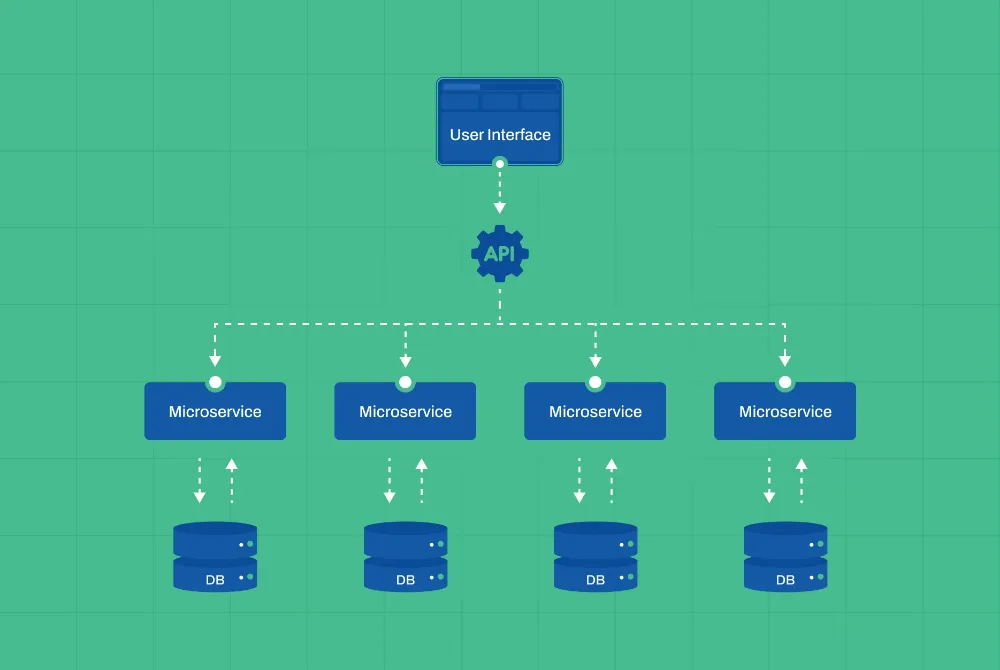
Multi-tenant products with many services and several squads sharing one platform — namespaces per team, GitOps delivery, autoscaling by tenant load and cost visible per service.
Screening, monitoring and transaction platforms with strict availability and audit needs — network policy, signed images at admission, workload identity and an evidence trail for every deploy.
Event-driven platforms ingesting telemetry from fleets and warehouses, scaling with the day’s volume and running the same manifests in the cloud and on regional on-premises clusters.
Writing from the platform work: from DevOps to platform engineering, best practices for SaaS microservices architecture, and multi-tenancy in RegTech and FinTech platforms.
Software Engineering
Beyond Multi -Tenancy: Best Practices for SaaS Microservices Architecture in RegTech & FinTech
· Akash Thakor · 7 min read
Cloud & Platform Engineering
From DevOps to Platform Engineering: The 2026 Blueprint for Enterprise Software Scalability
Direct answers on whether you need Kubernetes, managed versus self-hosted, GitOps, security, cost and what our Kubernetes consulting services include after the platform is live.
01Do we actually need Kubernetes?
Only if you have the problems it solves: many services, several teams sharing infrastructure, real availability targets or a portability requirement. A single product with a handful of services is usually better on a managed container service such as ECS, Cloud Run or Container Apps. We assess that honestly before a cluster exists, and often recommend against.
02Managed Kubernetes or self-hosted?
Managed — EKS, AKS or GKE — unless a regulation or an air-gapped environment forbids it. The provider runs the control plane, patches and upgrades; you keep the flexibility of Kubernetes without the part that hurts. Self-hosted clusters on-premises are viable for sovereign or edge cases and cost a platform team to run.
03What is GitOps and why do you insist on it?
GitOps means the cluster continuously reconciles itself to a Git repository: a deploy is a reviewed pull request, the state of production is readable, and rollback is a revert. It removes laptop-to-production commands, gives an audit trail for free and makes disaster recovery a matter of pointing a new cluster at the repository.
04How do you secure a Kubernetes platform?
Least-privilege access with workload identity instead of long-lived keys, secrets from a vault, network policies between namespaces, admission control that rejects unsigned or vulnerable images, CIS benchmark hardening, runtime detection and centralised audit logs — each control mapped to ISO/IEC 27001 and your regime so the evidence exists before the audit.
05How do you keep Kubernetes costs under control?
Right-sized requests and limits from real usage, cluster autoscaling with spot or preemptible nodes for tolerant workloads, namespace quotas, cost allocation per team and service, and a monthly review. An untuned cluster wastes half its capacity; a tuned one is often cheaper than the virtual machines it replaced.
06What does managed operation look like after go-live?
The three-a-year upgrade cadence handled and rehearsed, node patching and rotation, cluster-state backups tested by restore, observability and on-call with runbooks, security posture reviews and a monthly reliability and cost report. The Terraform, manifests and runbooks are yours; we run the platform for you, with you, or hand it over.
Run the Platform Without Living in It.
Tell us how many services and teams the platform has to carry, and we will show you comparable platform work before anything is scoped.
One click opens the assistant you already use with a question that points it at this page, so the answer comes from what we publish, not a guess.
The question it opens withRead https://digiwagon.com/kubernetes and explain when DigiWagon recommends Kubernetes, what it would ask about my product before scoping, and which of its case studies are relevant. Stick to what the page says and mark anything you are not sure about.