.NET Development Services for Enterprise Applications
C# for the Long Game.
Modern .NET is cross-platform, fast and open source, and C# is one of the most productive languages for the enterprise application that has to integrate with everything Microsoft already runs. We build on the current .NET — ASP.NET Core, Entity Framework Core, minimal APIs, Blazor where it fits — for teams whose estate is Azure, Active Directory and SQL Server.
Our .NET development services cover new applications, the modernisation of .NET Framework systems that still carry the business, and the integrations that connect them to the rest of the stack.
Flawless, Functional, Freakin’ Development Services
From a greenfield ASP.NET Core API to a .NET Framework 4 application brought onto the current runtime, our .NET development services cover the Microsoft side of the enterprise.
01
ASP.NET Core Applications
Web applications and APIs on the current .NET: minimal APIs or controllers, Entity Framework Core with migrations under review, identity via Entra ID, OpenAPI contracts, health checks and OpenTelemetry — clean architecture where the domain does not depend on the framework.
Minimal APIs and OpenAPI contractsEntity Framework Core and migrationsEntra ID and identity integrationOpenTelemetry from the first commit
Web Forms, WCF and .NET Framework 4 applications moved to the current .NET in stages — the upgrade assistant where it helps, characterisation tests where it does not, a strangler approach for the parts that need a redesign — so the business keeps running on the old system until the new one is proven.
Staged Framework-to-.NET migrationWCF and Web Forms replacementCharacterisation tests around the seamsContainerisation and pipelines
Services designed for Azure — App Service and Container Apps, Functions for event-driven work, Service Bus, Azure SQL and Cosmos DB, Key Vault for secrets, Managed Identity everywhere — with infrastructure as code and deployment pipelines your platform team can own.
App Service and Container AppsFunctions and Service BusManaged Identity and Key VaultBicep or Terraform pipelines
Connecting .NET applications to Dynamics 365, SharePoint, SAP and the line-of-business systems that already hold the data — message-based where it should be, API-based where it must be, with the reconciliation and monitoring that make an integration trustworthy.
Dynamics 365 and Microsoft GraphSAP and ERP connectorsMessage-based integrationReconciliation and monitoring
WPF and .NET MAUI applications and Blazor internal tools for operations, finance and plant floors — the applications that never trend but run the business every day, built with the same testing and release discipline as the customer-facing work.
WPF and .NET MAUI clientsBlazor internal toolsOffline and sync scenariosSigned, managed deployment
Why hire us for .NET and C#, in five lines you can hold us to.
One Stack, Whole Estate
When identity is Entra ID, the database is SQL Server and the cloud is Azure, .NET integrates with the least friction — and we know where the friction still is.
Fast, Modern, Open Source
Current .NET is among the fastest mainstream web runtimes and runs on Linux containers; the ‘Windows-only, heavyweight’ picture is a decade out of date and we build accordingly.
C# Productivity
Records, pattern matching, nullable reference types and LINQ make C# expressive without giving up static safety — fewer bugs reach review, and review is faster.
Long-Term Support
Long-term-support releases every two years with a published policy; we plan the upgrade in the roadmap so the application never sits on an unsupported runtime.
Enterprise Tooling
Visual Studio, first-class debugging, profilers and Azure DevOps or GitHub pipelines — the tooling your team already licenses and knows, used properly.
Tech expertise
Our Tech Vault At Your Command
.NET is one backend in this stack; here is what we ship around it. Every name with a page of its own is a link.
What changes when the team actually knows the stack, in six rows.
Feature
DigiWagon
Other agencies
Backend architecture
Built like a boss — modular, mighty, made to last, and load-tested before launch.
Patchy blueprints that crumble under real-world traffic.
API mastery
REST, GraphQL, gRPC, webhooks — versioned, documented, idempotent. You name it, we ship it.
REST-only mindset with clunky API designs.
Estimation
Real timelines and budget, no plot twist — the estimate names its assumptions.
Estimate comes with ‘oops, missed that!’
Security protocols
Dependency audits on every pull request, secrets out of the code, patches on a schedule.
Oh, did we forget that patch?
Post-launch care
We watch it like a hawk — monitoring, upgrades, incident response. Not even a blink.
Ghosting after launch — hope you have backup plans.
Documentation
Docs so clear even your interns can hand them off: OpenAPI, runbooks, decision records.
Documentation? Yeah, we will get back to you on that…
Industries
.NET / C#, by Industry
Three of the nine industries we build for, with the .NET fit behind each, linked to the industry page.
01
Manufacturing
Plant, quality and maintenance applications that talk to SCADA, ERP and the Microsoft estate already on the factory network — .NET where the operations team runs Windows and Azure.
Back-office and reporting systems on SQL Server and Azure with Entra ID sign-in, audit trails and the batch and reconciliation jobs finance runs every night.
Clinical and administrative applications integrating with hospital systems over HL7 and FHIR, deployed inside a Microsoft-centred IT estate with identity and access already governed.
Writing from the engineering work: a guide to API-first development, software product development versus custom software, and when to rebuild, refactor or buy.
Software Engineering
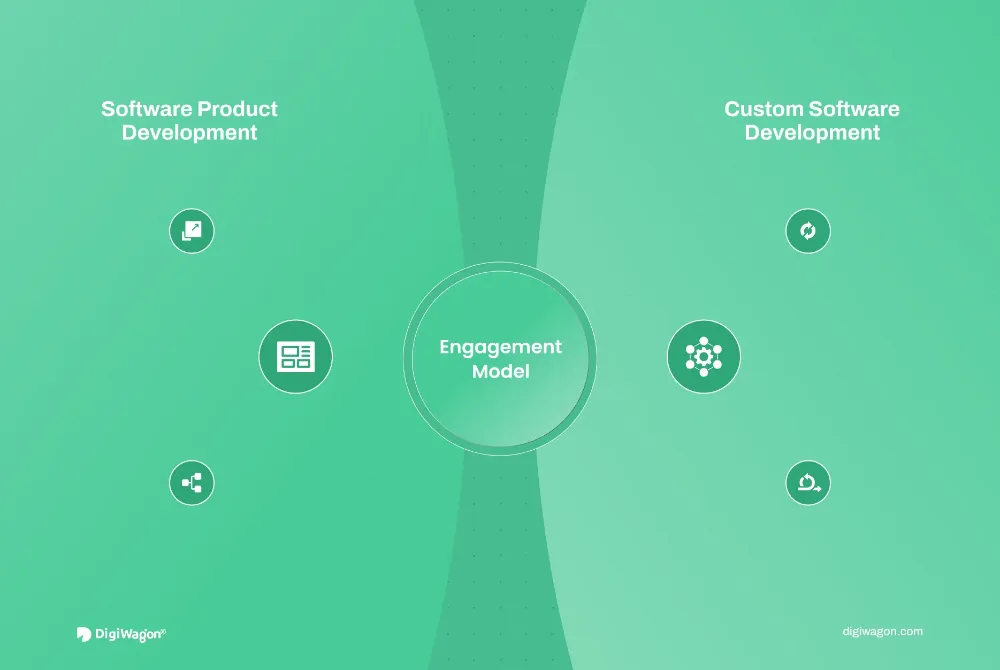
Software Product Development vs. Custom Software: How to Choose
· Charmi Shah · 7 min read
Software Engineering
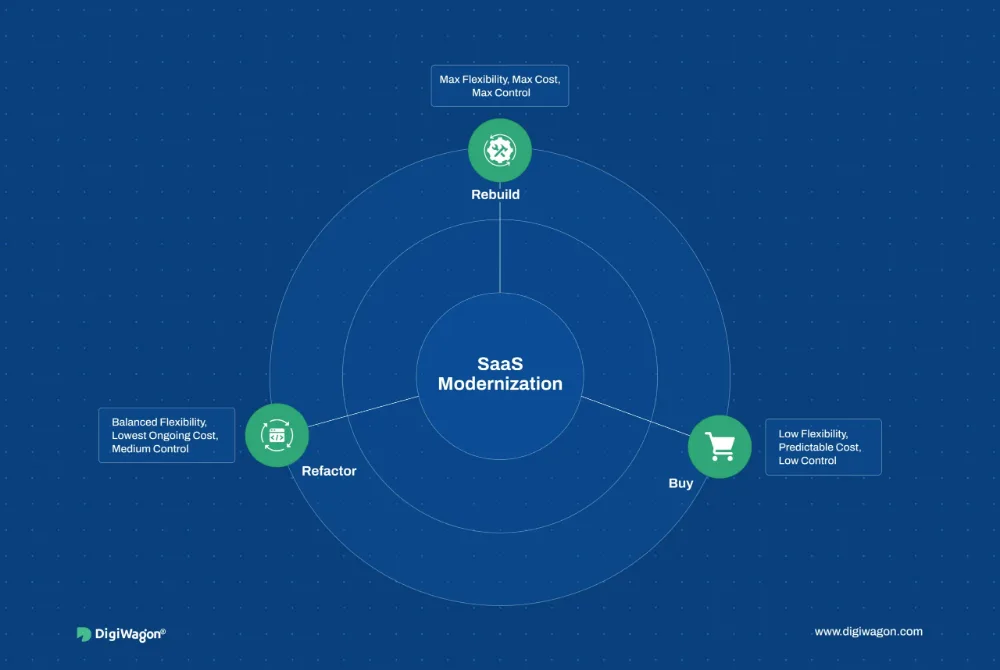
SaaS Consulting Playbook: When to Rebuild, Refactor, or Buy
· Charmi Shah · 4 min read
AI & Machine Learning
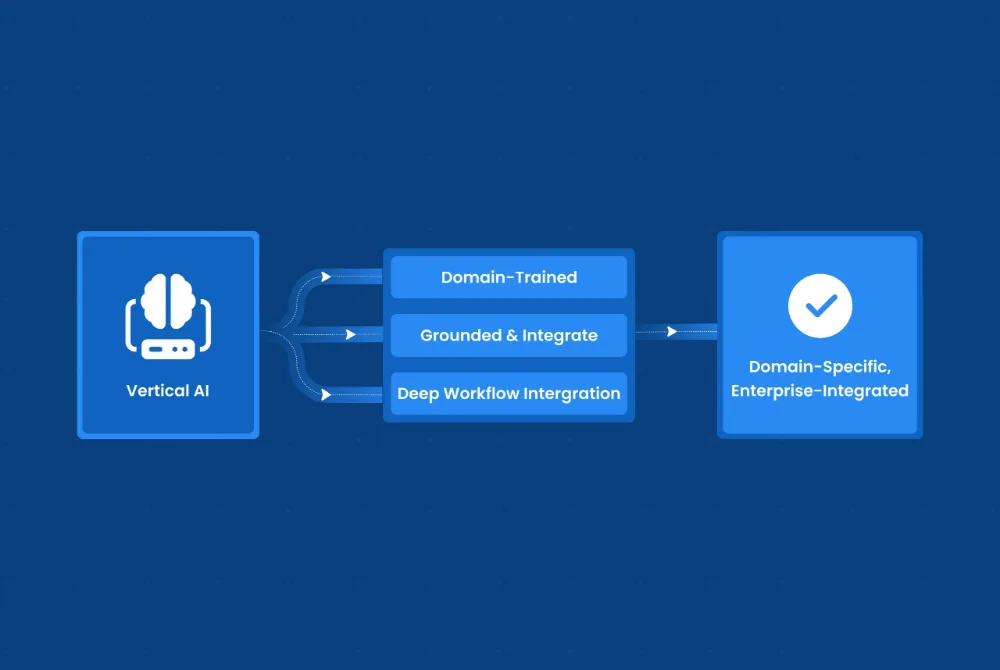
Vertical AI in 2026: Why Generic LLMs Fail in Custom Software and How to Build Domain-Specific Solutions
Direct answers on .NET versions, Framework migration, Azure, cross-platform .NET and what our .NET development services include after launch.
01Which .NET versions do you work with?
New work goes on the current long-term-support .NET with ASP.NET Core and Entity Framework Core. We maintain and modernise .NET Framework 4.x applications — Web Forms, WCF, MVC 5 — and plan their move to the current runtime as part of the engagement, so nothing is left on an unsupported version.
02Can you migrate our .NET Framework application?
Yes, in stages. We assess with the upgrade tooling, put characterisation tests around the seams, move shared libraries first, then the application — replacing WCF and Web Forms with current equivalents where needed. The business runs on the old system until each stage is proven, and every stage is reversible.
03Is .NET only for Windows and Azure?
No. Current .NET runs on Linux and macOS, ships in containers, and deploys to any cloud. It is a natural fit for Azure and a Microsoft identity estate, which is where most of our .NET work lands, but we run it on AWS and on-premises Linux where that is what the client has.
04Do you build Blazor or React frontends for .NET backends?
Both, depending on the team. Blazor suits internal tools and teams who want C# end to end; React or Angular suits customer-facing products where the frontend team already lives in TypeScript. The API is designed the same way either way, so the choice is not permanent.
05How do you integrate with Dynamics, SharePoint and SAP?
Through their supported APIs — Dataverse and Microsoft Graph for the Microsoft side, OData or IDoc-based connectors for SAP — with message-based integration where systems should be decoupled. Every integration gets reconciliation and monitoring, because an integration that fails silently is worse than one that fails loudly.
06What does support look like after go-live?
Scheduled runtime and dependency updates, security patching, monitoring with alerting your team can act on, incident response and a quarterly performance and cost review on Azure. Documentation and runbooks are handed over from day one; we can run the application for you, with you, or hand it over entirely.
Modernise Without the Rewrite.
Tell us what the application has to do and what it has to integrate with, and we will show you comparable enterprise work before anything is scoped.
One click opens the assistant you already use with a question that points it at this page, so the answer comes from what we publish, not a guess.
The question it opens withRead https://digiwagon.com/dotnet and explain when DigiWagon recommends .NET / C#, what it would ask about my product before scoping, and which of its case studies are relevant. Stick to what the page says and mark anything you are not sure about.