FastAPI Development Services for AI and Data Backends
Typed. Async. Shipped.
FastAPI is the Python framework the AI era chose: async by default, typed end to end with Pydantic, OpenAPI documentation for free, and fast enough to sit in front of a model, a vector store or a data platform without becoming the bottleneck. We build production services on it — not notebooks with a route decorator.
Our FastAPI development services cover LLM and retrieval backends, high-throughput APIs, model serving and the modernisation of Python services that grew up faster than their architecture.
Flawless, Functional, Freakin’ Development Services
From the API in front of a retrieval pipeline to the service layer of a data platform, our FastAPI development services turn Python into production.
01
AI & LLM Service Backends
The service layer around a model: retrieval-augmented generation pipelines, prompt and tool orchestration, streaming responses, evaluation hooks and guardrails — built as a governed FastAPI service with tenancy, audit and cost controls, not as a demo that escaped.
RAG pipelines and vector searchStreaming and tool orchestrationGuardrails and evaluation hooksTenancy, audit and cost controls
Async endpoints with typed request and response models, dependency-injected auth and database sessions, background tasks handed to Celery or a queue, and load tests that set the concurrency numbers before traffic does — the FastAPI a product can bill against.
Async endpoints and connection poolingPydantic models as the contractBackground jobs via Celery or queuesLoad tests as release gates
Inference endpoints for classical and deep models with batching, versioning and shadow deployment; feature retrieval at request time; drift and latency metrics exported to your observability stack — the last mile between a trained model and a product decision.
Versioned inference endpointsBatching and shadow deploymentFeature retrieval at request timeDrift and latency metrics
Flask and Django REST services, script collections and the Jupyter-shaped backend moved onto FastAPI with typed contracts, tests and a real deployment — incrementally, behind the same URLs, with the parts that should stay in Django left where they are.
Incremental Flask-to-FastAPI migrationTyped contracts and testsContainers and pipelinesCoexistence with Django where it fits
The APIs that expose a warehouse, a lakehouse or a Kafka stream to products and partners — authenticated, rate-limited, cached and documented — so the data team stops fielding one-off extract requests and the product team gets a contract.
Warehouse and lakehouse APIsKafka consumers and producersRate limiting and cachingOpenAPI docs and SDK generation
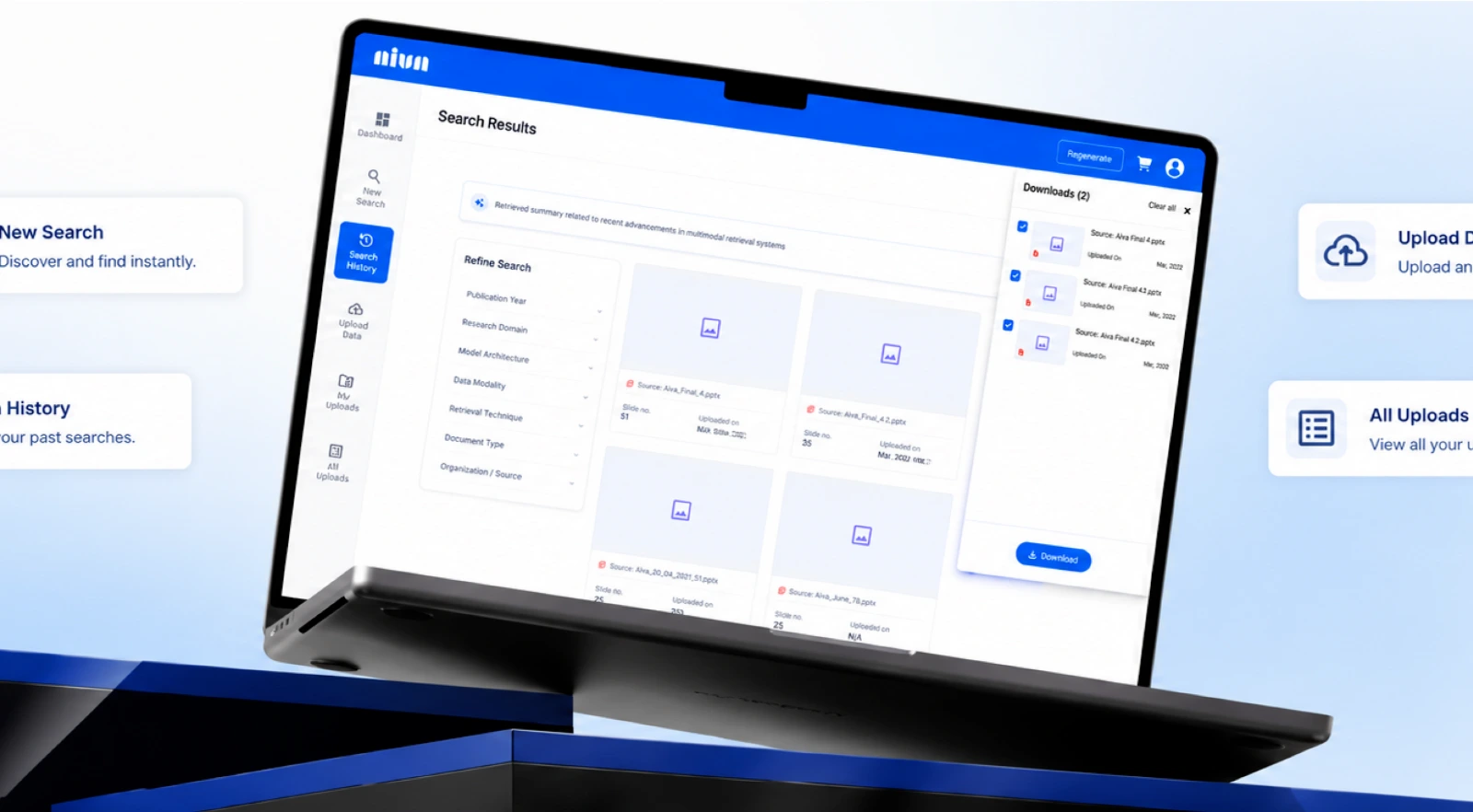
DigiWagon built a production-grade RAG platform for a global CPG leader, using Azure AI to help R&D and compliance teams quickly search, synthesise, and generate insights from millions of scattered documents.
What DigiWagon built
DigiWagon engineered a production-grade RAG platform that lets users ask natural language questions and get grounded, citation-backed answers from enterprise documents. Instead of sending users on a document hunt, the assistant retrieves the right context, generates a clear answer, and links it back to the original source.
70%Faster information retrieval60%Reduction in manual knowledge discovery
Why hire us for FastAPI, in five lines you can hold us to.
Typed From Edge to Model
Pydantic models are the contract: validation, serialisation and the OpenAPI document come from one definition, so the frontend, the SDK and the tests all agree.
Async Where It Counts
Concurrent I/O for model calls, vector lookups and database queries without a thread per request — the shape of work an AI backend does all day.
The Python Ecosystem, Governed
LangChain, LlamaIndex, scikit-learn, PyTorch and pandas are a pip install away; we put them behind a service boundary with tests, limits and observability.
Documentation for Free
Every endpoint is documented and testable in the browser from the first deploy — the handoff to a frontend or partner team happens on day one, not at the end.
Fast Enough to Not Matter
FastAPI with Uvicorn is among the fastest Python stacks; when the model is the slow part, the framework should disappear, and it does.
Tech expertise
Our Tech Vault At Your Command
FastAPI is the Python service layer of this stack; here is what we ship around it. Every name with a page of its own is a link.
What changes when the team actually knows the stack, in six rows.
Feature
DigiWagon
Other agencies
Backend architecture
Built like a boss — modular, mighty, made to last, and load-tested before launch.
Patchy blueprints that crumble under real-world traffic.
API mastery
REST, GraphQL, gRPC, webhooks — versioned, documented, idempotent. You name it, we ship it.
REST-only mindset with clunky API designs.
Estimation
Real timelines and budget, no plot twist — the estimate names its assumptions.
Estimate comes with ‘oops, missed that!’
Security protocols
Dependency audits on every pull request, secrets out of the code, patches on a schedule.
Oh, did we forget that patch?
Post-launch care
We watch it like a hawk — monitoring, upgrades, incident response. Not even a blink.
Ghosting after launch — hope you have backup plans.
Documentation
Docs so clear even your interns can hand them off: OpenAPI, runbooks, decision records.
Documentation? Yeah, we will get back to you on that…
Industries
Where Our FastAPI Work Lives
Three of the nine industries we build for, with the FastAPI work or the FastAPI fit behind each, linked to the industry page.
01
Manufacturing
A production-grade RAG platform for a global consumer-goods manufacturer — 70% faster information retrieval, a 60% reduction in manual knowledge discovery — with FastAPI serving the pipeline.
Screening, scoring and alert-triage services where a Python model has to answer inside a transaction’s latency budget, with every decision logged for the regulator.
Clinical decision-support and document-intelligence APIs that sit behind consent and audit, integrate over FHIR and keep protected data inside the perimeter.
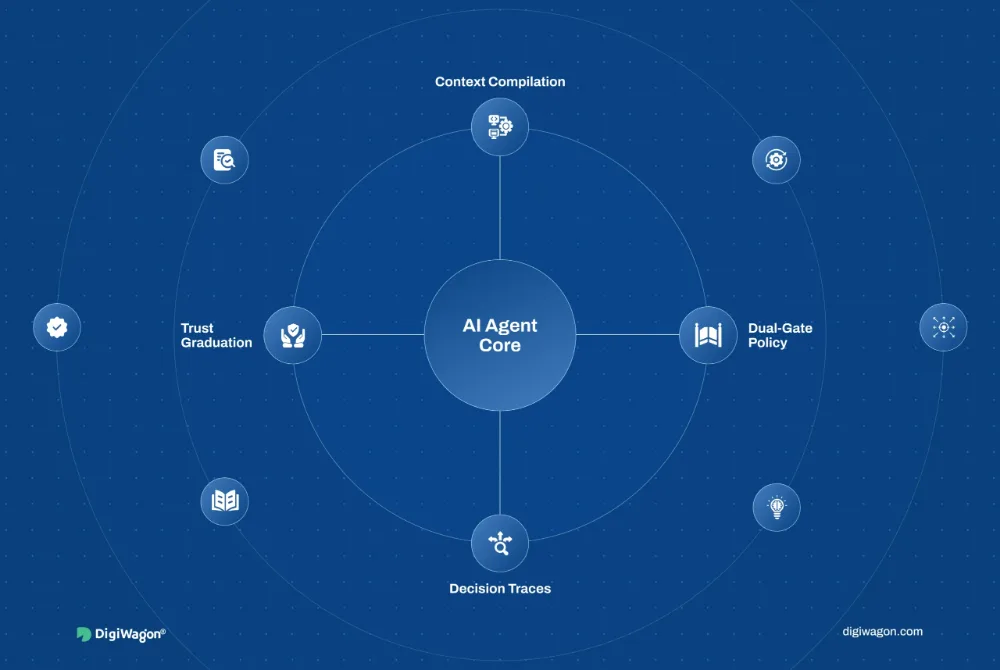
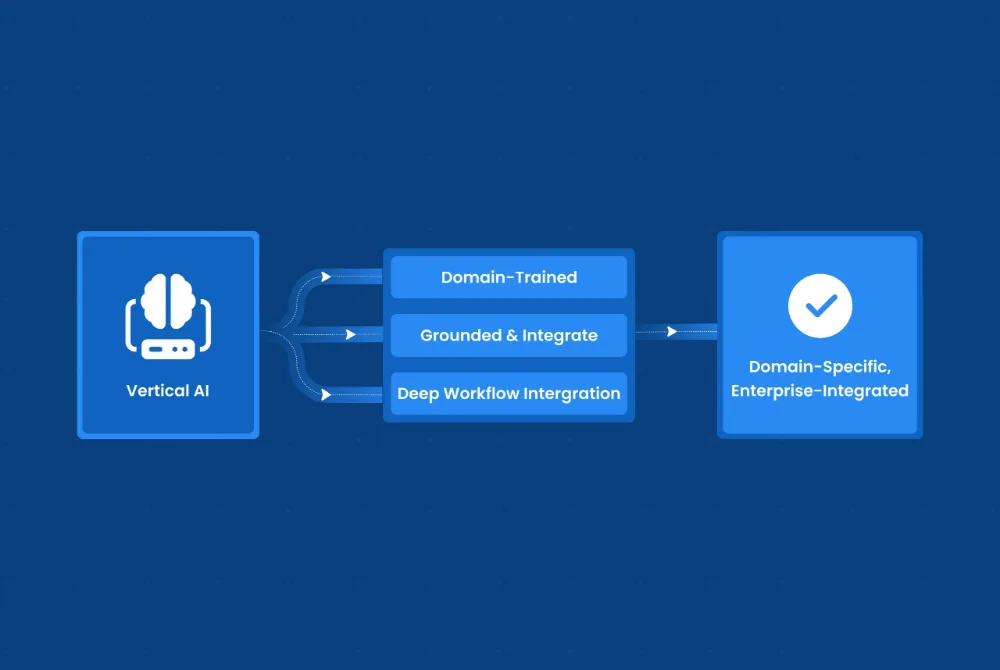
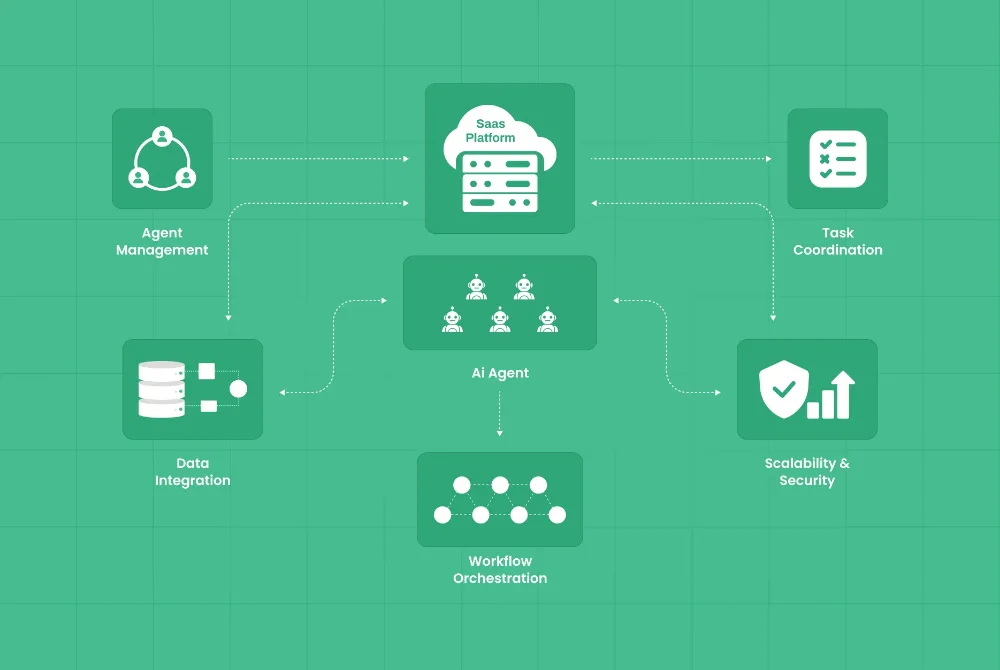
Writing from the AI engineering work: a decision-harness architecture for governed enterprise agents, how to architect SaaS platforms for the agent economy, and why generic LLMs fail in vertical AI.
AI & Machine Learning
Governed Enterprise AI Agents: A Decision-Harness Architecture
· Kartik Gajjar · 10 min read
AI & Machine Learning
Vertical AI in 2026: Why Generic LLMs Fail in Custom Software and How to Build Domain-Specific Solutions
· Akash Thakor · 5 min read
Software Engineering
The Agent Economy: How to Architect SaaS Platforms for Multi Agent AI Orchestration in 2026
Direct answers on FastAPI versus Django and Flask, LLM backends, scaling Python, migration and what our FastAPI development services include after launch.
01When is FastAPI the right choice over Django or Flask?
When the service is an API first — especially one wrapping models, retrieval or data — and you want typed contracts, async I/O and generated documentation without a full web framework. Django still wins for admin-heavy, form-driven applications; Flask for tiny services. We often run FastAPI alongside Django, each doing what it is good at.
02Can you build our LLM or RAG backend on FastAPI?
Yes — that is most of our FastAPI work. Retrieval pipelines, prompt and tool orchestration, streaming responses, evaluation hooks and guardrails, wrapped in a service with tenancy, audit logging and cost controls. The published RAG platform case study is exactly this shape, and its numbers are on this page.
03Does Python scale for a production API?
Yes, when the architecture matches the workload. FastAPI’s async model handles concurrent I/O — model calls, vector lookups, database queries — efficiently, heavy compute moves to workers or the model server, and horizontal scaling behind a load balancer does the rest. We load-test to the numbers before launch rather than hoping.
04How do you handle background jobs and long-running tasks?
Anything longer than a request goes to a worker: Celery with Redis or RabbitMQ, or a cloud queue, with FastAPI enqueuing and returning a job handle. Progress and results come back through polling, webhooks or a stream. Retries, idempotency and dead-letter handling are designed in, not discovered.
05Can you migrate our Flask or script-based backend to FastAPI?
Incrementally. New endpoints go on FastAPI behind the same gateway, existing ones move as they are touched, and typed contracts and tests arrive with each move. Nothing is rewritten in one go, URLs stay stable, and the parts that belong in Django or a batch job are left there deliberately.
06What does support look like for an AI backend after launch?
Model and prompt changes under version control, evaluation runs before every release, drift and cost dashboards, dependency and security updates on a schedule, and incident response. AI backends change faster than ordinary services, so support is a cadence rather than a ticket queue — we run it with you or for you.
Put a Real Service in Front of the Model.
Tell us what the model or the data has to answer and who has to trust it, and we will show you comparable AI backend work before anything is scoped.
One click opens the assistant you already use with a question that points it at this page, so the answer comes from what we publish, not a guess.
The question it opens withRead https://digiwagon.com/fastapi and explain when DigiWagon recommends FastAPI, what it would ask about my product before scoping, and which of its case studies are relevant. Stick to what the page says and mark anything you are not sure about.