Angular Development Services for Enterprise Frontends
Structure Meets Swag.
It’s not just about building apps; it’s how serious apps get built. Angular gives us a full-featured framework — standalone components, signals, a router and a CLI that agree with each other — so enterprise frontends feel like magic but run like a machine.
Real-time updates? Check. Built-in security? Double check. A codebase your team can still read in three years? That is the whole point.
Flawless, Functional, Freakin’ Development Services
From eye-popping animations to tailor-made digital experiences, our code brings your vision to life, minus the cookie-cutter: Angular web development from Angular developers who take the framework’s opinions seriously, and an Angular migration path for the apps still running the old ones. Each row links to the DigiWagon practice behind it.
01
The Angular Edge
Powerful, scalable web applications on the current Angular: standalone components, signals for state, typed reactive forms and clean feature boundaries — efficient data binding and a responsive UI for seamless digital journeys, with tests from the first commit.
Standalone components and signalsTyped reactive formsFeature-module boundariesTests from the first commit
Need a fancy button, a slick dropdown or something totally out of the box? We craft Angular components on your design tokens with Angular Material or CDK primitives underneath, so they are accessible, themeable and a whole vibe to use.
Design tokens in codeAngular Material and CDK primitivesAccessible, themeable componentsStorybook documentation
No more slow reloads or clunky clicks. SPAs with lazy-loaded routes, prefetching, and server-side rendering plus hydration where first paint matters — built to impress and measured against Core Web Vitals, just what your user deserves.
Lazy-loaded routes and prefetchingServer-side rendering and hydrationCore Web Vitals budgetsRoute guards and resolvers
Still on AngularJS or a version nobody supports? We lift your app into the current Angular the safe way — ngUpgrade or route by route, modules to standalone components, RxJS to signals where it helps — with the old app running until the new one is proven.
AngularJS to Angular with ngUpgradeModules to standalone componentsRxJS to signals where it helpsRoute-by-route cutover
Glitches, crashes, weird app hiccups? Our support squad is on standby: bundle budgets, change-detection audits, OnPush and zoneless where it pays, dependency upgrades on a schedule. We fix, polish and keep your app in superhero shape.
Bundle budgets on every pull requestChange-detection auditsScheduled dependency upgradesReal-user Web Vitals monitoring
Big idea brewing, or a big app misbehaving? Our Angular experts audit the architecture, the state model and the build, and guide you from a napkin sketch or a legacy tangle to a high-flying launch with a roadmap the team can follow.
Architecture and state auditsBuild and CI reviewUpgrade roadmapsTeam enablement
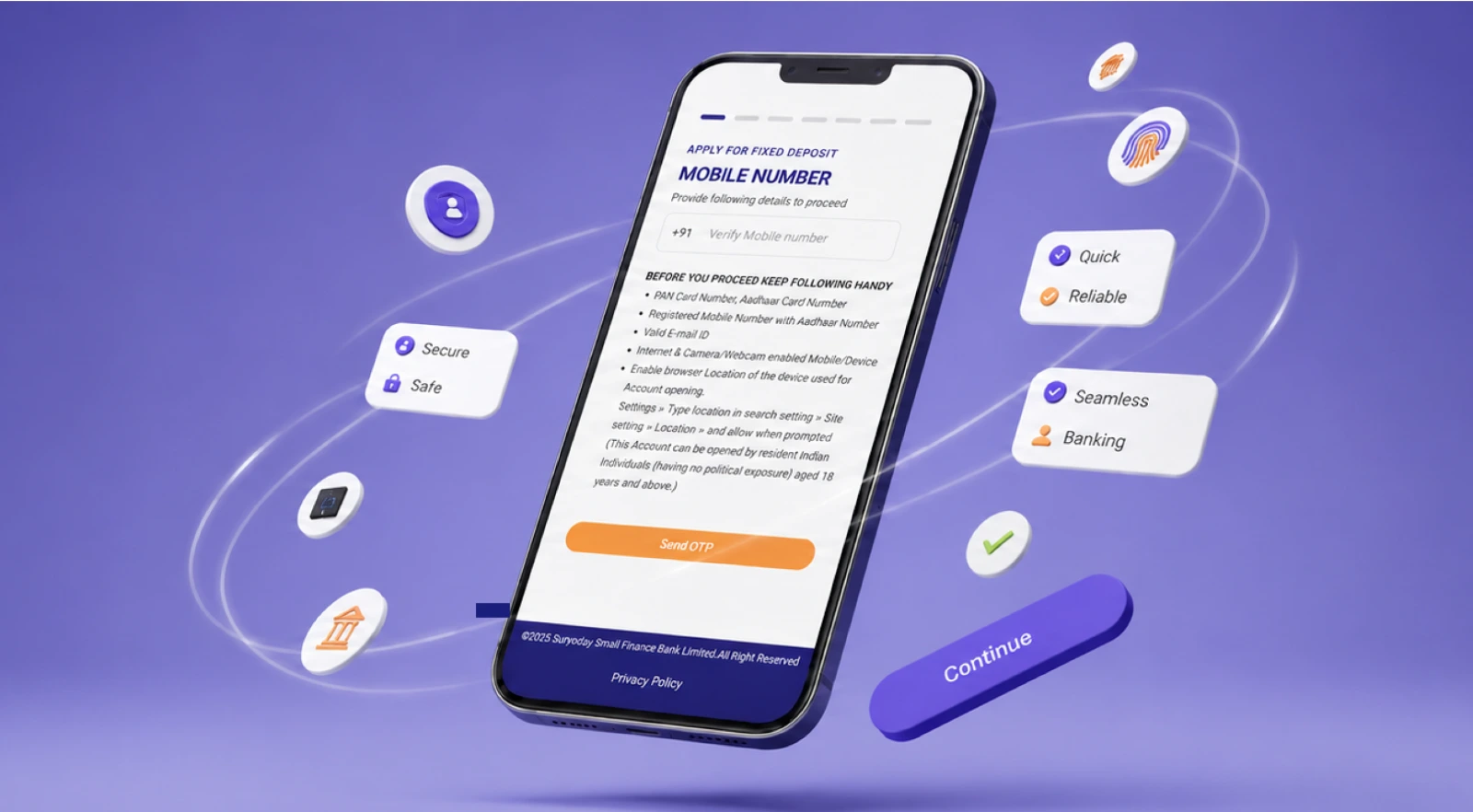
A leading Small Finance Bank launched a 100% digital FD platform with compliance, security, and fraud prevention at its core. The solution cut onboarding to 15 minutes, boosted trust, and reduced support costs.
What DigiWagon built
DigiWagon validated an end-to-end digital FD onboarding platform that helps customers open Fixed Deposit accounts online, complete identity checks, finish VKYC, and set up secure payout details without manual paperwork. The QA engagement covered the full customer journey along with business logic, third-party integrations, security, compliance-critical flows, fraud scenarios, and operational readiness.
98%Identity verification accuracy30%Improvement in customer satisfaction
Why hire us for Angular, in five lines you can hold us to.
Everything, Out of the Box
A full-featured framework with the router, forms, HTTP client and CLI built in — no extra installs, no Frankenstein setups, one way to do most things.
Auto-Sync Magic
Signals and reactive forms keep your UI and your logic in perfect sync without the boilerplate, and change detection only runs where something changed.
Speed Meets Maintainable Structure
Standalone components, strict typing and clear feature boundaries mean you build quickly and still find your way around the app a year later.
Backed by Google
A strong foundation, a predictable release cadence, long-term-support versions and big-name backing you can plan a product roadmap around.
Lean Code, More Control
Dependency injection means less boilerplate and more clarity: services are swappable, testable and mocked in a line, so the dev flow stays fast.
Tech expertise
Our Tech Vault At Your Command
Angular is the front of this stack; here is the rest of what we ship it with. Every name with a page of its own is a link.
What changes when the team actually knows the stack, in six rows.
Feature
DigiWagon
Other agencies
Tech fluency
Fluent in everything from basic to spicy stacks — hooks, signals, composables and the boring parts: accessibility, i18n, testing.
Limited expertise in modern frameworks.
Documentation
Crystal-clear, handoff-ready: Storybook, decision records and a README your next hire can follow.
“Where’s the handover file?” you ask for weeks.
Estimation
Honest timelines and budget, zero surprises — the estimate names its assumptions.
Estimate comes with ‘oops, missed that!’
UI/UX sync
Design + dev on one system: tokens in Figma are tokens in code. Sharp, sleek, scroll-stopping.
Design says wow, dev says meh.
Scalability
Future-proof builds that grow with you: typed components, code-splitting, no refactoring nightmares.
You scale, they scramble.
Post-launch care
Support that actually supports — monitoring, upgrades, a migration plan. No ghosting.
You are on your own after deployment.
Industries
Where Our Angular Work Lives
Three of the nine industries we build for, with the Angular work or the Angular fit behind each, linked to the industry page.
01
FinTech
Paperless fixed-deposit onboarding for a small finance bank — 98% identity-verification accuracy, a 30% lift in customer satisfaction — with Angular on the client.
Admin consoles, back-office tools and data-dense dashboards where Angular’s structure pays off: typed forms, role-based routes and tables that stay fast at ten thousand rows.
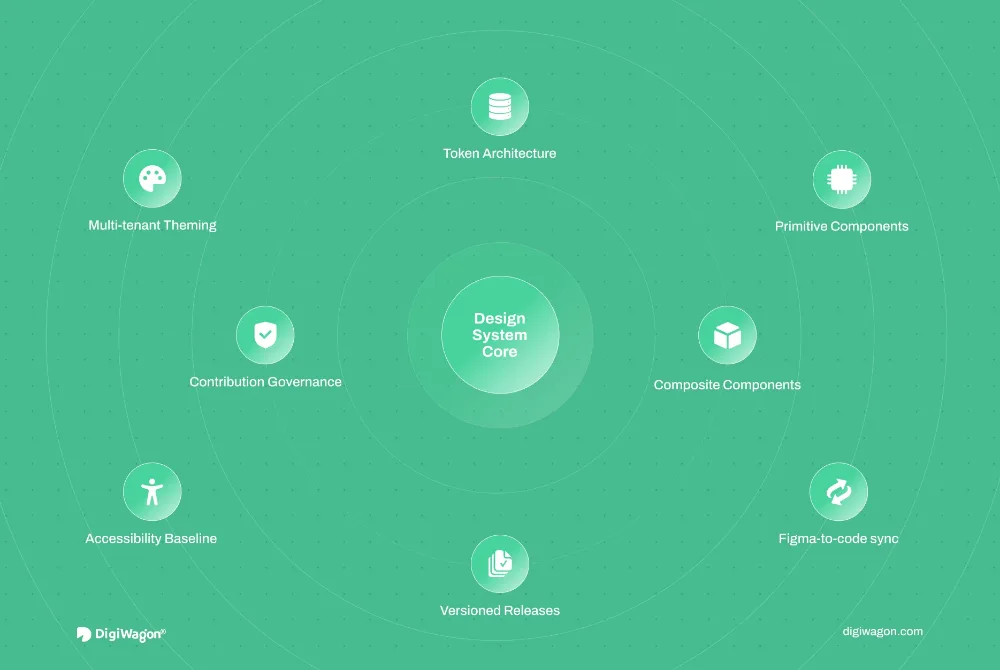
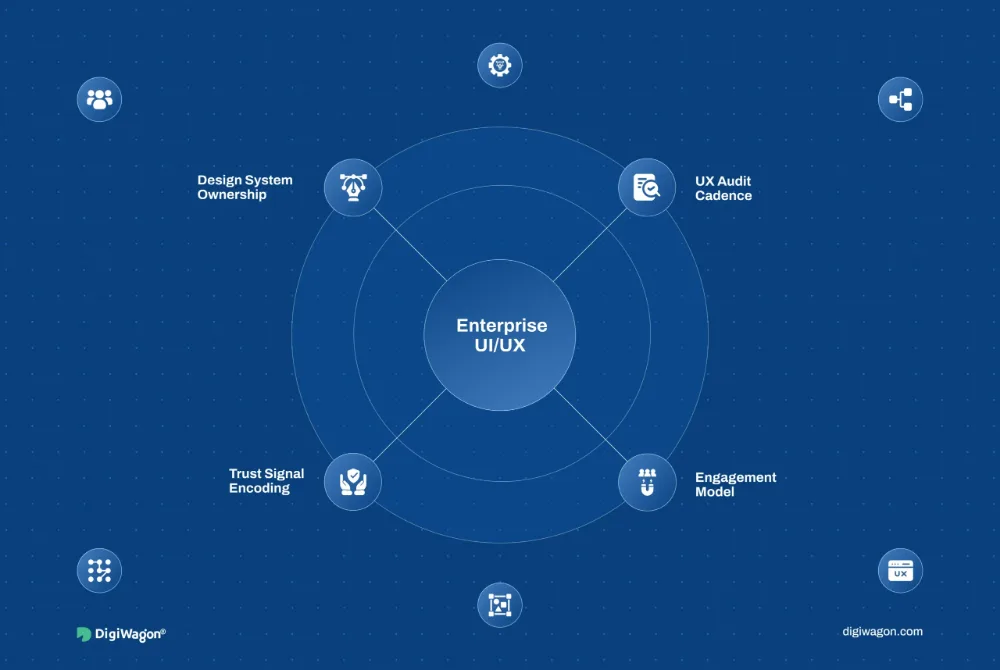
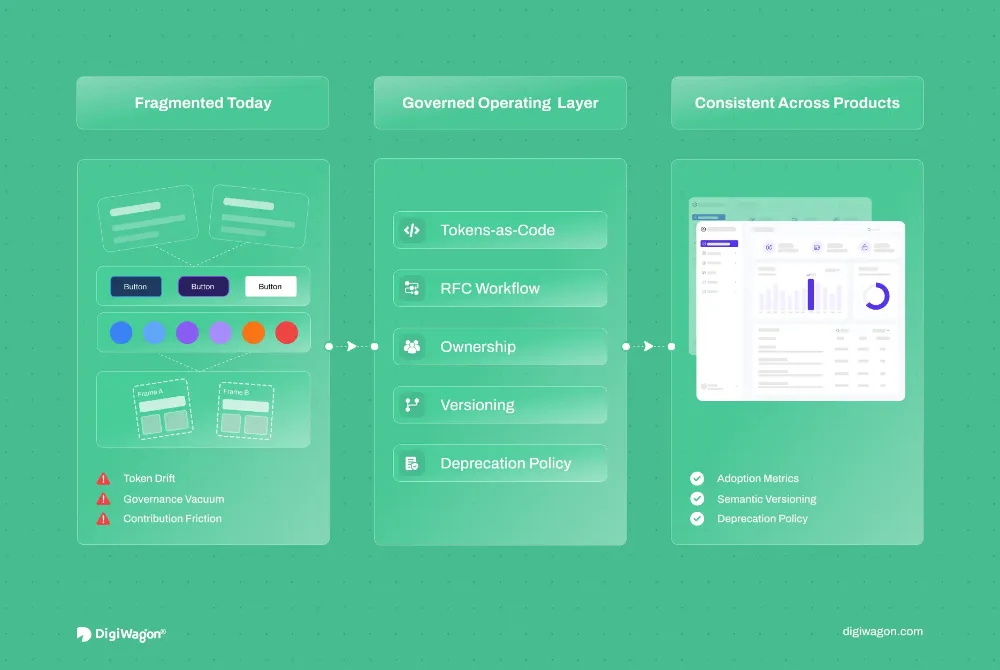
Writing from the frontend work: how production-grade design systems are architected, why enterprise design systems fail at scale, and the decisions an enterprise UI/UX audit should settle.
Experience Design
Production-Grade Design Systems: An Architecture Guide for Enterprise SaaS
· Pavan Chavda · 7 min read
Experience Design
Enterprise UI/UX Playbook: Decisions and Audits
· Pavan Chavda · 10 min read
Experience Design
Why Your Enterprise Design System at Scale Fails (And How to Fix It)
Direct answers on versions and support, migrating from AngularJS, keeping Angular apps secure and fast, and what our Angular development services include after launch.
01Do you still support Angular, and which versions?
Totally. We build new products on the current Angular and maintain apps on older versions, including AngularJS, while we plan their upgrade. Long-term-support releases get security patches and dependency updates on a schedule, so an app never falls two major versions behind without anyone noticing.
02Can you migrate our AngularJS or legacy Angular app?
100%, and without breaking a beat or your budget. We migrate route by route — ngUpgrade where both must coexist, modules to standalone components, RxJS to signals where it simplifies — with the old app running until each new route is proven. Your users see continuity; your team gets a codebase it can change.
03How do you keep Angular apps secure?
We run dependency audits on every pull request, apply security patches as they land, enable ahead-of-time compilation and strict template checking, sanitise anything that touches the DOM and keep authentication in interceptors and guards rather than scattered through components. Then we test it, because a policy nobody checks is a wish.
04What if our app is buggy or slow?
We love that challenge. A profiling pass finds the hot components; OnPush change detection, lazy routes, bundle budgets and virtual scrolling fix most of it; a test suite keeps it fixed. You get a report of what changed and why, not a mystery patch, and an app back in top shape.
05Do you offer ongoing support and maintenance?
You bet. We stick around after the launch: squashing bugs, upgrading Angular and its dependencies on a schedule, watching Core Web Vitals from real users and shipping the small improvements that keep a product feeling new. Support is scoped in writing, so you know what is covered and who answers.
Click. Code. Conquer.
Trusted by developers before it was cool. Tell us what the app has to do and who has to use it, and we will show you comparable Angular work before anything is scoped.
One click opens the assistant you already use with a question that points it at this page, so the answer comes from what we publish, not a guess.
The question it opens withRead https://digiwagon.com/angular-js and explain when DigiWagon recommends Angular, what it would ask about my product before scoping, and which of its case studies are relevant. Stick to what the page says and mark anything you are not sure about.