Java Development Services for Banking-Grade Backends
Old Faithful, New Tricks.
Java is what runs when the transaction has to be right: core banking journeys, lending engines, service platforms with years of life ahead of them. We build on the current Java and Spring Boot — records, virtual threads, native images where they pay — with the testing, observability and security posture regulated products need.
Our Java development services cover new services, the modernisation of the monolith nobody wants to touch, and the long-run support that keeps a JVM estate patched and boring.
Flawless, Functional, Freakin’ Development Services
From a greenfield Spring Boot service to a decade-old estate brought back under test, our Java development services cover the backend where the money moves.
01
Spring Boot Services
Production-grade services on the current Spring Boot: layered or hexagonal architecture, validated configuration, OpenAPI contracts, resilience patterns and observability wired in from the first commit — the backend for onboarding, lending and transaction journeys where correctness is the feature.
Hexagonal service architectureOpenAPI-first contractsResilience and retriesObservability from the first commit
Onboarding, KYC, deposits, loan origination and servicing built on Java for small finance banks and lenders — the domain logic where the rules change every quarter, designed so a policy change is configuration rather than a release.
Onboarding and KYC journeysLoan origination and servicingRule engines and policy configurationAudit trails by design
The Java 8 estate on an application server nobody upgrades, brought forward in stages: tests around the seams, a current JDK and framework, containers, then the extraction of the services that need to scale — while the product keeps running.
Characterisation tests around the seamsJDK and framework upgradesContainerisation and pipelinesIncremental service extraction
Kafka, JMS and REST integration layers between core systems, partners and channels — idempotent consumers, schema governance, dead-letter handling and the reconciliation that regulated integrations need to prove nothing was lost.
Kafka and JMS consumers and producersSchema registry and versioningIdempotency and reconciliationPartner API gateways
Throughput and latency work on real traffic: profiling, garbage-collector selection, connection-pool and thread-model tuning, virtual threads where they fit, caching tiers and load tests that stand in for month-end before month-end does.
Profiling on production-shaped loadGC and thread-model tuningCaching tiersLoad tests as release gates
Why hire us for Java, in five lines you can hold us to.
Built for the Long Run
Java’s backward compatibility and long-term-support releases mean the service you ship this year is still supportable in ten — we plan the upgrade path in the first sprint, not the last.
Correctness Is the Feature
Strong typing, mature testing tools and a transaction model that has run banks for decades — we use all of it, with contract tests and audit trails, where a wrong number is a regulatory event.
Throughput Without Drama
Virtual threads, tuned pools and the JVM’s garbage collectors handle month-end and campaign spikes; we prove it with load tests before your customers do.
An Ecosystem That Exists
Spring, Kafka clients, database drivers, security libraries, observability agents — every integration a regulated product needs has a mature Java client, maintained by someone.
Hiring Is Possible
Java engineers exist in every market you operate in; a stack your own team can staff and support is a stack that outlives the vendor.
Tech expertise
Our Tech Vault At Your Command
Java is the backend of this stack; here is what we ship around it. Every name with a page of its own is a link.
What changes when the team actually knows the stack, in six rows.
Feature
DigiWagon
Other agencies
Backend architecture
Built like a boss — modular, mighty, made to last, and load-tested before launch.
Patchy blueprints that crumble under real-world traffic.
API mastery
REST, GraphQL, gRPC, webhooks — versioned, documented, idempotent. You name it, we ship it.
REST-only mindset with clunky API designs.
Estimation
Real timelines and budget, no plot twist — the estimate names its assumptions.
Estimate comes with ‘oops, missed that!’
Security protocols
Dependency audits on every pull request, secrets out of the code, patches on a schedule.
Oh, did we forget that patch?
Post-launch care
We watch it like a hawk — monitoring, upgrades, incident response. Not even a blink.
Ghosting after launch — hope you have backup plans.
Documentation
Docs so clear even your interns can hand them off: OpenAPI, runbooks, decision records.
Documentation? Yeah, we will get back to you on that…
Industries
Where Our Java Work Lives
Three of the nine industries we build for, with the Java work or the Java fit behind each, linked to the industry page.
01
FinTech
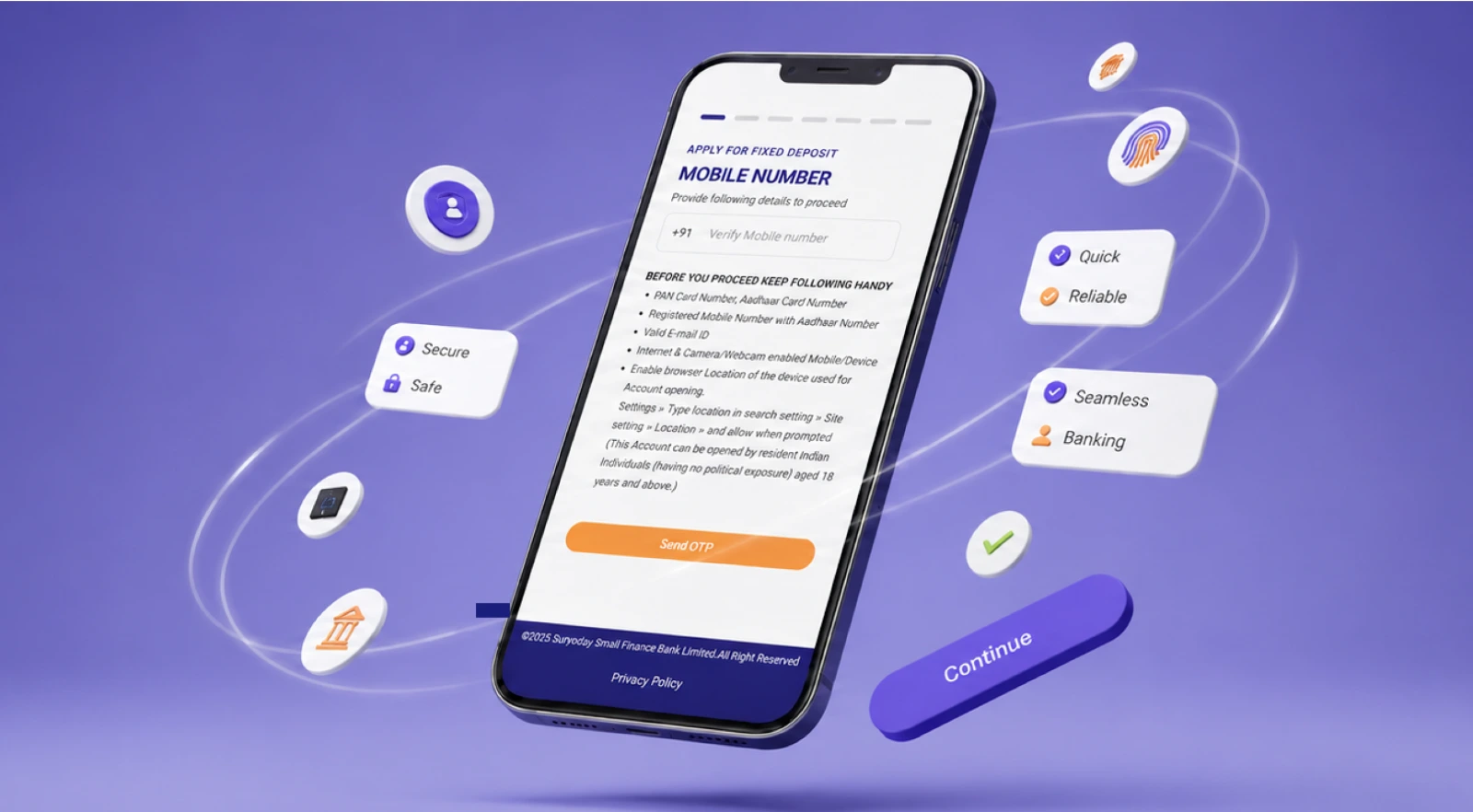
Paperless fixed-deposit onboarding for a small finance bank — 98% identity-verification accuracy, a 30% lift in customer satisfaction — and a personal-loan engine with 60% faster approvals, both on Java.
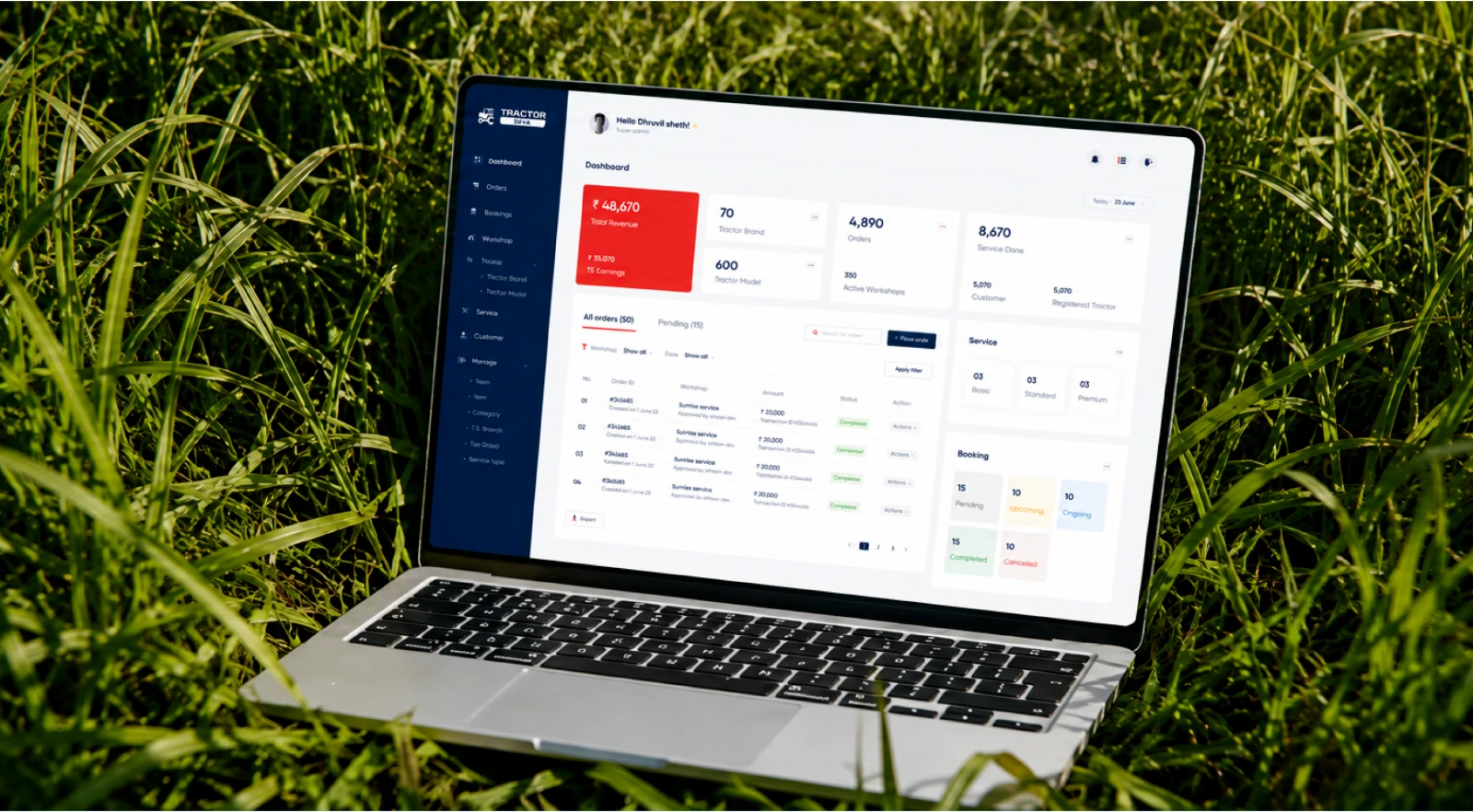
A multi-brand tractor service platform for owners and workshops — 50% faster service tracking, 40% smoother workshop coordination — on Java and Spring Boot with Flutter in front.
Plant systems, production and workforce platforms and the integrations between ERP, shop floor and payroll — the long-lived, high-integrity backends the JVM was built for.
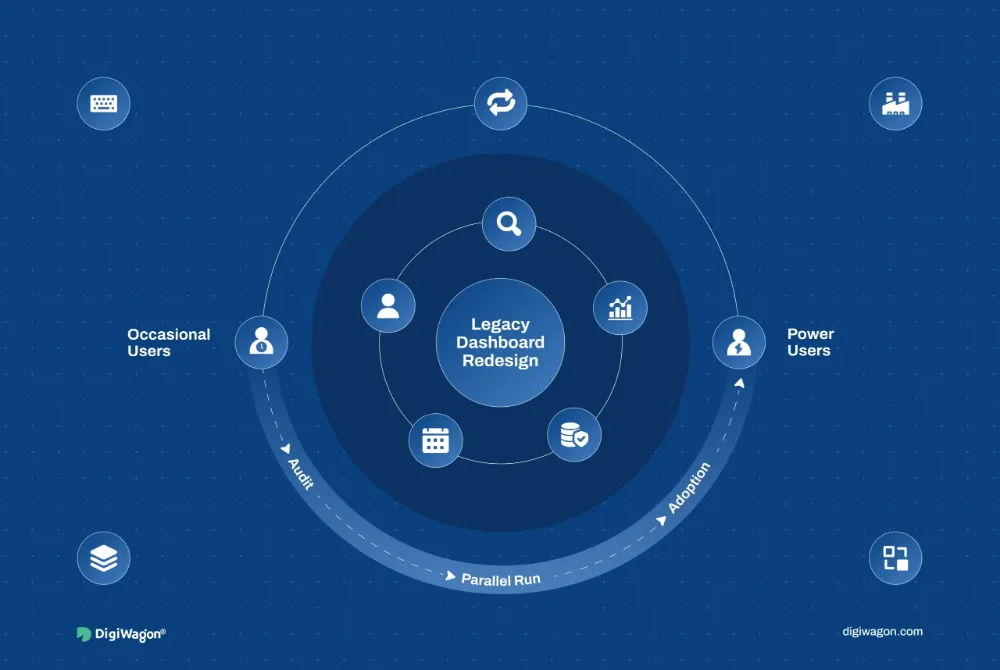
Writing from the engineering work: a guide to API-first development, redesigning a legacy dashboard without losing power users, and the ROI of a design audit in legacy enterprise software.
Experience Design
Redesigning a Legacy Dashboard Without Losing Power Users
· Rutvi Kothari · 8 min read
Experience Design
From Chaos to Clarity: The ROI of a Design Audit & Usability Testing in Legacy Enterprise Software
· Rutvi Kothari · 6 min read
Software Engineering
Guide to API-First Development: Building Scalable SaaS Products
Direct answers on Java versions, Spring Boot, modernising an old estate, performance and what our Java development services include after launch.
01Which Java versions and frameworks do you work with?
New services go on the current long-term-support Java and the current Spring Boot. We maintain and upgrade estates from Java 8 onwards, including Jakarta EE and older Spring, and plan the jump to a supported release as part of the engagement so the product never sits on an end-of-life runtime.
02Is Java still the right choice for a new product?
For backends where correctness, throughput and a decade of supportability matter — banking, lending, insurance, industrial platforms — yes. Modern Java is concise, virtual threads make concurrency simple, and the ecosystem is unmatched for regulated integrations. For a lightweight startup API we might recommend Node.js or Python instead, and say so.
03Can you modernise our Java monolith without a rewrite?
That is the only way we do it. Characterisation tests go around the seams first, then a current JDK and framework, containers and pipelines, and only then the extraction of services that actually need independent scaling. The product keeps running throughout, and each stage is reversible.
04How do you handle performance for peak loads?
We profile on production-shaped load before launch: garbage-collector choice, connection pools, thread model, caching tiers and query plans tuned against real data volumes. Load tests become release gates, so month-end or a campaign spike is rehearsed in staging before it arrives in production.
05Do you work with our existing Java team?
Often. We can lead a build, embed with your team or take a bounded piece such as an upgrade or an integration layer. Code review, architecture decision records and pairing are part of every model, so the knowledge lands in your team rather than leaving with ours.
06What does support look like after go-live?
Scheduled JDK and dependency updates, security patching, monitoring with alerting your team can read, incident response and a quarterly performance review. We hand over runbooks and documentation from day one and can run the platform for you, with you or hand it over entirely.
Bring Us the Hard Backend.
Tell us what the system has to guarantee and who has to run it, and we will show you comparable Java work before anything is scoped.
One click opens the assistant you already use with a question that points it at this page, so the answer comes from what we publish, not a guess.
The question it opens withRead https://digiwagon.com/java and explain when DigiWagon recommends Java, what it would ask about my product before scoping, and which of its case studies are relevant. Stick to what the page says and mark anything you are not sure about.