Shopify Development Company for Stores That Convert
Shop Built. Shop Sold.
Shopify is the fastest way to a store that takes money reliably, and the hardest platform to make feel like your brand once the template runs out. We are a Shopify development company that does the second part: custom themes and headless storefronts, apps and integrations, migrations that keep the revenue, and the Plus and B2B configurations that turn a shop into a channel.
Everything measured the way a merchant measures it — conversion rate, average order value, Core Web Vitals through peak season — rather than by the number of features installed.
From a custom theme to a headless Hydrogen storefront and the apps between Shopify and your ERP, our Shopify development company covers the store end to end.
01
Custom Theme Development
Online Store 2.0 themes built on your design system — sections and blocks merchandisers can compose, metafields and metaobjects for structured content, and a performance budget that keeps the product page fast after the twentieth app is installed.
Online Store 2.0 sections and blocksMetafields and metaobjectsPerformance budgets in CIAccessible, brand-true storefronts
Hydrogen and Remix, or Next.js on the Storefront API, for brands whose front end has outgrown Liquid: content and commerce composed together, edge-rendered pages, and checkout still on Shopify so the money side stays boring.
Hydrogen and Storefront APIComposable content and commerceEdge renderingShopify checkout retained
Custom and private apps on the Admin API and Functions — discounts, delivery and payment customisations, ERP and warehouse sync, marketplace feeds, subscription and loyalty logic — with webhooks, reconciliation and monitoring so an integration never fails silently.
Admin API and Shopify FunctionsERP, WMS and marketplace syncWebhooks with reconciliationCustom discount and delivery logic
Magento, WooCommerce, BigCommerce or a custom platform moved to Shopify with the catalogue, customers, orders and — above all — the URLs and search rankings intact. Rehearsed on a staging store, cut over in a quiet window, watched for a month.
Catalogue, customer and order migrationURL and SEO preservationRehearsed cutoverPost-migration monitoring
Plus features used properly: checkout extensibility, Launchpad for drops and sales, Flow automations, multi-store and market setup, and the B2B catalogue, pricing and payment-terms features for brands selling to retailers and distributors as well as consumers.
Checkout extensibilityMarkets and multi-storeB2B catalogues and price listsFlow and Launchpad automation
Why hire us as your Shopify development company, in five lines you can hold us to.
The Checkout Is Solved
Shopify’s checkout converts, scales on the biggest sale day of the year and handles payments and fraud — we spend the budget on what makes your store yours.
Brand-True, Not Template-True
Custom themes and headless storefronts on your design system, so the store stops looking like every other store on the same theme.
Integrations That Reconcile
ERP, warehouse, marketplaces and CRM connected with webhooks, retries and reconciliation reports — the order count matches in every system, every day.
Fast Through Peak
Performance budgets, image pipelines and app audits keep the product page fast when traffic is ten times normal; we rehearse the sale, not just the launch.
Merchandisers in Control
Sections, blocks and metaobjects designed so the team changes the store in the admin, not in a ticket queue.
Tech expertise
Our Tech Vault At Your Command
Shopify is the commerce platform in this stack; here is what we ship around it. Every name with a page of its own is a link.
What changes when the team actually knows the stack, in six rows.
Feature
DigiWagon
Other agencies
Platform fluency
Shopify, Magento, WooCommerce, headless CMSs — we know the admin, the APIs and the limits, and we say when a platform is the wrong fit.
One platform for every brief, whether or not it fits.
Checkout & payments
Payments, tax, shipping and fraud rules wired and tested end to end before launch day — the cart is where the money is.
Checkout ‘works on staging’.
Estimation
Honest timelines and budget, no surprise line items — the estimate names its assumptions.
Estimate comes with ‘oops, missed that!’
Performance
Core Web Vitals treated as revenue metrics: image pipelines, edge caching, lean themes, budgets enforced in CI.
Beautiful theme, five-second product page.
Catalogue & content
Product data, content models and integrations designed so merchandisers work in the admin, not in tickets.
Every content change is a developer task.
Post-launch care
Peak-season readiness, platform upgrades, extension audits and monitoring — we stay for the sale.
You are on your own for Black Friday.
Industries
Where Our Shopify Work Lives
Three of the nine industries we build for, with the Shopify fit behind each, linked to the industry page.
01
Retail & eCommerce
D2C and omnichannel brands: custom themes, subscriptions, loyalty, marketplace feeds and the peak-season performance work that decides whether the sale day is a record or an incident.
Manufacturers selling direct and to trade: B2B catalogues, price lists and payment terms on Shopify Plus, integrated with the ERP that already runs production and stock.
Writing from the commerce work: a strategic guide to Shopify agents, building a true omnichannel eCommerce platform for D2C brands, and a quick-commerce strategy for logistics and retail.
Software Engineering
Unifying the Experience: Building a True Omnichannel E-commerce Platform for D2C Brands in 2026
· Akash Thakor · 6 min read
Software Engineering
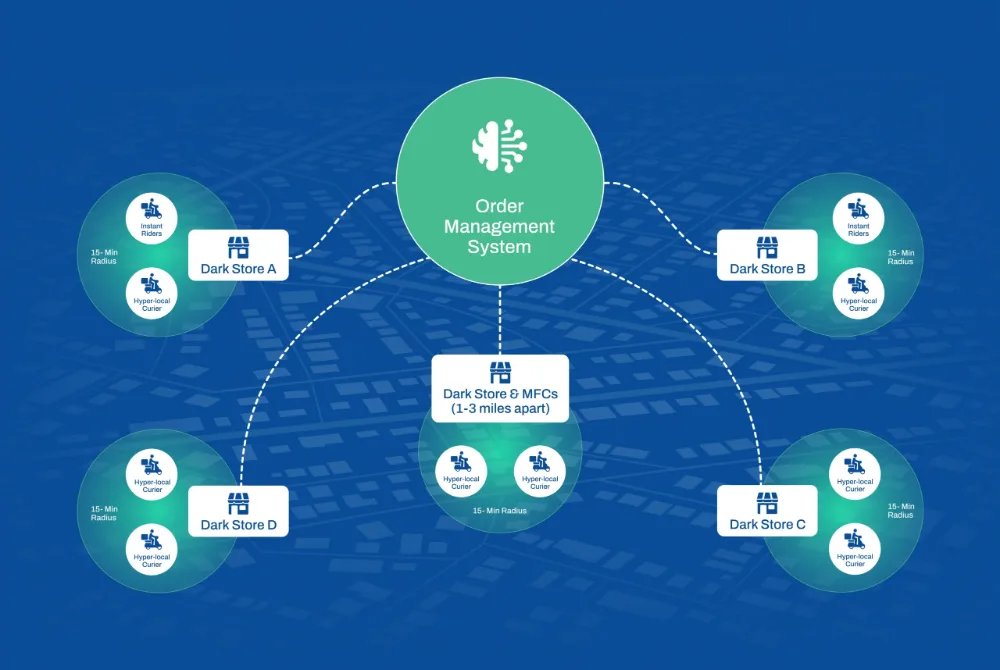
From Click to Cart in 15 Minutes: Developing a Quick Commerce Strategy for Logistics & Retail
Direct answers on Shopify versus other platforms, custom themes versus headless, apps, migration, Plus and what our Shopify development company does after launch.
01Is Shopify the right platform for our store?
For most D2C and many B2B brands, yes: checkout, payments, fraud and scale are solved, and the ecosystem covers most needs. It is a poorer fit for very complex catalogues, heavy B2B pricing logic outside Plus, or businesses needing full control of checkout. We tell you which you are before anything is built.
02Custom theme or headless storefront?
A custom Online Store 2.0 theme for most brands — it is faster to build, merchandisers can edit it, and it performs well when built carefully. Headless with Hydrogen or Next.js when content and commerce must compose deeply, when the front end serves several channels, or when the brand has outgrown Liquid. We recommend by need, not by fashion.
03Can you build a custom Shopify app for us?
Yes — private and custom apps on the Admin API, Functions and checkout extensibility, from a discount rule to a full ERP integration. Every app gets webhooks with retries, reconciliation and monitoring, because an integration that fails silently costs more than one that never existed.
04Will we lose search rankings if we migrate to Shopify?
Not if the migration is done properly. We map every old URL to its new one and redirect it, preserve product and category content, carry structured data across and monitor rankings and crawl errors for a month after cutover. The migration is rehearsed on a staging store so the live cutover is a quiet window.
05Do you work with Shopify Plus?
Yes: checkout extensibility, Markets and multi-store, B2B catalogues and price lists, Flow automations and Launchpad. We help decide whether Plus pays for you — it usually does above a certain order volume or with B2B and multi-market needs — and set it up so the features are actually used.
06What does support look like after launch?
Peak-season readiness reviews, theme and app updates, performance and accessibility checks, integration monitoring and a conversion review each quarter. Documentation and admin training are handed over at launch; we can run the store’s technical side for you, with you, or hand it over entirely.
Make the Store Yours.
Tell us what the store has to sell and what it has to connect to, and we will show you comparable commerce work before anything is scoped.
One click opens the assistant you already use with a question that points it at this page, so the answer comes from what we publish, not a guess.
The question it opens withRead https://digiwagon.com/shopify and explain when DigiWagon recommends Shopify, what it would ask about my product before scoping, and which of its case studies are relevant. Stick to what the page says and mark anything you are not sure about.