Strapi Development Services for Self-Hosted Headless CMS
Your CMS. Your Servers.
Strapi is the open-source headless CMS for teams who want the content model, the database and the admin under their own roof: Node.js, TypeScript, any SQL database, deployed wherever your infrastructure lives. Editors get a clean admin; developers get REST and GraphQL APIs they can extend in code.
Our Strapi development services cover the content model and admin customisation, the front ends that consume it, plugins and integrations, hardened deployment and the migrations from monolithic or SaaS CMSs onto infrastructure you control.
From the content types to the hardened deployment behind your perimeter, our Strapi development services cover the self-hosted headless stack end to end.
01
Content Modelling & Admin
Collection and single types, components and dynamic zones designed with the editors, roles and permissions that match how your teams publish, internationalisation configured, and the admin customised — fields, views, branding — so it feels like your tool.
Types, components and dynamic zonesRoles, permissions and i18nAdmin customisationDraft, publish and review
Strapi plugins and lifecycle hooks in TypeScript for the logic the platform does not ship — approval workflows, integrations with commerce, search and translation, custom field editors, scheduled publishing — kept upgrade-safe and documented.
TypeScript plugins and hooksWorkflow and scheduling logicCommerce, search and translation integrationUpgrade-safe customisation
Websites and apps on Next.js, Nuxt or your framework consuming Strapi’s REST or GraphQL APIs, with preview, on-demand revalidation and the caching layer that makes a self-hosted CMS as fast at the edge as a SaaS one.
Next.js and Nuxt front endsREST or GraphQL consumptionPreview and revalidationEdge caching in front of Strapi
Strapi in containers on your cloud or on-premises — PostgreSQL, object storage for media, secrets management, backups tested by restore, monitoring, and a pipeline for schema and version upgrades — inside the network boundary your compliance regime requires.
Containers on your cloud or on-premPostgreSQL and object storageBackups, monitoring and upgradesNetwork boundary and access control
WordPress, Drupal or a SaaS headless CMS mapped into Strapi types and migrated with rerunnable scripts, media moved to your storage, URLs and metadata preserved, and a parallel run until the new stack is proven — bringing the content home without losing its search equity.
Content mapping and scriptsMedia migration to your storageURL and SEO preservationParallel run and cutover
Why hire us for Strapi, in five lines you can hold us to.
Sovereign by Default
Content, database and admin run where you decide — your cloud region, your data centre, your perimeter — which is why it suits residency and security regimes.
No Per-Seat Surprises
Open source with no usage-based fees: add editors, content types and API calls without a pricing conversation.
Extend in TypeScript
Plugins, hooks and custom controllers in the language your team already writes — the CMS is a codebase, reviewed and tested like the rest.
Editors Get a Real Admin
A clean, customisable admin with roles, drafts, i18n and review — headless does not have to mean a developer publishes everything.
Any Database, Any Front End
PostgreSQL, MySQL or SQLite behind; Next.js, Nuxt, mobile or anything that speaks REST or GraphQL in front — the content model outlives each of them.
Tech expertise
Our Tech Vault At Your Command
Strapi is the self-hosted content layer in this stack; here is what we ship around it. Every name with a page of its own is a link.
What changes when the team actually knows the stack, in six rows.
Feature
DigiWagon
Other agencies
Platform fluency
Contentful, Strapi, Sanity, headless WordPress — we know the content APIs, the limits and the pricing cliffs, and we say when a platform is the wrong fit.
One CMS for every brief, whether or not it fits.
Content modelling
Models designed with the editors who will use them: references, locales, validations and previews that make sense in the admin.
A schema that mirrors the database, not the editorial work.
Estimation
Honest timelines and budget, no surprise line items — the estimate names its assumptions.
Estimate comes with ‘oops, missed that!’
Performance
Edge-cached delivery, image pipelines and build strategies chosen so a content change is live in seconds, not a redeploy.
Every publish is a twenty-minute build.
Editorial workflow
Roles, review, scheduling and rollback set up so marketing ships without a developer in the loop.
Every content change is a ticket.
Post-launch care
Model migrations, plugin audits, upgrades and monitoring — we stay after the launch, not just for it.
You are on your own after go-live.
Industries
Where Our Strapi Work Lives
Three of the nine industries we build for, with the Strapi fit behind each, linked to the industry page.
01
SaaS & Technology
Product marketing, documentation and in-app content from one self-hosted model, extended in TypeScript by the same team that owns the product, deployed in the product’s own cloud account.
Product catalogues, technical documentation and dealer content managed centrally and delivered to websites, portals and field apps, hosted inside the company’s own infrastructure.
Content and knowledge platforms that must run inside a controlled network with no third-party SaaS in the path — a CMS your security team can inspect, host and audit line by line.
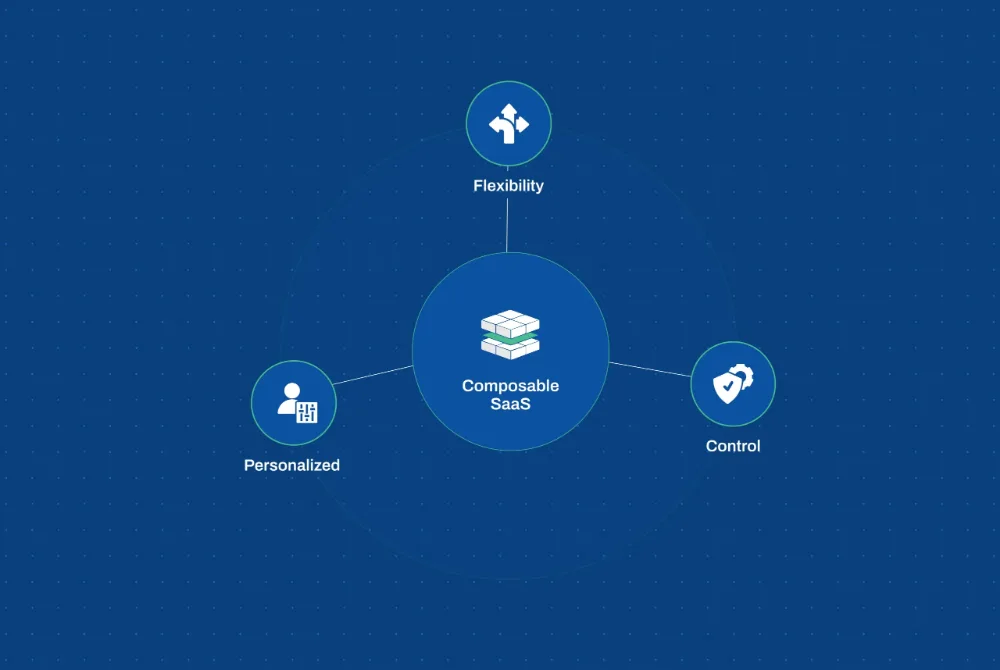
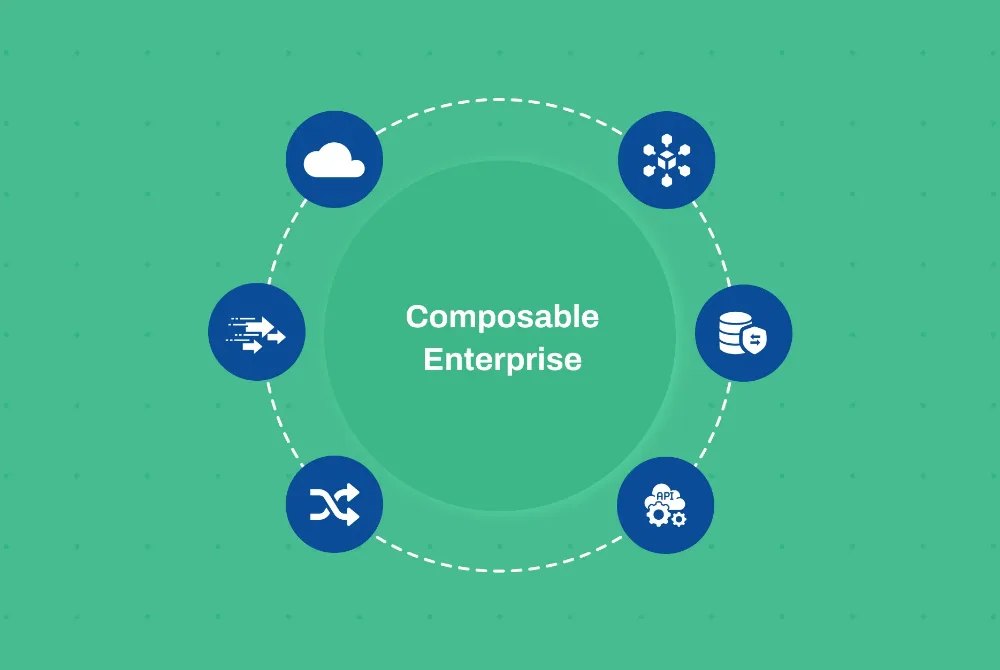
Writing from the platform work: the CTO’s guide to composable enterprise, composable SaaS architecture for hyper-personalised B2B platforms, and generative AI’s role in hyper-personalisation.
Software Engineering
Composable SaaS Architecture: The New Foundation for Hyper-Personalized B2B Platforms
· Akash Thakor · 7 min read
Software Engineering
The CTO’s Guide to Composable Enterprise: Unlocking Agility for Digital Transformation in 2026
· Akash Thakor · 5 min read
AI & Machine Learning
Unlocking Hyper-Personalization: Generative AI’s Role in B2B E-commerce for US & UK Enterprises
Direct answers on Strapi versus SaaS headless CMSs, hosting, security, editors, upgrades and what our Strapi development services include after launch.
01Why Strapi instead of a SaaS headless CMS?
Ownership and residency. Strapi runs on your infrastructure with your database, so content stays inside your region and perimeter, there are no per-seat or per-call fees, and the platform can be extended in TypeScript without vendor permission. A SaaS CMS wins when you want zero infrastructure; we recommend by regime and team.
02Where do you host Strapi?
Wherever your infrastructure lives: containers on AWS, Azure, Google Cloud or DigitalOcean, or on-premises for controlled networks. PostgreSQL for the database, object storage for media, secrets in a vault, backups tested by restoring them, and monitoring. The deployment is infrastructure as code so your team can own it.
03How do you keep a self-hosted CMS secure?
Least-privilege roles and API tokens, single sign-on where you have it, a hardened container image, network boundaries so the admin is not on the public internet, dependency and Strapi version updates on a schedule, audit logging and backups. Self-hosting is a responsibility; we set it up so it is a routine, not a risk.
04Can editors work without developers?
Yes, if the model and admin are built for them: content types that read like the content, components and dynamic zones for flexible pages, drafts and review, internationalisation and a preview of the front end. Where the default admin is awkward, we customise fields and views rather than asking editors to adapt.
05How do Strapi upgrades work?
Strapi publishes migration guides for major versions and we plan upgrades into the roadmap, with custom plugins written upgrade-safe and a staging environment to rehearse. Minor updates ride the normal dependency cadence. An upgrade that is scheduled and rehearsed is a task; one that is postponed for two years is a project.
06What does support look like after launch?
Scheduled Strapi, Node and dependency updates, security patching, infrastructure monitoring and backups, content-model changes as the business evolves, front-end updates and editor support. Documentation and runbooks are handed over at launch; we run the platform for you, with you, or hand it over entirely.
Bring the Content Home.
Tell us what content has to reach which channels and where it is allowed to live, and we will show you comparable headless work before anything is scoped.
One click opens the assistant you already use with a question that points it at this page, so the answer comes from what we publish, not a guess.
The question it opens withRead https://digiwagon.com/strapi and explain when DigiWagon recommends Strapi, what it would ask about my product before scoping, and which of its case studies are relevant. Stick to what the page says and mark anything you are not sure about.