Magento Development Services for Complex Catalogues
Big Catalogue? Bring It.
Magento — Adobe Commerce and Magento Open Source — is the platform for stores that do not fit a template: tens of thousands of SKUs, configurable and bundled products, B2B price lists and company accounts, several storefronts and currencies from one back end. It rewards engineering discipline and punishes its absence.
Our Magento development services bring the discipline: clean modules over core hacks, a tested upgrade path, performance work measured at the product page, and integrations that reconcile with the ERP every night.
From a Magento 2 build that stays upgradeable to the PWA storefront in front of it, our Magento development services cover the platform for stores with real complexity.
01
Magento 2 Store Development
Adobe Commerce and Open Source stores built the upgradeable way: custom modules with plugins and observers, no core overrides, configurable, bundled and grouped products modelled properly, and a deployment pipeline with automated tests so an upgrade is a task rather than a project.
Clean custom modules, no core hacksComplex product types and attributesAutomated tests and pipelinesUpgrade-safe architecture
Company accounts, shared catalogues, tiered and negotiated pricing, quotes, purchase orders and requisition lists — Magento’s B2B suite configured and extended for manufacturers and distributors selling to trade, integrated with the ERP that owns the price book.
Company accounts and rolesShared catalogues and price tiersQuotes and purchase ordersERP-owned pricing sync
PWA Studio, or Next.js and Vue on GraphQL, for brands that want a fast, app-like front end on a Magento back end — server-rendered category and product pages, edge caching and a checkout that still runs Magento’s logic.
PWA Studio or GraphQL storefrontsServer rendering and edge cachingApp-like performanceMagento checkout retained
Varnish and full-page cache tuned properly, Elasticsearch or OpenSearch indexing, Redis sessions, database and indexer optimisation, image pipelines and a load-tested cluster — the product page under two seconds with fifty thousand SKUs and a sale running.
Varnish and full-page cacheSearch indexing and tuningDatabase and indexer optimisationLoad-tested scaling
Magento 1 estates and old Magento 2 versions brought to the current release, extensions audited and replaced, custom code refactored to survive future upgrades — or a migration off Magento when the catalogue no longer needs it, with URLs and rankings kept either way.
Version upgrades and patchingExtension audits and replacementMagento 1 to 2 migrationURL and SEO preservation
Why hire us for Magento, in five lines you can hold us to.
Built for Complexity
Configurable products, bundles, attribute sets, multiple storefronts, currencies and tax regimes — Magento models the hard catalogue natively, and we model it properly.
B2B Without a Bolt-On
Company accounts, shared catalogues, negotiated pricing and quotes are part of the platform, not a plugin stack, and we wire them to the ERP that owns the price book.
Upgradeable by Design
No core hacks, clean modules, automated tests and a pipeline — the discipline that turns the dreaded Magento upgrade into a routine task.
Fast Where It Counts
Cache, search and database tuning measured at the product page under load, because a two-second page on a fifty-thousand-SKU store is engineering, not luck.
You Own the Platform
Open source or Adobe-licensed, the store runs where you decide and the code is yours — no platform can change the rules on your checkout.
Tech expertise
Our Tech Vault At Your Command
Magento is the commerce platform in this stack; here is what we ship around it. Every name with a page of its own is a link.
What changes when the team actually knows the stack, in six rows.
Feature
DigiWagon
Other agencies
Platform fluency
Shopify, Magento, WooCommerce, headless CMSs — we know the admin, the APIs and the limits, and we say when a platform is the wrong fit.
One platform for every brief, whether or not it fits.
Checkout & payments
Payments, tax, shipping and fraud rules wired and tested end to end before launch day — the cart is where the money is.
Checkout ‘works on staging’.
Estimation
Honest timelines and budget, no surprise line items — the estimate names its assumptions.
Estimate comes with ‘oops, missed that!’
Performance
Core Web Vitals treated as revenue metrics: image pipelines, edge caching, lean themes, budgets enforced in CI.
Beautiful theme, five-second product page.
Catalogue & content
Product data, content models and integrations designed so merchandisers work in the admin, not in tickets.
Every content change is a developer task.
Post-launch care
Peak-season readiness, platform upgrades, extension audits and monitoring — we stay for the sale.
You are on your own for Black Friday.
Industries
Magento, by Industry
Three of the nine industries we build for, with the Magento fit behind each, linked to the industry page.
01
Retail & eCommerce
Multi-brand and multi-country retailers with large, configurable catalogues, several storefronts from one admin and promotions engines that marketing runs without a developer.
Manufacturers and distributors selling to trade: company accounts, tiered pricing, quotes and purchase orders, integrated with the ERP and the product information system that own the data.
Order orchestration across warehouses and 3PLs, inventory by source, click-and-collect and carrier integrations — the fulfilment logic a complex catalogue needs behind the buy button.
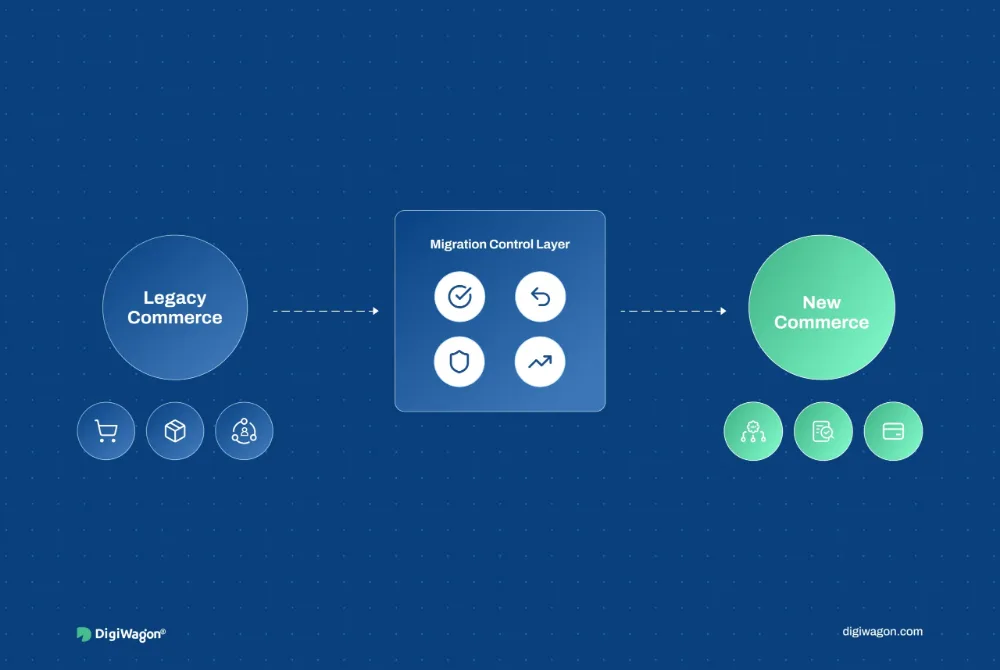
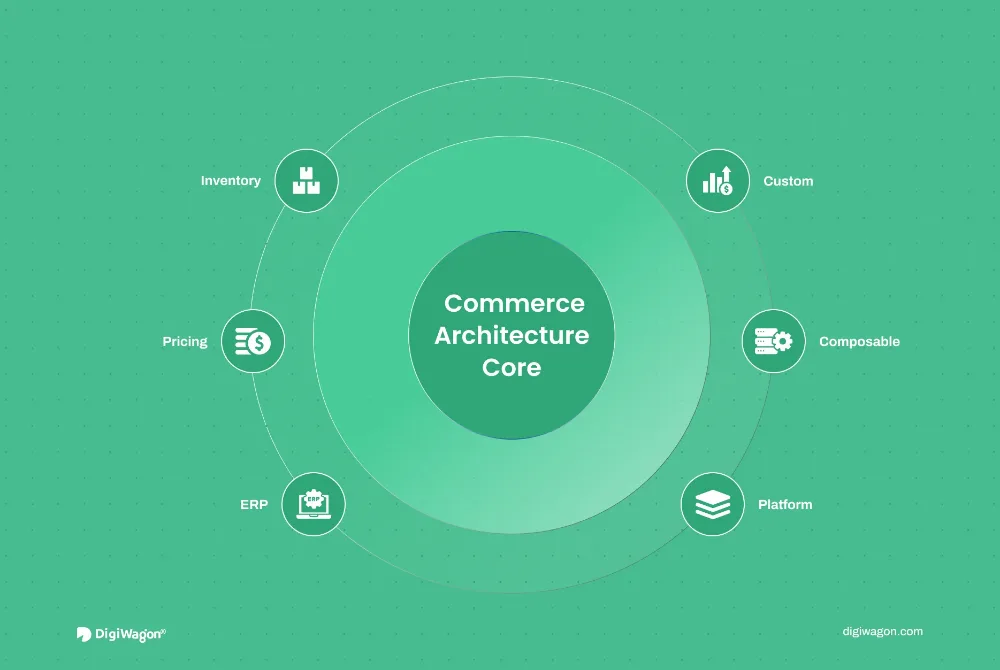
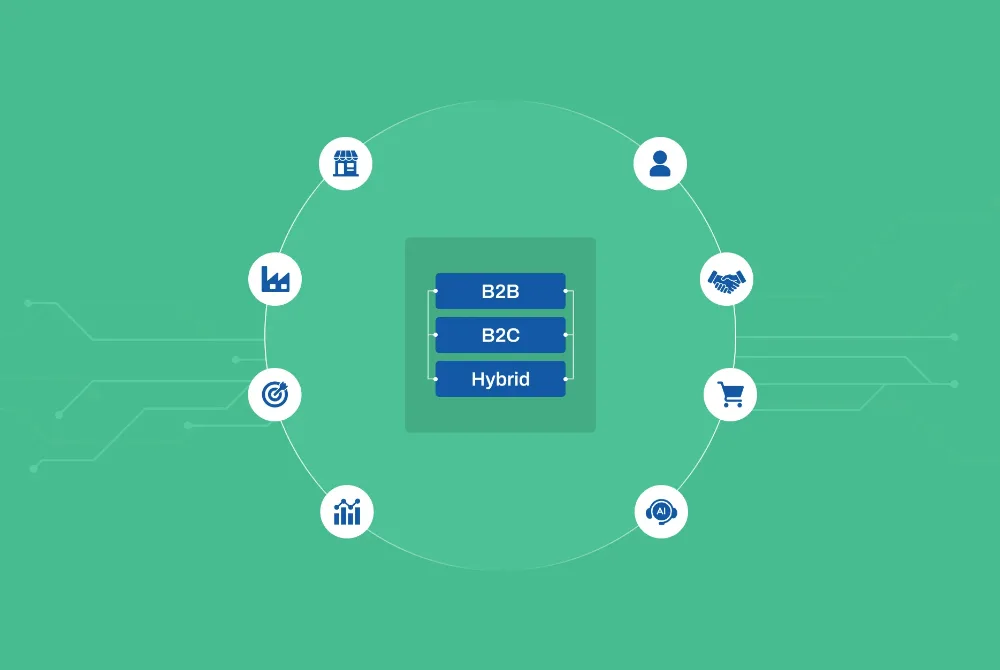
Writing from the commerce work: a strategic risk playbook for eCommerce migration, B2B eCommerce architecture — custom versus composable versus platform — and the rise of B2B2C and hybrid models.
Software Engineering
eCommerce Migration: A Strategic Risk Playbook for Enterprise Replatforming
· Divyarajsinh Gohil · 6 min read
Software Engineering
B2B eCommerce Architecture: Custom vs. Composable vs. Platform
· Divyarajsinh Gohil · 10 min read
Software Engineering
The Rise of B2B2C and Hybrid Models: Building a Unified E-commerce Platform for 2026
Direct answers on Magento versus Shopify, Open Source versus Adobe Commerce, upgrades, performance, B2B and what our Magento development services include after launch.
01Is Magento still a good choice in 2026?
For stores with genuine complexity — large configurable catalogues, B2B pricing and accounts, multiple storefronts and markets from one back end, or a need to own the platform — yes. For a simple D2C brand it is more platform than you need, and we would recommend Shopify. The decision is the catalogue and the team, not the brand.
02Magento Open Source or Adobe Commerce?
Open Source when the team is engineering-strong and the B2B suite, page builder, staging and Adobe’s cloud hosting are not required. Adobe Commerce when B2B, content staging, customer segmentation and vendor support matter and the licence is affordable against the revenue. We model the total cost of both before recommending.
03Why do Magento upgrades have a bad reputation?
Because stores built with core overrides, unvetted extensions and no tests make every upgrade a rewrite. Built properly — clean modules, plugins and observers, an extension audit, automated tests and a pipeline — an upgrade is a scheduled task. We fix the architecture first when we inherit a difficult store.
04How do you make a large Magento store fast?
Full-page caching with Varnish tuned for your catalogue, search on Elasticsearch or OpenSearch, Redis for sessions and cache, indexer and database optimisation, an image pipeline and a load-tested infrastructure. We measure at the product page under sale-day load, not on an empty staging box.
05Can Magento handle our B2B requirements?
Usually, natively: company accounts and roles, shared catalogues, tiered and negotiated pricing, quotes, purchase orders and requisition lists are part of the B2B suite. The work is integrating them with the ERP that owns pricing and credit, which we design with reconciliation so the two never disagree.
06What does support look like after launch?
Security patching on Adobe’s schedule, version upgrades planned rather than dreaded, extension audits, performance and search-index monitoring, peak-season readiness and a quarterly conversion review. Documentation and admin training are handed over at launch; we run the platform for you, with you, or hand it over entirely.
Give the Catalogue a Platform That Fits.
Tell us what the store has to sell, to whom and through what, and we will show you comparable commerce work before anything is scoped.
One click opens the assistant you already use with a question that points it at this page, so the answer comes from what we publish, not a guess.
The question it opens withRead https://digiwagon.com/magento and explain when DigiWagon recommends Magento, what it would ask about my product before scoping, and which of its case studies are relevant. Stick to what the page says and mark anything you are not sure about.